
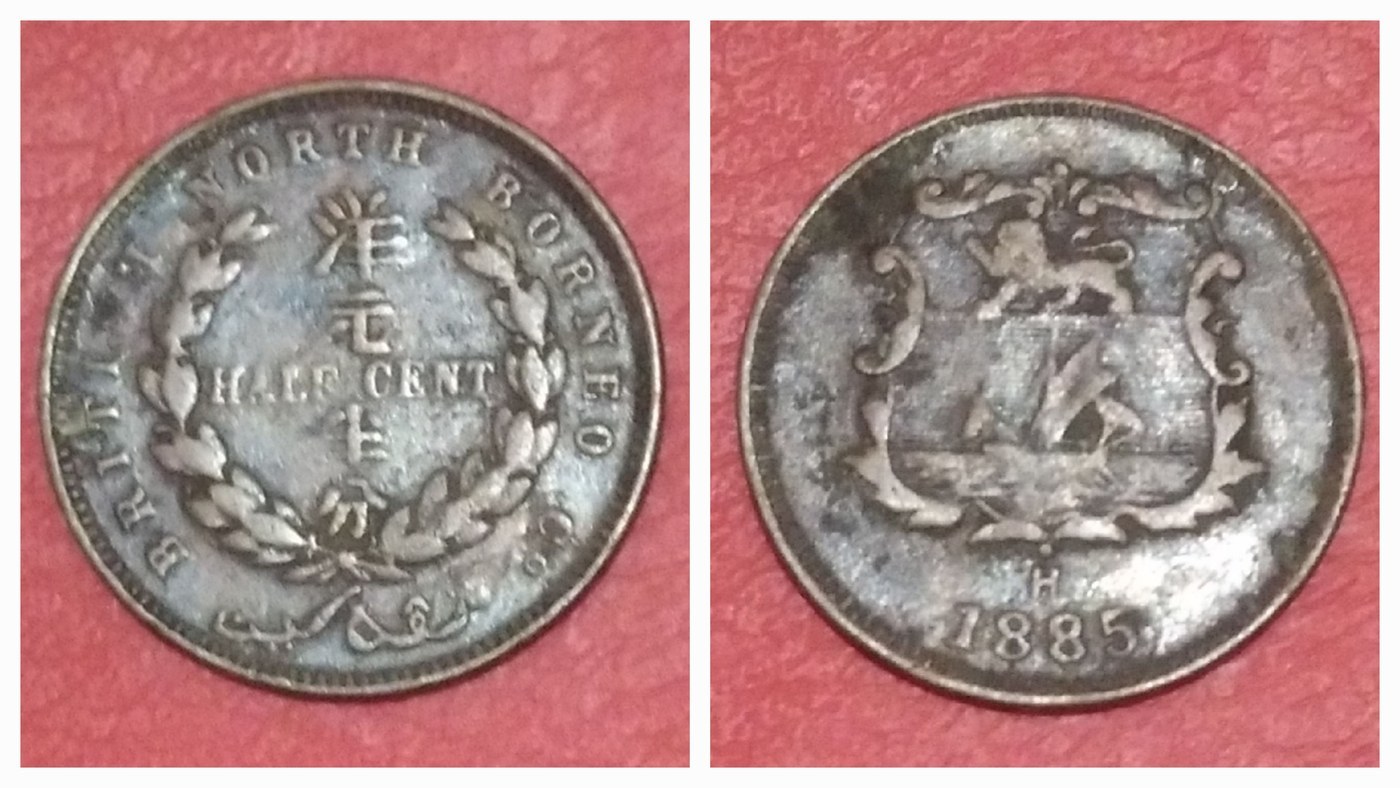
British North Borneo Half Cent
An 1885 copper half cent of British North Borneo: a bust in a laurel wreath on the obverse and the company arms with a heraldic supporter on the reverse.
- Country
- British North Borneo
- Denomination
- 1/2 Cent
- Metal
- Copper
Got a coin like this?
Identify any coin from a photo, free.
Overview
The British North Borneo Half Cent is a small copper colonial coin struck for the territory administered by the British North Borneo Company on the northern tip of Borneo. The photographed example is dated 1885, one of the earliest years of the company's coinage, and carries the title BRITISH NORTH BORNEO around a left-facing bust framed by a laurel wreath, with HALF CENT stated in the center.
The reverse shows the arms of the British North Borneo Company, including a lion-like heraldic supporter, above the date 1885. As a base-metal minor of the lowest denomination, it was intended for everyday small transactions in the chartered territory rather than as a commemorative or precious-metal piece.
History & Background
The British North Borneo Company received a royal charter in 1881 and governed the territory of British North Borneo—today part of the Malaysian state of Sabah—as a commercial administration until it was folded into direct colonial rule in the mid-twentieth century. To supply small change for its ports and trading stations, the company issued its own coinage, and the half cent of 1885 belongs to this early series.
The half cent was the smallest denomination of the company's cent system, sitting below the one cent. Its design pairs a bust within a laurel wreath with the company's heraldic arms, a format the company used to project its chartered authority in place of a monarch's ordinary coinage. Coins of this issuer were struck under contract at British mints, as was typical for chartered-company and colonial coinage of the period.
Because it was a low-value working coin circulating in a tropical trading economy, many pieces saw hard use, and the series as a whole documents the distinctive era when a private chartered company minted money in Britain's name in Southeast Asia.
How to Identify
Confirm the coin by its legends first. The obverse reads BRITISH NORTH BORNEO around the rim, with HALF CENT stated within, surrounding a left-facing bust enclosed by a laurel wreath—the wreath and the explicit HALF CENT wording are strong diagnostics. The reverse carries the British North Borneo Company coat of arms with a lion-like heraldic supporter and the year 1885 at the bottom.
Physically it is a small, round copper coin, brown to reddish-brown depending on wear and toning, and light in the hand as befits the lowest denomination of the series. It is a base-metal piece with no precious content. On the reverse, look to the date to place the coin; on this example that date is 1885.
Distinguish the half cent from the company's one cent by reading the stated denomination rather than judging size alone, since the two share the same general design language. The written HALF CENT and the specific company arms with the date are the surest confirmation of exactly which coin you hold.
Value & Collectibility
British North Borneo Company coins have a steady following among collectors of colonial and Southeast Asian coinage, and early dates such as 1885 are of particular interest as first-issue material. As a small copper minor, however, an ordinary well-worn example is an affordable collector coin rather than a rarity.
Condition drives value strongly. Heavily circulated pieces with smooth wear, corrosion, or environmental damage sit at the low end, while problem-free coins retaining sharp detail and original surfaces command a clear premium; genuine mint-state copper with red or red-brown color is scarce for a tropical circulating issue and is valued accordingly. Because this is an older colonial copper, cleaned or damaged coins are common and are discounted.
Treat any single figure as indicative only. For a specific 1885 half cent, compare against recent auction and dealer sales of the same date and grade, and give weight to eye appeal, surface originality, and third-party grading where available.
Frequently asked questions
What is British North Borneo, the issuer of this coin?
It was a territory on the northern part of Borneo administered by the chartered British North Borneo Company from the 1880s. The company struck its own coinage, including this half cent, for local circulation.
What is shown on the British North Borneo Half Cent?
The obverse has a left-facing bust in a laurel wreath with the title BRITISH NORTH BORNEO and the words HALF CENT. The reverse shows the company coat of arms with a lion-like heraldic supporter and the date, here 1885.
Is the half cent made of copper or silver?
It is a base-metal copper coin with no precious-metal content. Its value comes from collector demand for early company coinage, not from its metal.
How much is an 1885 British North Borneo Half Cent worth?
As a small colonial copper minor, worn examples are affordable, while problem-free coins with strong detail and original surfaces bring a premium. Check recent sales of the same date and grade for a current figure.
British North Borneo Half Cent guides
In-depth guides for identifying, valuing, and collecting British North Borneo Half Cent.
Other coins you may enjoy
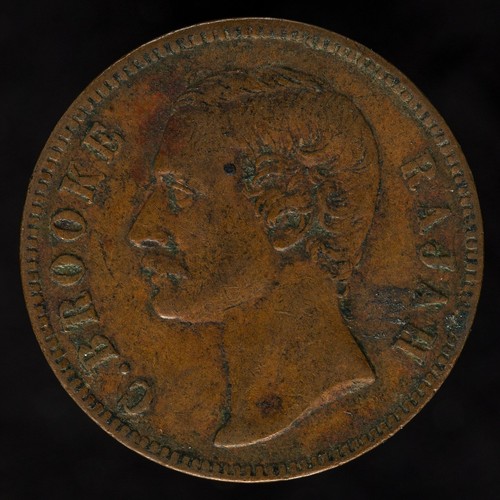
Sarawak One Cent
1870
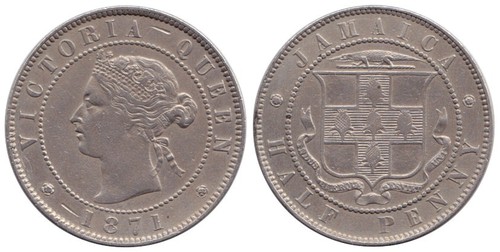
Jamaica Half Penny
1871
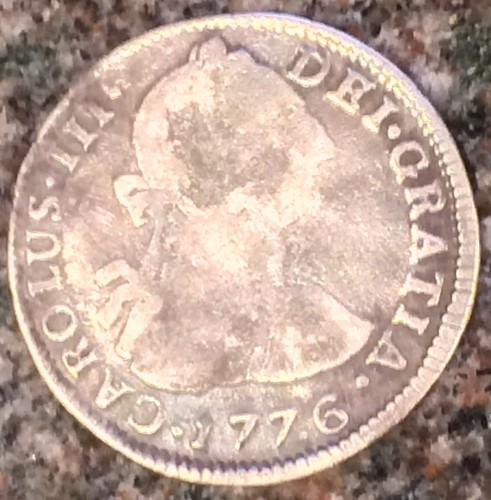
Spanish Colonial 2 Reales (Milled)
1732–1772 (pillar) and 1772–1825 (portrait); example dated 1776
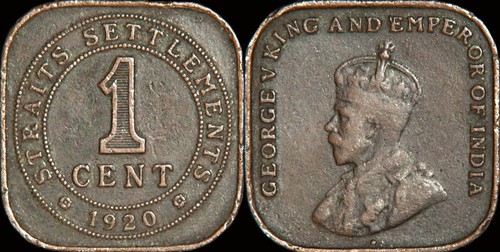
Straits Settlements One Cent
1919–1926 (this type)
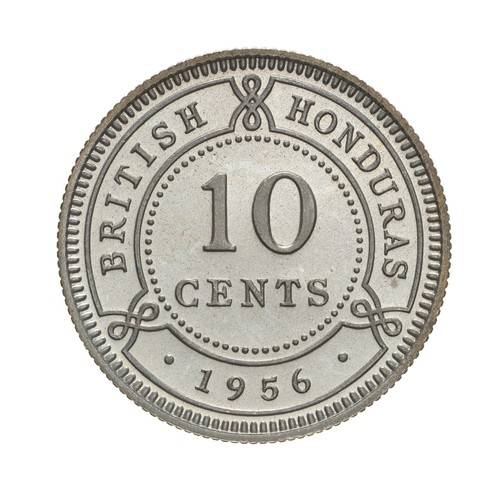
British Honduras 10 Cents
1956
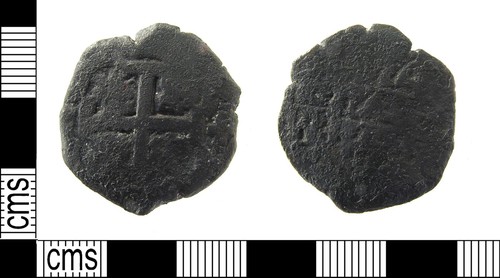
Spanish Colonial 1 Real (Bourbon)
1700-1746
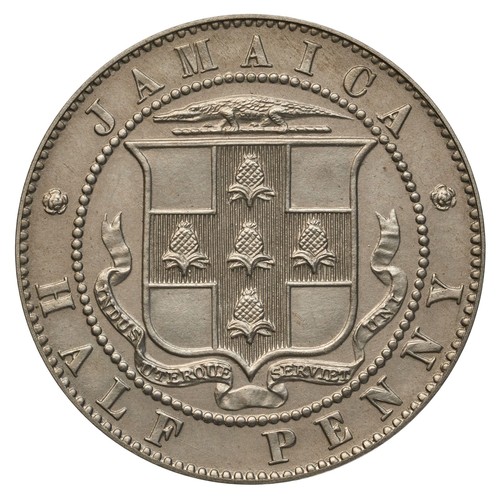
Bermuda Half Penny
1909
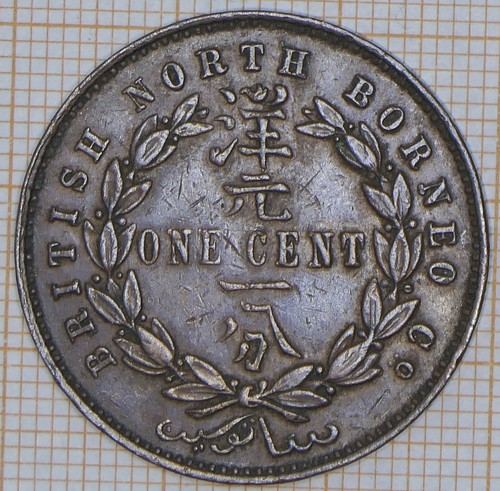
British North Borneo One Cent
1884–1886
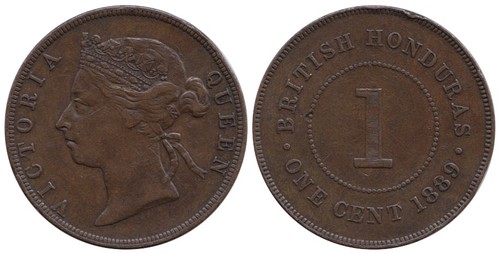
British Honduras One Cent
1885–1894 (Victoria); this example 1889
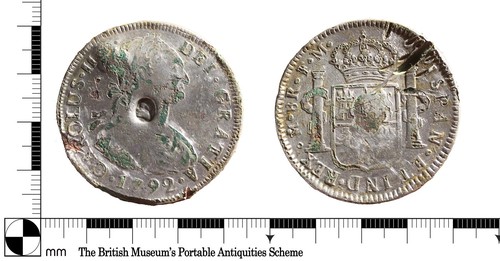
Counterstamped 8 Reales
Charles IV era (1788-1808), host coin; counterstamps and hole added later
Fugio Cent
1787
Massachusetts Shilling (1 Shilling 6 Pence)
1779