
Coin Encyclopedia
Search and identify coins from around the world — with country, denomination, metal, mint, history, and how to tell them apart.
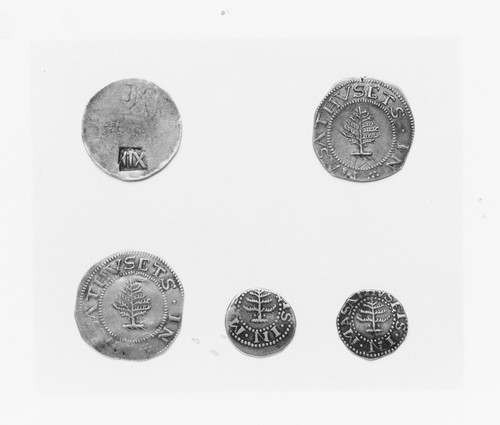
Scottish Shilling
A historical Scottish silver shilling featuring the thistle, Scotland's national emblem, in a heraldic design on one face and as a growing plant on the other.
World Coin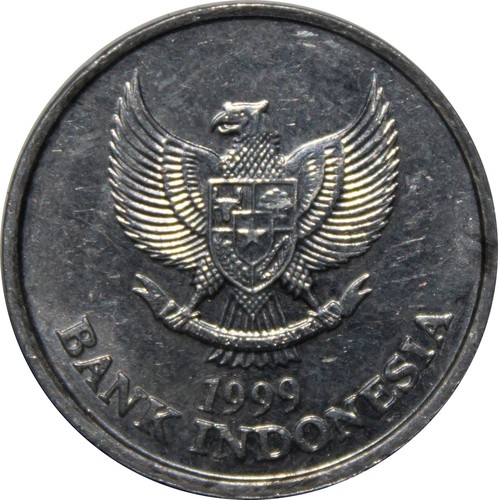
Indonesia 100 Rupiah
A modern lightweight aluminium 100 Rupiah of Indonesia, carrying the Garuda Pancasila national emblem, the BANK INDONESIA legend and the 100 denomination.
Southeast Asia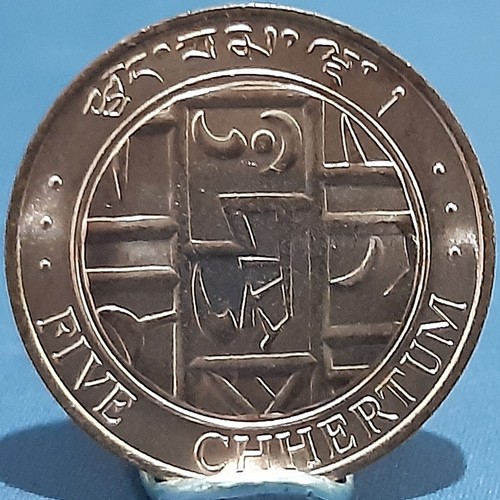
Bhutan 5 Sengtrum
A small cupro-nickel Bhutanese coin of 1979 worth five Sengtrum, with the national emblem on the obverse and a traditional architectural gateway on the reverse.
Himalayan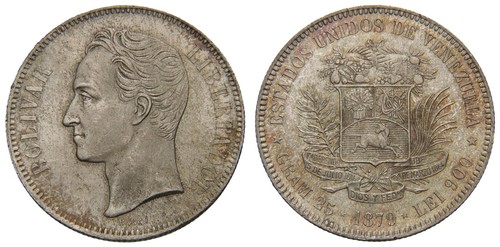
Venezuelan Silver Coin (1879)
An 1879 Venezuelan silver coin: the left-facing head of Simón Bolívar on one side and the national coat of arms in a wreath on the other.
Circulation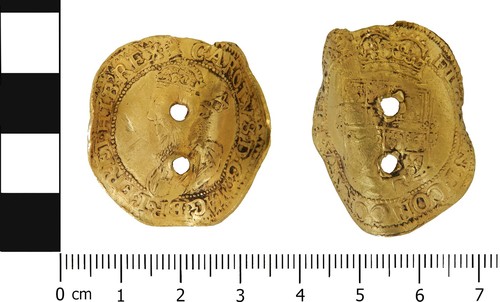
Charles I Unite
A large hammered gold coin of Charles I worth twenty shillings, showing his crowned profile and a crowned quartered shield of lions and fleur-de-lis.
Hammered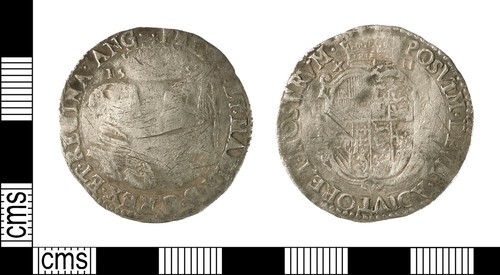
Philip and Mary Shilling
Hammered silver shilling of Philip II of Spain and Mary I (1554-1558), showing their paired royal busts and a crowned quartered shield of arms.
Hammered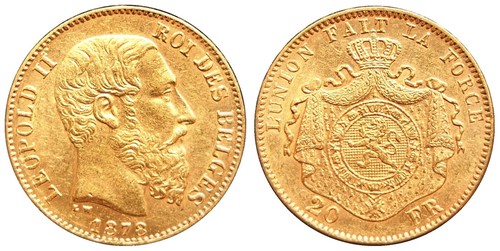
20 Francs (Leopold II)
Belgium's gold 20 francs under King Leopold II, a small Latin Monetary Union coin with the bearded king's profile and the crowned national arms.
Modern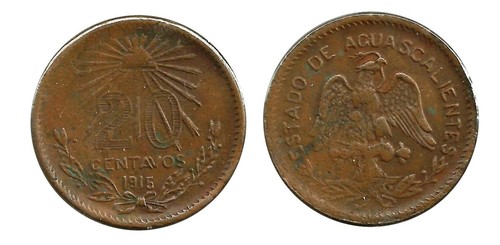
Aguascalientes 20 Centavos
A copper 20 centavos struck in Aguascalientes during the Mexican Revolution in 1915, showing the denomination on one side and a large numeral 20 with the national eagle on the other.
Revolutionary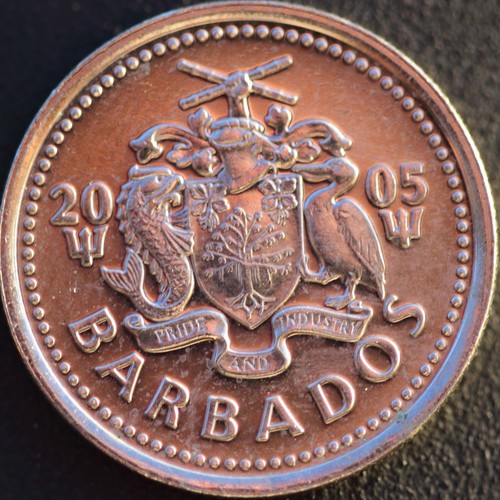
Barbados 10 Cents
A small copper-nickel Barbadian 10-cent coin showing the national coat of arms on one side and the value and country name on the other.
Circulation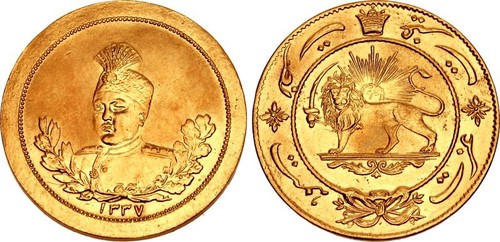
Qajar 5 Tomans Commemorative
A late Qajar gold 5 Tomans of Persia showing Ahmad Shah Qajar in a laurel wreath and the national Lion emblem, dated 1299.
Persia / Iran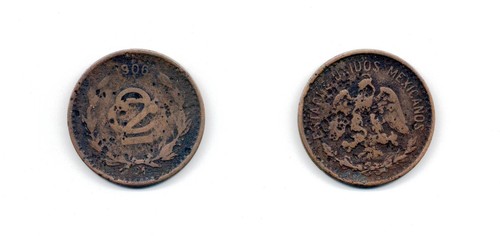
2 Centavos
A copper Mexican 2 centavos with a large numeral 2 framed by a laurel wreath on one side and the national eagle with spread wings on the other.
Circulation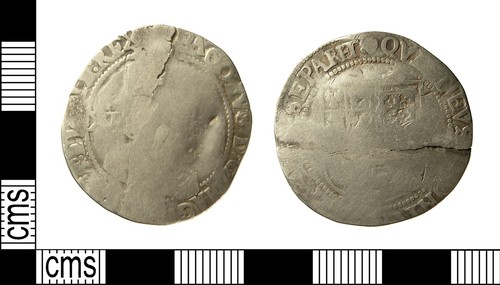
Shilling of James I
Hammered silver shilling of King James I, showing his crowned left-facing bust and a quartered heraldic shield of England, Scotland, Ireland and France.
World Coins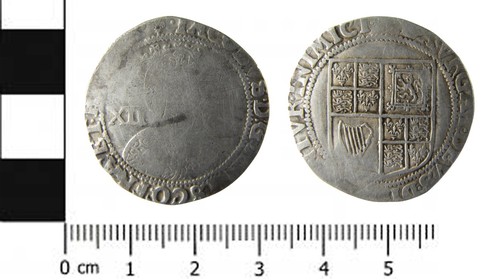
Shilling of Charles I
A hammered silver English shilling of King Charles I, showing his crowned left-facing profile with the value mark XII and a quartered royal shield.
World Coins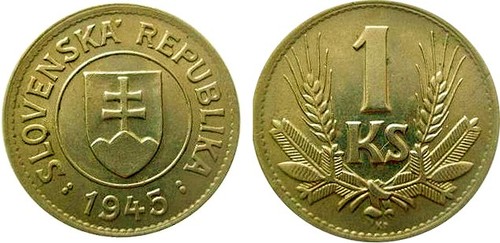
1 Koruna
A lightweight aluminum 1 Koruna of the wartime Slovak state, showing the double-cross national shield on one side and the value 1 Ks flanked by wheat ears.
Modern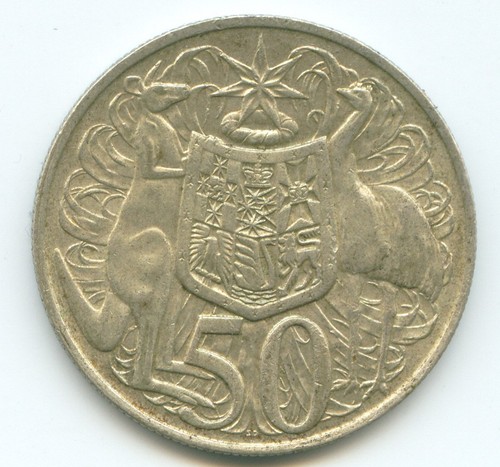
Australian Fifty Cents
Australia's 50 cent coin bearing the national coat of arms. The 1966 round issue shown here was struck in silver; later 12-sided coins are cupronickel.
Australian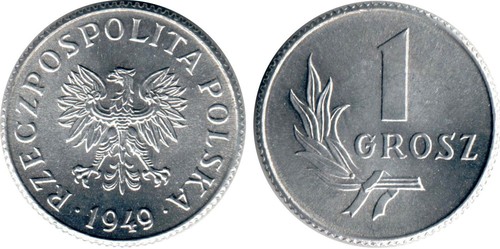
1 Grosz
A small 1949 Polish one-grosz coin bearing the crownless national eagle and RZECZPOSPOLITA POLSKA, with the value 1 GROSZ framed by grain on the reverse.
Modern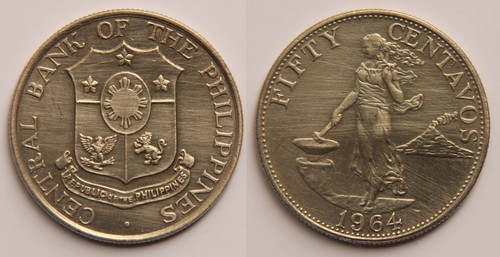
Philippines 50 Centavos
A 1960s Philippine 50-centavos coin in copper-nickel, its obverse showing an allegorical woman with a torch and its reverse the national coat of arms.
Southeast Asia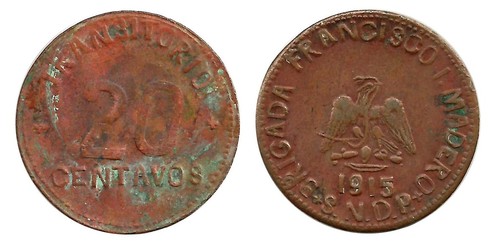
Puebla 20 Centavos
A copper 20 centavos struck in the State of Puebla during the Mexican Revolution, showing a profile bust and the numeral 20 with the national eagle, dated 1915.
Revolutionary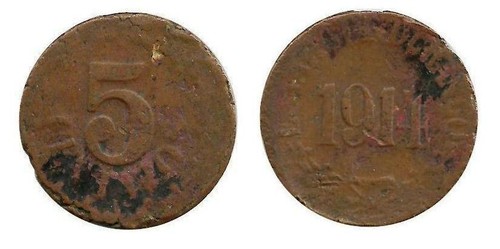
Durango 5 Centavos
A copper 5 centavos struck in the State of Durango during the Mexican Revolution, showing a large numeral 5 and the Mexican national eagle, dated 1914.
Revolutionary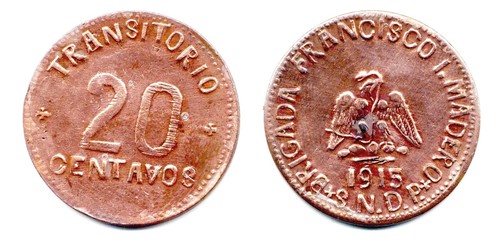
Chiconcuautla 20 Centavos
A 1915 copper 20 centavos struck as a local Revolutionary-era issue at Chiconcuautla, with a numeral 20 on one side and the Mexican national eagle on the other.
Revolutionary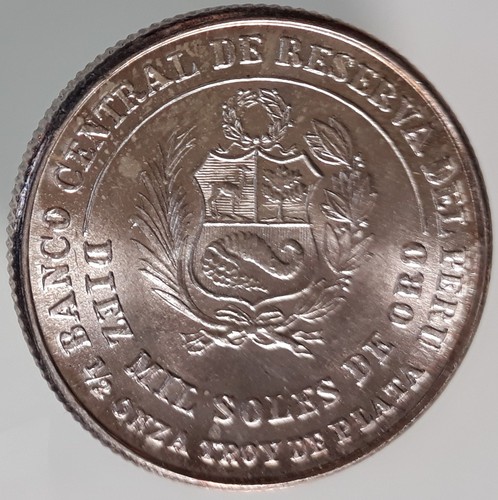
10,000 Soles de Oro
A large Peruvian silver coin of 10,000 soles de oro, its obverse bearing the national coat of arms with the vicuna, cinchona tree and cornucopia.
Circulation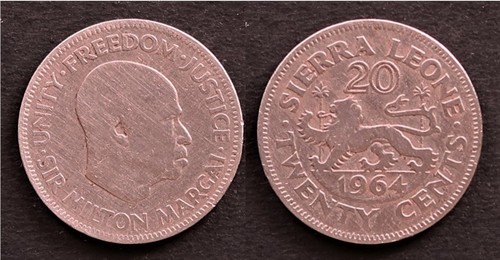
Sierra Leone 20 Cents
A 1964 Sierra Leone 20 cents from the country's first decimal coinage, showing a portrait profile on one side and the national coat of arms with its lion on the other.
World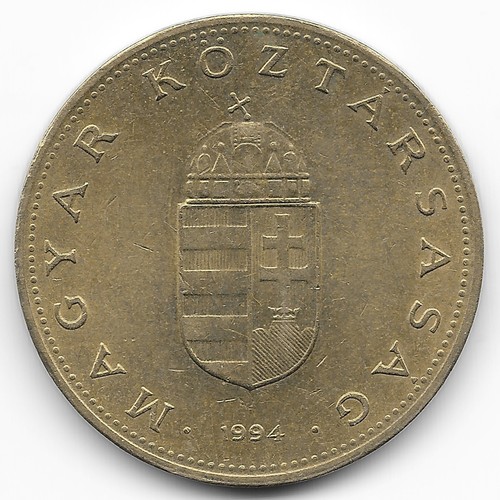
100 Forint (Commemorative)
A Hungarian bi-metallic 100 Forint commemorative pairing the national coat of arms with a bird of prey in flight, struck in a gold-toned ring and pale center.
Commemorative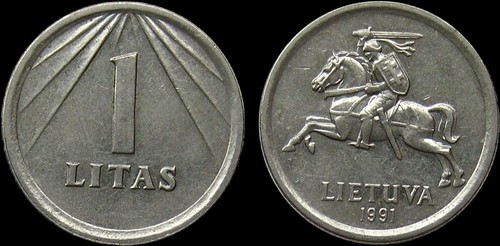
1 Litas
A 1991 Lithuanian one-litas coin from the first coinage after restored independence, showing the value with a radiating pattern and the Vytis knight of the national arms.
Modern