
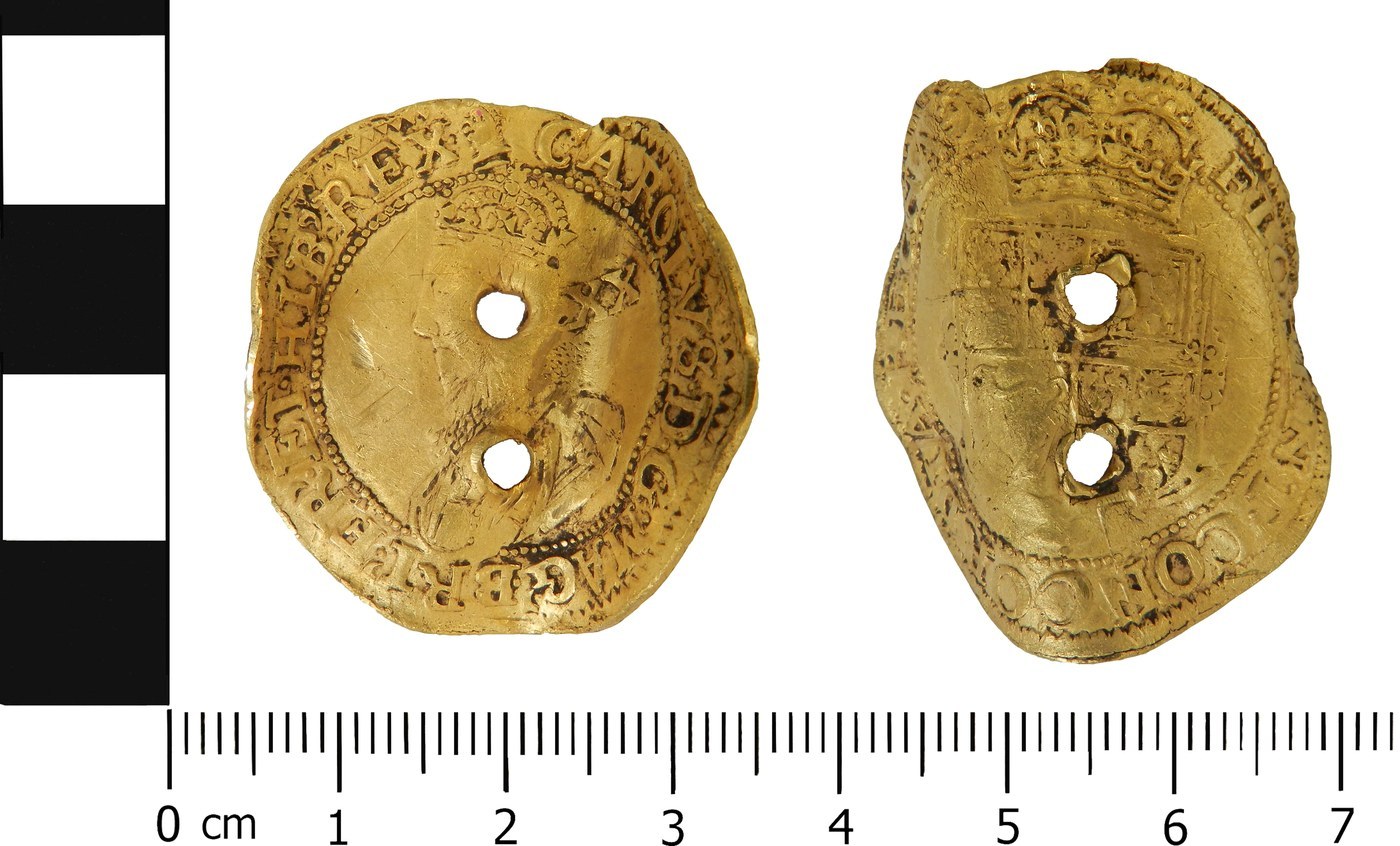
Charles I Unite
A large hammered gold coin of Charles I worth twenty shillings, showing his crowned profile and a crowned quartered shield of lions and fleur-de-lis.
- Country
- England
- Denomination
- Unite (20 shillings)
- Metal
- Gold
Got a coin like this?
Identify any coin from a photo, free.
Overview
The Charles I Unite is a large hammered gold coin struck during the reign of Charles I (1625–1649), valued at twenty shillings, or one pound. It shows the king's crowned bust in profile on the obverse and a crowned quartered shield of arms on the reverse, combining the heraldic lions of England and the fleur-de-lis of France.
The name Unite recalls the joining of the English and Scottish crowns under the Stuart dynasty, a theme carried forward from the coinage of Charles's father, James I. As the standard gold pound of the period, it was a substantial piece of money, well above the reach of everyday small change.
Like all coins of its era, the Unite was struck by hand between two engraved dies rather than by machine, so each surviving piece has a slightly irregular flan, individual centering, and hand-cut lettering. The photographed example shows the characteristic crowned royal portrait facing left and the quartered heraldic shield that identify the type.
History & Background
Charles I ruled from 1625 until his execution in 1649, a period that included mounting conflict between the Crown and Parliament and the English Civil War (1642–1651). The gold Unite was the principal large gold denomination of his reign, struck across several issues and mints, including the Tower of London mint and, during the war, royalist mints established away from London.
The quartered shield of the reverse displays the arms of the Stuart kings — the leopards (lions) of England, the fleur-de-lis of France claimed by English monarchs since the medieval period, and the elements representing Scotland and Ireland — reflecting the combined titles of the crown. The Unite denomination itself dates from the Stuart accession, when the union of the kingdoms was first marked on the gold coinage.
Unites struck during the 1640s belong to a decade of political upheaval, when royal and parliamentary authorities competed and provincial mints operated under wartime pressure. This context makes Civil War–era gold of Charles I of particular interest to collectors of the period.
How to Identify
The obverse shows Charles I crowned and facing left in profile, wearing armor or robes depending on the issue, surrounded by a Latin legend naming him king. The legend typically reads as an abbreviated form of "Charles, by the grace of God, king of Great Britain, France and Ireland," and on hand-struck coins is often only partly legible.
The reverse carries a crowned quartered shield of arms, its quarters filled with the heraldic lions of England and the fleur-de-lis of France together with the emblems of Scotland and Ireland, encircled by a Latin motto. The pairing of the crowned left-facing royal portrait with this crowned quartered shield is the key diagnostic for the type.
The Unite is a large, comparatively thin hammered gold coin with an uneven flan and hand-cut lettering rather than the crisp, uniform detail of machine-made coinage. Many issues carry a small mint mark (a privy mark) in the legend that helps place the coin to a particular period and mint; genuine strikes show the slight irregularity characteristic of hammered work.
Value & Collectibility
As a genuine hammered gold coin of Charles I, roughly 375 to 400 years old and worth a full pound in its day, the Unite is a substantial and desirable collector's item. Its value combines meaningful gold content with strong numismatic demand, so even worn examples are valuable, and prices span a wide range according to condition, mint, and issue.
Heavily worn, clipped, or damaged pieces sit at the lower end, while well-struck, well-centered coins with clear portraits and legends command a strong premium. Rarer mints and issues — particularly scarce Civil War royalist strikings — can be worth many multiples of a common Tower mint example.
Because this is a high-value gold coin, anyone valuing a specific piece should consult recent auction records for comparable Charles I Unites of the same mint and grade, and treat any single quoted figure as context rather than a fixed price. Professional authentication is strongly advised before buying or selling.
Frequently asked questions
What is a Charles I Unite?
It is a large hammered gold coin struck during the reign of Charles I (1625–1649), valued at twenty shillings (one pound). It shows the king's crowned profile on one side and a crowned quartered shield of arms on the other.
Why is it called a Unite?
The name refers to the union of the English and Scottish crowns under the Stuart dynasty. The denomination was introduced to mark that union and continued through Charles I's gold coinage.
What do the lions and fleur-de-lis on the reverse mean?
They are heraldic emblems in the royal arms: the lions (leopards) of England and the fleur-de-lis of France, which English monarchs claimed for centuries. The shield also carries the emblems of Scotland and Ireland.
How much was a Unite worth?
A Unite was worth twenty shillings, equal to one pound sterling — a large sum in the seventeenth century, far above the value of everyday silver small change.
Why does the coin look uneven or off-center?
It was struck by hand between two dies rather than by machine, so an irregular flan, off-center design, and slightly soft lettering are normal and expected for a coin of this period.
Charles I Unite guides
In-depth guides for identifying, valuing, and collecting Charles I Unite.
Other coins you may enjoy
English Sixpence
Early 1600s (James I, 1603-1625)
Sixpence of James I
1603-1625
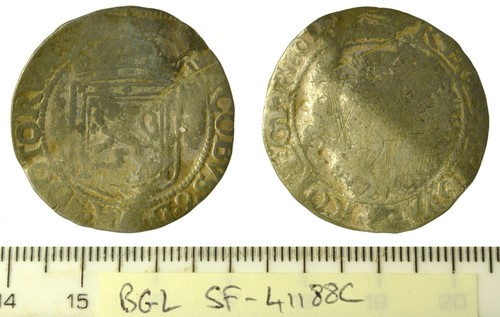
Thistle Merk
1567–1625
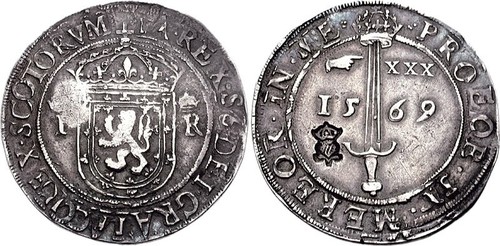
James VI Ryal
1567–1571
Quarter Merk
c. 1580–1691
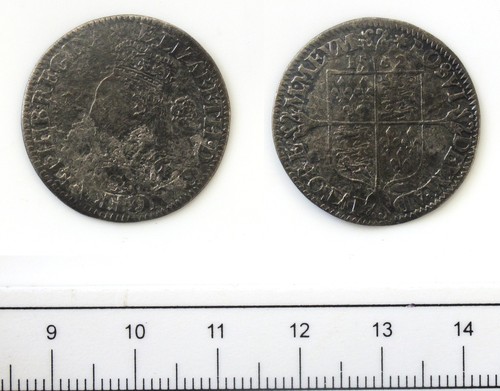
Sixpence of Elizabeth I
1560–1603
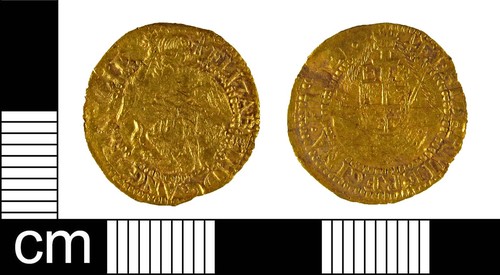
Quarter Angel of Elizabeth I
1581-1583
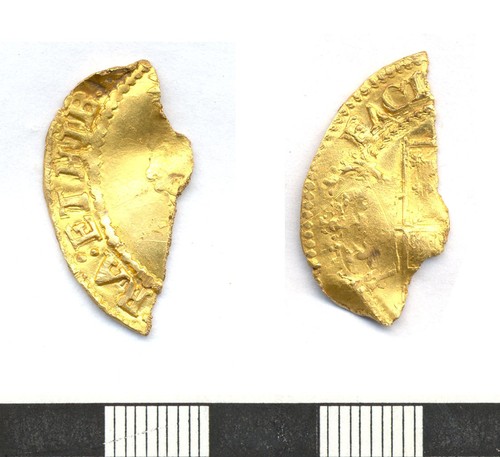
Laurel
1619-1625
Mary I Groat
1553-1558
Medieval Coin
c. 500–1500 (Medieval)
Half Thistle Merk
1567-1625
Irish Pistole
1640s (17th century)