
How to Identify the Charles I Unite
A collector's guide to recognizing Charles I's large hammered gold Unite by its crowned portrait, quartered shield of lions and fleur-de-lis, and mint marks.
Read the full Charles I Unite encyclopedia entry →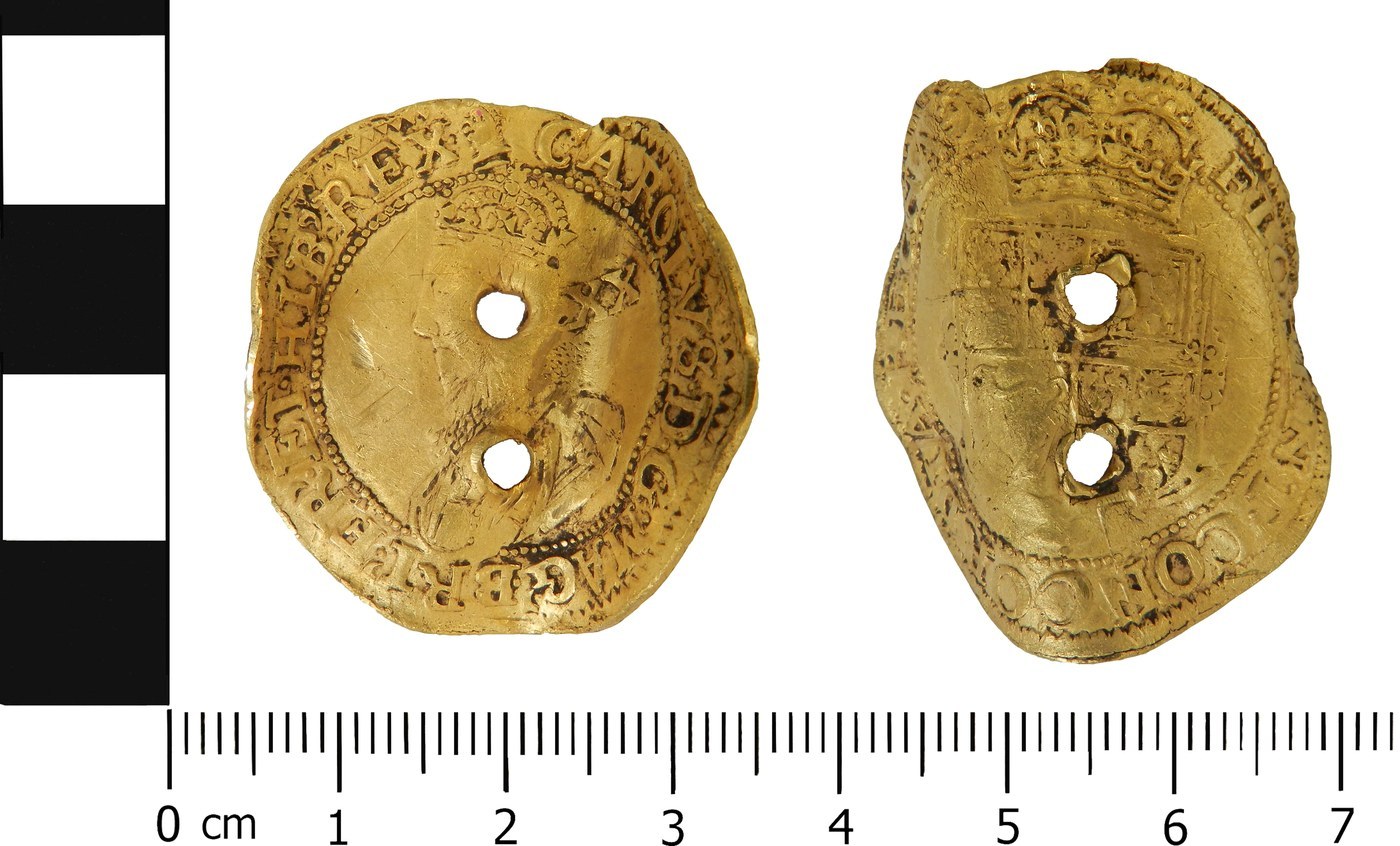
Start with the portrait. The obverse of a Charles I Unite shows the king crowned and in left-facing profile, surrounded by an abbreviated Latin legend naming Charles as king by the grace of God. A large gold coin bearing this crowned royal bust and legend is the first indication of the type; note that different issues vary the king's dress and the crown style, which helps date the coin.
Turn to the reverse. Look for a crowned quartered shield of arms, with the heraldic lions of England and the fleur-de-lis of France set among the other quarters, framed by a Latin motto. The pairing of a crowned Stuart portrait with this crowned quartered shield is the core diagnostic; confirm both sides together before attributing the coin.
Check size, weight, and metal. The Unite is a large hammered gold coin worth twenty shillings, so it is substantially bigger and heavier than the silver denominations of the reign. Weigh and measure the piece and compare against published specifications; a badly underweight coin may be clipped, damaged, or not gold at all. Gold does not tarnish, so heavy dark toning can be a warning sign.
Find the mint mark. Many Unites carry a small privy mark (mint mark) in the legend, often at the start, which ties the coin to a particular period and mint — Tower of London or one of the provincial Civil War mints. Identifying this mark is important both for attribution and for value, since some mints and issues are far scarcer than others.
Be cautious with authentication. Because it is a valuable gold coin, the Unite is a target for forgery, including cast copies, tooled pieces, and modern replicas. Look for casting seams, bubbles, unnaturally smooth fields, incorrect weight, and lettering that lacks the variation of genuine hand engraving. Given the value at stake, always seek an opinion from a specialist in English hammered gold or a reputable grading service before buying.
Frequently asked questions
Which side is the obverse?
The side with the crowned left-facing portrait of Charles I is the obverse; the crowned quartered shield of lions and fleur-de-lis is the reverse. Both should be present to confirm the type.
How do I tell a Unite from other Charles I gold?
Charles I struck several gold denominations with similar portraits and shields, so confirm the size and weight and read the legends. The Unite is the twenty-shilling piece; smaller pieces such as the half-unite are lighter and smaller.
Why do mint marks matter?
The small privy mark in the legend places the coin to a mint and period. It is essential for accurate attribution and can greatly affect value, since scarce Civil War mints are worth far more than common Tower strikings.
How can I be sure a Unite is genuine?
Because it is high-value gold, forgeries exist. Check weight and metal, watch for casting seams, bubbles, and mushy lettering, and obtain professional authentication or grading before any purchase or sale.