
Coin Encyclopedia
Search and identify coins from around the world — with country, denomination, metal, mint, history, and how to tell them apart.
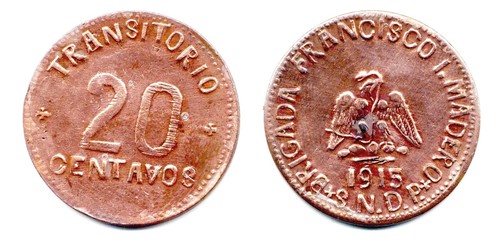
Chiconcuautla 20 Centavos
A 1915 copper 20 centavos struck as a local Revolutionary-era issue at Chiconcuautla, with a numeral 20 on one side and the Mexican national eagle on the other.
Revolutionary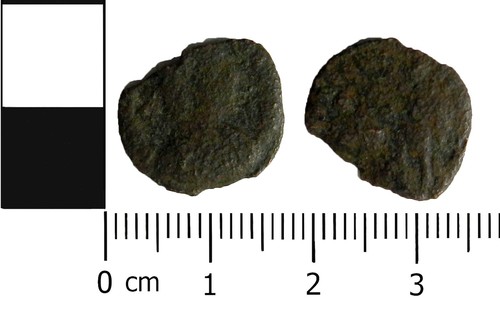
Roman Centenionalis
A small fourth-century Roman bronze coin, part of the reformed low-value currency struck across the empire's mints during a period of frequent monetary change.
Ancient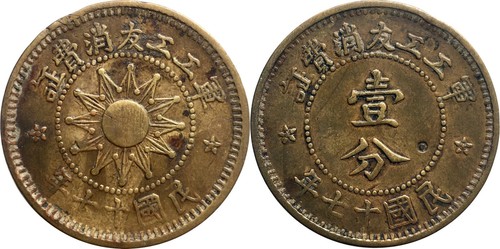
Shansi Arsenal 1 Fen
A holed copper 1 Fen struck by the Shansi Arsenal in 1928, with Chinese inscriptions and numeral '1' around a central square hole.
Circulation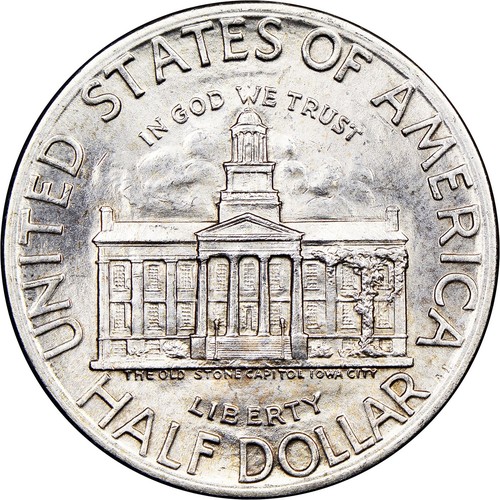
Iowa Centennial Half Dollar
A 1946 U.S. silver half dollar marking a century of Iowa statehood, showing the Old Stone Capitol at Iowa City and the state eagle with the Iowa motto.
Classic Commemorative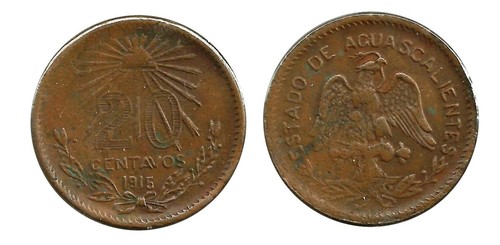
Aguascalientes 20 Centavos
A copper 20 centavos struck in Aguascalientes during the Mexican Revolution in 1915, showing the denomination on one side and a large numeral 20 with the national eagle on the other.
Revolutionary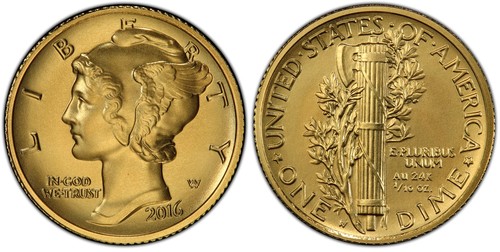
Mercury Dime Centennial Gold
A 2016-W gold collector coin marking the centennial of the 1916 Mercury dime, struck in 1/10 oz of 24-karat gold at West Point.
Dime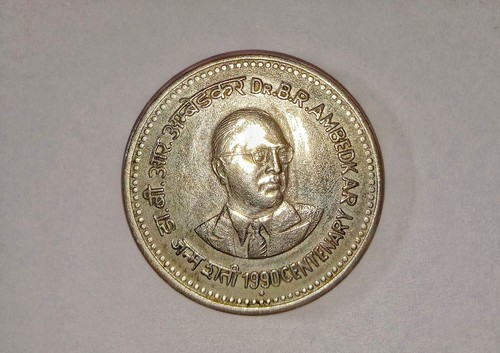
Ambedkar Centenary One Rupee
A 1990 Indian one-rupee commemorative honoring the birth centenary of Dr. B.R. Ambedkar, its obverse bearing his bespectacled portrait and bilingual legend.
Modern India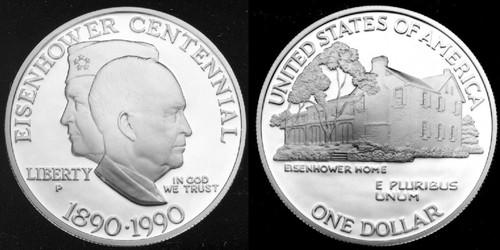
Eisenhower Centennial Dollar
A 1990 U.S. commemorative silver dollar marking 100 years since Dwight D. Eisenhower's birth, with his left-facing profile and his Gettysburg home on the reverse.
Dollar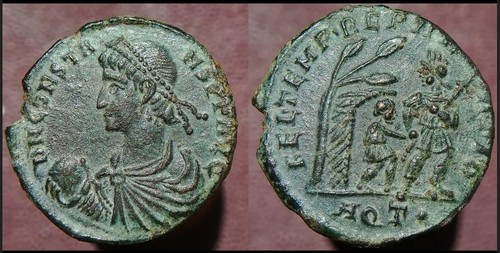
Centenionalis of Constans
A mid-4th-century Roman bronze of Constans bearing the FEL TEMP REPARATIO reform reverse, showing a soldier lifting a small captive from a hut.
Ancient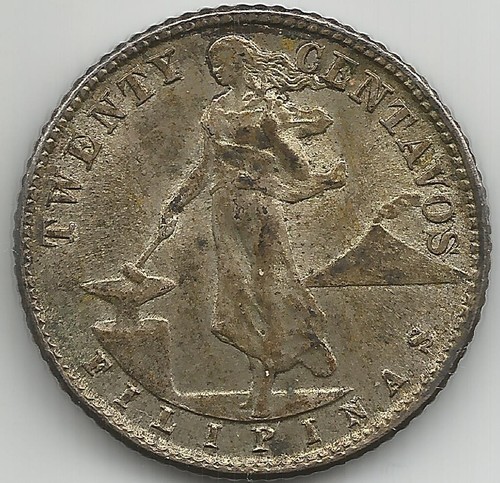
Philippines 20 Centavos
A small wartime silver 20 centavos of the Commonwealth-era Philippines: a standing Liberty figure and Mayon volcano, with an eagle over a shield on the reverse.
Southeast Asia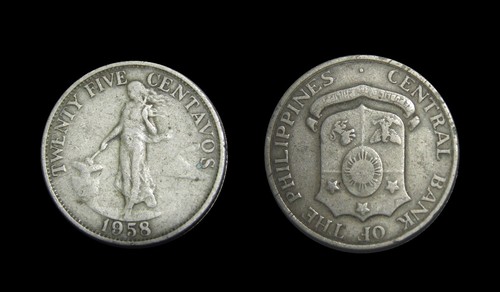
Philippines 25 Centavos
Silvery base-metal 25 centavos of the young Republic of the Philippines, dated 1958: a standing figure with a liberty torch and the Republic's sunburst coat of arms.
Southeast Asia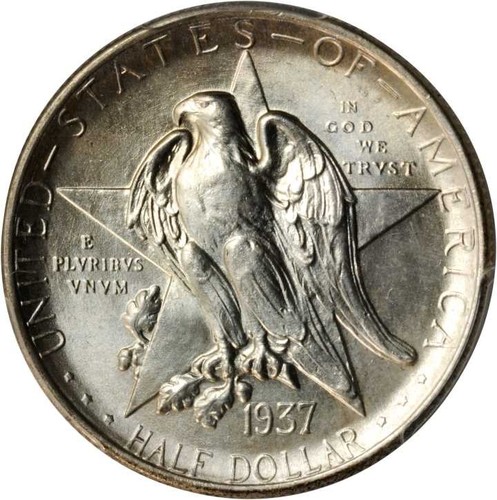
Texas Centennial Half Dollar
A U.S. silver commemorative half dollar (1934–1938) marking a century of Texas independence, with a spread-winged eagle over a large star on the obverse.
Classic Commemorative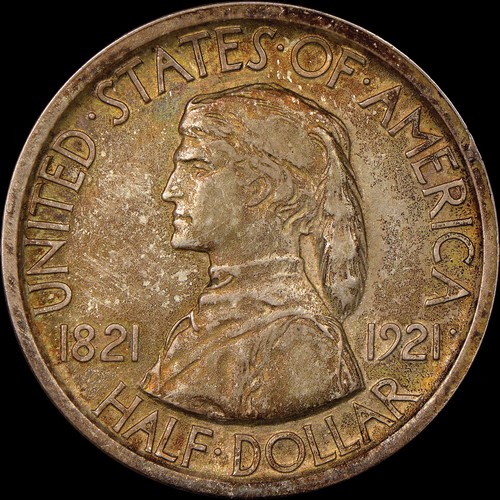
Missouri Centennial Half Dollar
A 1921 U.S. silver commemorative half dollar marking 100 years of Missouri statehood, with a coonskin-capped frontiersman facing left and a frontier-scene reverse.
Classic Commemorative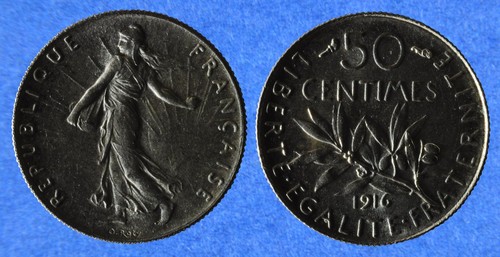
French Semeuse 50 Centimes
A small French silver coin showing the striding Semeuse (Sower) with a liberty cap; the reverse frames the value 50 CENTIMES in an oak-and-olive wreath.
Circulation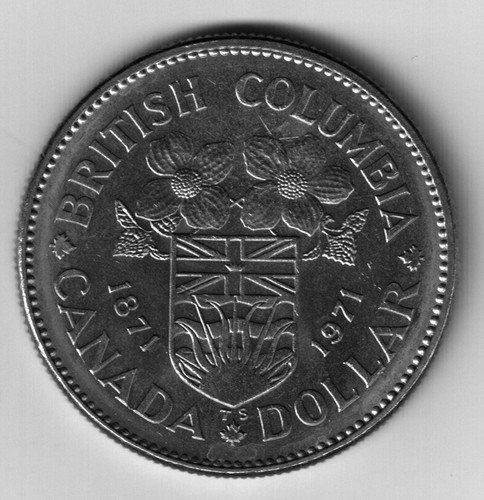
British Columbia Centennial Dollar
A 1958 Canadian silver dollar marking British Columbia's centennial, showing a Pacific Northwest totem pole and the dates 1858–1958.
Canadian & Provincial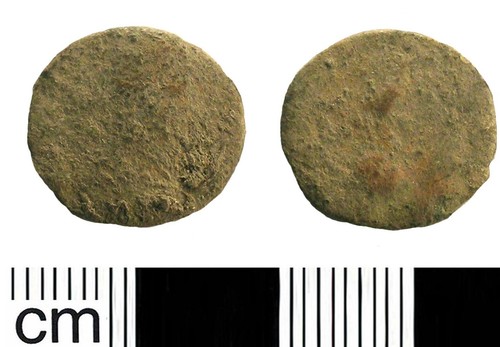
Half Centenionalis of Constans or Constantius II
A small mid-4th-century Roman bronze attributed to Constans or Constantius II, sons of Constantine the Great, worn but identifiable by its imperial portrait and era.
Ancient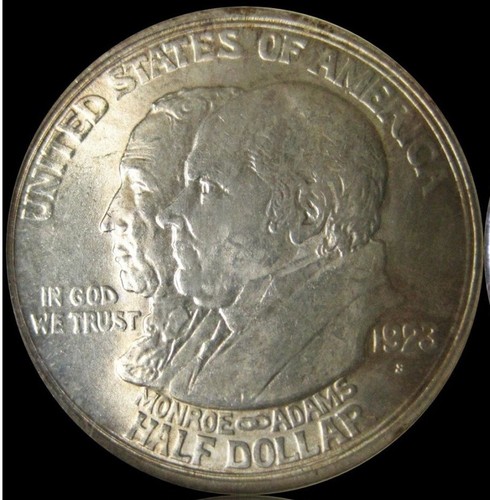
Monroe Doctrine Centennial Half Dollar
A 1923 U.S. silver commemorative half dollar marking the centennial of the Monroe Doctrine, with jugate portraits of James Monroe and John Quincy Adams.
Classic Commemorative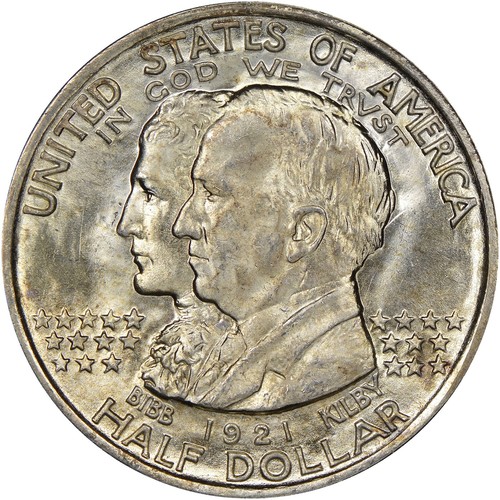
Alabama Centennial Half Dollar
A 1921 U.S. silver half dollar marking a century of Alabama statehood, with jugate governor busts and a state eagle; issued in plain and scarcer 2×2 varieties.
Classic Commemorative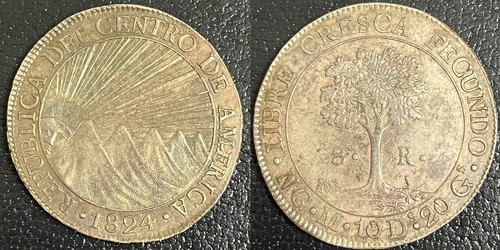
Central American Republic 8 Reales
A silver 8 reales of the Central American Republic, showing a rayed sun rising over mountains on one side and a tree on the other, dated 1824.
Circulation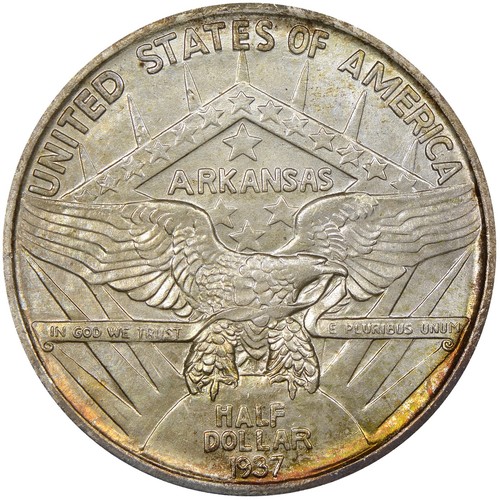
Arkansas Centennial Half Dollar (Robinson)
A 1936 U.S. silver commemorative half dollar pairing a portrait of Senator Joseph T. Robinson with the Arkansas Centennial eagle; a scarce one-year Philadelphia issue.
Classic Commemorative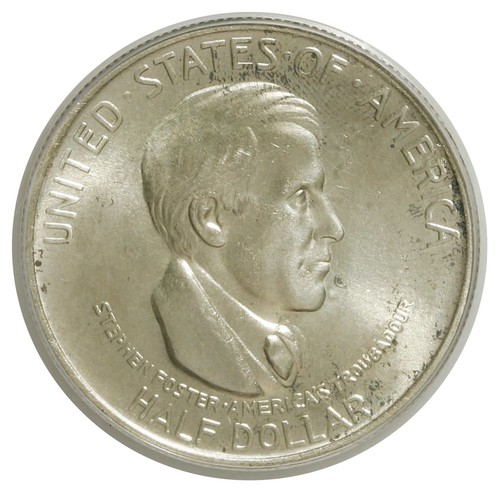
Cincinnati Music Center Half Dollar
A 1936 U.S. silver half dollar honoring Cincinnati as a music center, with composer Stephen Foster on the obverse and an allegorical figure with a lyre on the reverse.
Classic Commemorative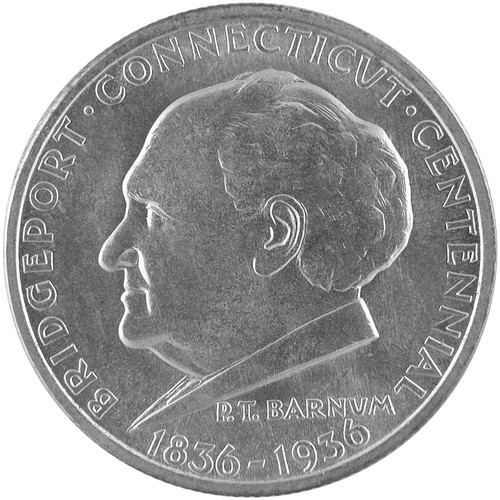
Bridgeport Centennial Half Dollar
A 1936 U.S. silver commemorative half dollar for Bridgeport, Connecticut's centennial, with a P.T. Barnum portrait and a bold Art Deco eagle.
Classic Commemorative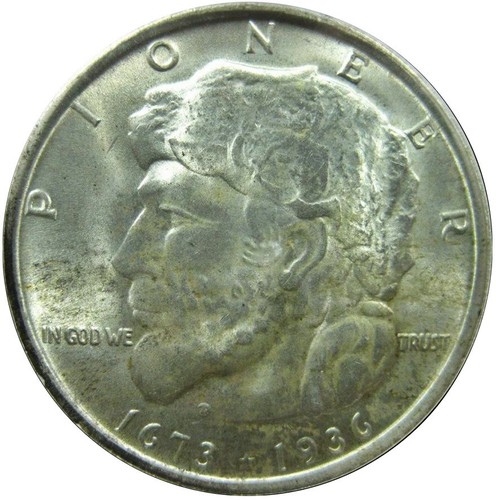
Elgin Illinois Centennial Half Dollar
A 1936 U.S. silver half dollar marking the centennial of Elgin, Illinois, with a bearded pioneer head and a pioneer-family memorial group on the reverse.
Classic Commemorative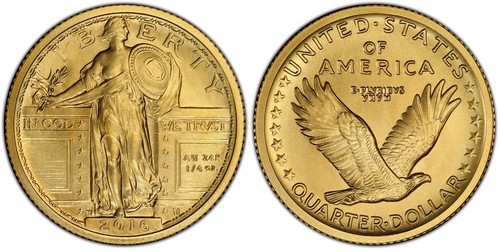
Standing Liberty Quarter Centennial Gold
A 2016 U.S. quarter-dollar struck in 1/4 oz of .9999 fine gold, reviving Hermon MacNeil's Standing Liberty design for its 100th anniversary.
Quarter