
Coin Encyclopedia
Search and identify coins from around the world — with country, denomination, metal, mint, history, and how to tell them apart.
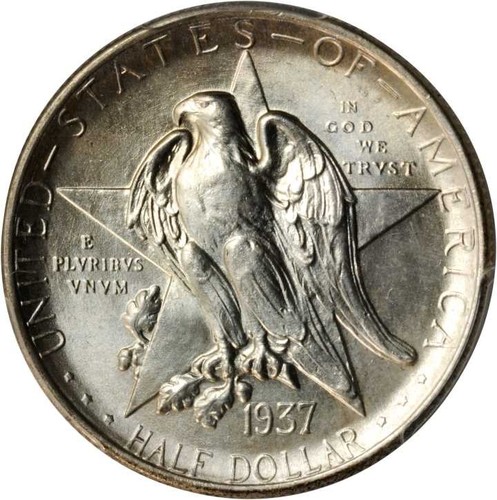
Texas Centennial Half Dollar
A U.S. silver commemorative half dollar (1934–1938) marking a century of Texas independence, with a spread-winged eagle over a large star on the obverse.
Classic Commemorative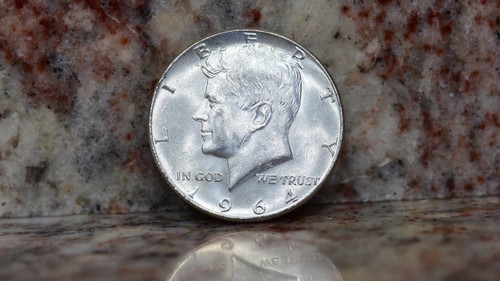
Kennedy Half Dollar
U.S. fifty-cent piece introduced in 1964 to honor President John F. Kennedy; the first-year 1964 coins were struck in 90% silver.
United States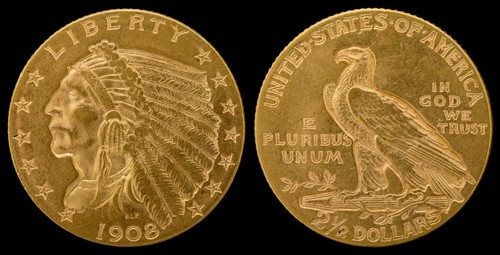
Indian Head Quarter Eagle
U.S. $2.50 gold coin of 1908–1929 with a sunken (incuse) design: an Indian in a feathered war bonnet on the obverse and a standing eagle reverse.
Quarter Eagle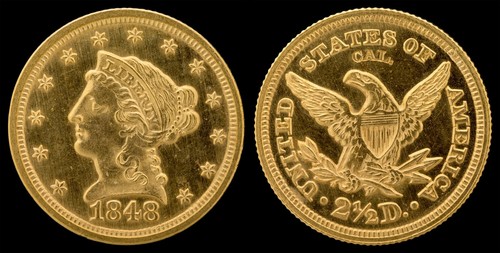
Liberty Head Quarter Eagle
U.S. $2.50 gold coin struck 1840–1907, with a coronet-crowned Liberty head obverse and a shield-breasted eagle reverse marked "2½ D."
Quarter Eagle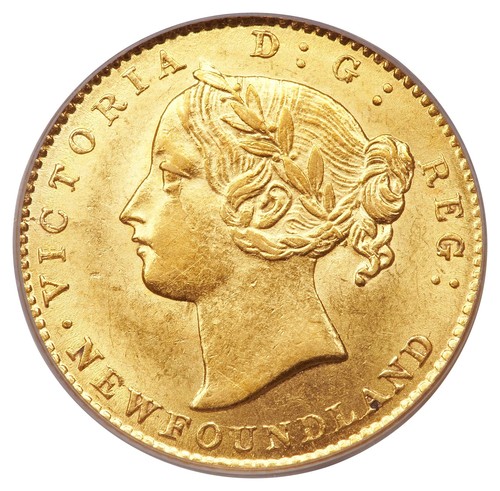
Newfoundland Two Dollars
Small gold two-dollar coin of the colony of Newfoundland; the only circulating coin ever denominated in dollars, cents, and pence together.
Canadian & Provincial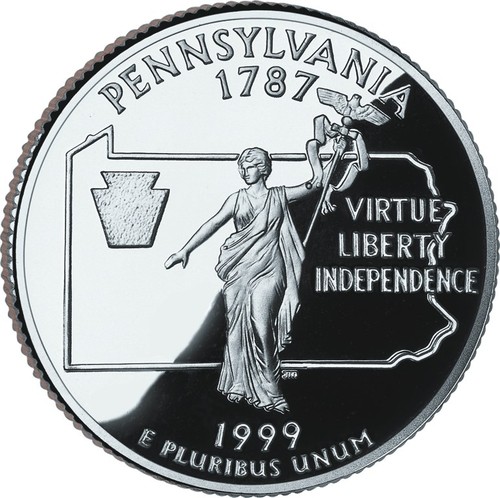
Pennsylvania State Quarter
1999 U.S. 25-cent piece, second in the 50 State Quarters series, showing the Commonwealth statue, state outline, and a keystone for Pennsylvania.
Quarter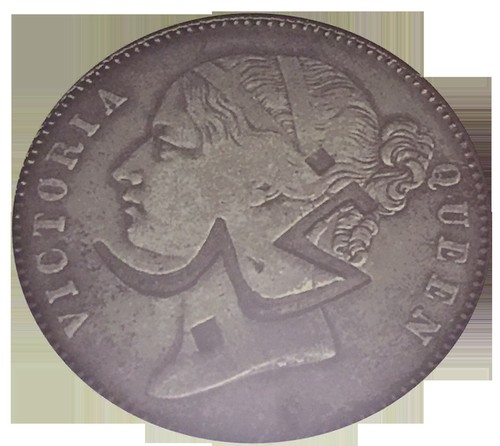
Najd Silver Coin
Silver trade coin catalogued to Najd, central Arabia, bearing a left-facing Victoria Queen bust and an 1862 date in the British India rupee style.
Arabia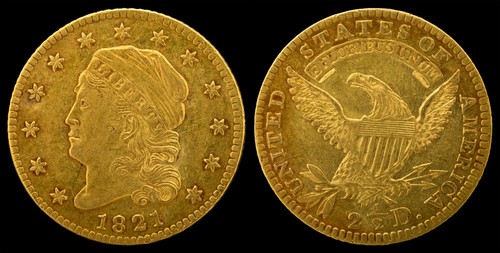
Capped Head Quarter Eagle
A rare early U.S. $2.50 gold coin struck 1821–1834, showing a left-facing capped Liberty head amid stars and a heraldic eagle with shield and E PLURIBUS UNUM.
United States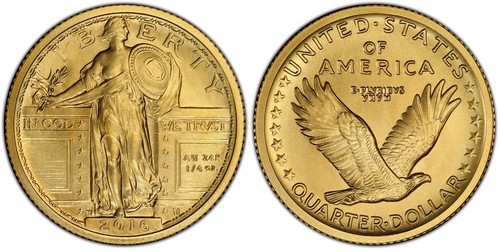
Standing Liberty Quarter Centennial Gold
A 2016 U.S. quarter-dollar struck in 1/4 oz of .9999 fine gold, reviving Hermon MacNeil's Standing Liberty design for its 100th anniversary.
Quarter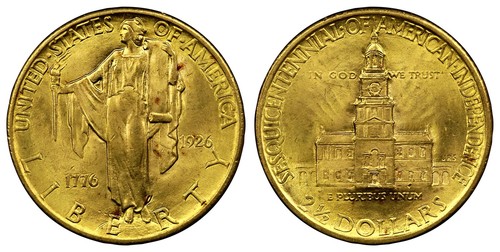
Sesquicentennial of American Independence Quarter Eagle
A 1926 U.S. commemorative $2.50 gold coin marking 150 years of American independence, with Liberty holding a torch and scroll and Independence Hall on the reverse.
Classic Commemorative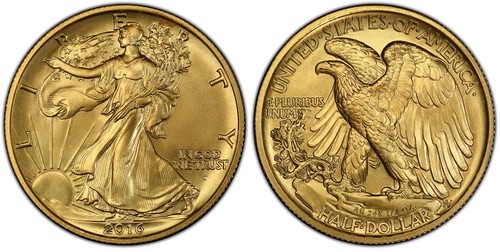
Walking Liberty Half Dollar Centennial Gold
A 2016-W gold collector coin marking the centennial of the 1916 Walking Liberty half dollar, struck in 1/2 oz of 24-karat gold at West Point.
Half Dollar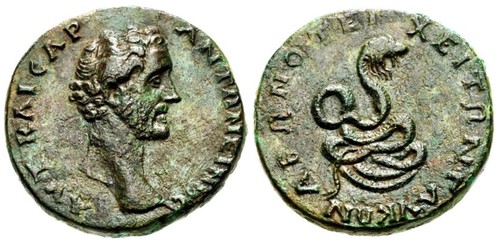
Glycon Bronze Coin
Roman provincial bronze of the 2nd century AD showing the snake-god Glycon: a bearded serpent head on one side and a coiled snake on the other.
Ancient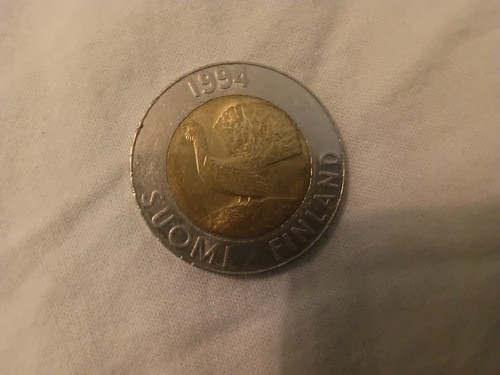
10 Markka
Finland's largest circulating markka coin: a bimetallic 10 markkaa with a capercaillie bird on the obverse, struck 1993–2001 until the euro.
World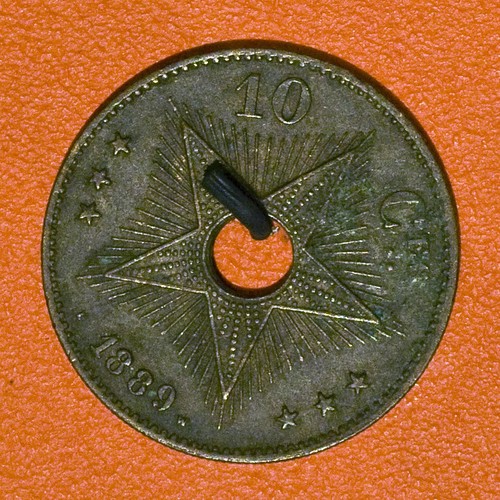
Congolese Commemorative Coin
An 1889 holed copper 10-centime coin of the Congo Free State, with a radiant five-pointed star, the value 10 C, and a ring of small stars.
World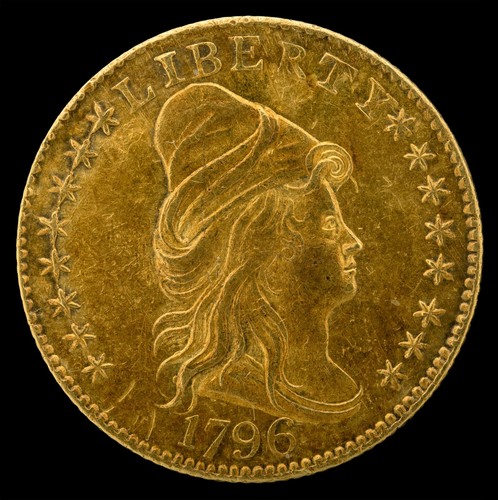
Turban Head Quarter Eagle
First U.S. $2.50 gold coin (1796), designed by Robert Scot; Liberty in a soft cap facing right with a heraldic eagle reverse. Extremely rare.
United States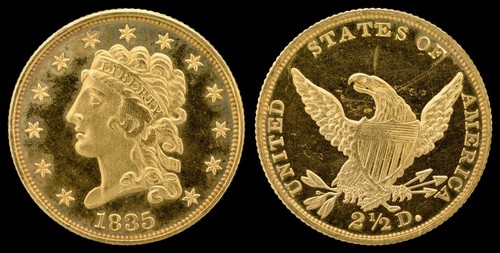
Classic Head Quarter Eagle
U.S. $2.50 gold coin struck 1834–1839, with a band-bound Liberty head obverse and a shield-breasted eagle reverse marked "2½ D."
Quarter Eagle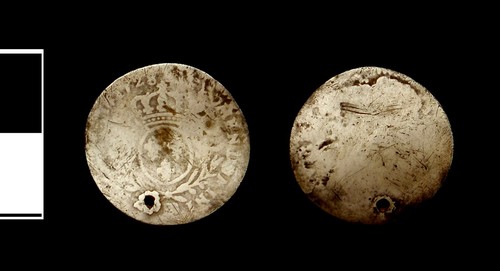
Unidentified Silver Coin (Louis XV era)
An 18th-century French royal silver coin of the Louis XV era, showing a right-facing bust and a crowned fleur-de-lis shield; the exact denomination is not confirmed.
Royal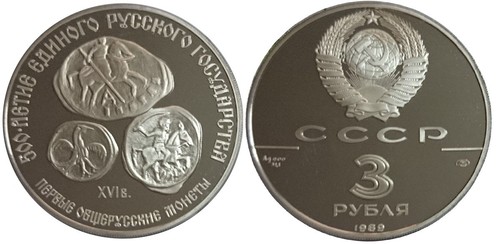
3 Roubles (First All-Russian Coins)
Soviet 1982 commemorative 3 Roubles honoring the first all-Russian coins, showing three historical 18th-century Russian coins with the state emblem reverse.
Commemorative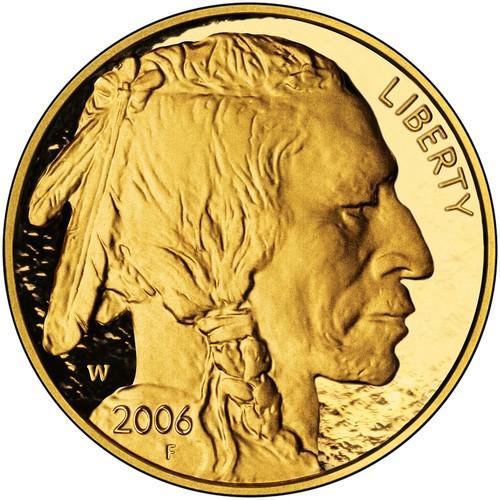
Buffalo Nickel
Iconic U.S. five-cent coin struck 1913–1938, with a Native American profile on the obverse and a standing American buffalo on the reverse.
Nickel Five Cent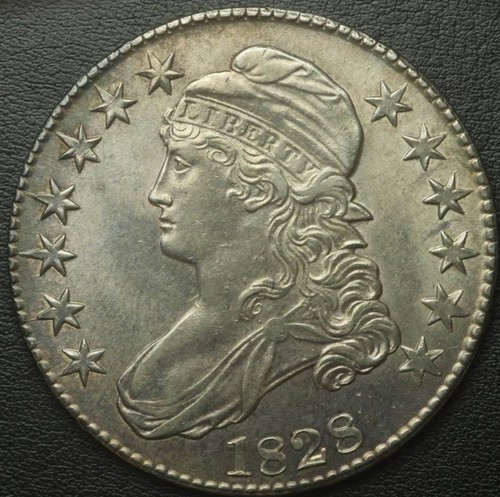
Capped Bust Half Dollar
U.S. fifty-cent silver coin struck 1807–1839, showing Liberty in a Phrygian cap surrounded by stars and a heraldic eagle on a shield.
Half Dollar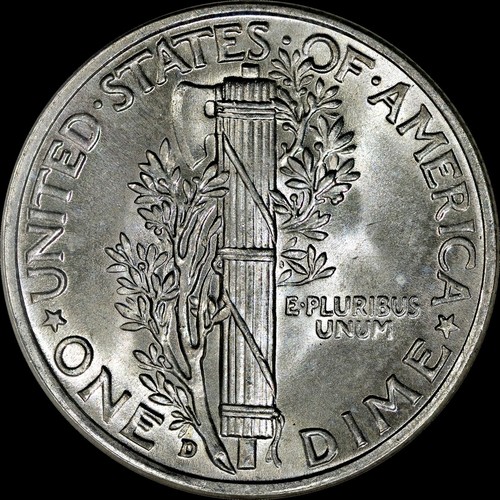
Mercury Dime
U.S. silver ten-cent coin struck 1916–1945, showing a winged-cap Liberty head on the obverse and a fasces with an olive branch on the reverse.
Dime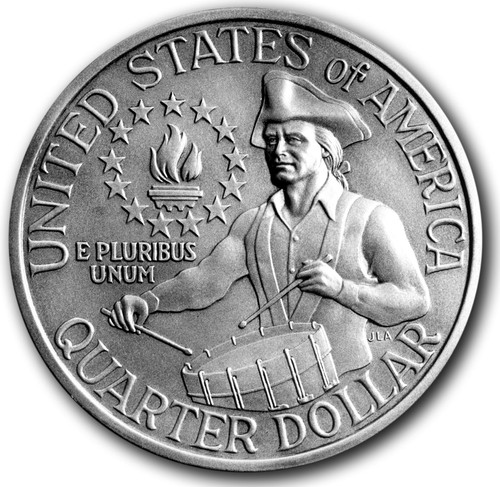
Bicentennial Quarter
U.S. 25-cent coin issued for the 1976 Bicentennial, pairing Washington's portrait with a Colonial drummer and the dual date 1776-1976.
Quarter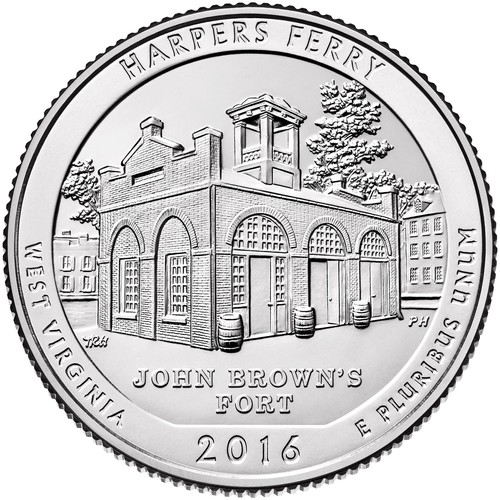
Harpers Ferry Quarter
U.S. 25-cent coin from the 2016 America the Beautiful series, showing John Brown's Fort at Harpers Ferry National Historical Park, West Virginia.
Quarter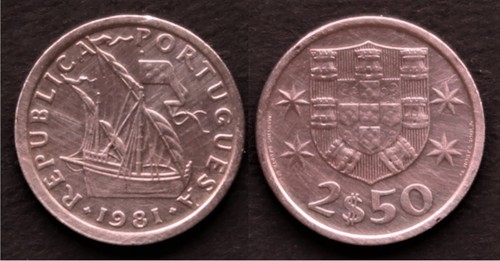
2.5 Escudos
A copper-nickel 2.5 Escudos of the Portuguese Republic, showing a sailing caravel on the obverse and the national shield with the value 2$50.
Modern