
Coin Encyclopedia
Search and identify coins from around the world — with country, denomination, metal, mint, history, and how to tell them apart.
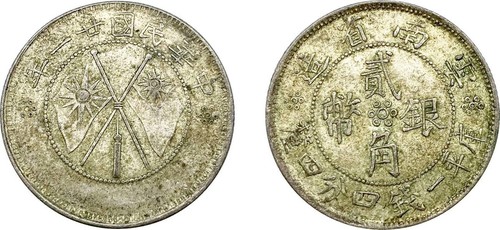
Yunnan 20 Cents
A 1932 provincial silver 20 Cents from Yunnan, China, with a radiant sun and rays on one face and central Chinese value characters framed by ornament on the other.
Circulation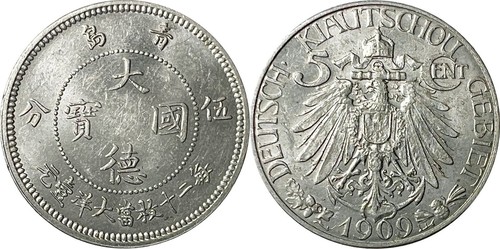
Kiautschou 5 Cents
A 1909 nickel 5 Cent coin of the German-leased Kiautschou Bay territory in China, pairing Chinese characters with the German imperial eagle.
Colonial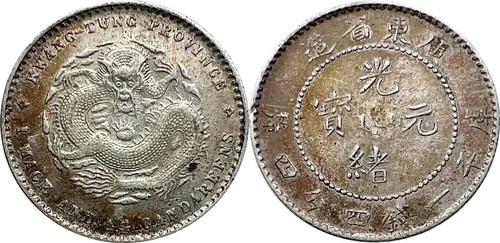
Guangdong 20 Cents
A silver 20-cent coin of Kwangtung (Guangdong) province, struck under the Guangxu Emperor with a coiled dragon on one side and Chinese legends on the other.
Circulation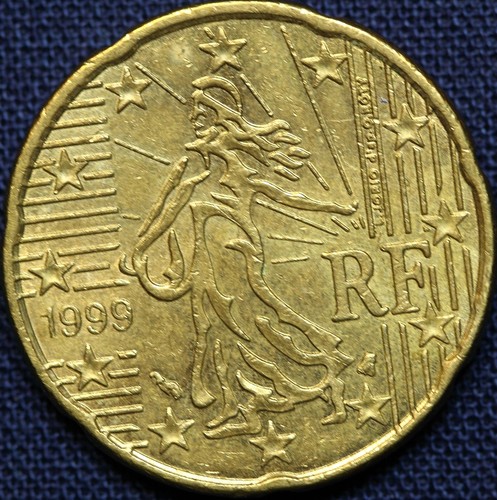
France 50 Cent Euro
France's gold-coloured 50 euro cent coin, showing the striding Sower (Marianne) among the EU stars on one side and the value 50 on the other.
Circulation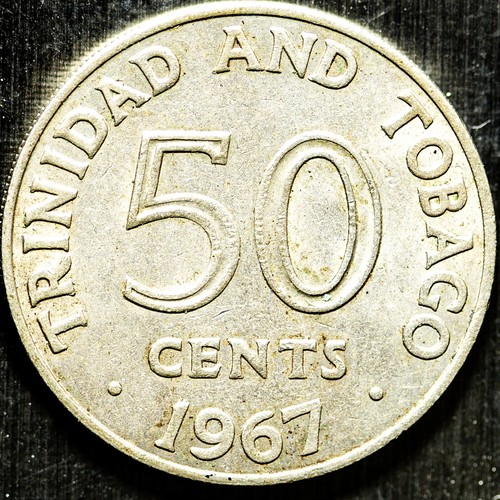
Trinidad and Tobago 50 Cents
A large copper-nickel Caribbean circulation coin; the 1967 example carries the national coat of arms and country name on the obverse and the 50-cent value on the reverse.
Circulation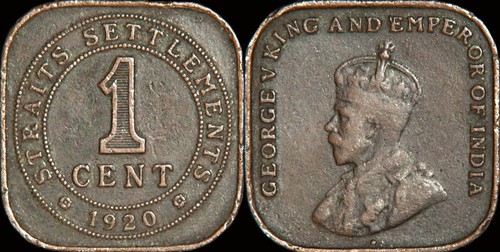
Straits Settlements One Cent
A round bronze one-cent coin of the British Straits Settlements bearing the crowned profile of King George V, dated 1920.
Colonial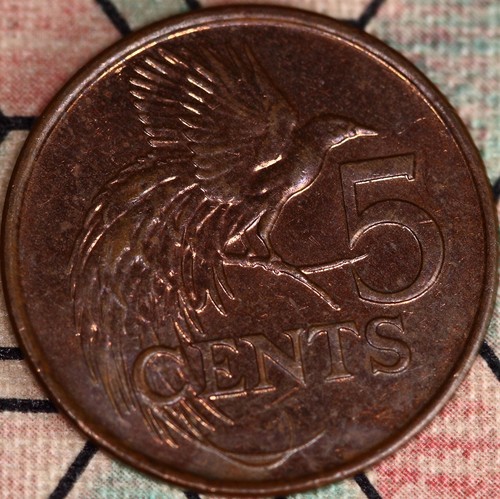
Trinidad and Tobago 5 Cents
A bronze five-cent coin of Trinidad and Tobago showing a perched bird — the Greater Bird of Paradise, often mistaken for a parrot — with FIVE CENTS on the reverse.
Circulation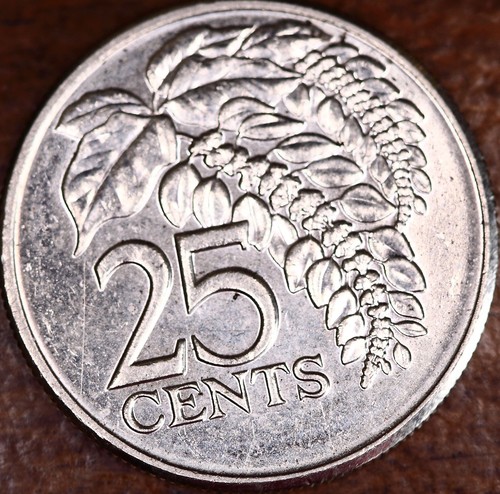
Trinidad and Tobago 25 Cents
A copper-nickel 25-cent coin of Trinidad and Tobago: a leafy national-flower plant design on one face and the value TWENTY FIVE CENTS on the other.
Circulation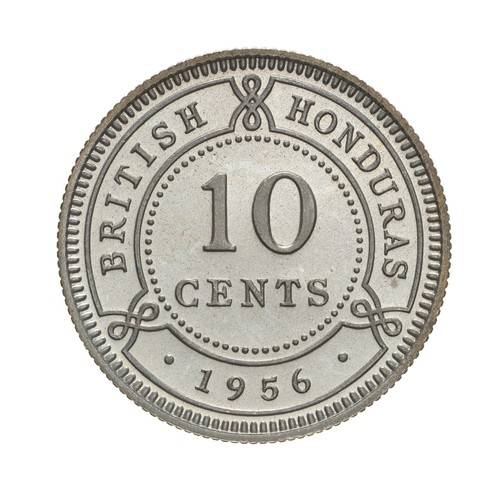
British Honduras 10 Cents
A silver-colored colonial 10 cents of British Honduras, with the Queen's portrait on the obverse and a plain 10 CENTS legend around BRITISH HONDURAS and the date.
Colonial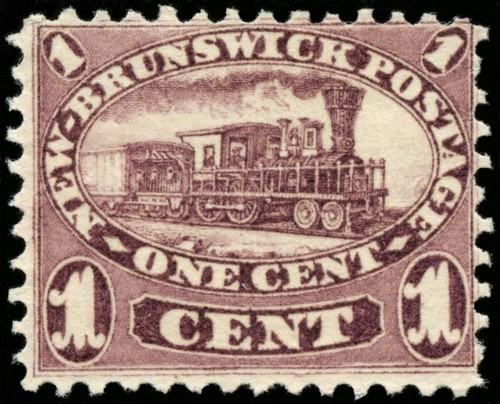
New Brunswick One Cent
A bronze one-cent piece dated 1860 showing a steam locomotive with NB and ONE CENT — a New Brunswick locomotive-type token distinct from the official 1861/1864 cent.
Canadian & Provincial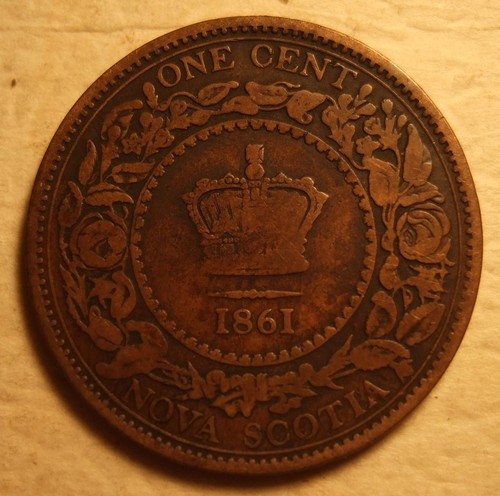
Nova Scotia One Cent
Bronze one-cent coin of the colony of Nova Scotia, with a crowned Queen Victoria obverse and a crown-and-maple-leaves reverse.
Canadian & Provincial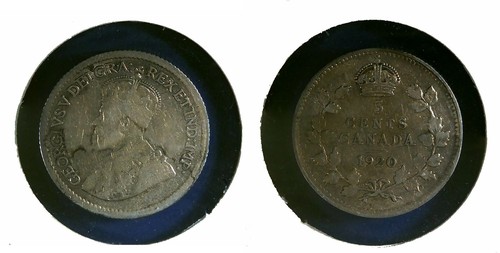
Canadian Five Cents (Nickel)
Canada's five-cent 'nickel,' with G.E. Kruger Gray's beaver reverse. This 1987 example pairs the beaver with an Elizabeth II portrait.
Canadian & Provincial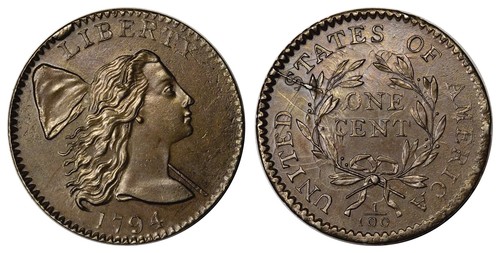
Flowing Hair Large Cent
An early U.S. copper cent showing Liberty with flowing hair and a liberty cap, ONE CENT in a wreath on the reverse; the photographed piece is dated 1794.
Large Cent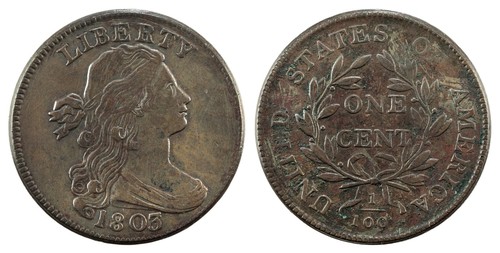
Draped Bust Large Cent
An early U.S. copper one-cent coin (1796–1807) showing a right-facing Liberty with flowing hair and drapery, larger and heavier than a modern cent.
United States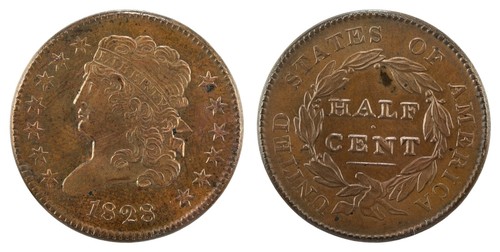
Classic Head Half Cent
A small U.S. copper half cent of 1809–1836 showing Liberty in a beaded headband ringed by stars, with a plain wreath and HALF CENT on the reverse.
Half Cent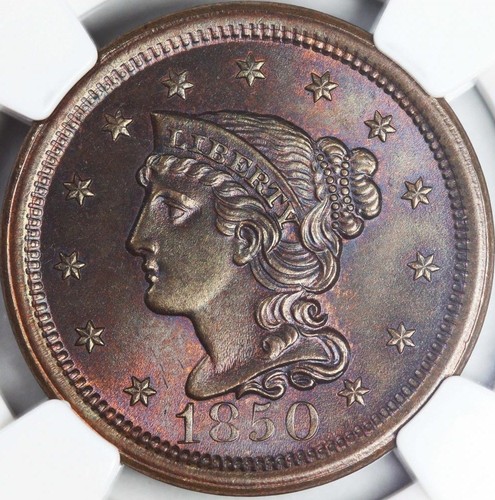
Braided Hair Large Cent
The last U.S. large copper cent: Liberty in a beaded coronet with braided hair, ringed by stars, over a laurel-wreath ONE CENT reverse.
Large Cent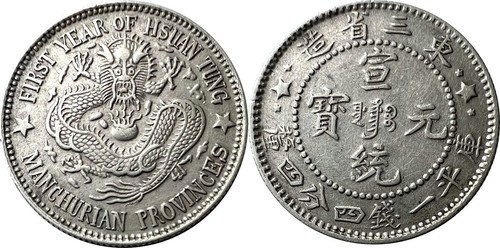
Xuantong Yuanbao 20 Cents
A small late-Qing silver 20-cent coin with a Western-style dragon, the English legend FIRST YEAR OF HSUAN TUNG, and Chinese characters reading Xuantong Yuanbao.
Circulation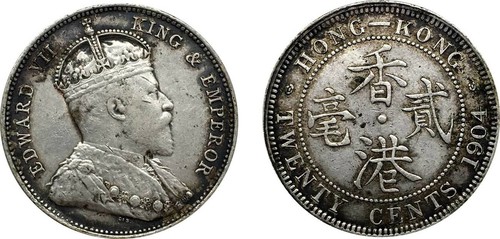
Hong Kong 20 Cents
A small British Hong Kong silver 20 Cents of Edward VII, with the crowned royal profile on one side and a Chinese dragon and value on the other.
Circulation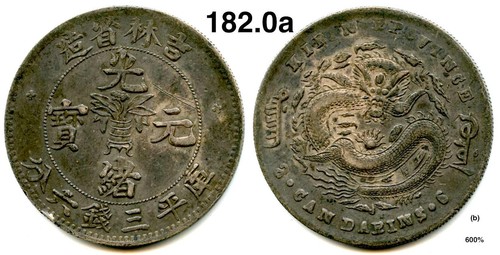
Guangxu Yuanbao 50 Cents
A Qing-dynasty silver half-dollar bearing the legend Guangxu Yuanbao and a coiled dragon, struck by Chinese provincial mints during the Guangxu Emperor's reign.
Circulation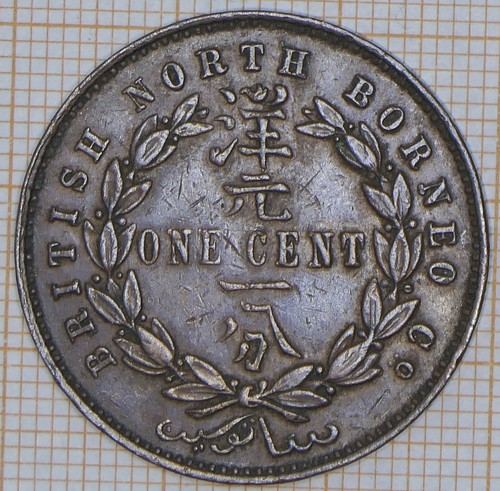
British North Borneo One Cent
A colonial copper cent of the British North Borneo Company: company arms with Dyak supporters and a sailing ship on one side, ONE CENT in a wreath on the other.
Colonial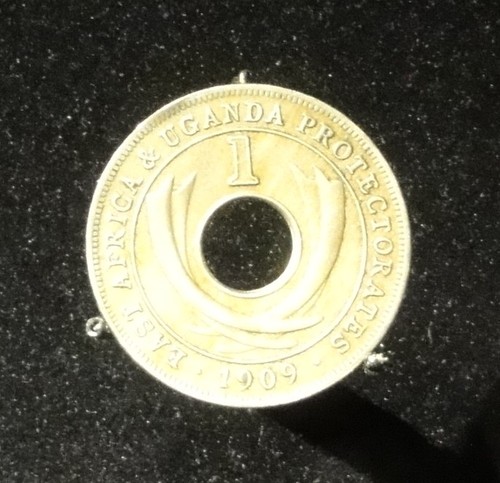
East Africa Protectorate 1 Cent
A small holed one-cent coin of the British East Africa Protectorate, struck in base metal with a crowned, portrait-free design around a central hole.
World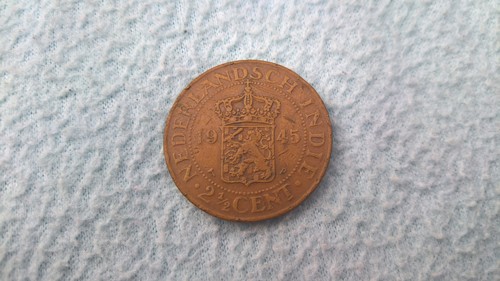
Netherlands East Indies 2 Cent
A wartime 1945 bronze 2-cent coin of the Dutch colony of the Netherlands East Indies, showing the crowned Netherlands shield and an ornate colonial reverse.
Southeast Asia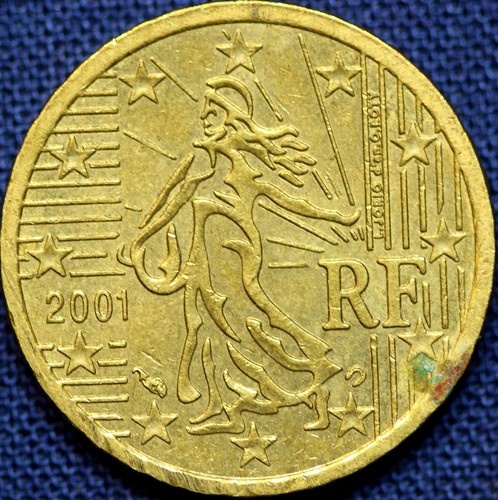
France 10 Cent Euro
France's gold-coloured 10 euro cent: the striding Sower for the French Republic on one side, a European map and the value 10 on the other.
Circulation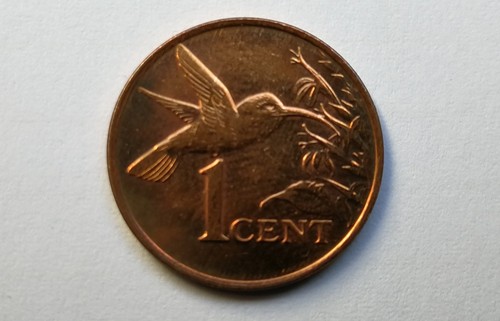
Trinidad and Tobago 1 Cent
The small copper-colored one cent of Trinidad and Tobago, with a hummingbird obverse and a plain value-and-name reverse.
Circulation