
Coin Encyclopedia
Search and identify coins from around the world — with country, denomination, metal, mint, history, and how to tell them apart.
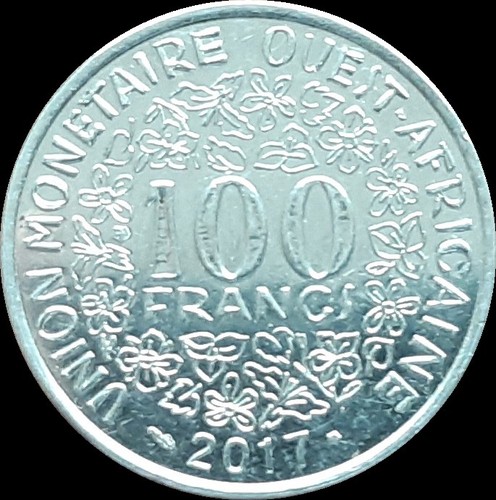
100 CFA Francs
A widely circulated West African coin bearing a crossed-sword emblem and a floral design, denominated 100 francs of the West African CFA franc.
World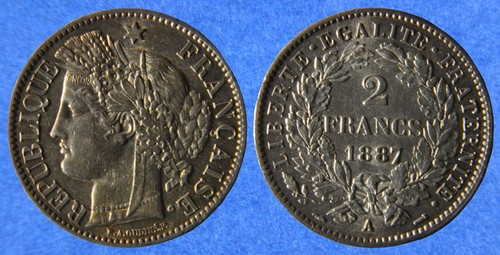
French Cérès 2 Francs
A French Third Republic silver 2 francs showing the goddess Cérès in a liberty cap, with the value 2 FRANCS in a wreath on the reverse.
Circulation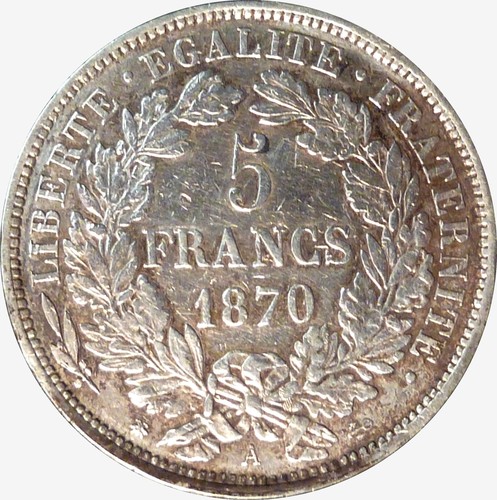
French Cérès 5 Francs
A large silver French 5 francs showing the head of Cérès, goddess of the harvest, wearing a liberty cap, with the republican motto LIBERTÉ ÉGALITÉ FRATERNITÉ.
Circulation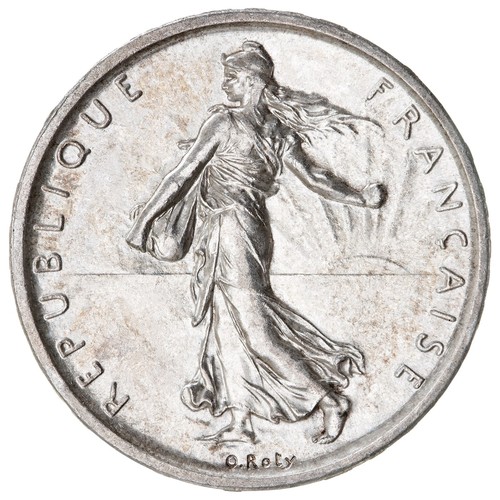
French Semeuse 5 Francs
A silver French 5-franc coin of the Fifth Republic showing the Sower (Semeuse) striding left, with a flowered wreath around the value on the reverse.
Circulation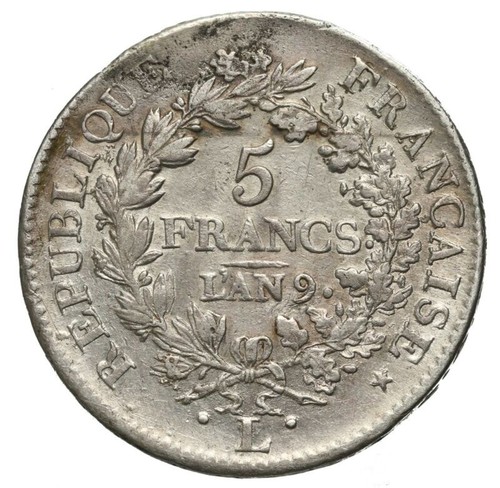
5 Francs (First Republic)
A large silver 5-franc crown of the French First Republic, dated by the revolutionary calendar as L'an 9 (1800–1801), with a right-facing Liberty head.
Circulation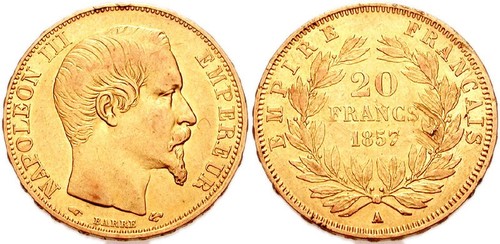
Napoleon III 20 Francs
French gold 20 francs of Emperor Napoleon III, showing his bare head facing right and a wreathed value on the reverse; example dated 1857.
World Coins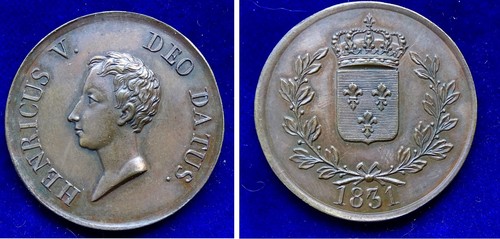
Henri V Five Francs
An 1831 French five-franc piece struck for the Legitimist pretender Henri V, showing his young profile and the royal fleur-de-lis shield.
World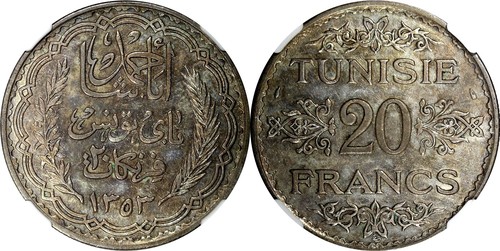
Tunisia 20 Francs (Brass)
A brass 20 francs of French-protectorate Tunisia dated 1950, with Arabic script and geometric design on one face and 'TUNISIE / 20 FRANCS' on the other.
World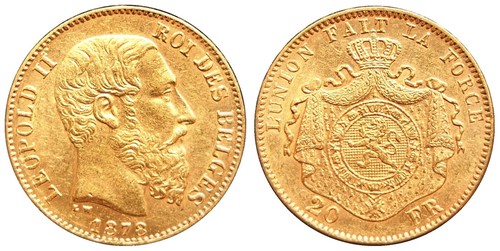
20 Francs (Leopold II)
Belgium's gold 20 francs under King Leopold II, a small Latin Monetary Union coin with the bearded king's profile and the crowned national arms.
Modern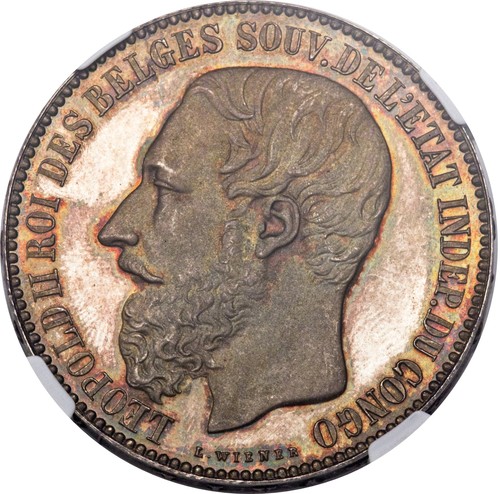
Belgian Congo 5 Francs (Copper)
A copper 5 Francs piece dated 1887 with a radiant star obverse and a crowned heraldic reverse reading CONGO BELGE, widely regarded as a fantasy or novelty type.
World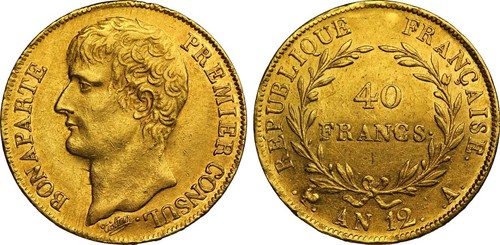
French 40 Francs Gold (Napoleon I)
A large early French gold coin showing Napoleon Bonaparte's left-facing profile and a wreathed reverse, struck in the opening years of his rule.
Bullion/gold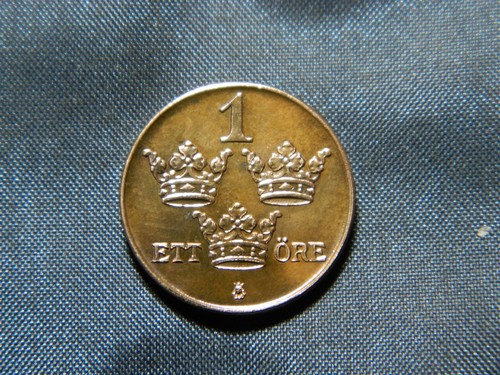
1 Öre
A small copper 1 öre of Sweden dated 1873, with a left-facing profile of King Oscar II, the legend SVERIGE OCH NORGE, and the value in a laurel wreath.
Modern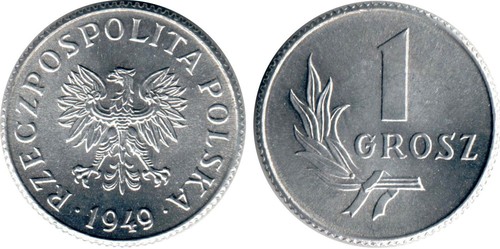
1 Grosz
A small 1949 Polish one-grosz coin bearing the crownless national eagle and RZECZPOSPOLITA POLSKA, with the value 1 GROSZ framed by grain on the reverse.
Modern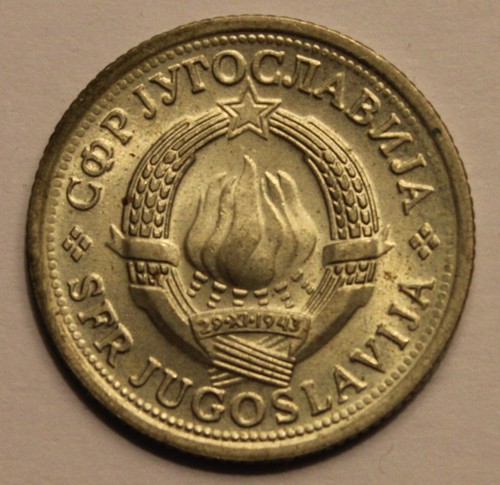
1 Dinar
A base-metal 1 dinar of Socialist Yugoslavia, dated 1978, with a star and SFRJ legend on one side and the socialist state emblem of flaming torches on the other.
Modern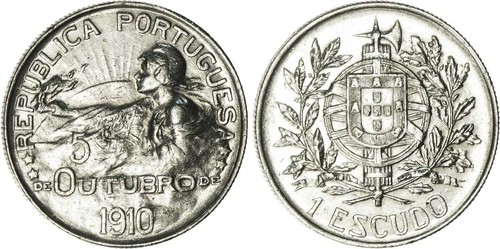
1 Escudo
Portugal's first silver escudo, struck in 1910 to mark the founding of the Republic, with an allegorical female head and the crowned national shield.
Modern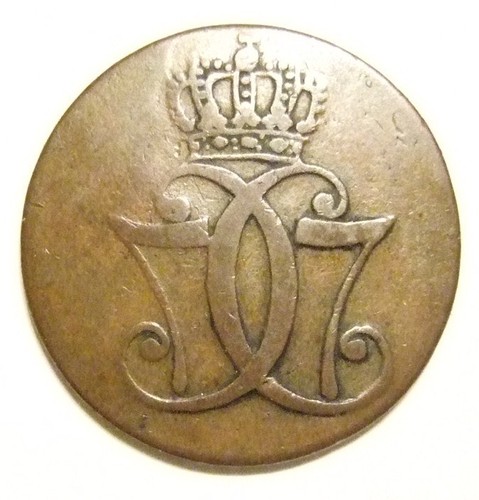
1 Skilling
A copper 1 skilling of Denmark dated 1771, with a royal crown over ornament on one side and an inscribed value design on the other.
Early Modern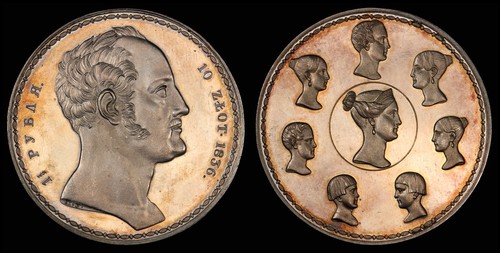
1½ Roubles
A large silver crown of Tsar Nicholas I, dual-valued at 1½ Roubles and 10 Zlotych for Russia and Congress Poland, with an eagle bearing many shields.
Modern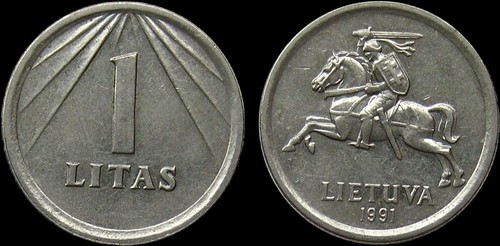
1 Litas
A 1991 Lithuanian one-litas coin from the first coinage after restored independence, showing the value with a radiating pattern and the Vytis knight of the national arms.
Modern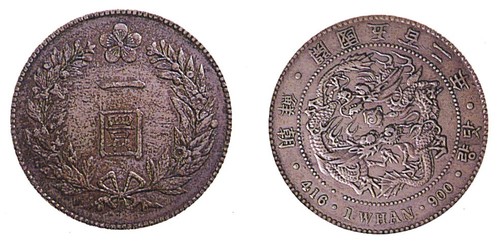
1 Hwan
A late-Joseon Korean bronze coin of one hwan, carrying a chrysanthemum-and-cartouche obverse and a traditional dragon motif with East Asian characters on the reverse.
Historic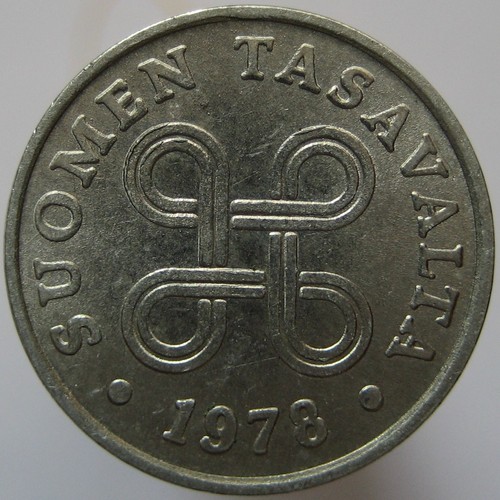
1 Penni
Finland's smallest post-1963 coin: a tiny light base-metal piece with a bold numeral 1 and SUOMI on the front and a geometric line pattern on the back.
World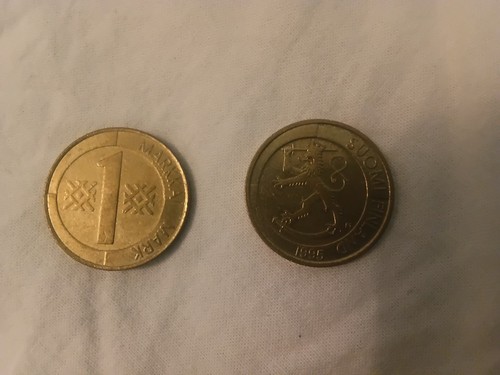
1 Markka
Finland's bimetallic one-markka coin (1993–2001), with a crowned heraldic lion on one face and a large numeral 1 on the other.
World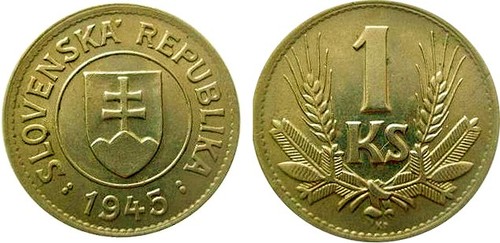
1 Koruna
A lightweight aluminum 1 Koruna of the wartime Slovak state, showing the double-cross national shield on one side and the value 1 Ks flanked by wheat ears.
Modern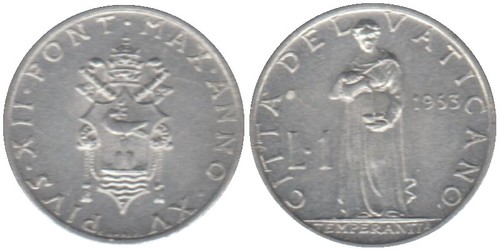
1 Lira
A tiny, lightweight Vatican City lira of the 1950s under Pius XII, with the tiara-and-keys arms on the obverse and a standing figure of Charity on the reverse.
Modern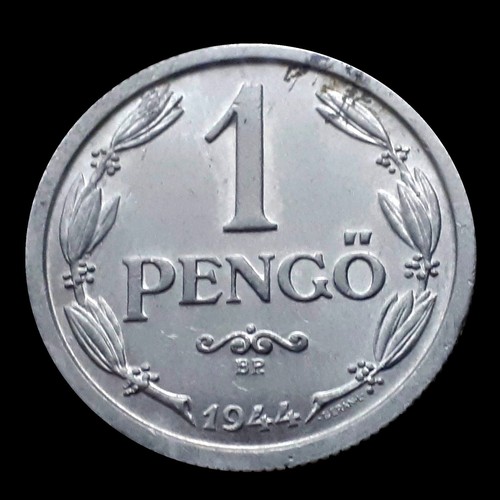
1 Pengő
Wartime Hungarian one pengő struck in lightweight aluminum, with an ornamental laurel-wreath design on one side and the value with the 1944 date on the other.
Modern