1½ Roubles
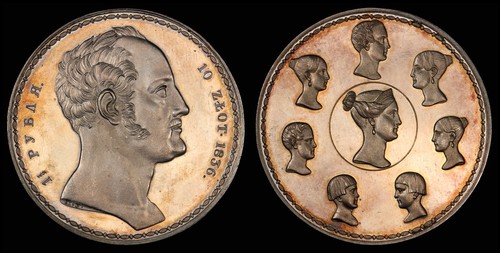
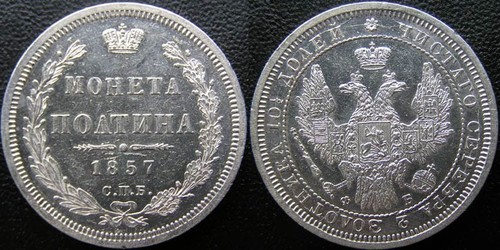
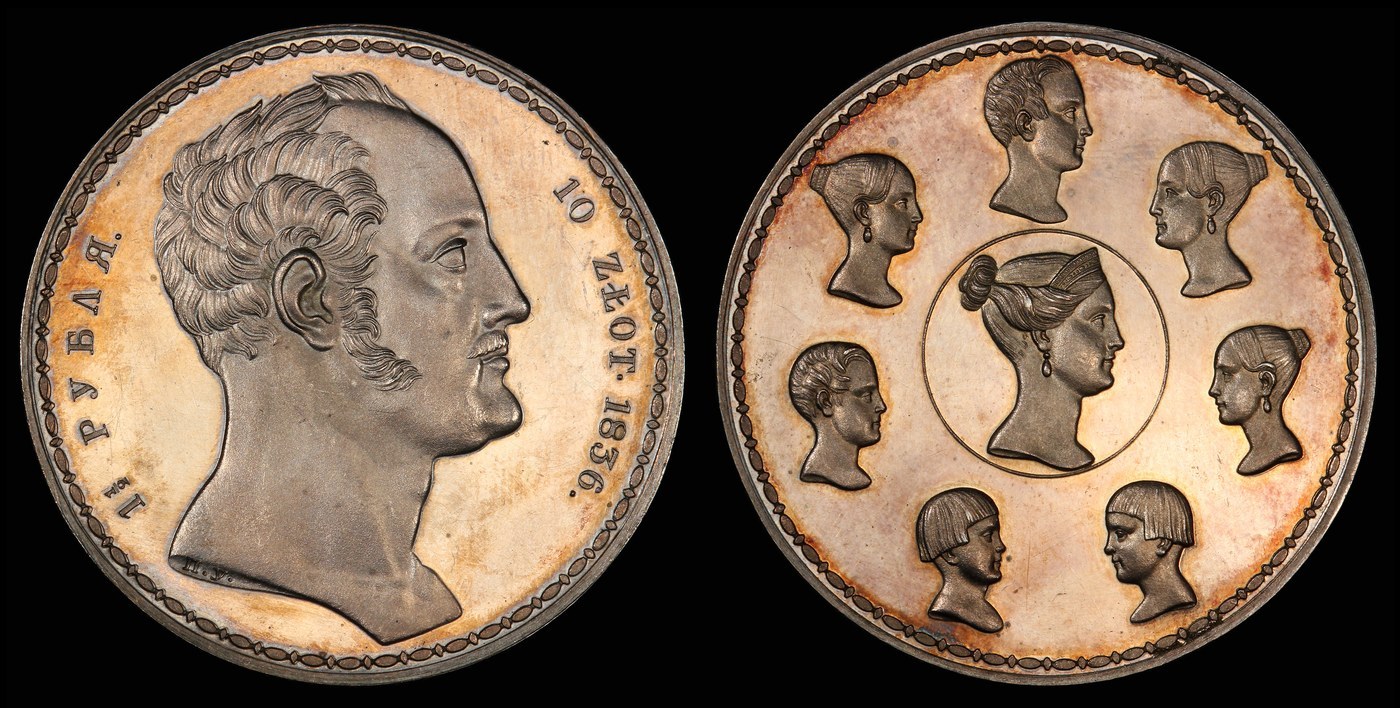
A large silver crown of Tsar Nicholas I, dual-valued at 1½ Roubles and 10 Zlotych for Russia and Congress Poland, with an eagle bearing many shields.
- Country
- Russia
- Denomination
- 1½ Roubles
- Metal
- Silver
Got a coin like this?
Identify any coin from a photo, free.
Overview
The 1½ Roubles is a large silver coin of the Russian Empire struck during the reign of Emperor Nicholas I. The example shown, dated 1836, carries the emperor's curled-hair profile on the obverse and a crowned double-headed eagle laden with heraldic shields on the reverse. It is a heavy, crown-sized piece rather than a small circulation coin.
What sets this issue apart is its dual denomination. Alongside the Russian value of 1½ Roubles it also states the value in Polish złotych, marking it as money for both the Russian Empire proper and the Kingdom of Poland (Congress Poland), which was joined to Russia under the tsar. The two figures represent the same coin at the fixed rate then in force.
Collectors prize the type as a striking example of imperial Russian silver and as a tangible relic of the Russo-Polish monetary union of the 1830s. Its size, the crowded eagle reverse, and the bilingual value make it instantly recognizable among Nicholas I issues.
History & Background
Nicholas I ruled Russia from 1825 to 1855. After the November Uprising of 1830-31 in the Kingdom of Poland was suppressed, the previously separate Polish coinage was progressively brought into line with the Russian system. One result was a series of dual-denomination silver coins, struck from the early 1830s into the early 1840s, that stated their value in both Russian roubles and Polish złotych.
The 1½ Roubles / 10 Złotych sat at the top of this joint series as its largest silver piece, equivalent to one and a half Russian roubles. These coins were produced at the imperial mints, with issues associated with both St. Petersburg and Warsaw during the years the type ran. They circulated as full-value silver in both parts of the realm.
The reverse eagle, spreading its wings over shields for the empire's various lands, expresses the composite nature of Nicholas I's state, while the paired values on the coin record the formal binding of Polish currency to the Russian standard in this period.
How to Identify
The obverse shows the bare-headed profile of Nicholas I with distinctive curled hair, encircled by a Russian legend naming the emperor. There is no crown on the head; the portrait is a classical bust in the style used across his larger silver coins.
The reverse is the key identifier: a crowned Imperial double-headed eagle whose spread wings and body carry multiple small heraldic shields for the constituent lands of the empire, with the orb and sceptre in its talons. Below or around the eagle the coin states its value twice, as 1½ Roubles in Russian and 10 Złotych in Polish, together with the date, here 1836.
This is a large, heavy silver coin of crown size, on the order of roughly 31 grams and about 40 mm across in a high silver fineness typical of imperial Russian issues. The combination of the curled-hair profile, the shield-laden eagle, and above all the dual Russian-and-Polish value distinguishes it from ordinary single-value roubles.
Value & Collectibility
The 1½ Roubles is a scarce and desirable 19th-century silver crown, worth far more than its metal. As a large coin struck for a limited dual-currency series over only a handful of years, surviving examples are collected across Russian, Polish and world-crown specialties, which supports steady demand.
Value turns heavily on grade, originality and eye appeal. Heavily worn or cleaned pieces sit at the lower end, presentable circulated coins bring a solid mid-range price, and sharp, original high-grade examples command substantial sums. Specific dates and mint variants within the series can differ significantly in scarcity.
Because this is a high-value type, it is also a target for counterfeits, so authentication matters to value. The figures here are general context rather than fixed quotes; actual prices depend on the individual coin, its date and the market at the time of sale.
Frequently asked questions
Why does the coin show two different values?
It is a dual-denomination coin for the Russian Empire and the Kingdom of Poland. The same piece is valued at 1½ Roubles in Russian and 10 Złotych in Polish, reflecting the fixed rate that tied Polish currency to the Russian standard under Nicholas I.
Who is on the obverse?
The obverse shows Emperor Nicholas I of Russia, portrayed bare-headed in profile with curled hair and surrounded by a Russian legend naming him.
What are all the little shields on the eagle?
The reverse double-headed eagle carries small heraldic shields for the various lands of the Russian Empire on its wings and body, a standard way of showing the composite territories ruled by the tsar.
Is it real silver?
Yes. It is a large silver crown struck to a high imperial Russian fineness, weighing on the order of 31 grams. It is genuine silver, not a plated or base-metal coin.
Is the 1836 date rare?
The whole 1½ Roubles / 10 Złotych type is scarce, and individual dates and mint variants vary in availability. Value is driven mainly by date, mint, and condition together rather than the year alone.
1½ Roubles guides
In-depth guides for identifying, valuing, and collecting 1½ Roubles.