
Coin Encyclopedia
Search and identify coins from around the world — with country, denomination, metal, mint, history, and how to tell them apart.
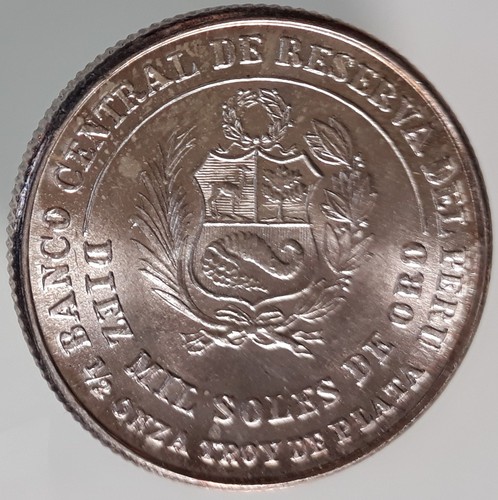
10,000 Soles de Oro
A large Peruvian silver coin of 10,000 soles de oro, its obverse bearing the national coat of arms with the vicuna, cinchona tree and cornucopia.
Circulation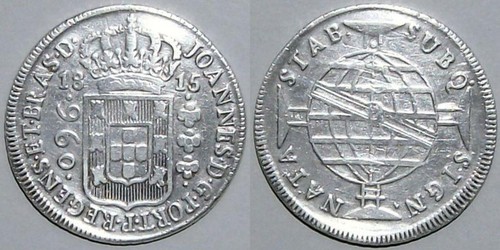
Patacao
A Portuguese silver coin known as the patacao, a larger member of the pataca family, carrying the royal coat of arms and a crowned heraldic shield.
Circulation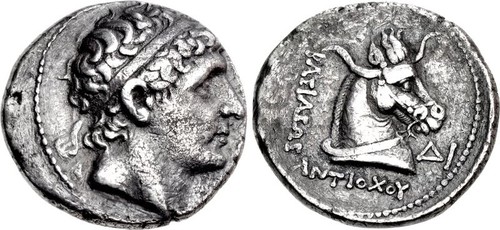
Tetradrachm of Antiochos I Soter
A large Seleucid-era silver coin of Antiochos I Soter, showing a helmeted bearded royal head and a standing elephant, a symbol of eastern military power.
Ancient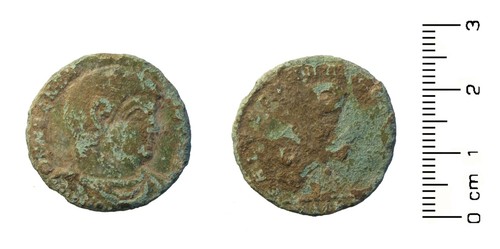
Nummus of Magnentius
A late Roman bronze struck for the usurper Magnentius (AD 350-353), noted for its bold bare-headed portrait and large Chi-Rho reverses.
Ancient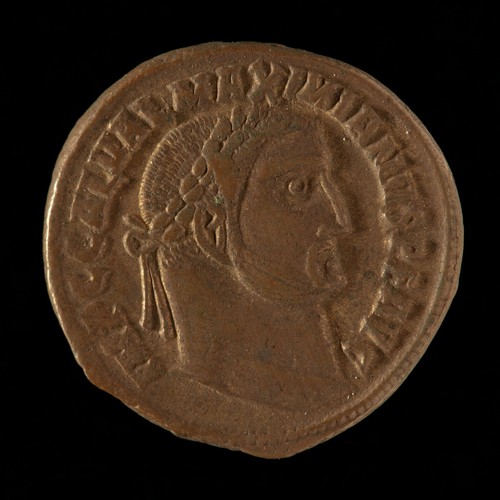
Follis of Galerius
A large silvered bronze follis of the emperor Galerius (Augustus AD 305-311), struck across the Tetrarchic mints with a laureate portrait and a standing deity reverse.
Ancient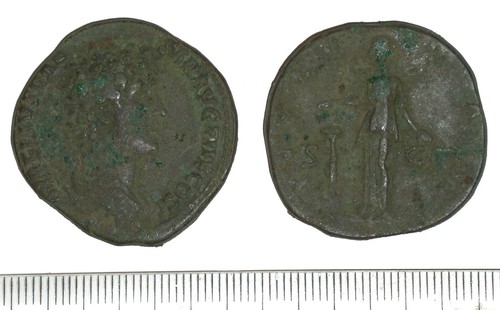
Sestertius of Marcus Aurelius
A large Roman bronze sestertius struck during the reign of Marcus Aurelius (161–180 CE), with his laureate portrait facing right and a Latin legend.
Ancient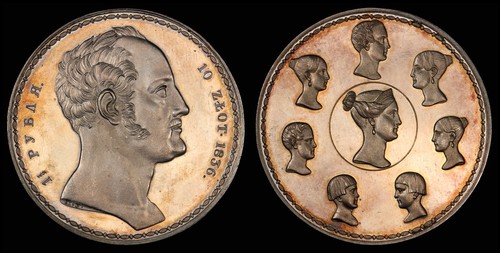
1½ Roubles
A large silver crown of Tsar Nicholas I, dual-valued at 1½ Roubles and 10 Zlotych for Russia and Congress Poland, with an eagle bearing many shields.
Modern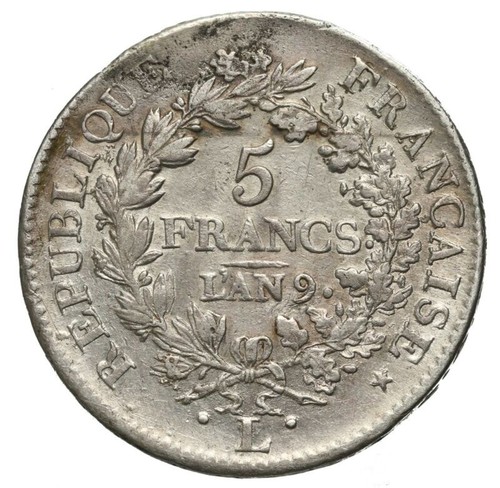
5 Francs (First Republic)
A large silver 5-franc crown of the French First Republic, dated by the revolutionary calendar as L'an 9 (1800–1801), with a right-facing Liberty head.
Circulation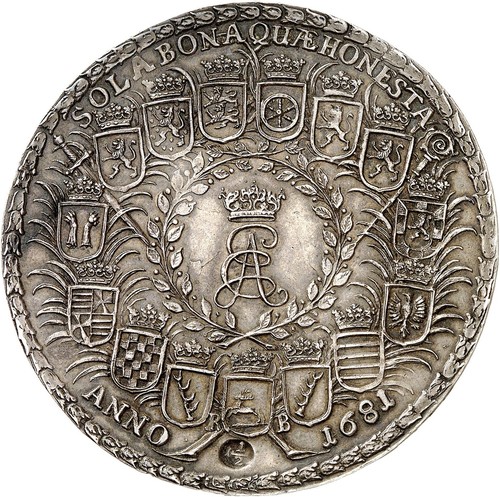
Hanover-Luneburg 1.5 Thaler
A large silver 1.5 Thaler of Brunswick-Luneburg (Hanover), dated 1681, with a busy multi-shield heraldic design and the motto SOL BONA QUE HONESTA.
German States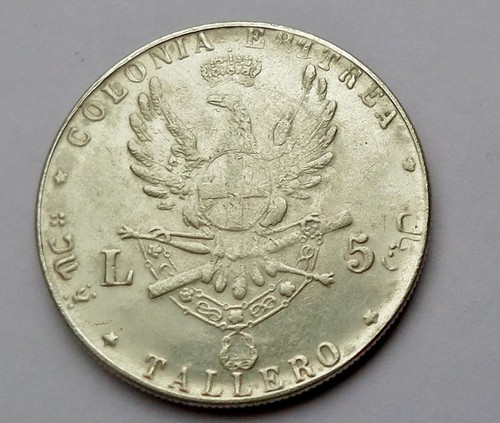
Eritrea 1 Tallero
A large silver trade dollar struck for Italian Eritrea under King Umberto I, carrying crowned heraldic arms and a Savoy eagle, dated 1891.
World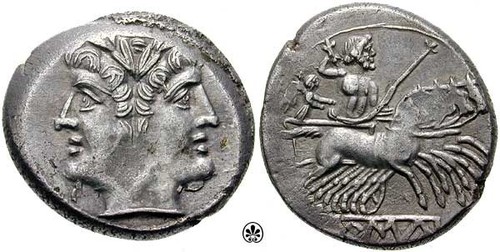
Roman As
A base-metal As of ancient Rome, showing the double-faced head of Janus on one side and a chariot with ROMA on the other.
Ancient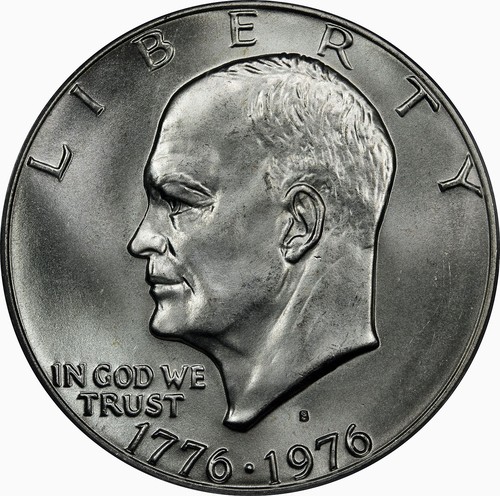
Eisenhower Dollar Bicentennial
U.S. one-dollar coin for the 1976 Bicentennial, with Eisenhower's profile and a special Liberty Bell superimposed on the Moon reverse.
Dollar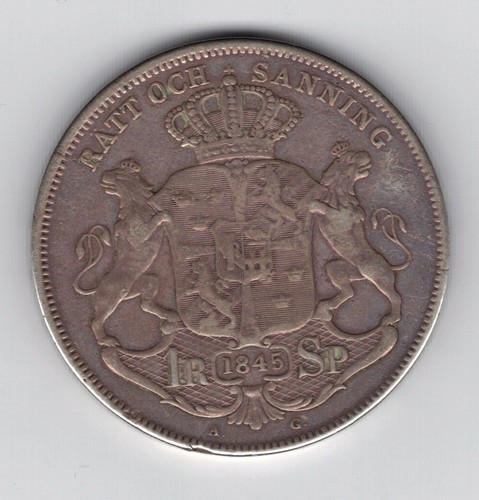
1 Riksdaler Specie
Large silver Riksdaler Specie of Sweden under King Oscar I, dated 1845, bearing his right-facing portrait, royal motto, and the Swedish coat of arms.
Modern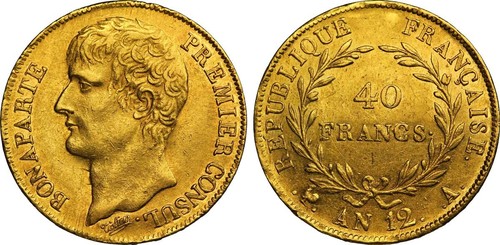
40 Francs Napoleon
A large early French gold 40 francs of Napoleon's Consulate, with the bare-headed BONAPARTE PREMIER CONSUL bust and a laurel-framed 40 FRANCS reverse dated 1804.
Bullion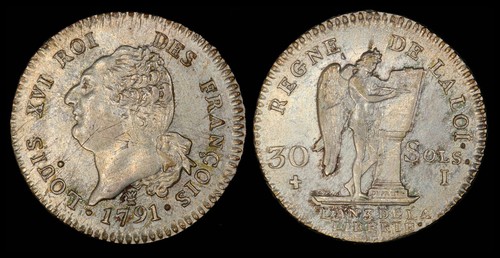
French 30 Sols
A silver coin of the early French Revolution showing Louis XVI as constitutional king on one side and a standing Liberty on the other.
Revolutionary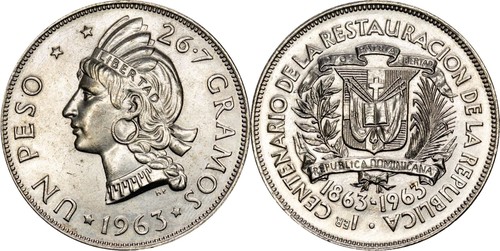
Restoration Anniversary Peso
A silver Dominican one-peso commemorative dated 1963, marking the centennial of the Restoration, with a Liberty head obverse and the national arms.
Commemorative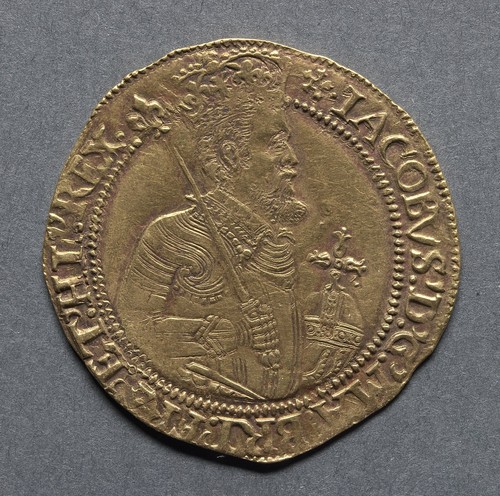
Unite of James I
A hammered gold pound coin of James I, named to celebrate the union of England and Scotland under one crown.
Hammered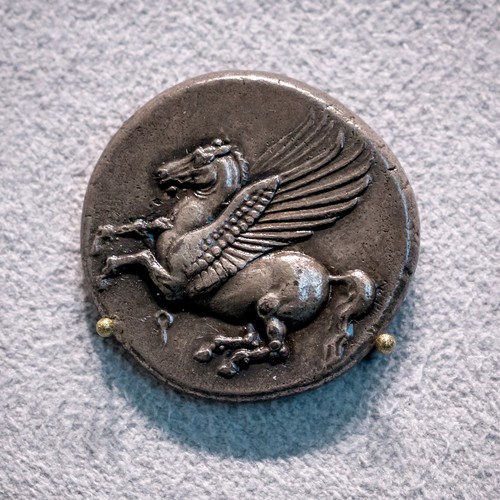
Corinthian Stater
Silver stater of ancient Corinth showing the winged horse Pegasos on one side and the helmeted head of Athena on the other.
Ancient Coins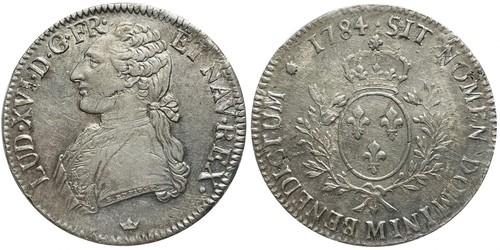
Ecu of Louis XIV
A large silver crown of Louis XIV, the Sun King, showing his laureate or wigged bust facing left and a crowned French shield of fleur-de-lis, dated 1693.
Royal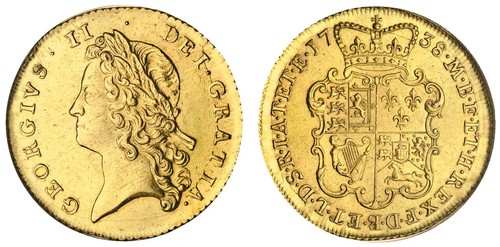
Two Guineas of George II
A large milled gold two-guinea piece of George II, with his left-facing laureate head and a crowned garnished shield of the royal arms; the pictured coin is dated 1738.
Milled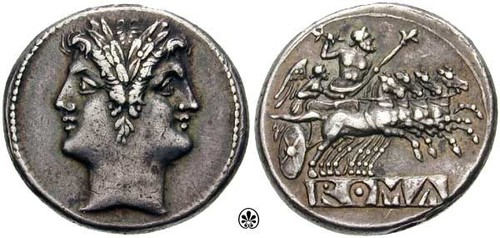
Roman As/Dupondius (Uncertain)
An uncertain Roman bronze As or Dupondius: a double-faced Janus head on one side and a ship (galley/prow) with ROMA below on the other.
Ancient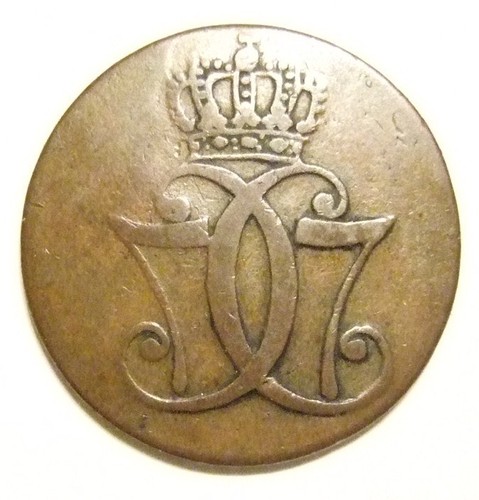
1 Skilling
A copper 1 skilling of Denmark dated 1771, with a royal crown over ornament on one side and an inscribed value design on the other.
Early Modern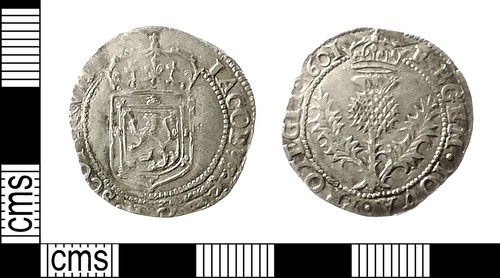
Half Thistle Merk
A hammered Scottish silver half merk of James VI, showing a crowned coat of arms on one side and a crowned thistle on the other.
Hammered
Scottish Shilling
A historical Scottish silver shilling featuring the thistle, Scotland's national emblem, in a heraldic design on one face and as a growing plant on the other.
World Coin