
Coin Encyclopedia
Search and identify coins from around the world — with country, denomination, metal, mint, history, and how to tell them apart.
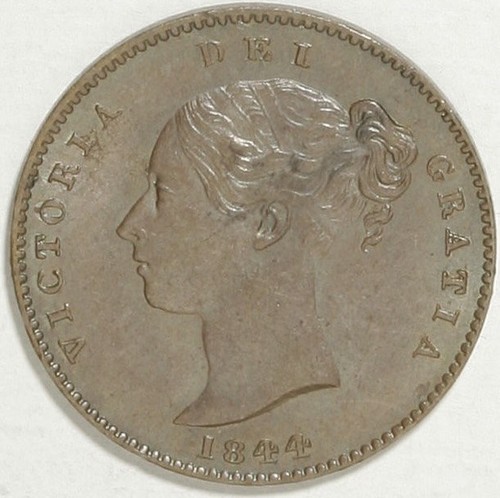
British Third Farthing
A tiny 1844 Victoria copper coin: young left-facing queen's bust obverse, crowned value reverse. One of Britain's smallest denominations, struck for Malta.
Circulation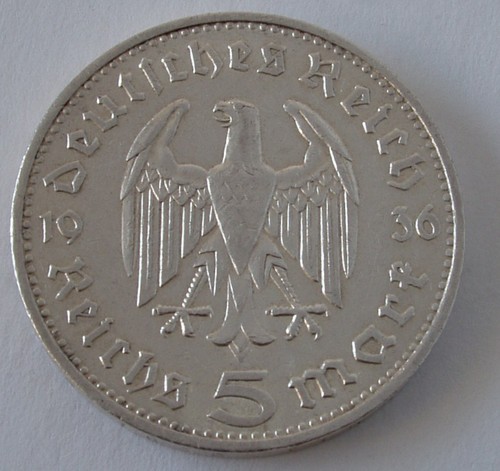
German 5 Reichsmark (Hindenburg)
German silver 5 Reichsmark of the Third Reich, pairing a portrait of Paul von Hindenburg with an eagle-and-swastika reverse; dated 1936.
Circulation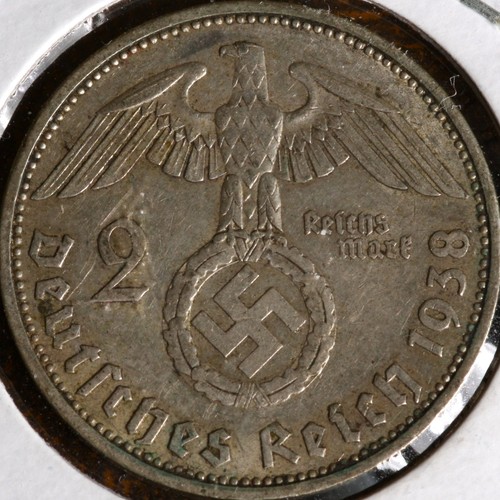
German 2 Reichsmark (Hindenburg)
Third Reich silver 2 Reichsmark showing an eagle over a swastika shield and, on the other side, Paul von Hindenburg with the value and date.
Circulation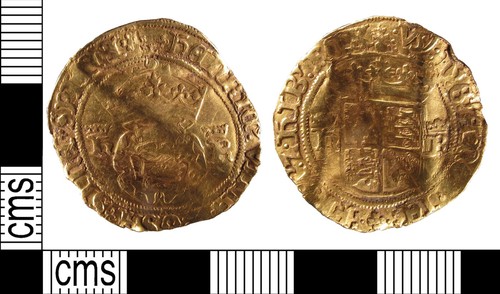
Gold Crown of Henry VIII (Third Coinage)
A hammered Tudor gold crown of five shillings struck during Henry VIII's Third Coinage, the debased issue that earned him the nickname "Old Coppernose."
Hammered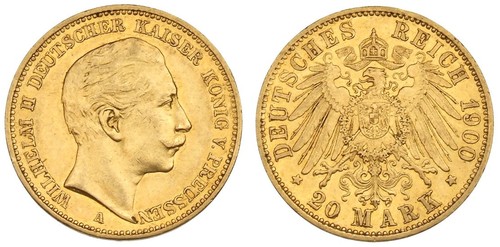
German 20 Mark Gold
German Empire gold 20 mark of Prussia, with Kaiser Wilhelm I's bust and the imperial eagle; a small .900 gold coin from the pre-WWI Goldmark era.
Bullion/gold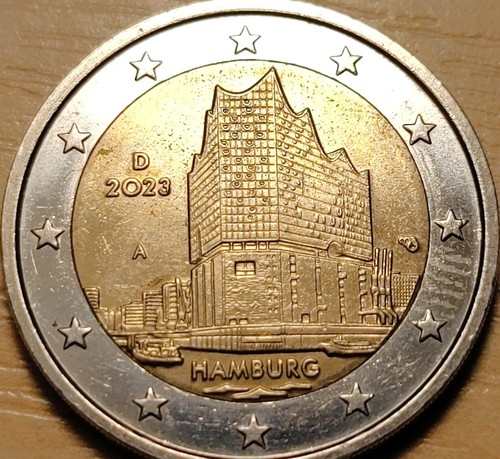
Germany 2 Euro Elbphilharmonie Commemorative
A 2017 German bi-metallic 2 euro commemorative for Hamburg, showing the Elbphilharmonie concert hall with the common European reverse.
Commemorative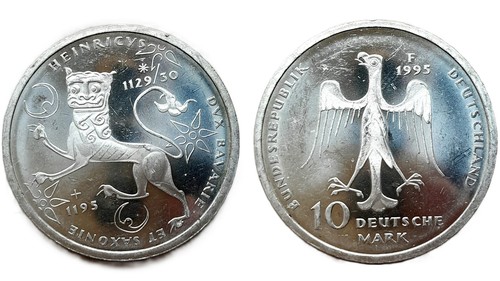
German 10 Deutsche Mark Commemorative
A West/unified German silver 10 Deutsche Mark commemorative; this 1995 issue honors Heinrich der Loewe (Henry the Lion) with the Federal Eagle reverse.
Commemorative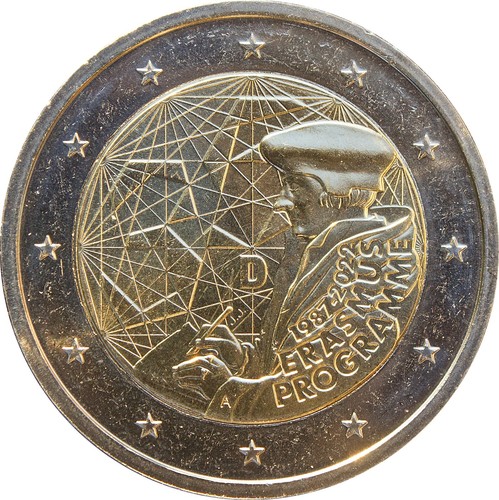
Germany 2 Euro Erasmus Programme Commemorative
A German 2 Euro commemorative dated 2022 marking the Erasmus Programme, its obverse showing a student figure with a globe and the reverse the ring of European stars.
Commemorative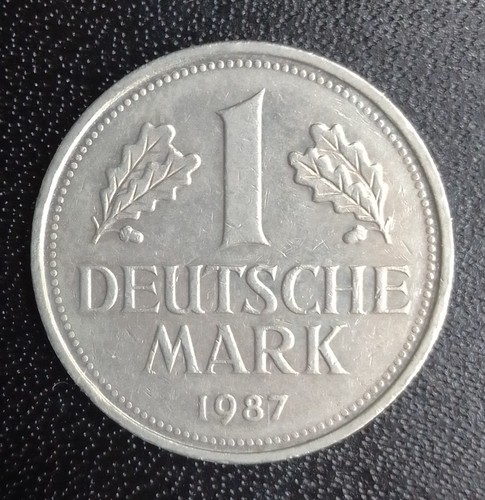
German 1 Deutsche Mark
The workhorse 1-Mark coin of West Germany and reunified Germany, showing a large numeral 1 framed by oak leaves and the words DEUTSCHE MARK.
Circulation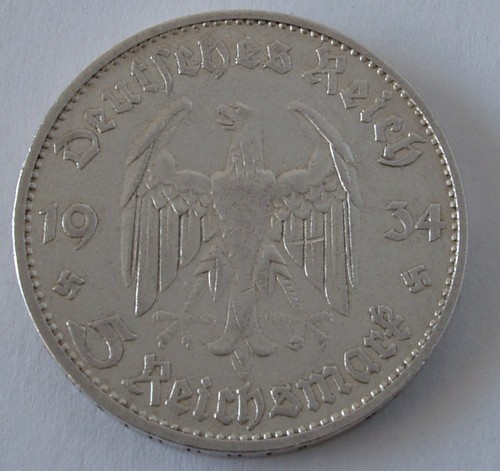
German 5 Reichsmark Garrison Church Commemorative
A 1934 German silver 5 Reichsmark commemorative with a spread-winged Reichsadler and 'Deutsches Reich' on the obverse and the Potsdam Garrison Church reverse.
Commemorative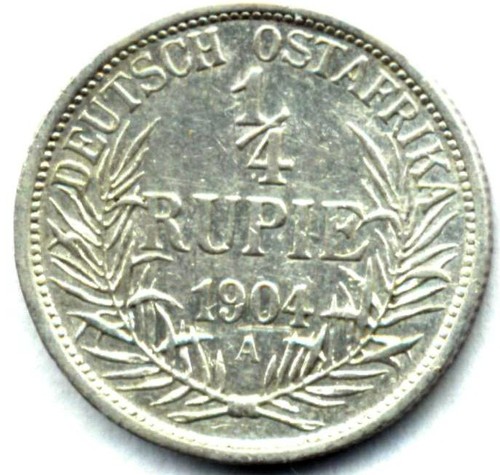
German East Africa 1/4 Rupie
A small colonial silver coin of German East Africa, inscribed DEUTSCH OSTAFRIKA and 1/4 RUPIE within a wreath, paired with the imperial eagle.
World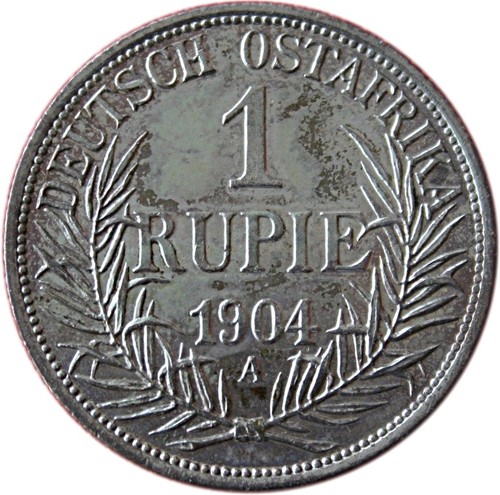
German East Africa 1 Rupie
A silver colonial rupee of German East Africa bearing the imperial eagle shield and the legend DEUTSCH OSTAFRIKA, struck for the German protectorate.
World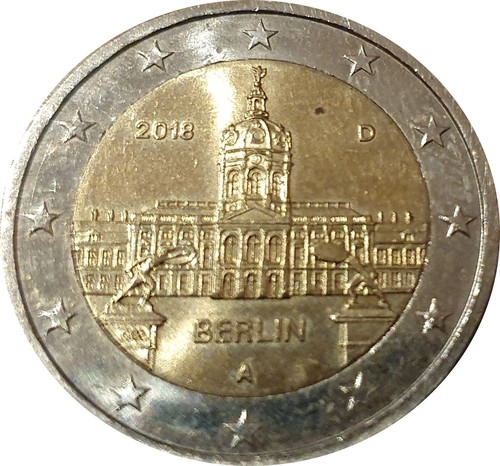
Germany 2 Euro Berlin 2018 Commemorative
Germany's 2018 bi-metallic 2 euro from the Federal States series honouring Berlin, showing a monumental Berlin building paired with the shared European reverse.
Commemorative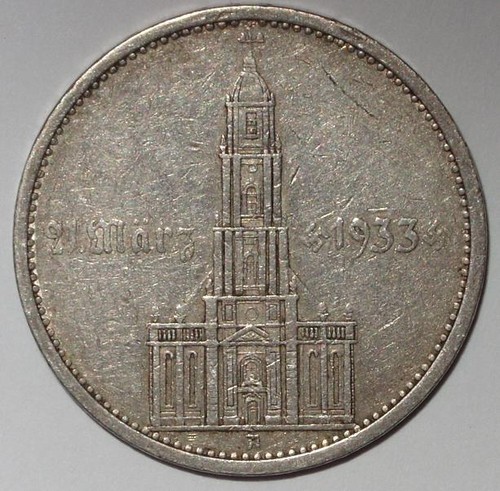
German 2 Reichsmark Garrison Church Commemorative
A 1933 German silver 2 Reichsmark commemorative showing the Potsdam Garrison Church tower, issued to mark the "Day of Potsdam."
Commemorative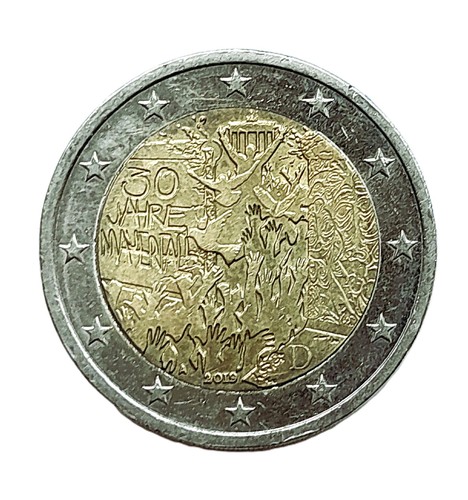
Germany 2 Euro Fall of the Berlin Wall Commemorative
A 2019 German bi-metallic 2 euro marking 30 years since the fall of the Berlin Wall, with a ring of twelve European Union stars.
Commemorative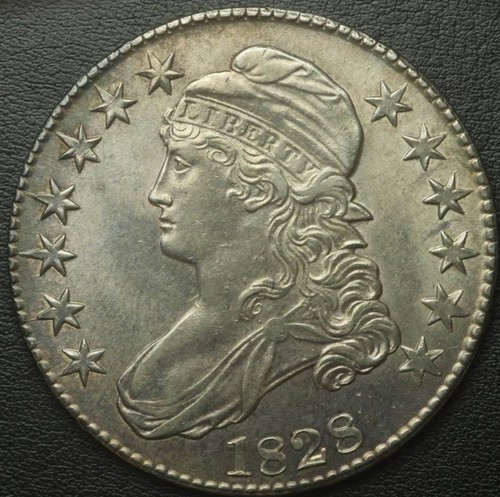
Capped Bust Half Dollar
U.S. fifty-cent silver coin struck 1807–1839, showing Liberty in a Phrygian cap surrounded by stars and a heraldic eagle on a shield.
Half Dollar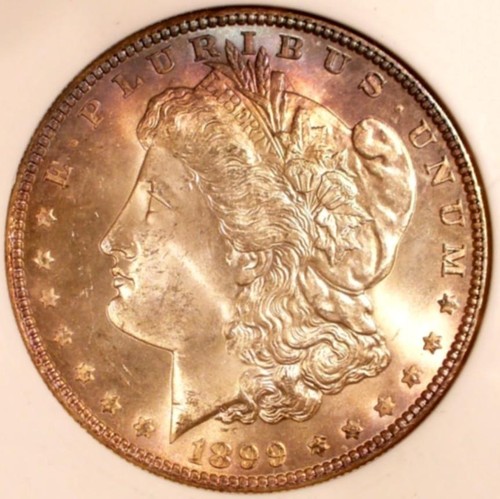
French Silver Franc
A small Third Republic silver 1-franc coin with an allegorical Marianne head and a REPUBLIQUE FRANCAISE reverse; the pictured piece is dated 1899.
World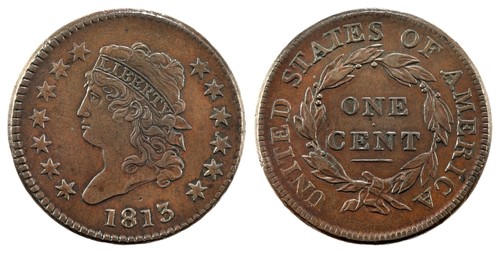
Classic Head Large Cent
A pure-copper U.S. large cent struck 1808–1814, showing John Reich's classical left-facing Liberty ringed by stars over a wreath reverse.
Large Cent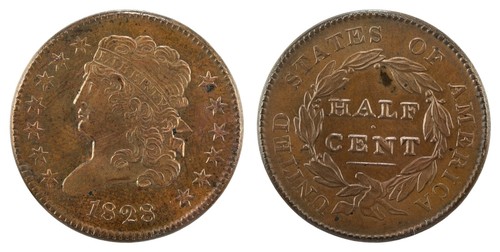
Classic Head Half Cent
A small U.S. copper half cent of 1809–1836 showing Liberty in a beaded headband ringed by stars, with a plain wreath and HALF CENT on the reverse.
Half Cent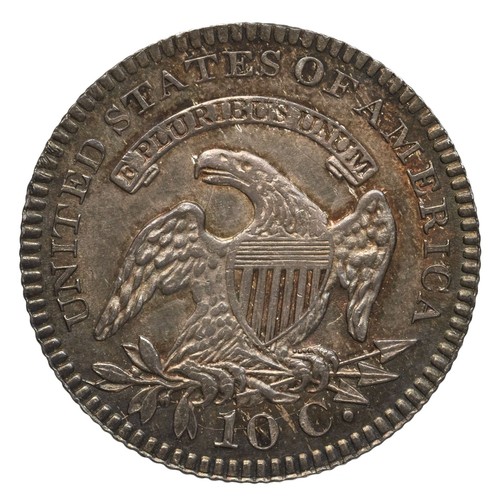
Capped Bust Dime
An early U.S. silver ten-cent piece showing Liberty in a cloth cap over a shield-breasted eagle, struck at Philadelphia from 1809 to 1837.
Dime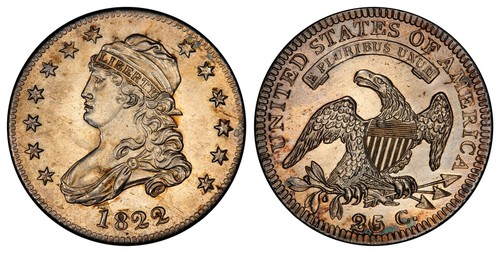
Capped Bust Quarter
An early U.S. silver quarter dollar showing Liberty in a cloth cap over a shield-breasted eagle, struck at Philadelphia from 1815 to 1838.
Quarter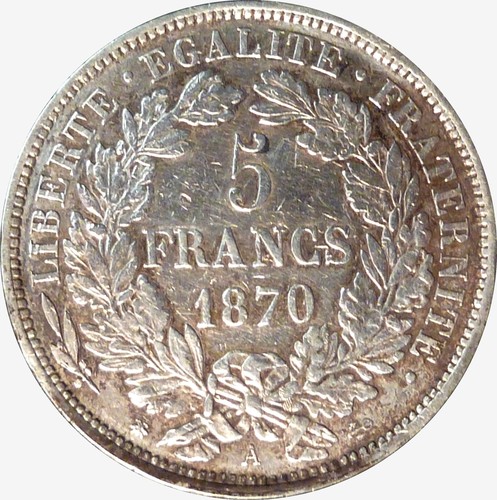
French Cérès 5 Francs
A large silver French 5 francs showing the head of Cérès, goddess of the harvest, wearing a liberty cap, with the republican motto LIBERTÉ ÉGALITÉ FRATERNITÉ.
Circulation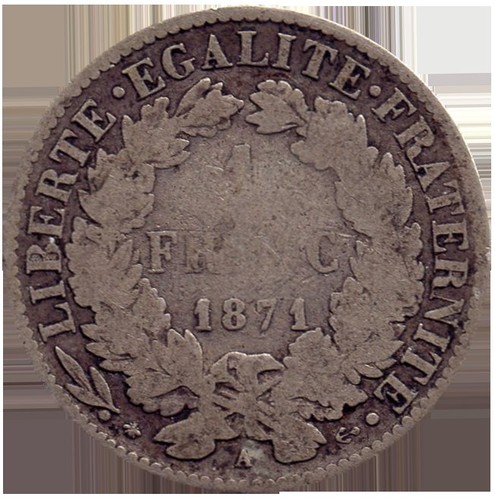
1 Franc Ceres
A small silver French franc showing the head of Cérès, goddess of the harvest, wearing wheat and a star, with the LIBERTE EGALITE FRATERNITE reverse dated 1871.
Circulation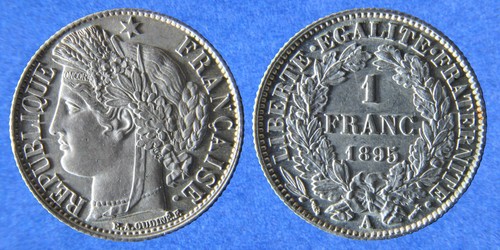
French Cérès 1 Franc
A .835 silver French 1 Franc showing the goddess Cérès in a liberty cap; this example is an 1895 Third Republic issue with a wreath-and-value reverse.
Circulation