
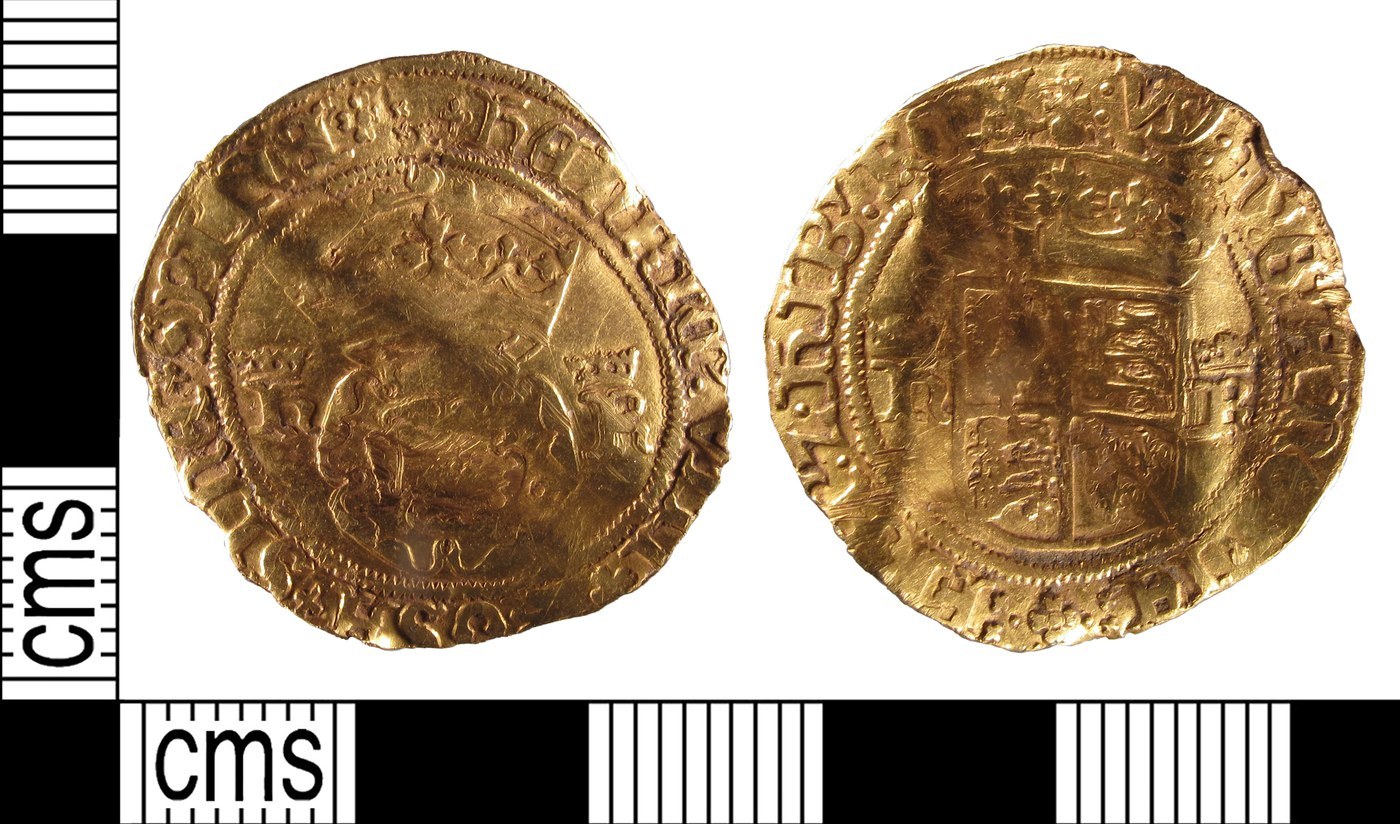
Gold Crown of Henry VIII (Third Coinage)
A hammered Tudor gold crown of five shillings struck during Henry VIII's Third Coinage, the debased issue that earned him the nickname "Old Coppernose."
- Country
- England
- Denomination
- 1 Crown
- Metal
- Gold
Got a coin like this?
Identify any coin from a photo, free.
Overview
The Gold Crown of Henry VIII's Third Coinage is a small hammered gold coin valued at five shillings (one quarter of a pound), struck in England between 1544 and its issue in the king's name up to 1547. The observed example shows the crowned, bearded bust of Henry VIII on the obverse and a quartered royal coat of arms on the reverse.
The crown belongs to the period known to numismatists as the "Great Debasement," when the fineness of English gold and silver was deliberately reduced to raise money for the Crown. As a result, Third Coinage gold sits below the traditional English standards, though it still contains substantial gold and remains a genuinely precious-metal Tudor coin.
Because it is hand-struck, each surviving crown is slightly irregular in shape and centring, and no two are identical. Well-preserved examples are prized both as portrait coins of one of England's most famous monarchs and as tangible artefacts of Tudor monetary history.
History & Background
Henry VIII's Third Coinage (begun in 1544) was the climax of the Great Debasement, a policy by which the king reduced the precious-metal content of the coinage to help fund costly wars against France and Scotland. Gold was struck below the long-standing 23-carat and 22-carat "crown gold" standards, and the silver coinage was so debased that worn testoons showed a copper tone through the thin surface silver — earning Henry the lasting nickname "Old Coppernose."
To produce the volume of coin required, the Crown operated multiple mints during this period, including the Tower of London and Southwark, with additional output from provincial mints such as Bristol, Canterbury and York. Coins can be attributed to these mints through their initial marks (mint marks).
Henry VIII died in January 1547, but coinage continued to be struck in his name after his death during the transition to Edward VI. Crowns dated or attributed to 1544–1547 therefore span the final years of Henry's reign and the immediate posthumous period.
How to Identify
The obverse carries a facing or three-quarter crowned bust of the bearded king, surrounded by a Latin legend naming Henry as King of England, France and Ireland — the inclusion of the Irish title reflects Henry's assumption of the style "King of Ireland" in 1541, a feature of later-reign coinage. The reverse shows the quartered royal arms (the English lions and French fleurs-de-lis) on a crowned shield, often flanked by crowned initials.
As a five-shilling gold crown it is a small, thin coin, roughly the size of a modern small coin and only a few grams in weight. Being hammered, the flan is irregular, the strike is frequently off-centre, and portions of the legend may be weak or missing.
Mint marks (initial marks) at the start of the legends are the key to attributing a specific coin to a mint and narrowing its date within the Third Coinage. Fineness and weight of Third Coinage gold are lower than earlier Henrician issues, which is itself a diagnostic of the debasement period.
Value & Collectibility
Genuine hammered gold crowns of Henry VIII are scarce and carry substantial value as both precious metal and historic Tudor artefacts. Prices vary widely with grade, mint, strength of the portrait, and completeness of the legend, so figures are best treated as ranges rather than fixed prices.
Attractive, clearly struck examples with a full bust and readable legends command strong premiums at specialist auction, while off-centre, clipped, or heavily worn pieces sell for considerably less. Mint attribution and any rare initial marks can add further value.
Because values are high and forgeries and modern copies exist, buyers typically rely on established auction houses or dealers and, for higher-value coins, third-party authentication. Never assess value from metal content alone — numismatic and historical demand drives the price far more than bullion weight.
Frequently asked questions
How much was a Henry VIII gold crown worth at the time?
The crown was valued at five shillings — sixty pence, or one quarter of a pound sterling — making it a comparatively small gold denomination within the Tudor coinage system.
Why is this coinage called "debased"?
During Henry VIII's Third Coinage the Crown deliberately lowered the gold and silver fineness of the coinage to raise revenue for war. Third Coinage gold sits below earlier English standards, and the debased silver earned Henry the nickname "Old Coppernose."
Which mints struck the Third Coinage gold crown?
Output came from several mints, including the Tower of London and Southwark, with provincial striking at mints such as Bristol, Canterbury and York. The initial (mint) mark on a given coin identifies where it was struck.
Were crowns struck after Henry VIII died?
Yes. Henry died in January 1547, but coins continued to be produced in his name during the transition to Edward VI, so pieces attributed to 1544–1547 can include posthumous striking.
Gold Crown of Henry VIII (Third Coinage) guides
In-depth guides for identifying, valuing, and collecting Gold Crown of Henry VIII (Third Coinage).
Other coins you may enjoy
English Sixpence
Early 1600s (James I, 1603-1625)
Sixpence of James I
1603-1625
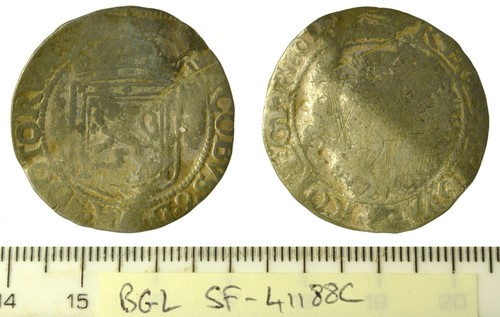
Thistle Merk
1567–1625
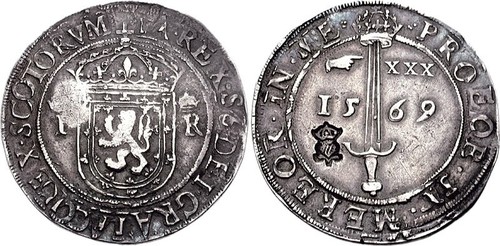
James VI Ryal
1567–1571
Quarter Merk
c. 1580–1691
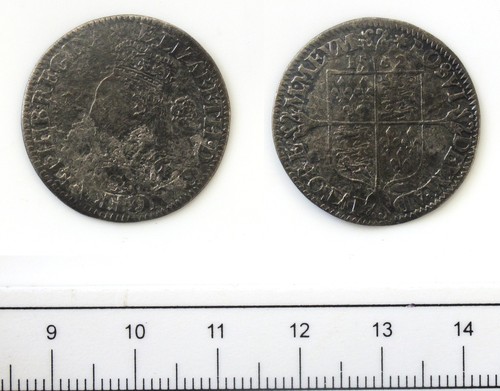
Sixpence of Elizabeth I
1560–1603
Quarter Angel of Elizabeth I
1581-1583
Laurel
1619-1625
Mary I Groat
1553-1558
Medieval Coin
c. 500–1500 (Medieval)
Half Thistle Merk
1567-1625
Irish Pistole
1640s (17th century)