
How to Identify the Gold Crown of Henry VIII (Third Coinage)
A collector's guide to spotting a genuine Tudor gold crown of Henry VIII — bust, arms, size, mint marks, look-alikes, and authentication cautions.
Read the full Gold Crown of Henry VIII (Third Coinage) encyclopedia entry →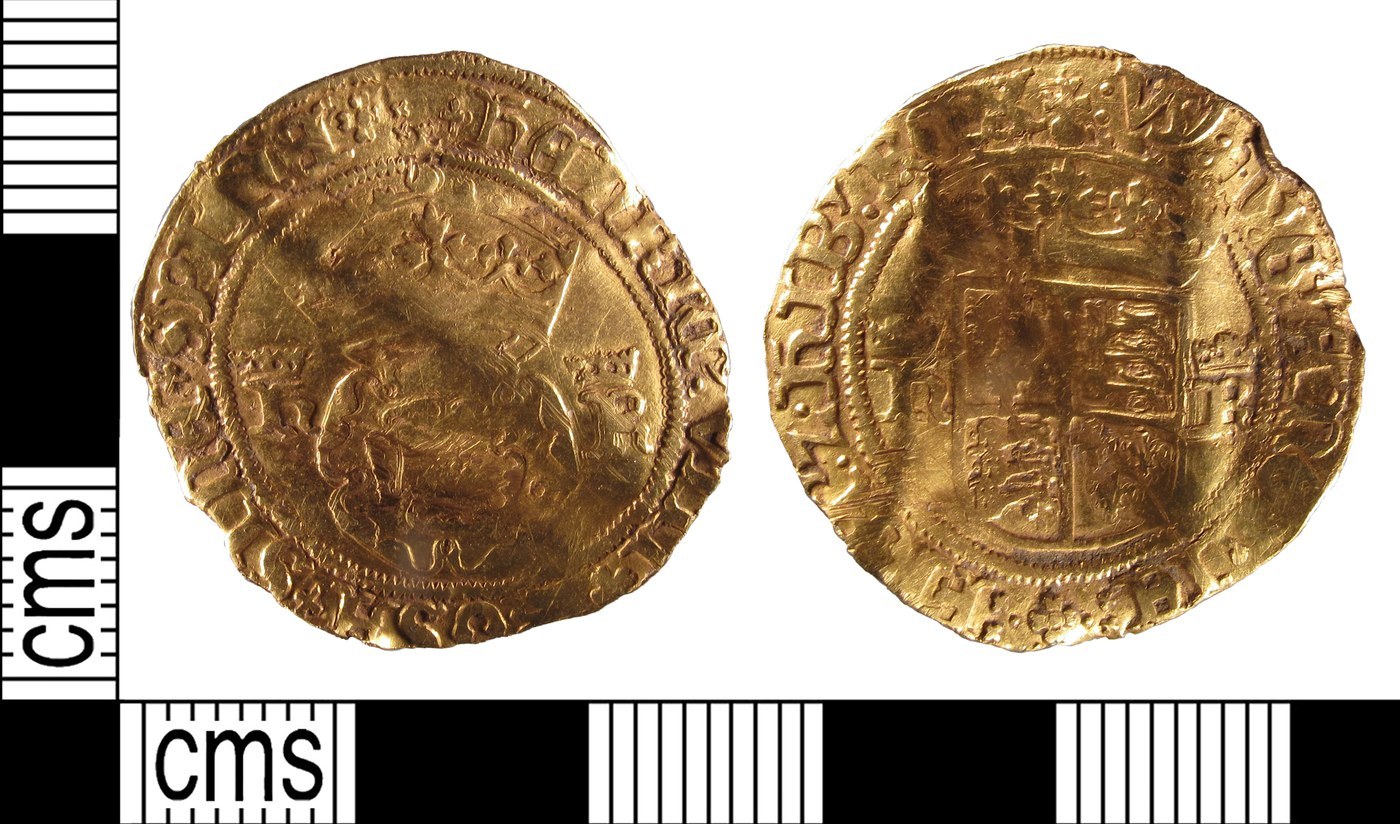
Start with the two design elements visible on the coin. The obverse should show a crowned, bearded bust of Henry VIII, encircled by a Latin legend giving his royal titles as King of England, France and Ireland. The presence of the Irish title ("HIB" / "HIBER") is a useful marker of later-reign coinage, since Henry only adopted the style King of Ireland in 1541. The reverse should display a crowned quartered shield combining the English lions and French fleurs-de-lis, sometimes flanked by crowned initials.
Check the physical characteristics. As a five-shilling gold crown this is a small, thin, hand-struck coin of only a few grams. Expect an irregular, slightly oval flan, uneven centring, and areas of weak or missing legend — all normal for hammered coinage. A perfectly round, sharply uniform "coin" with machined edges is a red flag for a modern reproduction or a milled-era piece.
Locate the initial (mint) mark, usually a small symbol at the start of the legend. This is the single most important detail for attributing the coin to a specific mint (for example the Tower, Southwark, Bristol, Canterbury or York) and for narrowing its place within the Third Coinage. Photograph both sides in good light and compare the mark and legend layout against standard references such as Spink's Coins of England before finalising an attribution.
Be alert to look-alikes and honest confusions. Henry VIII struck several gold denominations across his First, Second and Third coinages — including angels, half-sovereigns and sovereigns — that carry different designs, so confirm the denomination is a crown by its small size and five-shilling design rather than assuming from the portrait alone. Debasement means Third Coinage gold is lower in fineness than earlier Henrician gold, which can be a supporting clue.
Finally, exercise authentication caution. Tudor gold is valuable, so cast copies, tooled coins, and outright forgeries exist. Weigh and measure the piece, examine surfaces for casting bubbles or file marks, and for any significant purchase rely on a reputable dealer or auction house and, ideally, third-party grading and authentication. When in doubt, get an expert opinion before buying.
Frequently asked questions
What is the quickest way to tell a Third Coinage crown from another Henry VIII gold coin?
Size and denomination. The crown is a small five-shilling coin; larger denominations like the sovereign or half-sovereign are bigger and use different designs. Combine the small module with the crowned bust and quartered shield, then confirm with the mint mark and legend.
What do the mint marks tell me?
The initial mark at the start of the legend attributes the coin to a specific mint and helps date it within the Third Coinage. Matching it against a standard reference is the reliable way to identify the mint rather than guessing.
Should hammered irregularity worry me?
No. Off-centre strikes, weak legends and an oval flan are expected on genuine hammered coins. Suspicion should instead be reserved for unnaturally perfect, uniform pieces, casting bubbles, or file-worked edges.
Do I need professional authentication?
For any meaningful purchase, yes. Tudor gold is frequently faked, so buy from established dealers or auctions and consider third-party grading and authentication before committing to a high-value coin.