
Coin Encyclopedia
Search and identify coins from around the world — with country, denomination, metal, mint, history, and how to tell them apart.
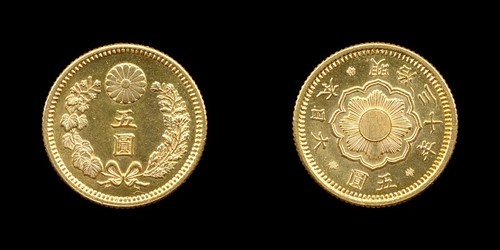
Japanese 5 Yen
Small Meiji-era Japanese gold coin with an imperial chrysanthemum and characters on the obverse and a floral wreath framing the 5 Yen value.
World Coins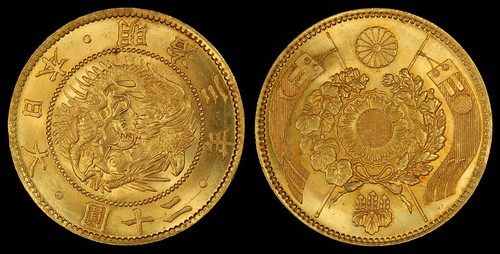
Japanese 20 Yen
Early Meiji-era Japanese gold coin showing a dragon among clouds on one side and a floral design with the 20 yen denomination on the other.
World Coins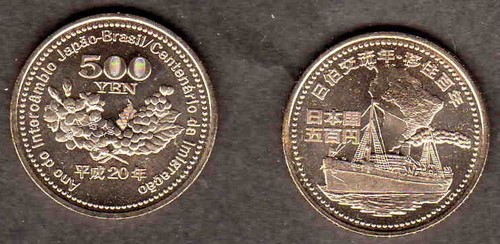
500 Yen Japanese Immigration Commemorative
A 2008 Japanese 500 yen commemorative marking 100 years of Japanese immigration to Brazil, with two figures on one side and a ship on the other.
Commemorative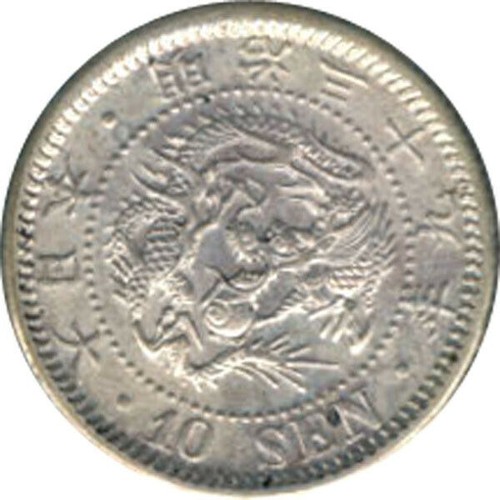
10 Sen
A small Meiji-era Japanese silver 10 Sen: a coiled dragon and characters on one face, a rayed sunburst framed by branches on the other.
Circulation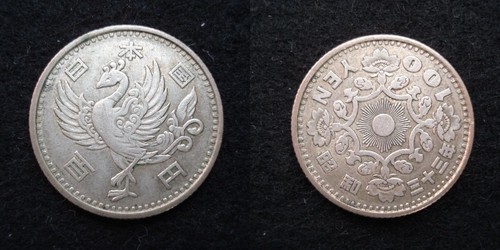
100 Yen (Showa Silver)
Japan's first 100 Yen coin, in silver: a phoenix in flight on the obverse and a bold radiating 100 on the reverse. Dated Showa 33 (1958).
Circulation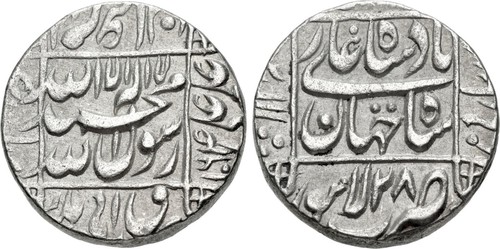
Shah Jahan Rupee
Hand-struck silver rupee of Mughal emperor Shah Jahan, all-Persian calligraphy in ornate cartouches, dated AH 1064 (AD 1653-1654).
Mughal India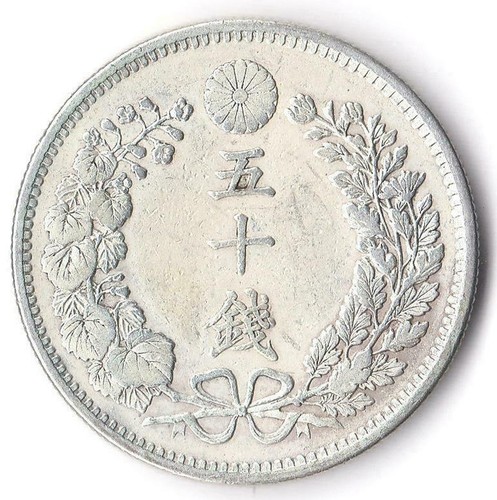
50 Sen (Dragon Type)
A Meiji-era Japanese silver 50 sen: a coiled dragon on one face, a sunburst-and-wreath value design on the other, dated Meiji 4 (1871).
Circulation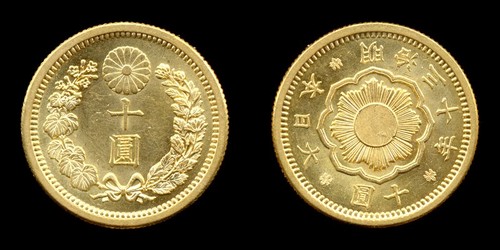
10 Yen (Gold)
A Japanese gold 10 Yen of the Meiji era, its obverse a radiant chrysanthemum sunburst, its reverse a wreath framing imperial crests; dated Meiji 30 (1897).
Circulation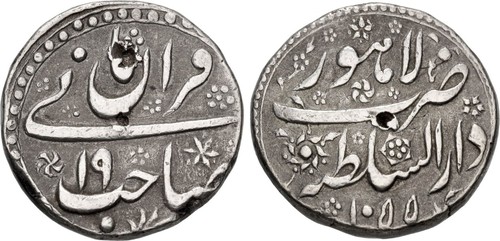
Shah Jahan Half Rupee
Silver half rupee of Mughal emperor Shah Jahan, dated AH 1055, carrying Persian-script inscriptions and ornamental borders instead of any portrait.
Mughal India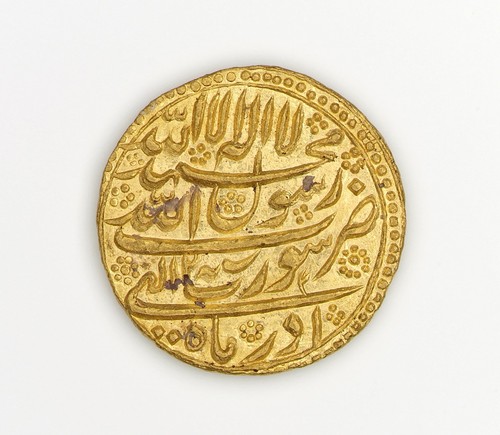
Gold Mohur of Shah Jahan
High-purity gold mohur struck under Mughal emperor Shah Jahan (1628-1658), bearing Persian imperial titles; this example carries the Balkh mint mark.
Mughal India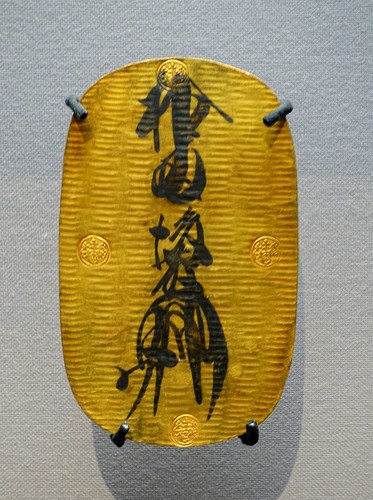
Keicho Oban
A large, thin oval Japanese gold oban of the Keicho era, hammer-marked with horizontal striations and bearing brush-inked ink signatures and paulownia crests.
Historic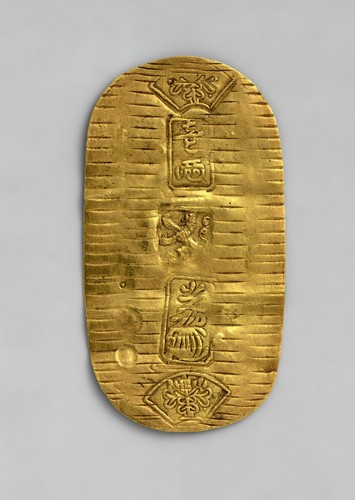
Koban with Dutch East Indies Counterstamp
An Edo-period Japanese gold koban bearing later punched marks, including a Japanese character cartouche and a Dutch coat-of-arms counterstamp.
Colonial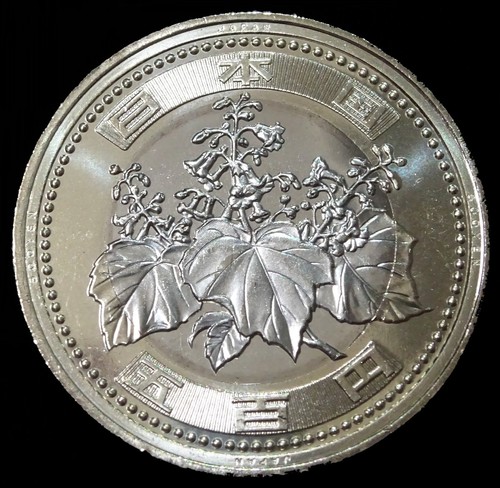
500 Yen Bicolor Clad
Japan's large two-tone 500 yen circulation coin, with a floral blossom design and pearl-like beading on one face and bold value numerals on the other.
Circulation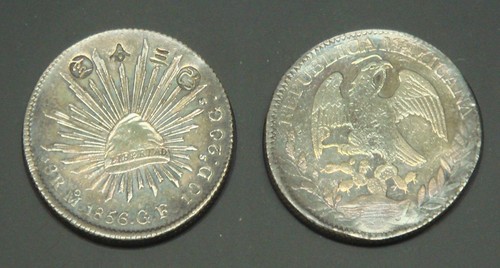
Aratame Sanbu Sadame
A round silver-colored coin with a coiled dragon and the inscription Aratame Sanbu Sadame on one face and a radiating sun on the other, dated 1859.
Historic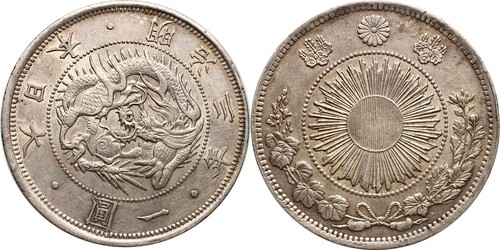
1 Yen (Silver)
An early Meiji silver 1 Yen struck in Meiji 3 (1870), showing a coiled dragon with a radiant sun on one side and a wreathed imperial crest on the other.
Circulation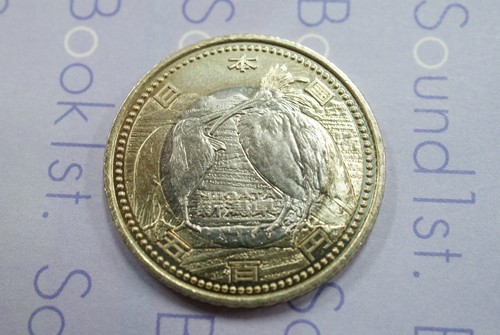
500 Yen Niigata Prefecture Commemorative
A modern Japanese 500 Yen commemorative for Niigata Prefecture, showing a traditional ship that celebrates the region's maritime and port heritage.
Commemorative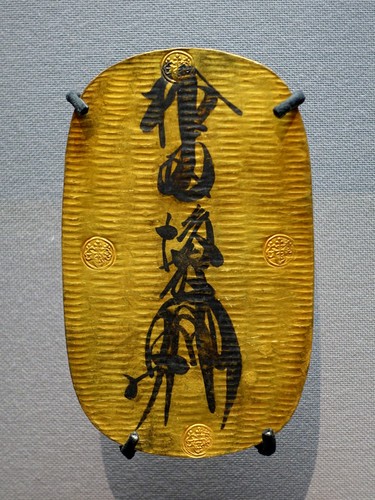
Keicho Koban
A thin oval Japanese gold coin worth one ryo, its surface covered in fine parallel striations with stamped cartouches and Goto mint marks.
Historic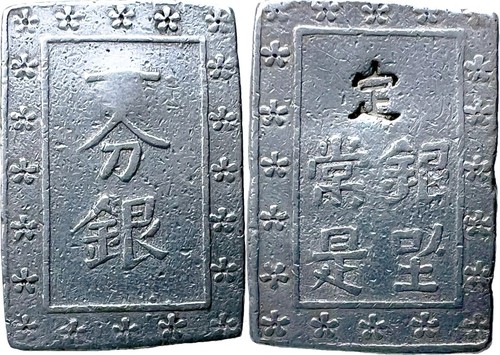
1 Bu Gin
A small rectangular Japanese silver coin, the ichibu gin, worth one bu (a quarter ryo), bearing beaded borders, paulownia crests and Ginza inscriptions.
Historic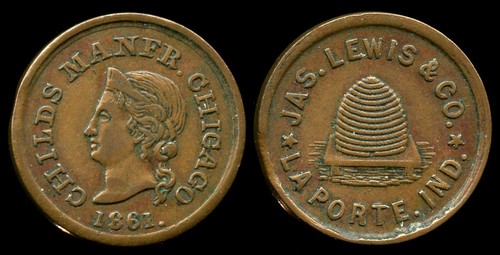
James Lewis and Company Civil War Token
A privately struck Civil War store card advertising Jas. Lewis & Co. of La Porte, Indiana, with a classical head obverse and a beehive reverse.
Token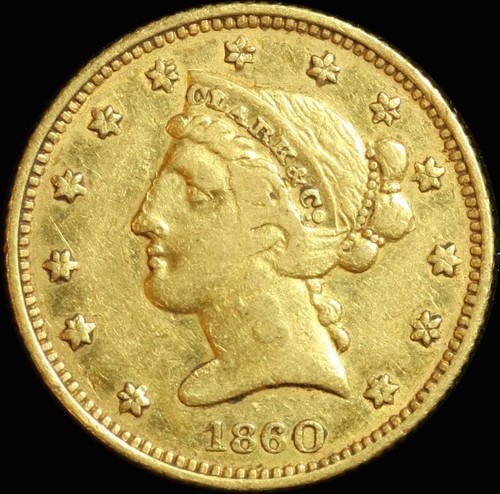
Clark & Co Territorial Gold Half Eagle
An 1860 privately struck $5 gold piece from Clark, Gruber & Co. of Denver, coined from Pikes Peak gold during the Colorado gold rush.
Half Eagle