
Coin Encyclopedia
Search and identify coins from around the world — with country, denomination, metal, mint, history, and how to tell them apart.
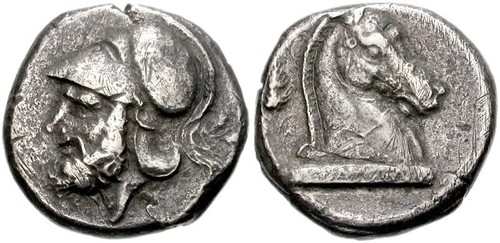
Ancient Greek Didrachm
An ancient Greek silver didrachm worth two drachms, here with a bearded male head and a horse-and-rider reverse in the tradition of Magna Graecia.
Ancient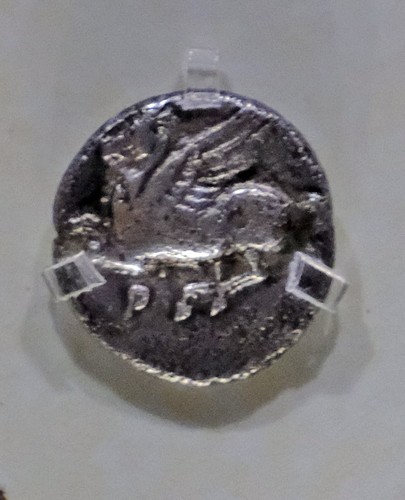
Corinthian Drachm
A silver drachm of ancient Corinth pairing a helmeted head of Athena with the city's emblem, the winged horse Pegasus, struck in the mid-4th century BC.
Ancient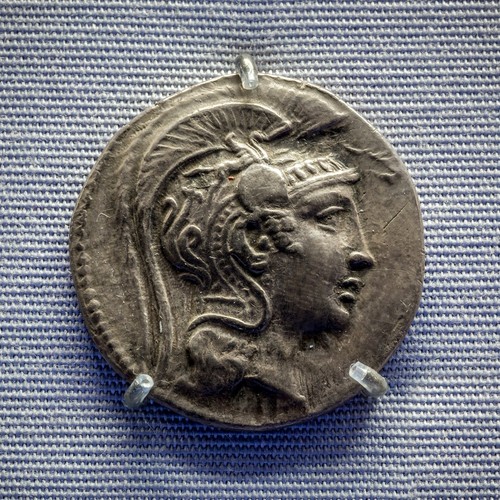
Athenian Owl Tetradrachm
Broad silver 'New Style' tetradrachm of Athens (c. 165-42 BC): helmeted Athena on the front, owl on an amphora within an olive wreath on the back.
Ancient Coins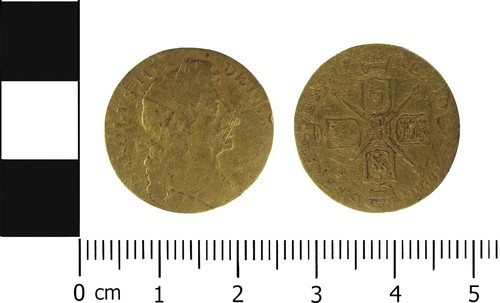
Charles II Half Guinea
A small milled gold coin of Charles II showing the king's laureate profile and a cruciform arrangement of crowned shields on the reverse.
Milled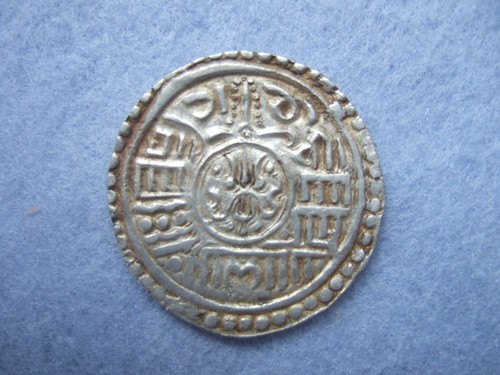
Nepalese Mohar
Silver mohar of the Nepalese Shah kingdom, with ornate Devanagari legends and auspicious symbols arranged around a mandala-style central design on both faces.
Himalayan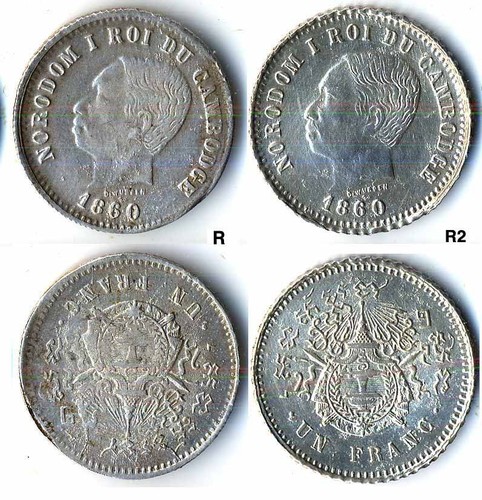
Cambodia One Franc
A mid-20th-century one-franc coin of the Kingdom of Cambodia, its obverse bearing a royal Norodom profile and its reverse a heraldic coat of arms.
Southeast Asia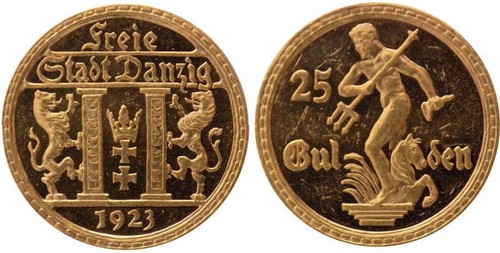
25 Gulden
The gold 25 Gulden of the Free City of Danzig, dated 1923, pairing the lion-supported Danzig arms with an armed female figure holding a trident.
Modern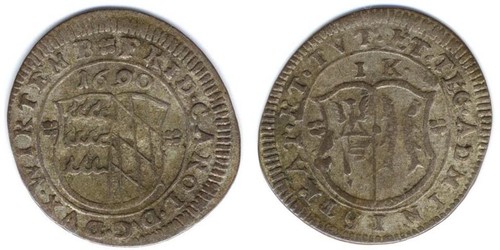
Württemberg Kreuzer
A small silver 1 Kreuzer of the Duchy of Württemberg, dated 1690, with a heraldic coat of arms and a crowned shield over scrollwork.
German States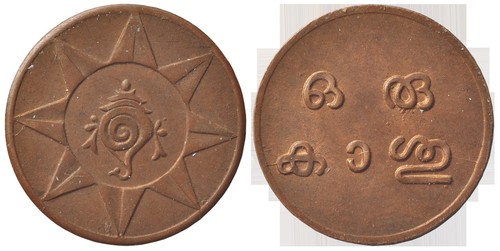
Travancore One Cash
A tiny copper coin of the princely state of Travancore, carrying the state's conch-shell emblem on one side and its cash value in local script on the other.
Princely & Presidency States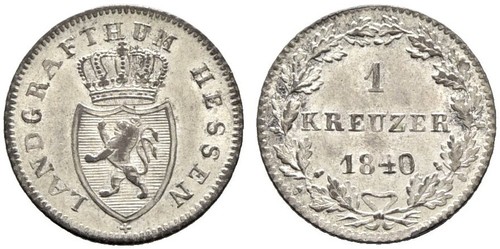
Hessen-Homburg Kreuzer
A small silver 1 Kreuzer of the Landgraviate of Hessen-Homburg, with a crowned arms shield and a dated 1 KREUZER value in a laurel wreath.
German States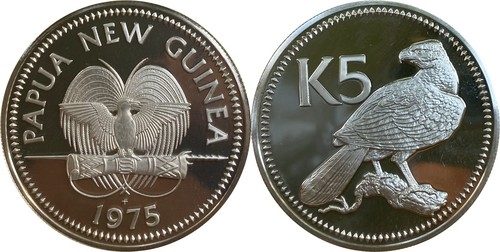
Papua New Guinea 5 Kina
Papua New Guinea's 1975 five-kina coin: Queen Elizabeth II in profile on the obverse, a bird-of-paradise with the K5 denomination on the reverse.
Circulation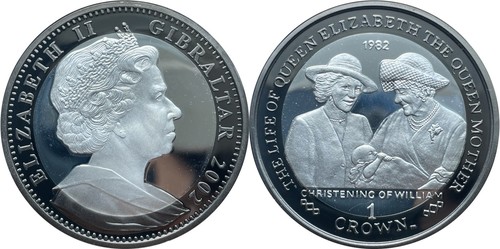
Gibraltar Crown
A 1982 Gibraltar cupro-nickel crown marking the christening of Prince William, showing the Queen Mother and Princess Diana with the infant prince.
Commemorative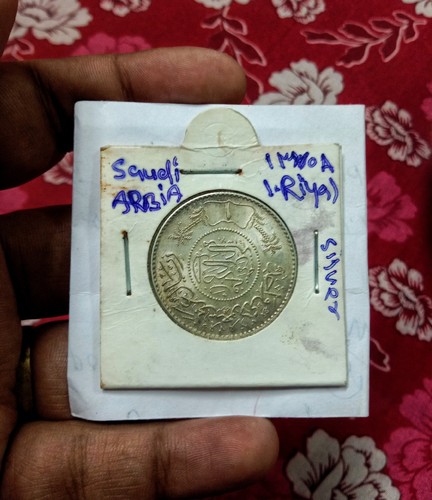
Saudi Arabian Silver Riyal
A large, portrait-free silver coin of King Abdul Aziz ibn Saud, covered in Arabic legends and a state seal — a cornerstone of early Saudi coinage.
World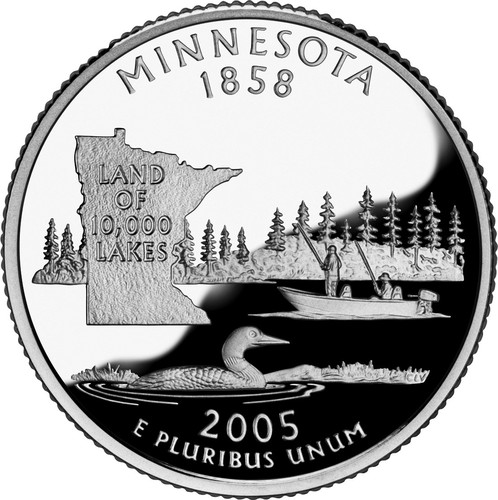
Minnesota State Quarter
2005 U.S. 25-cent coin in the 50 State Quarters series, showing Minnesota's outline, a common loon, anglers in a boat, and pines above 1858.
Quarter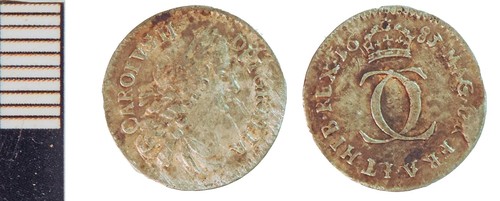
Charles II Twopence
A small milled twopence of Charles II, showing the king's profile bust on the obverse and a crowned mark of value on the reverse.
Milled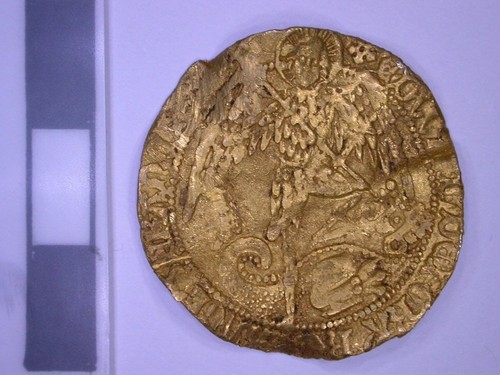
Edward V Angel
Gold angel struck in the brief 1483 reign of Edward V, showing Saint Michael the archangel spearing a demon, with a royal shield of arms on the reverse.
Medieval Coins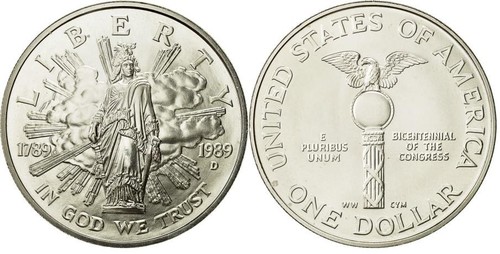
Congress Bicentennial Silver Dollar
A 1989 U.S. commemorative silver dollar marking 200 years of Congress, pairing a standing Liberty-style figure with an eagle above the U.S. Capitol.
Modern Commemorative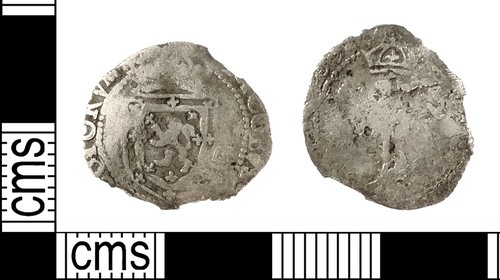
Eighth Thistle Merk
A small hammered silver Scottish coin of James VI, showing a crowned heraldic shield of arms on one side and a crowned thistle on the other.
Hammered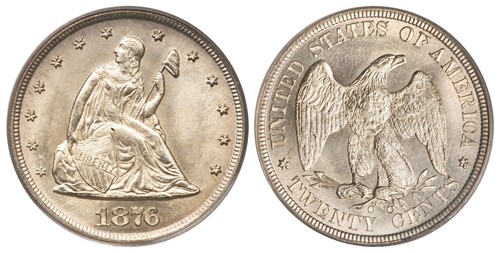
Twenty Cent Piece
A short-lived U.S. silver coin worth twenty cents, showing a seated Liberty and a soaring eagle, struck only from 1875 to 1878.
Twenty Cent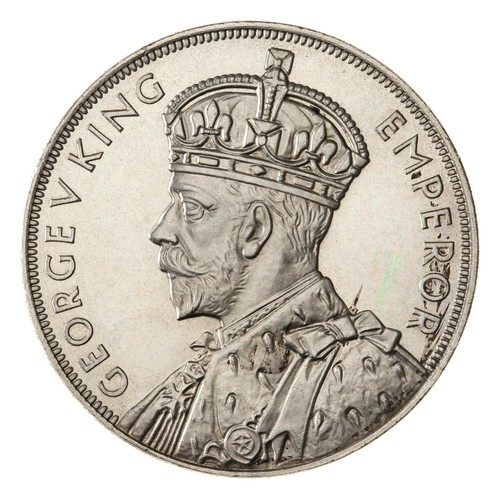
New Zealand Waitangi Crown
New Zealand's first and rarest crown, a 1935 silver five-shilling piece with a crowned George V obverse and the Treaty of Waitangi handshake reverse.
New Zealand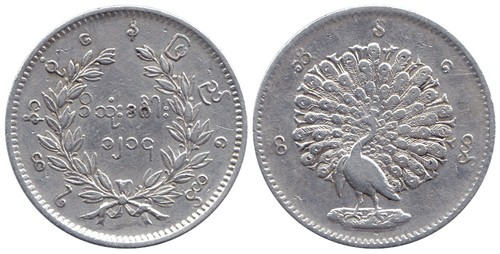
Burma One Kyat (Mindon Min)
Silver kyat of King Mindon Min's Burma, showing the royal peacock with spread tail on the obverse and the denomination within a wreath on the reverse.
Southeast Asia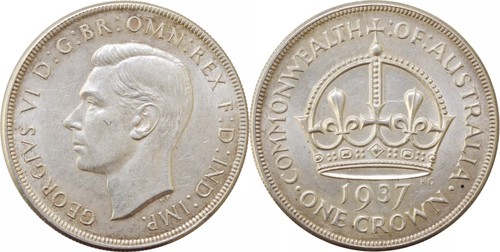
Australian Crown
Australia's only crown (five-shilling) coin, a large sterling-silver piece struck in 1937 and 1938 with a George VI portrait and a crown reverse.
Australian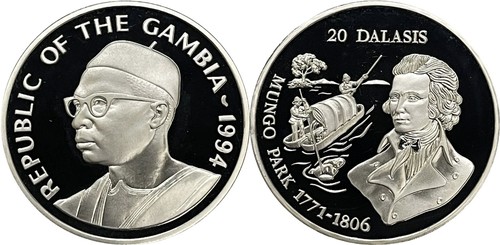
Gambia 20 Dalasis (Mungo Park Commemorative)
A 1994 silver 20 dalasis crown from The Gambia honoring Scottish explorer Mungo Park, shown with a sailing ship on the reverse.
World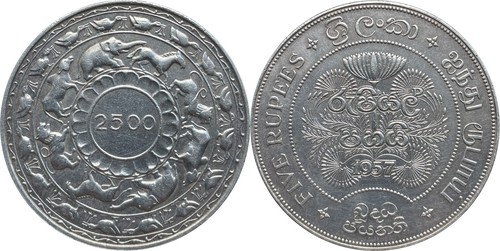
Ceylon 5 Rupees
A 1957 Ceylon silver 5 Rupees marking 2500 years of Buddhism, with a large 2500 on one side and RUPEES CEYLON with the 1957 date on the other.
Commemorative