
Coin Encyclopedia
Search and identify coins from around the world — with country, denomination, metal, mint, history, and how to tell them apart.
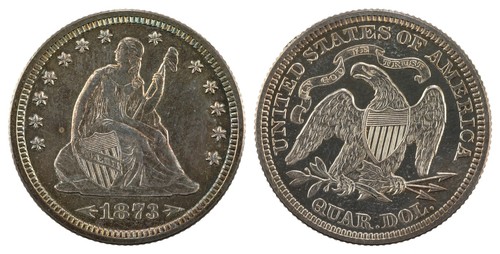
Seated Liberty Quarter
U.S. twenty-five-cent silver coin struck 1838–1891, showing Liberty seated with shield and staff on the obverse and a shield-breasted eagle on the reverse.
Quarter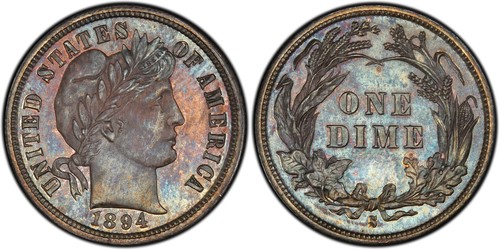
Barber Dime
U.S. ten-cent silver coin struck 1892–1916, showing a right-facing Liberty head and a wreath enclosing "ONE DIME" on the reverse.
Dime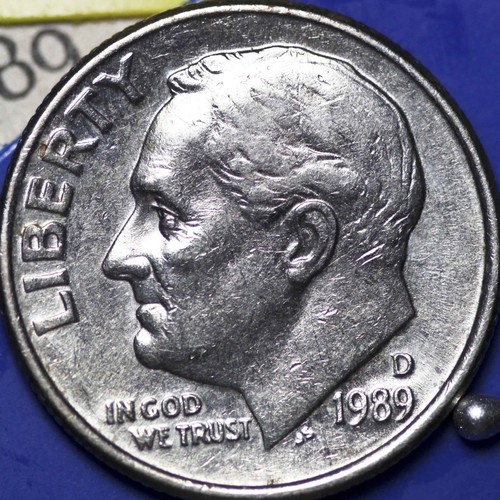
Roosevelt Dime
The circulating U.S. ten-cent coin honoring Franklin D. Roosevelt, shown here as a 1965 copper-nickel clad issue with a torch, olive, and oak reverse.
Dime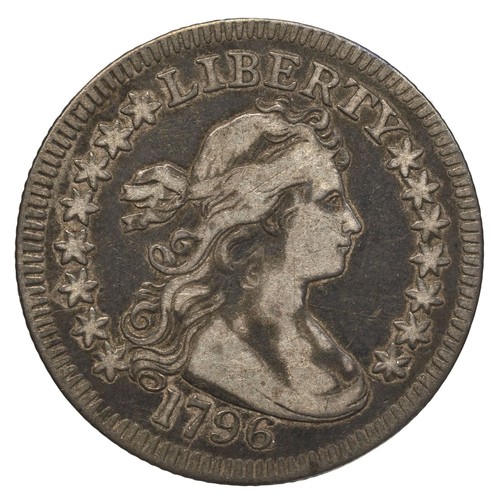
Draped Bust Quarter
The first United States quarter dollar, struck in silver with a draped Liberty and border stars on the obverse and an eagle reverse; the type began in 1796.
Quarter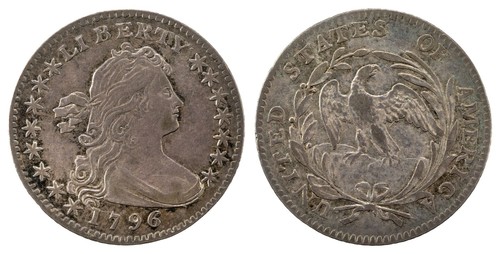
Draped Bust Half Dime
An early U.S. silver five-cent piece showing a draped bust of Liberty ringed by stars; the tiny half dime was struck 1796–1805.
Half Dime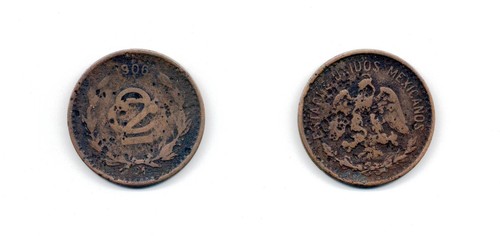
2 Centavos
A copper Mexican 2 centavos with a large numeral 2 framed by a laurel wreath on one side and the national eagle with spread wings on the other.
Circulation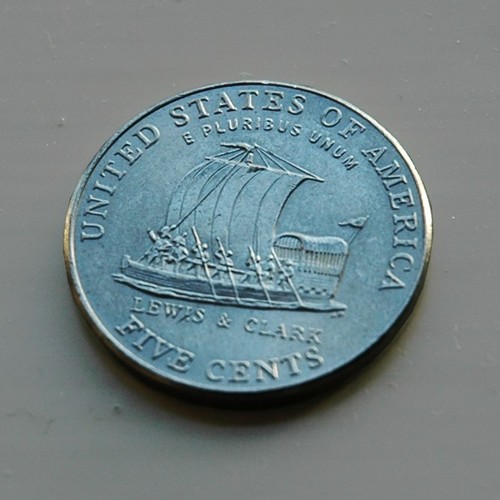
Westward Journey Nickel - Lewis and Clark Keelboat
A 2004 Jefferson five-cent piece from the Westward Journey series, its reverse showing the keelboat that carried the Lewis and Clark expedition upriver.
Nickel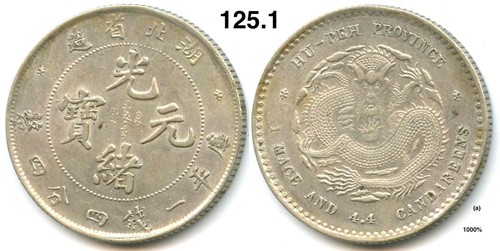
Guangxu Yuanbao 1 Mace 4.4 Candareens
A small silver dragon coin of Qing China from the Guangxu era, its face reading 1 Mace 4.4 Candareens and its back showing a coiled Chinese dragon.
Circulation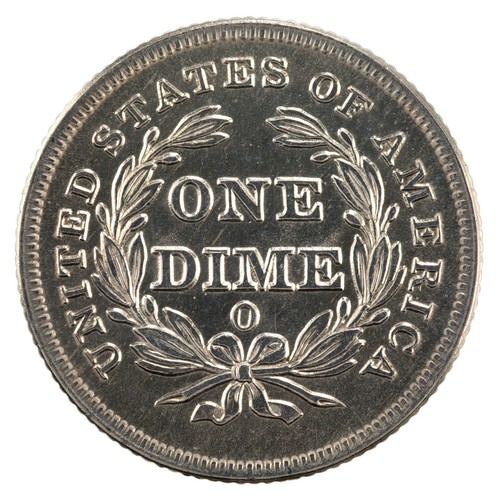
Seated Liberty Dime
A U.S. silver ten-cent coin showing Liberty seated with a pole and shield; the early No Stars type has a plain obverse and a laurel-wreath ONE DIME reverse.
Dime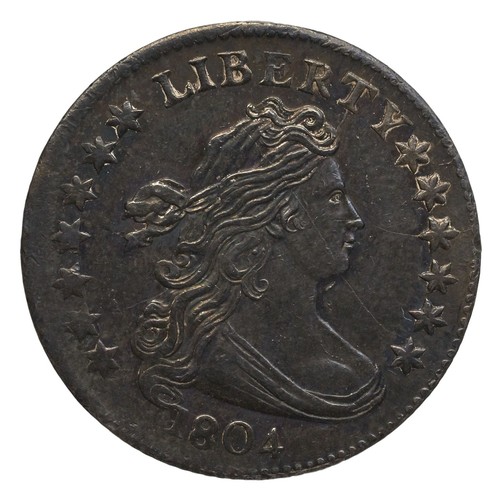
Draped Bust Dime
The first United States dime, struck in silver 1796–1807, with a draped Liberty and border stars on the obverse and an eagle on the reverse.
United States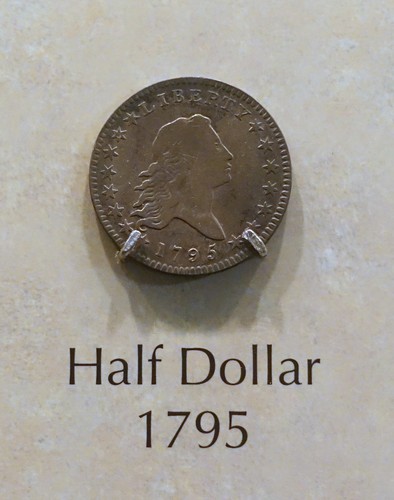
Flowing Hair Half Dollar
The first U.S. half dollar, struck 1794–1795 in silver, with a flowing-hair Liberty facing right and a small eagle within a wreath on the reverse.
Half Dollar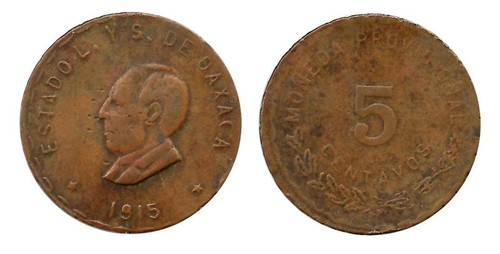
Oaxaca 5 Centavos
A copper 5-centavos struck by the sovereign State of Oaxaca during the Mexican Revolution, with a profile bust on the obverse and the numeral 5 in a wreath on the reverse.
Revolutionary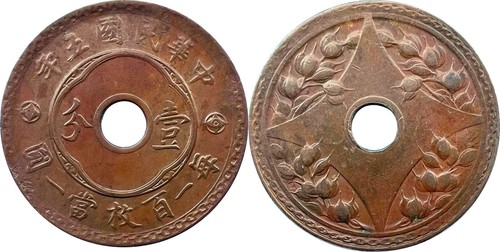
Republic 1 Fen
A holed copper 1 fen of Republican China, showing a numeral 1 with Chinese characters on one side and flowering plum blossoms on the other, around a central square-ish hole.
Circulation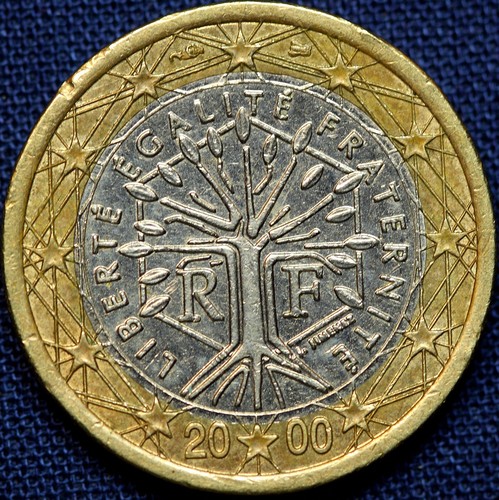
France 20 Centimes
A small gold-colored French Fifth Republic coin showing Marianne in profile, worth one-fifth of a franc, struck for four decades before the euro.
Circulation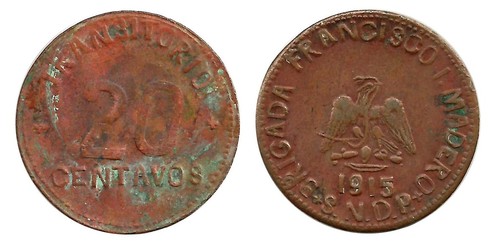
Puebla 20 Centavos
A copper 20 centavos struck in the State of Puebla during the Mexican Revolution, showing a profile bust and the numeral 20 with the national eagle, dated 1915.
Revolutionary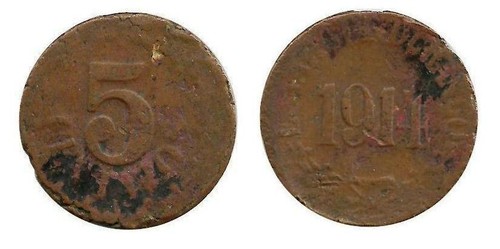
Durango 5 Centavos
A copper 5 centavos struck in the State of Durango during the Mexican Revolution, showing a large numeral 5 and the Mexican national eagle, dated 1914.
Revolutionary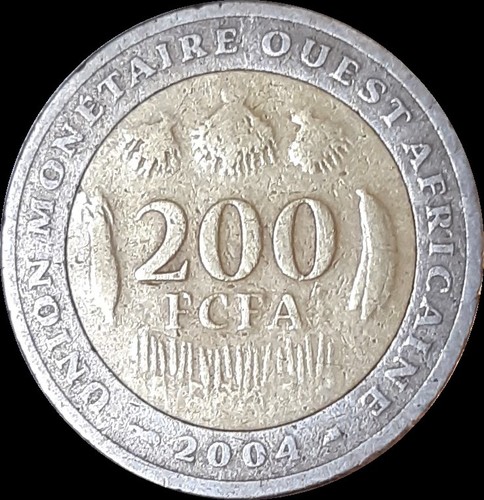
200 CFA Francs
A modern West African CFA coin worth 200 francs, showing a bold '200 FCFA' with decorative border on one face and a crossed emblem on the other.
World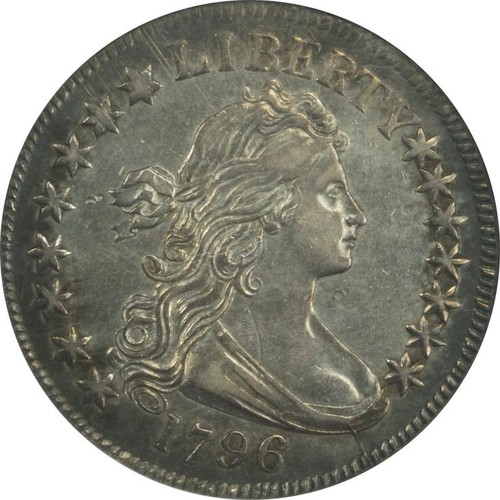
Draped Bust Half Dollar
Early U.S. silver fifty-cent piece of 1796–1807. The pictured 1796 Small Eagle with 15 stars is among the rarest of all American coins.
Half Dollar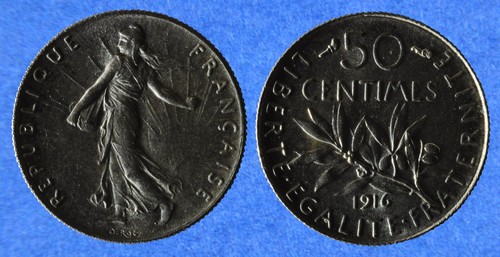
50 Centimes Semeuse
A small silver French 50 centimes with Roty's striding Semeuse (sower) on the obverse and the value within the national motto on the reverse.
Circulation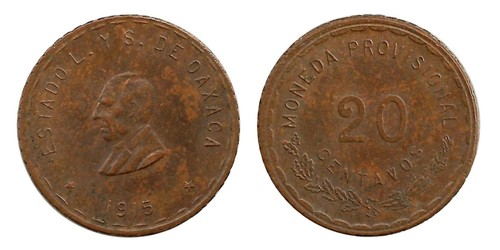
Oaxaca 20 Centavos
A copper 20 centavos struck by revolutionary-era Oaxaca in 1915, showing a profiled bust on a round base and a large numeral 20 with the Mexican eagle.
Revolutionary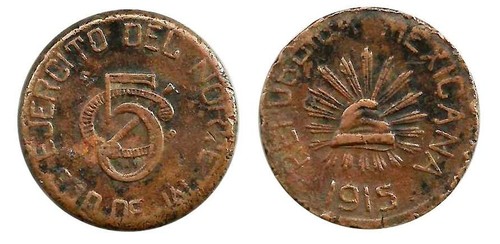
Jalisco 5 Centavos
A small copper 5-centavos coin issued by the Mexican state of Jalisco in 1915 during the Revolution, with a large numeral 5 and the national eagle.
Revolutionary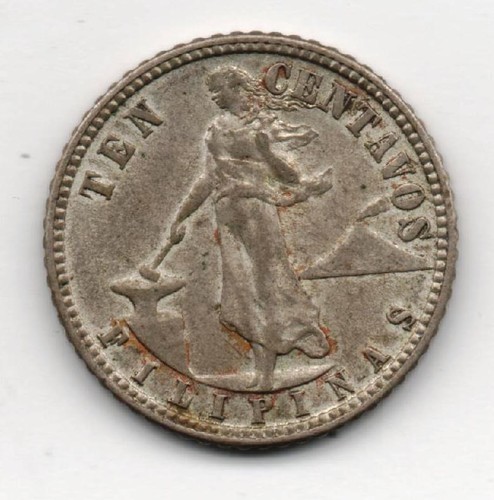
Philippines 10 Centavos
A small silver 10 centavos of the American-era Philippines: a standing Liberty figure and Mayon volcano on one side, the U.S. eagle and shield on the other.
Southeast Asia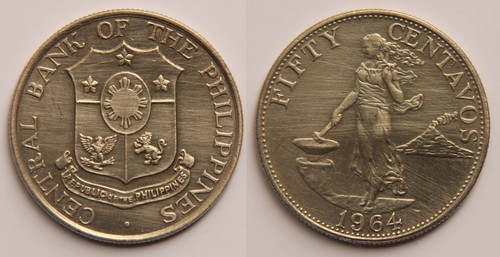
Philippines 50 Centavos
A 1960s Philippine 50-centavos coin in copper-nickel, its obverse showing an allegorical woman with a torch and its reverse the national coat of arms.
Southeast Asia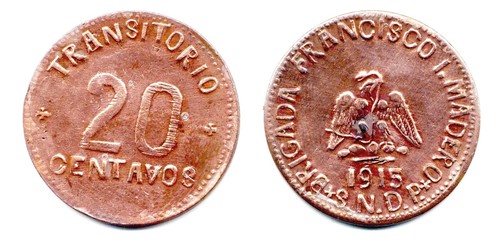
Chiconcuautla 20 Centavos
A 1915 copper 20 centavos struck as a local Revolutionary-era issue at Chiconcuautla, with a numeral 20 on one side and the Mexican national eagle on the other.
Revolutionary