
Coin Encyclopedia
Search and identify coins from around the world — with country, denomination, metal, mint, history, and how to tell them apart.
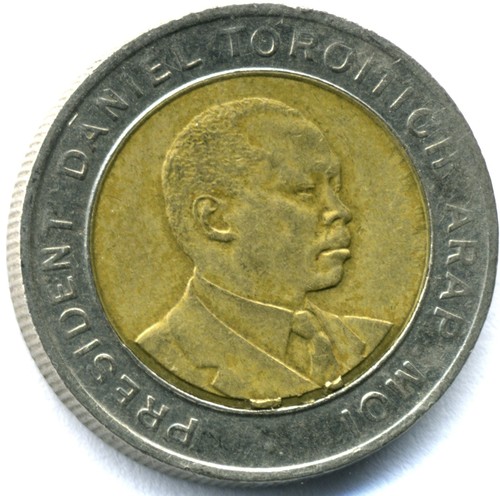
Kenya 5 Shillings
A modern bimetallic Kenyan coin pairing a President's portrait with the national coat of arms and the bold value 5 shillings.
World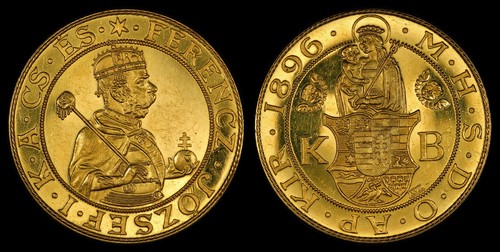
Hungarian 9 Ducats
A large gold multiple-ducat piece of Hungary dated 1896, showing a bearded crowned figure with sword and shield and the crowned Hungarian arms.
Bullion/gold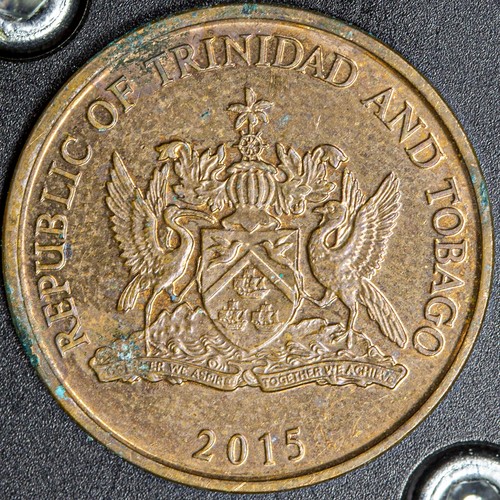
Trinidad and Tobago Dollar
A Trinidad and Tobago one-dollar circulation coin dated 2015, showing the national coat of arms on the obverse and national emblems on the reverse.
Circulation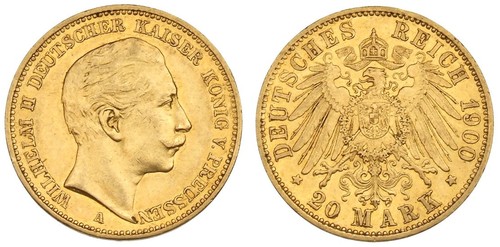
German 20 Mark Gold
German Empire gold 20 mark of Prussia, with Kaiser Wilhelm I's bust and the imperial eagle; a small .900 gold coin from the pre-WWI Goldmark era.
Bullion/gold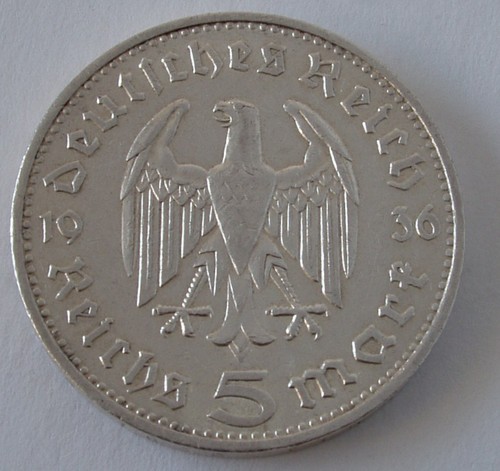
German 5 Reichsmark (Hindenburg)
German silver 5 Reichsmark of the Third Reich, pairing a portrait of Paul von Hindenburg with an eagle-and-swastika reverse; dated 1936.
Circulation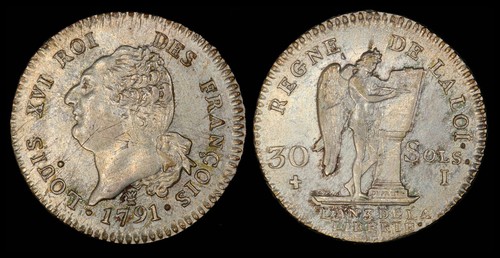
French 30 Sols
A silver coin of the early French Revolution showing Louis XVI as constitutional king on one side and a standing Liberty on the other.
Revolutionary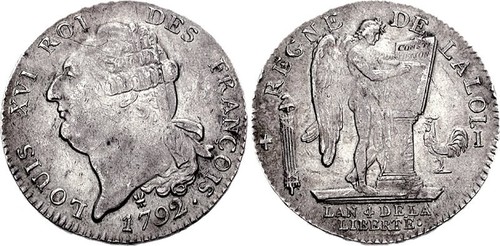
French Constitutional Ecu
A large 1792 French silver ecu of the constitutional monarchy, with a bust of Louis XVI and an allegorical figure of Liberty with fasces.
Revolutionary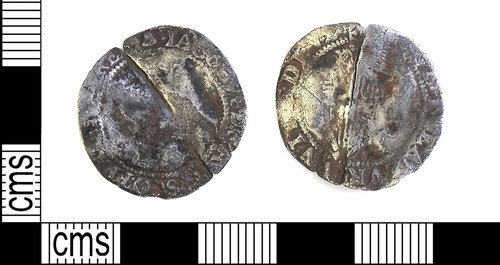
English Sixpence
A hammered silver sixpence of James I, showing his crowned profile bust and a quartered royal shield with a long cross on the reverse.
Hammered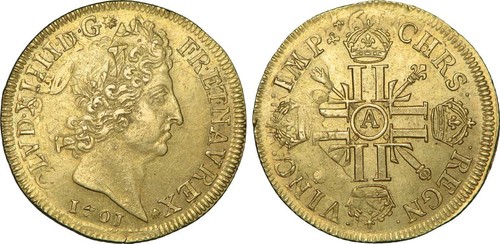
Double Louis d'Or
A large gold coin of Louis XIV dated 1701: the king's laureate profile and 'LUDOVICUS MAGNUS' obverse, an ornate cross of arms reverse.
Royal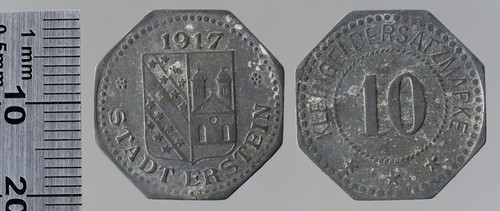
Erstein Notgeld 10 Pfennigs
A 1917 German emergency coin (Notgeld) for 10 Pfennigs from the town of Erstein, with the city coat of arms on one side and a large 10 on the other.
Token/notgeld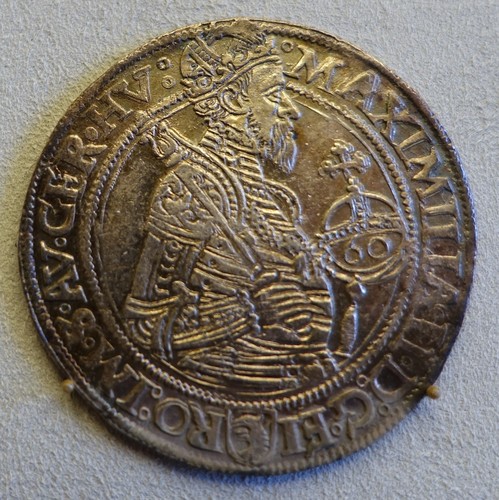
60 Kreuzer Guldiner
A gold 60 Kreuzer Guldiner of the Holy Roman Empire dated 1568, showing Emperor Maximilian II in plumed armor in right profile.
German States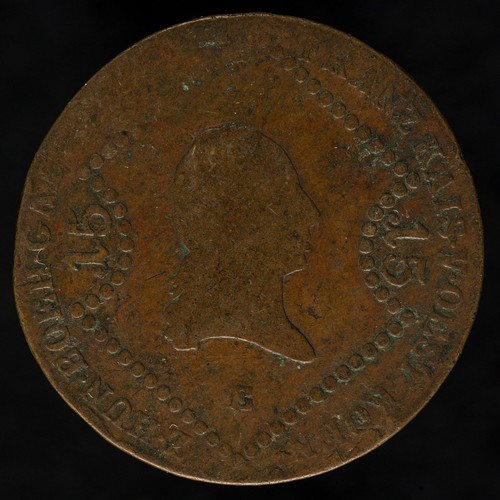
Austria-Hungary 15 Kreuzer
A large copper 15 Kreuzer of 1807 struck under Emperor Franz I, showing his crowned laureate profile on the obverse.
Circulation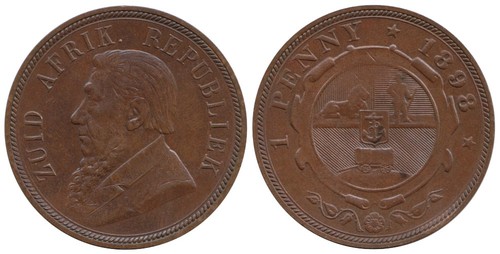
South African Republic Penny
An 1898 copper penny of the old South African Republic (Transvaal): President Paul Kruger's profile obverse, Transvaal coat of arms reverse.
Circulation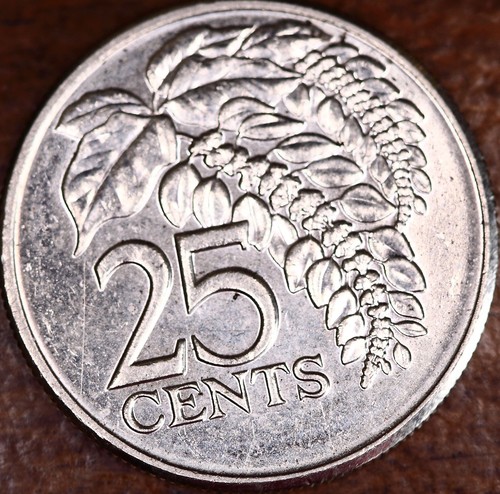
Trinidad and Tobago 25 Cents
A copper-nickel 25-cent coin of Trinidad and Tobago: a leafy national-flower plant design on one face and the value TWENTY FIVE CENTS on the other.
Circulation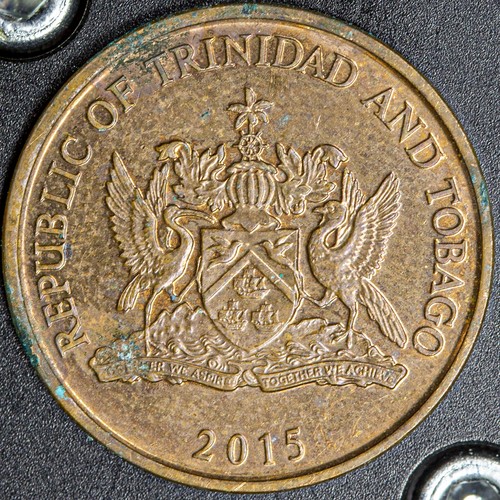
Trinidad and Tobago 1 Dollar
A nickel-plated steel one-dollar coin of Trinidad and Tobago, carrying the national coat of arms and heraldic emblems, dated 2015.
Circulation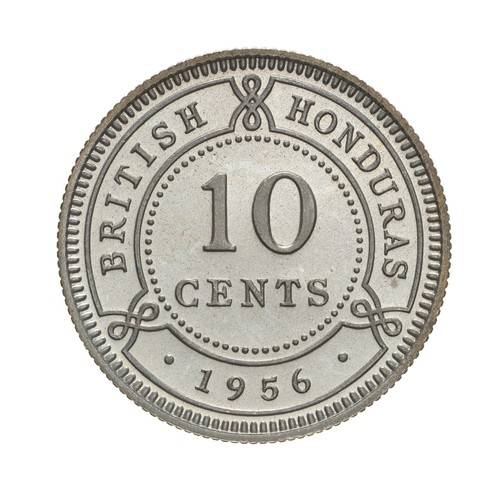
British Honduras 10 Cents
A silver-colored colonial 10 cents of British Honduras, with the Queen's portrait on the obverse and a plain 10 CENTS legend around BRITISH HONDURAS and the date.
Colonial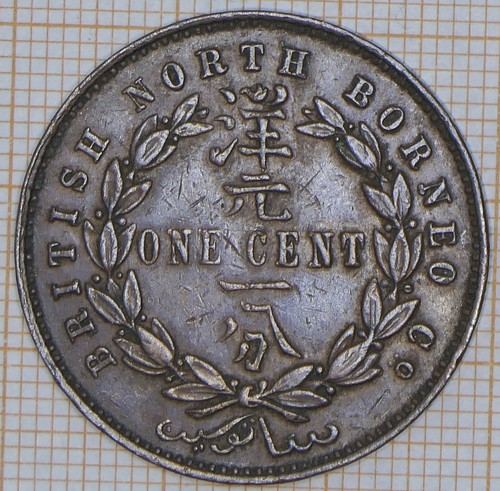
British North Borneo One Cent
A colonial copper cent of the British North Borneo Company: company arms with Dyak supporters and a sailing ship on one side, ONE CENT in a wreath on the other.
Colonial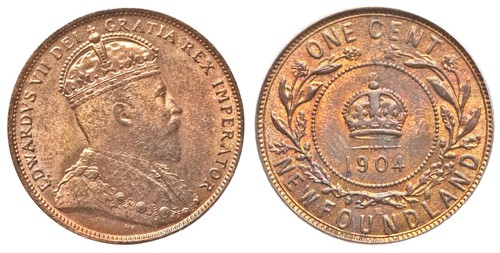
Newfoundland One Cent
Bronze large cent of the colony of Newfoundland; the example shown is a 1904 issue with Edward VII's profile and a wreath reverse.
Canadian & Provincial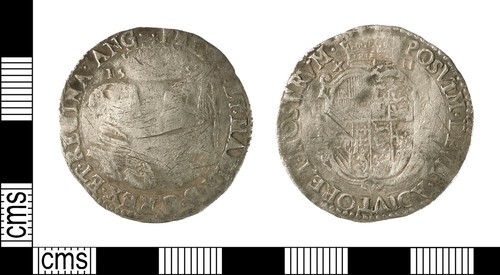
Philip and Mary Shilling
Hammered silver shilling of Philip II of Spain and Mary I (1554-1558), showing their paired royal busts and a crowned quartered shield of arms.
Hammered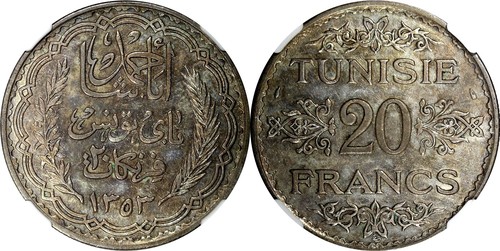
Tunisia 20 Francs (Brass)
A brass 20 francs of French-protectorate Tunisia dated 1950, with Arabic script and geometric design on one face and 'TUNISIE / 20 FRANCS' on the other.
World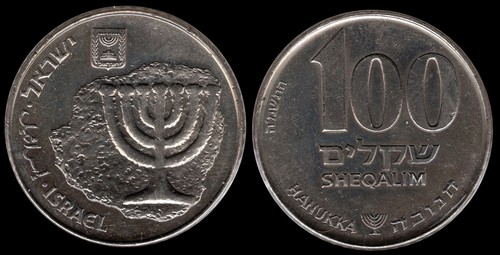
Israel 100 Sheqalim Hanukka Commemorative
A 1985 Israeli silver commemorative for the festival of Hanukka, its obverse dominated by a menorah and festive lamp motif.
World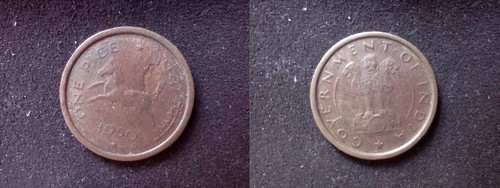
Republic India One Pice
A small bronze one-pice from 1950, the first year of the Republic of India, the lowest coin of the pre-decimal anna series struck in a copper alloy.
Modern India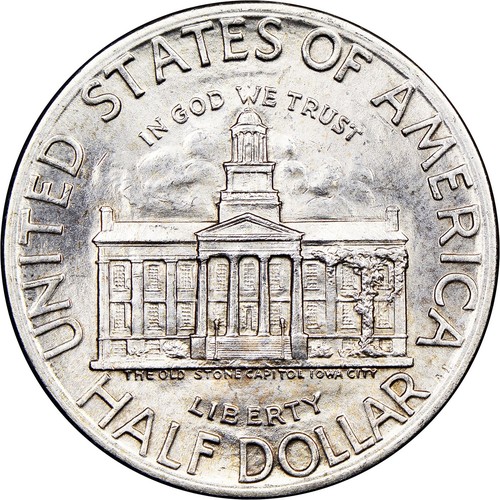
Iowa Centennial Half Dollar
A 1946 U.S. silver half dollar marking a century of Iowa statehood, showing the Old Stone Capitol at Iowa City and the state eagle with the Iowa motto.
Classic Commemorative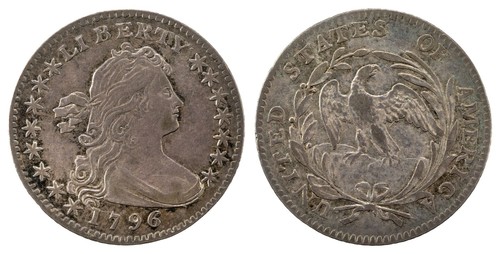
Draped Bust Half Dime
An early U.S. silver five-cent piece showing a draped bust of Liberty ringed by stars; the tiny half dime was struck 1796–1805.
Half Dime