
Coin Encyclopedia
Search and identify coins from around the world — with country, denomination, metal, mint, history, and how to tell them apart.
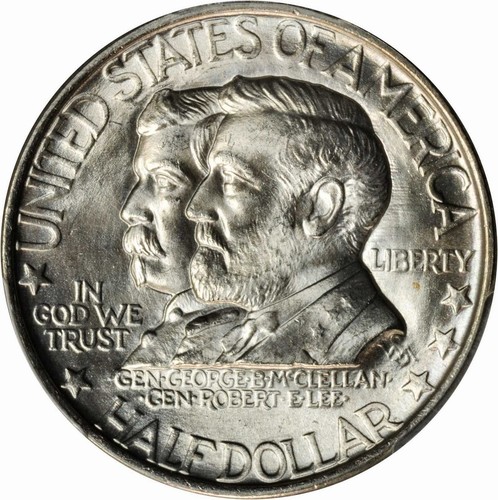
Battle of Antietam Half Dollar
A 1937 U.S. silver half dollar marking 75 years since the Civil War Battle of Antietam, with jugate busts of Lee and McClellan and Burnside Bridge on the reverse.
Classic Commemorative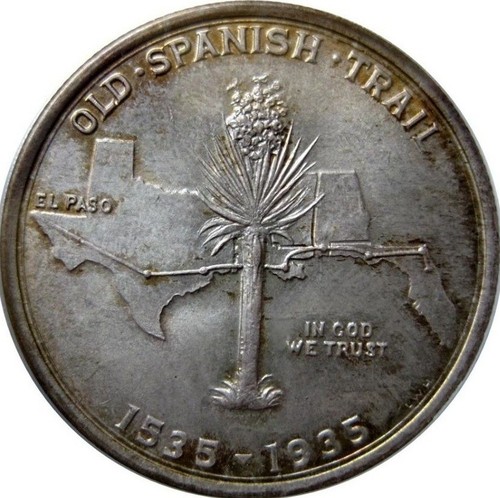
Old Spanish Trail Half Dollar
A 1935 U.S. silver commemorative half dollar marking 400 years of the Old Spanish Trail, with a longhorn cow's head punning on explorer Cabeza de Vaca.
Classic Commemorative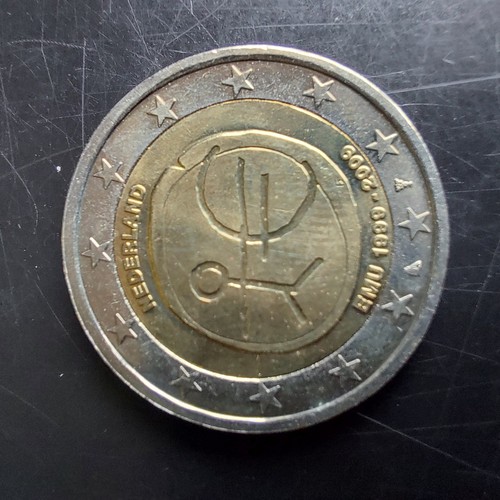
1 Euro (10 Years EMU)
Dutch bi-metallic 1 Euro marking ten years of Economic and Monetary Union, with a stylized integration design and the twin dates 1999 and 2009.
Commemorative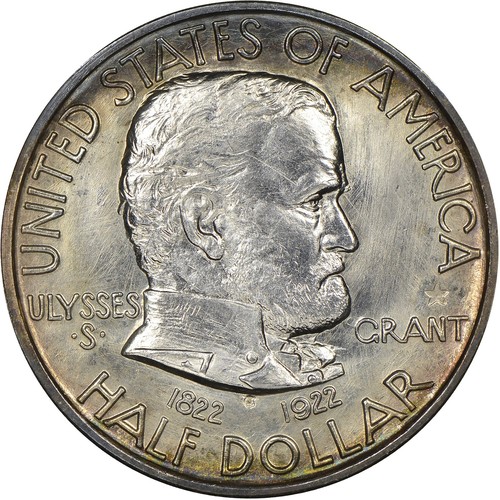
Grant Memorial Half Dollar
A 1922 U.S. silver commemorative marking the centennial of Ulysses S. Grant's birth, with his profile and the dates 1822-1922, issued with and without a star.
Classic Commemorative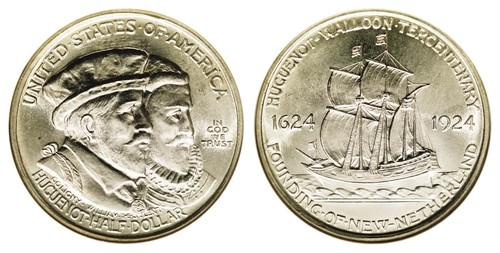
Huguenot-Walloon Tercentenary Half Dollar
A 1924 U.S. silver commemorative half dollar marking 300 years of Huguenot and Walloon settlement in America, with two settler profiles and a sailing ship.
Classic Commemorative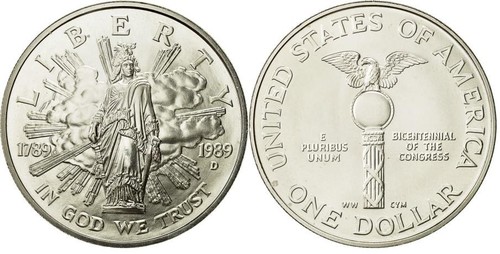
Congress Bicentennial Silver Dollar
A 1989 U.S. commemorative silver dollar marking 200 years of Congress, pairing a standing Liberty-style figure with an eagle above the U.S. Capitol.
Modern Commemorative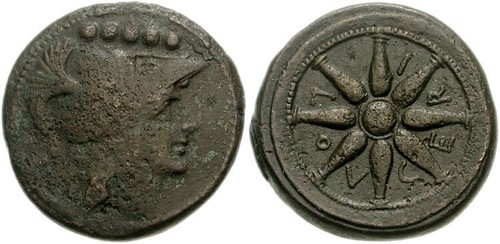
Quincunx of Luceria
A cast bronze quincunx of Luceria in Apulia (3rd century BC), showing a female head and a five-point floral or star device marking five unciae.
Ancient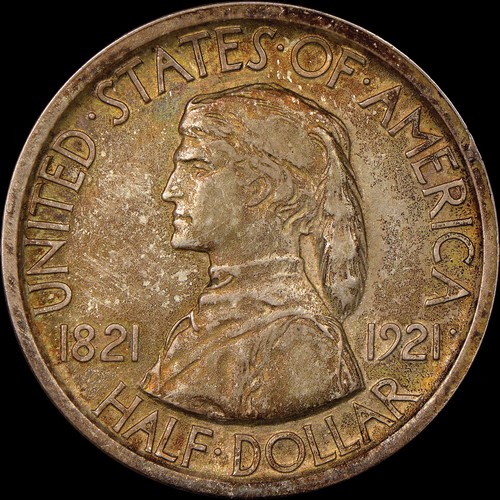
Missouri Centennial Half Dollar
A 1921 U.S. silver commemorative half dollar marking 100 years of Missouri statehood, with a coonskin-capped frontiersman facing left and a frontier-scene reverse.
Classic Commemorative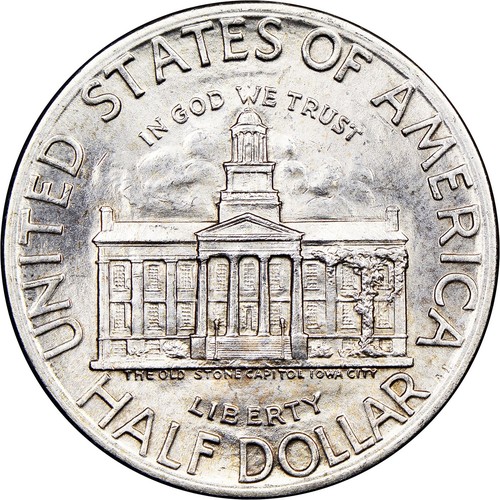
Iowa Centennial Half Dollar
A 1946 U.S. silver half dollar marking a century of Iowa statehood, showing the Old Stone Capitol at Iowa City and the state eagle with the Iowa motto.
Classic Commemorative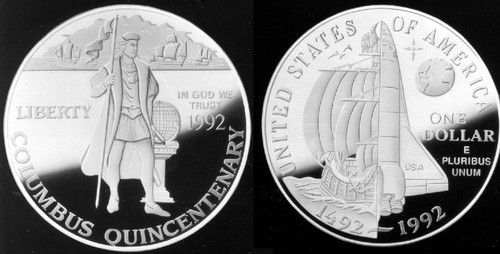
Christopher Columbus Quincentenary Silver Dollar
A 1992 U.S. 90% silver commemorative dollar marking 500 years since Columbus's 1492 voyage, with a standing Columbus obverse and a sailing-ship reverse.
Modern Commemorative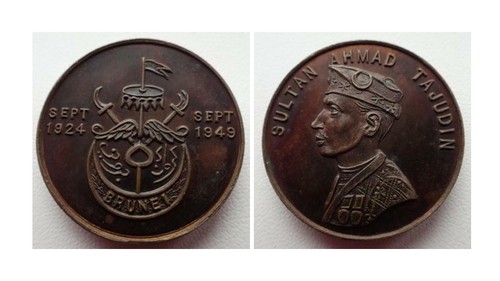
Brunei Silver Jubilee Commemorative
A bronze Brunei commemorative marking the 1949 Silver Jubilee of Sultan Ahmad Tajuddin, dated SEPT 1924 to SEPT 1949 with his right-facing portrait.
Southeast Asia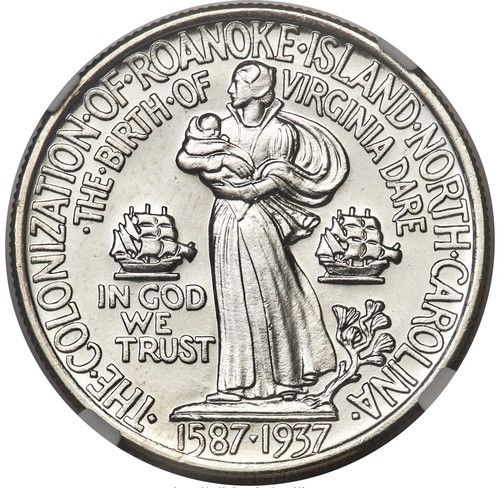
Roanoke Island Half Dollar
A 1937 U.S. silver half dollar marking 350 years since the Roanoke Island colony and the birth of Virginia Dare, with Sir Walter Raleigh and a sailing ship.
Classic Commemorative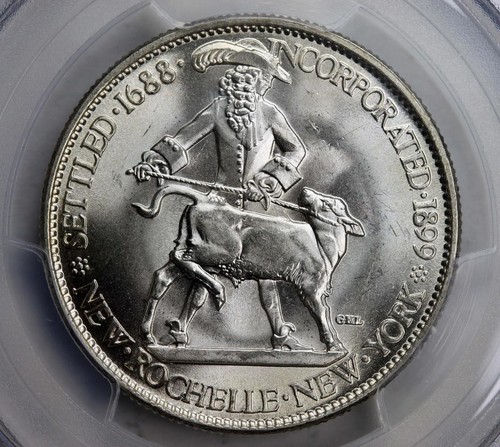
New Rochelle Half Dollar
A 1938 U.S. silver half dollar marking the 250th anniversary of New Rochelle, New York, with a Huguenot founder leading a fatted calf and a fleur-de-lis reverse.
Classic Commemorative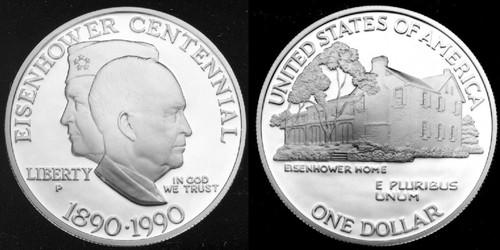
Eisenhower Centennial Dollar
A 1990 U.S. commemorative silver dollar marking 100 years since Dwight D. Eisenhower's birth, with his left-facing profile and his Gettysburg home on the reverse.
Dollar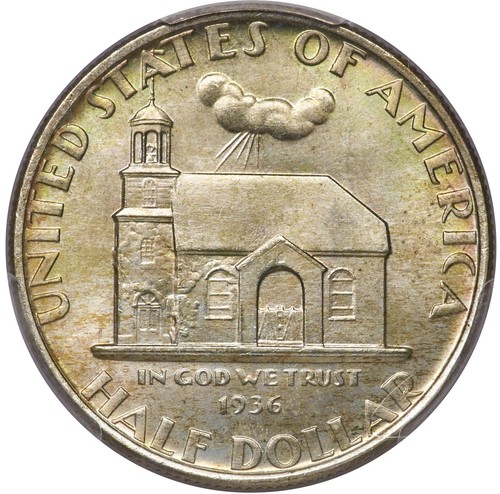
Delaware Tercentenary Half Dollar
A 1936 U.S. silver half dollar marking 300 years since Swedish colonists landed in Delaware, showing Old Swedes Church on one side and the ship Kalmar Nyckel on the other.
Classic Commemorative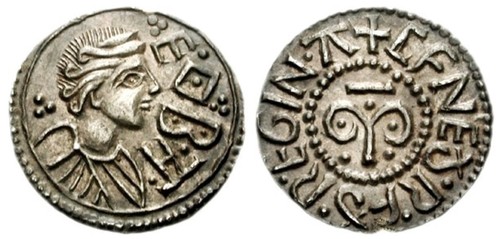
Penny of Cynethryth
Anglo-Saxon silver penny of Cynethryth, queen of Mercia and wife of Offa, and the only Anglo-Saxon queen named on her own coinage.
Medieval Coins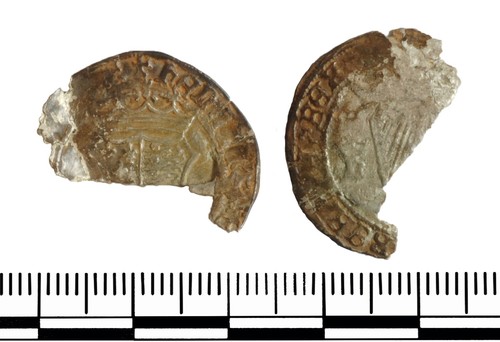
Irish Groat of Henry VIII
A hand-hammered silver fourpence struck for Ireland under Henry VIII, famed for introducing the crowned harp to Irish coinage.
Hammered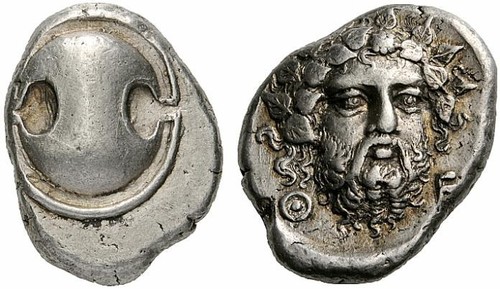
Thebes Stater
Silver stater of Thebes with the Boeotian shield and a bearded head of Dionysos, struck as federal coinage of the Boeotian League, c. 395-338 BC.
Ancient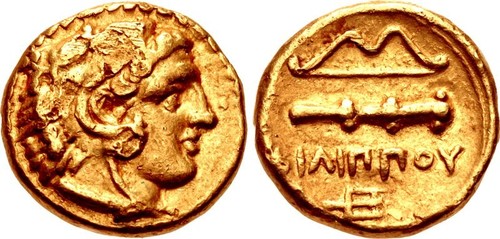
Alexander the Great Gold Quarter Stater
A small gold fraction of the Alexander the Great coinage, showing the head of Heracles and an eagle perched on a thunderbolt, the attributes of Zeus.
Ancient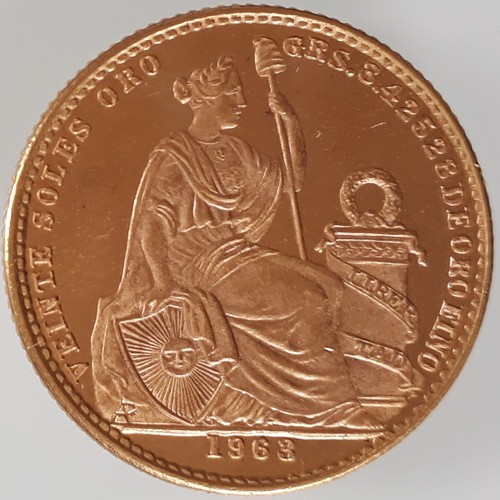
20 Soles de Oro
A Peruvian gold 20 soles de oro showing a seated Liberty with crown, torch and radiant sun, part of Peru's mid-20th-century gold coinage.
Circulation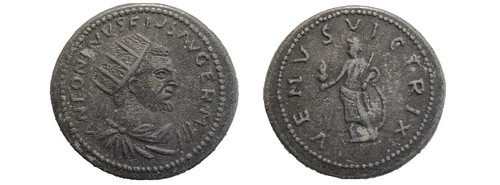
Antoninianus of Caracalla
The antoninianus introduced by Caracalla around AD 215, a radiate-crowned double denarius in debased silver that reshaped Roman coinage.
Ancient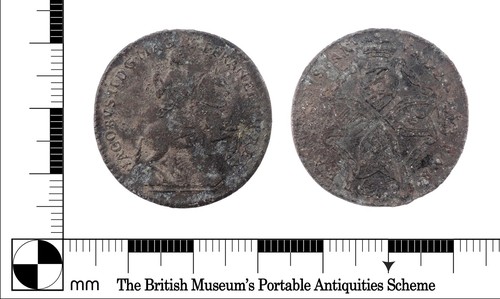
American Plantations Token
A 1688 tin token struck under James II for England's American colonies, valued at 1/24 of a Spanish real — the first regal-authorized coinage for British America.
Colonial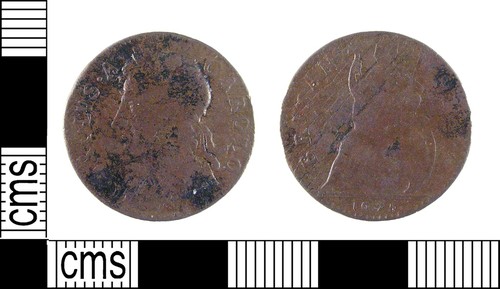
Charles II Halfpenny
A milled copper halfpenny of Charles II showing his laureate bust and a seated Britannia, part of the first regal copper coinage of England, dated 1675.
Milled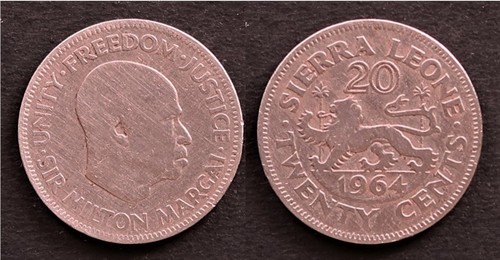
Sierra Leone 20 Cents
A 1964 Sierra Leone 20 cents from the country's first decimal coinage, showing a portrait profile on one side and the national coat of arms with its lion on the other.
World