
Coin Encyclopedia
Search and identify coins from around the world — with country, denomination, metal, mint, history, and how to tell them apart.
5 Francs Semeuse
France's silver 5 francs of the New Franc era: Roty's striding Semeuse (Sower) on the obverse, the value in an olive spray on the reverse.
Circulation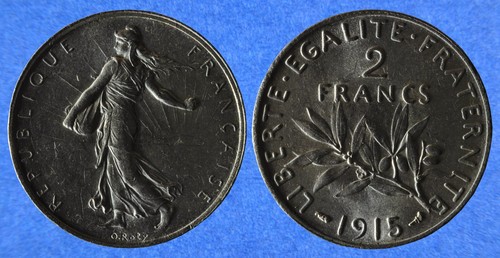
2 Francs Semeuse
A French silver two francs of the Third Republic showing Roty's striding Semeuse (Sower) on the obverse and the value with the national motto on the reverse.
Circulation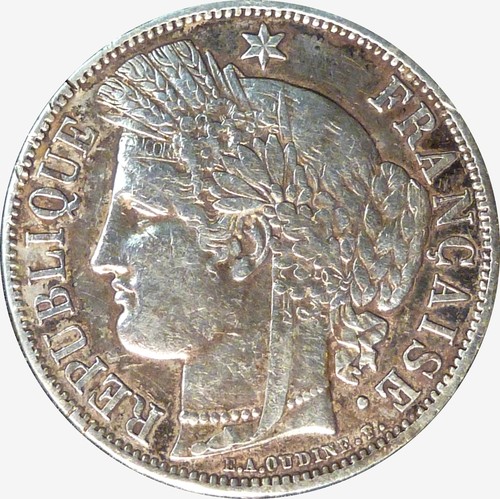
5 Francs Ceres
France's large silver 5 francs bearing the wreathed head of Cérès, goddess of the harvest, with the value framed by laurel on the reverse.
Circulation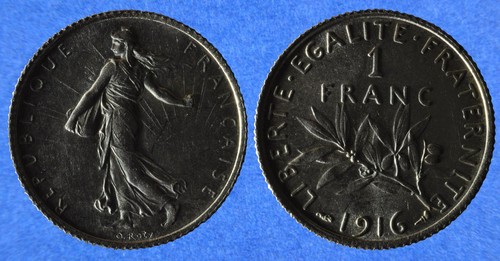
1 Franc Semeuse
A small silver French franc showing Roty's Semeuse, the striding Sower scattering seed at dawn, with the 1916 date on the LIBERTE EGALITE FRATERNITE reverse.
Circulation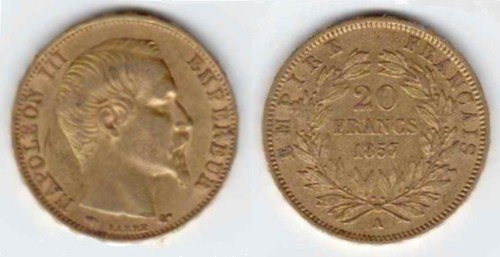
20 Francs Napoleon
A small 21 mm French gold coin bearing Napoleon III's profile and a wreathed 20 FRANCS reverse — the classic gold Napoleon, here dated 1857.
Bullion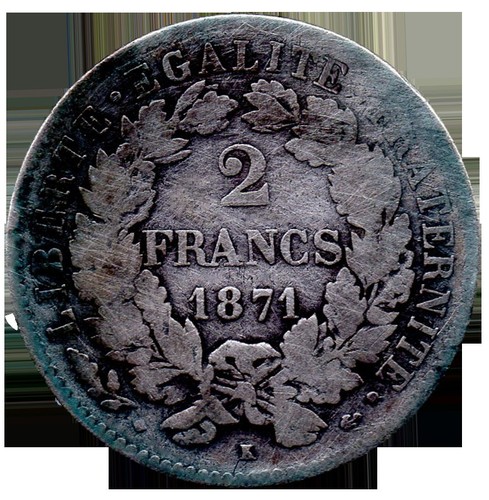
2 Francs Ceres
A French silver two francs of the early Third Republic showing the head of Cérès with a star on the obverse and the value within a wreath on the reverse.
Circulation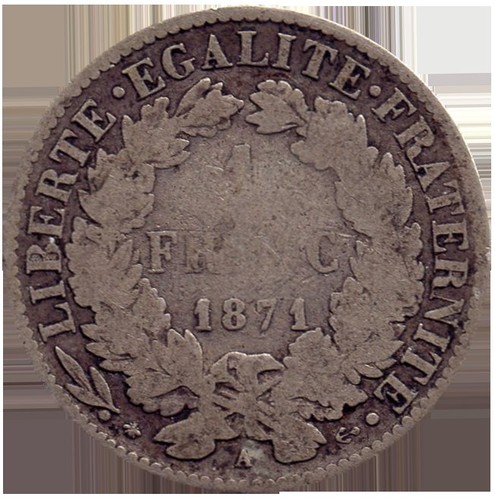
1 Franc Ceres
A small silver French franc showing the head of Cérès, goddess of the harvest, wearing wheat and a star, with the LIBERTE EGALITE FRATERNITE reverse dated 1871.
Circulation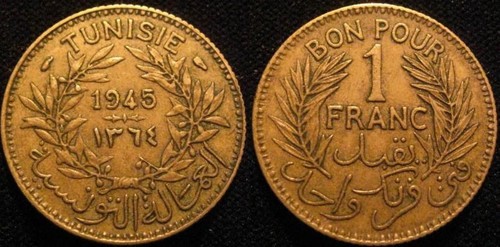
Tunisia 1 Franc
A small golden aluminum-bronze 1 franc of French-protectorate Tunisia, reading TUNISIE with a wreath and 'BON POUR 1 FRANC' beside Arabic script.
World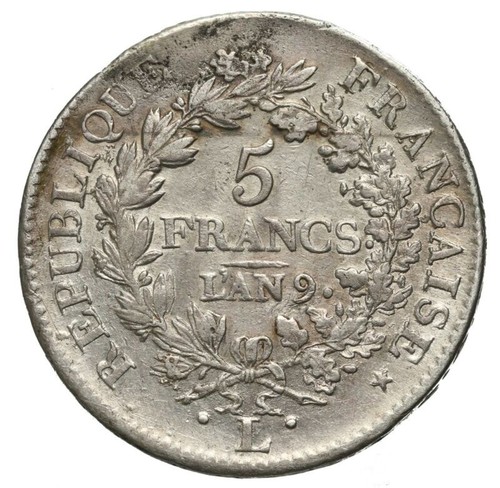
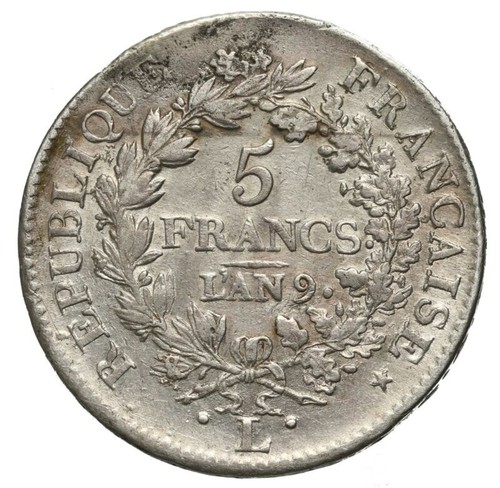
5 Francs (First Republic)
A large silver 5-franc crown of the French First Republic, dated by the revolutionary calendar as L'an 9 (1800–1801), with a right-facing Liberty head.
Circulation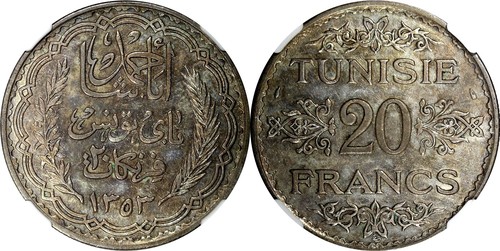
Tunisia 20 Francs (Brass)
A brass 20 francs of French-protectorate Tunisia dated 1950, with Arabic script and geometric design on one face and 'TUNISIE / 20 FRANCS' on the other.
World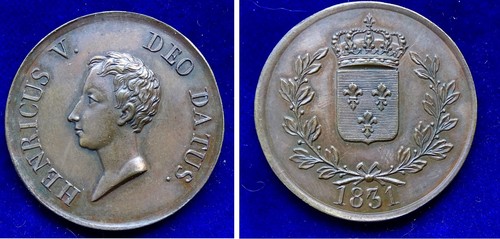
Henri V Five Francs
An 1831 French five-franc piece struck for the Legitimist pretender Henri V, showing his young profile and the royal fleur-de-lis shield.
World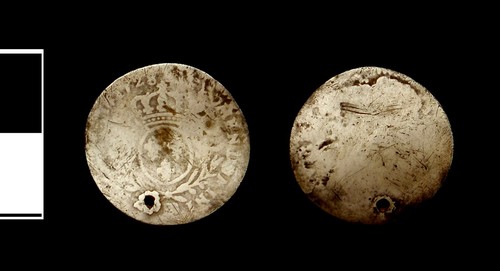
Unidentified Silver Coin (Louis XV era)
An 18th-century French royal silver coin of the Louis XV era, showing a right-facing bust and a crowned fleur-de-lis shield; the exact denomination is not confirmed.
Royal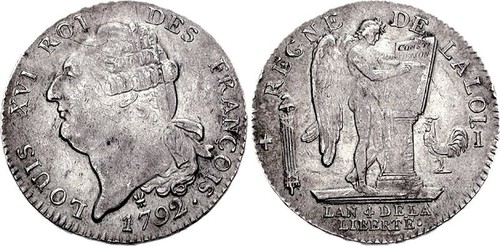
Constitutional Ecu
A French silver ecu of the constitutional-monarchy era showing King Louis XVI on the obverse and a standing armed Liberty figure on the reverse, dated 1792.
Revolutionary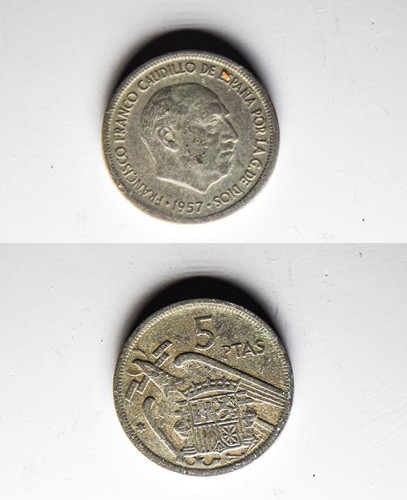
25 Pesetas (Franco)
Spain's common Franco-era 25 pesetas, a silvery copper-nickel coin bearing the national coat of arms and the value 25; dated 1957 but struck into the 1970s.
Modern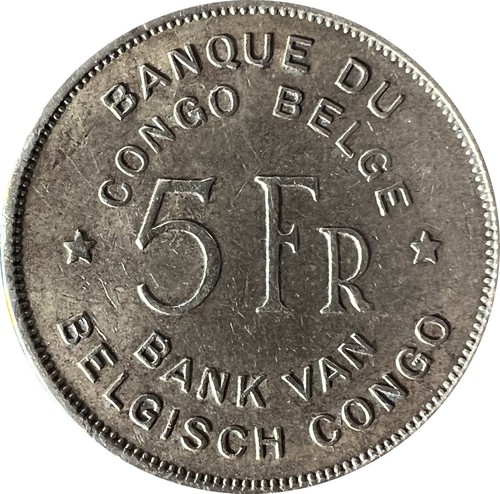
Congo 5 Francs
A modern circulation coin of the Democratic Republic of Congo, showing the central bank name and the value 5 Francs with decorative devices.
World
Swiss 5 Francs
Large .900 silver Swiss crown of 1888–1916, showing a Helvetia head on one face and the Swiss cross shield within a wreath on the other.
World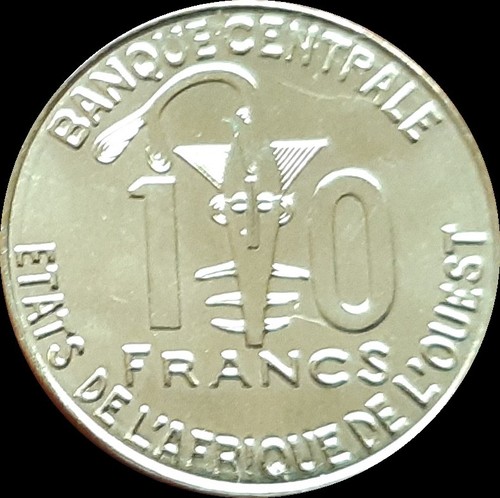
10 CFA Francs
A small modern circulation coin of the West African CFA franc zone, showing a stylized traditional emblem and the bold value 10.
World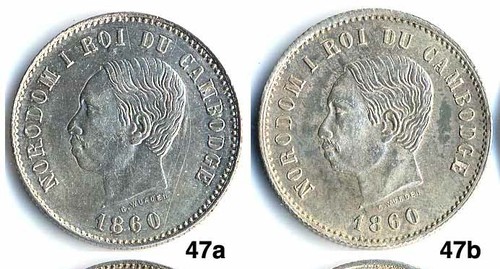
Cambodia Two Francs
A crown-sized Cambodian Two Francs of King Norodom I, its obverse a royal profile and DEUX FRANCS reverse over a crowned coat of arms; dated 1860 but long restruck.
Southeast Asia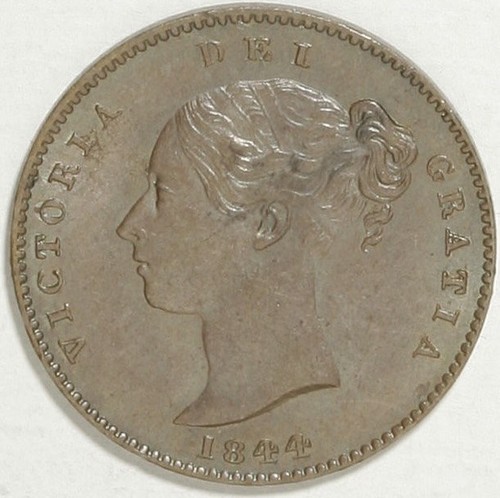
British Third Farthing
A tiny 1844 Victoria copper coin: young left-facing queen's bust obverse, crowned value reverse. One of Britain's smallest denominations, struck for Malta.
Circulation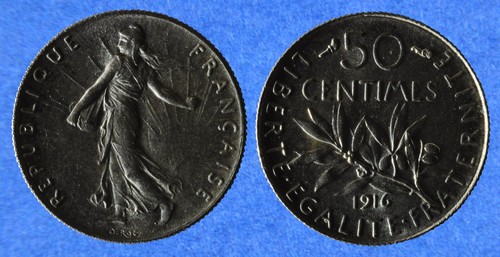
50 Centimes Semeuse
A small silver French 50 centimes with Roty's striding Semeuse (sower) on the obverse and the value within the national motto on the reverse.
Circulation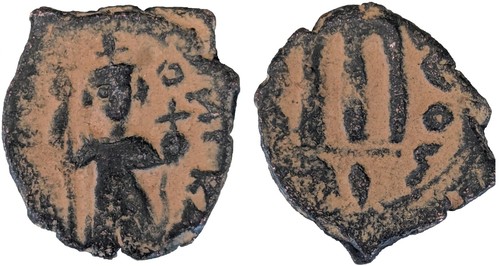
Byzantine Follis
Large bronze follis of the Byzantine Empire, this example under Constans II (from 641 AD), with an imperial portrait and a big M value mark topped by a cross.
Medieval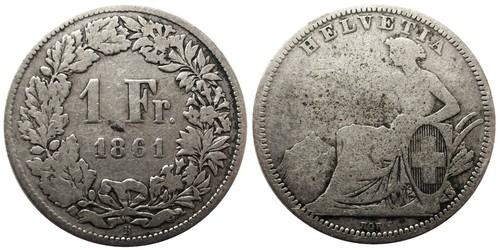
Swiss 1 Franc
A silver Swiss 1 Franc dated 1861, with the figure of Helvetia and the national coat of arms on one side and the value '1 Fr' in wreaths on the other.
Circulation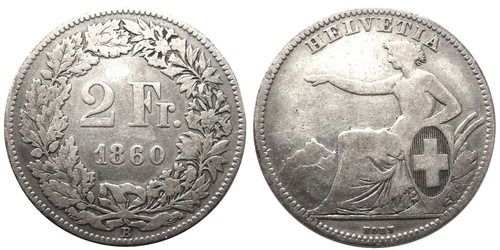
Swiss 2 Francs
A silver Swiss 2 Francs dated 1860, with the value and date in a wreath on one side and a seated Helvetia bearing the Swiss cross on the other.
Circulation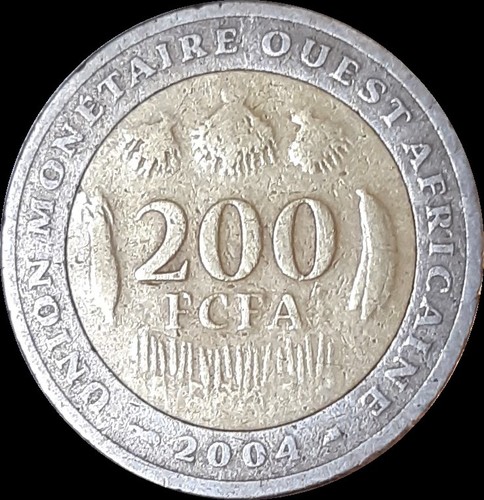
200 CFA Francs
A modern West African CFA coin worth 200 francs, showing a bold '200 FCFA' with decorative border on one face and a crossed emblem on the other.
World