
Coin Encyclopedia
Search and identify coins from around the world — with country, denomination, metal, mint, history, and how to tell them apart.
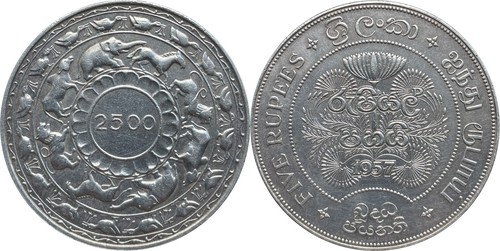
Ceylon 5 Rupees
A 1957 Ceylon silver 5 Rupees marking 2500 years of Buddhism, with a large 2500 on one side and RUPEES CEYLON with the 1957 date on the other.
Commemorative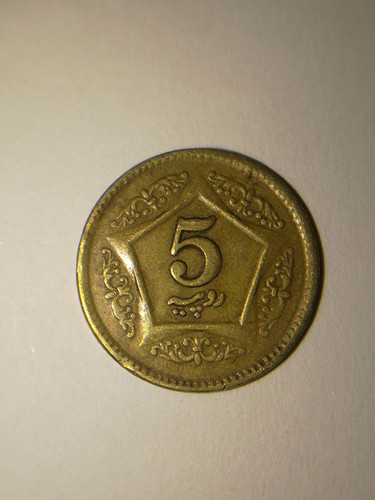
Pakistan 5 Rupees
A brass Pakistani five-rupee coin with a large numeral 5 set in an ornamental frame and Islamic-style Urdu calligraphy around both faces.
South Asia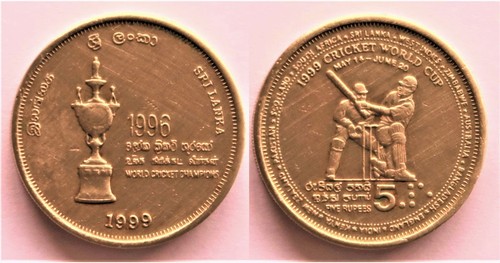
Sri Lanka 5 Rupees
Sri Lanka's 1999 copper-nickel five rupees marking the Cricket World Cup, showing the tournament trophy on one face and a batsman at the crease on the other.
South Asia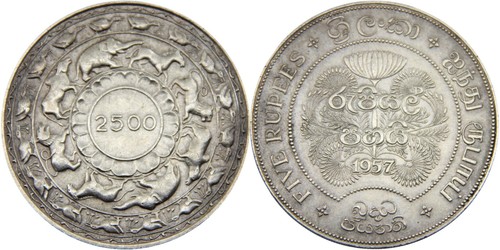
Ceylon 5 Rupees Buddhism Anniversary
Ceylon's 1957 silver five rupees marking 2,500 years of Buddhism, with an ornate 2500 device amid mythological creatures and a scrolled RUPEES reverse.
South Asia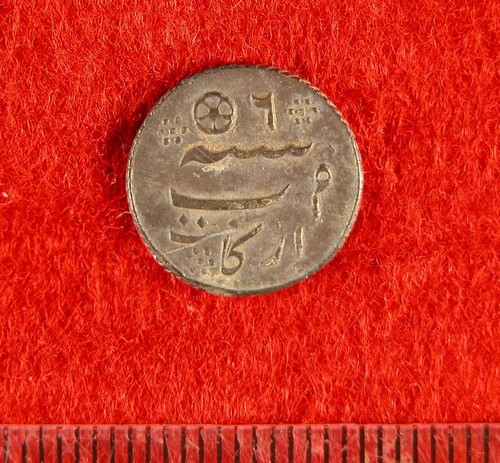
Indian Silver Coin
A silver coin of British India bearing Persian/Urdu calligraphy and a mint mark, in the Mughal-derived inscriptional style of Company-era coinage.
British India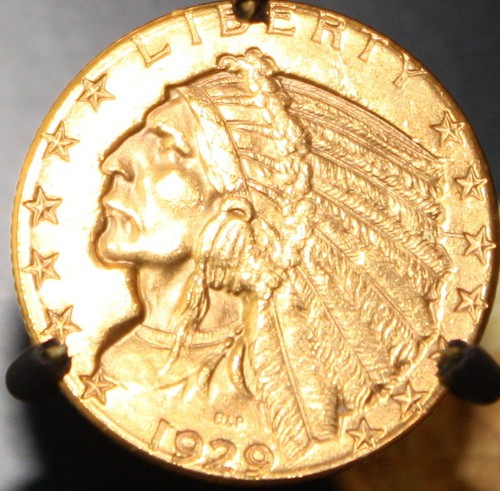
Indian Head Half Eagle
U.S. $5 gold half eagle struck 1908–1929, with an unusual sunken (incuse) design: a headdressed Native American obverse and a standing eagle reverse.
Half Eagle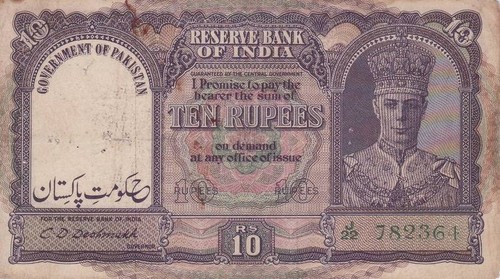
India 10 Rupees
A silver-era Indian coin carrying the profile of King George VI, struck during the final years of British India and the transition to the Republic.
Circulation
India Half Rupee (Copper)
Copper coin bearing a lion design with the English legend 'HALF RUPEE INDIA' and the date 1947, dated to the year of Indian independence.
Modern India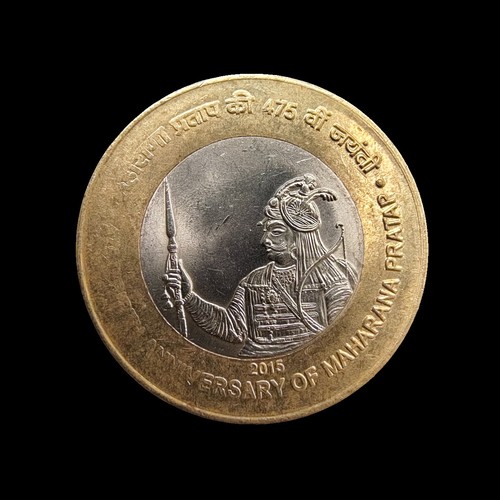
India 10 Rupees Commemorative
Bi-metallic Indian 10-rupee commemorative honoring Maharana Pratap, shown in armor with a sword and Devanagari inscription, dated 2015.
Modern India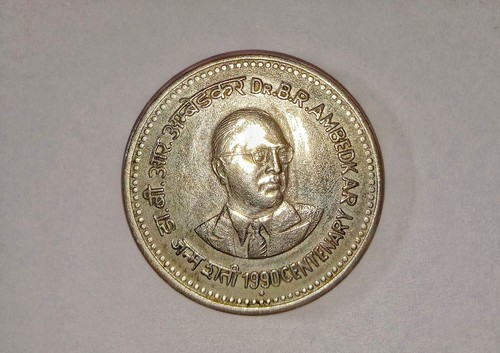
Ambedkar Centenary One Rupee
A 1990 Indian one-rupee commemorative honoring the birth centenary of Dr. B.R. Ambedkar, its obverse bearing his bespectacled portrait and bilingual legend.
Modern India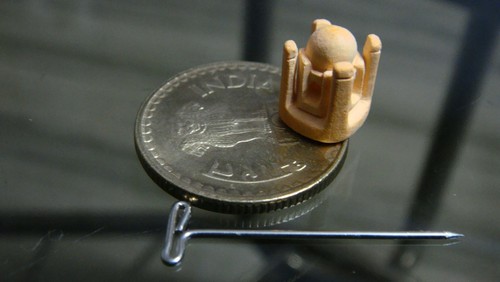
India 1 Rupee Commemorative
Copper-nickel Republic of India one rupee showing the Ashoka Lion Capital emblem, with the value and Devanagari legends on the reverse, from the late 20th century.
Modern India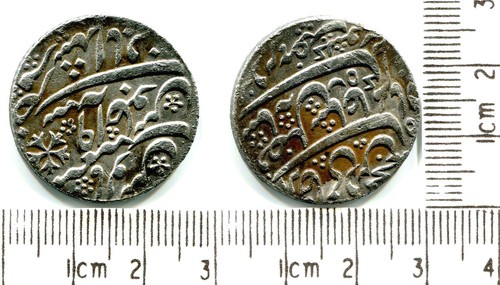
East India Company Rupee
British East India Company silver rupee struck to the Mughal pattern, carrying only Persian/Urdu calligraphy naming the reigning emperor.
British India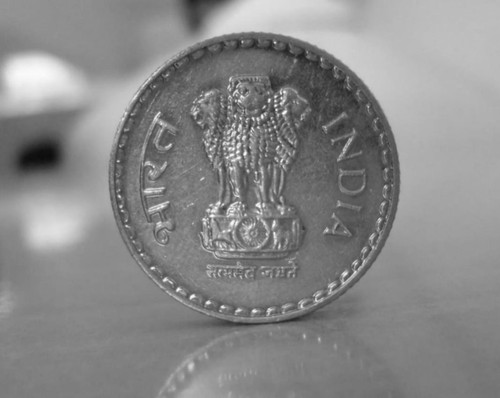
India One Rupee (Cupronickel)
A 1947 British India one rupee in cupro-nickel, its obverse bearing King George VI's crowned bust and its reverse a striding lion above ONE RUPEE INDIA.
Modern India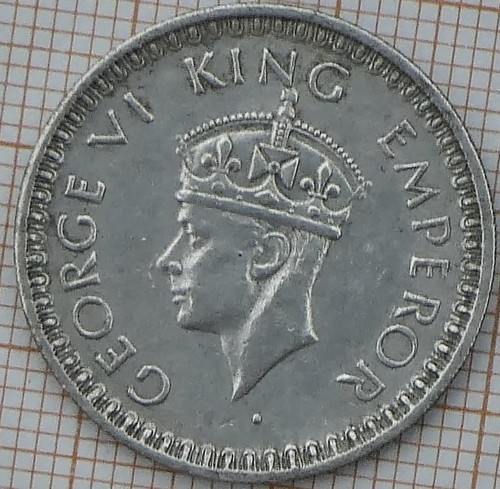
India 50 Paise
A George VI half-rupee of British India dated 1946 — the pale nickel-brass ancestor of the modern 50 paise, with a crowned royal bust and a rampant lion reverse.
Modern India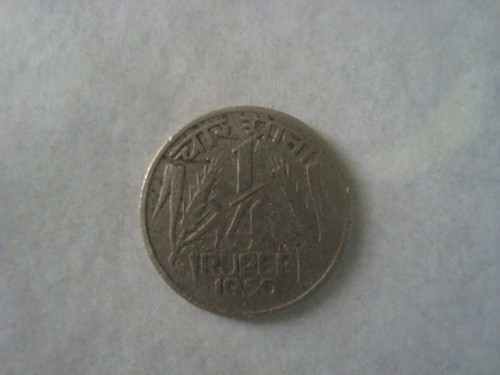
India Four Anna
An early Republic of India quarter rupee (four annas) of 1950, showing the Ashoka Lion Capital emblem with radiating rays and the country name INDIA.
Modern India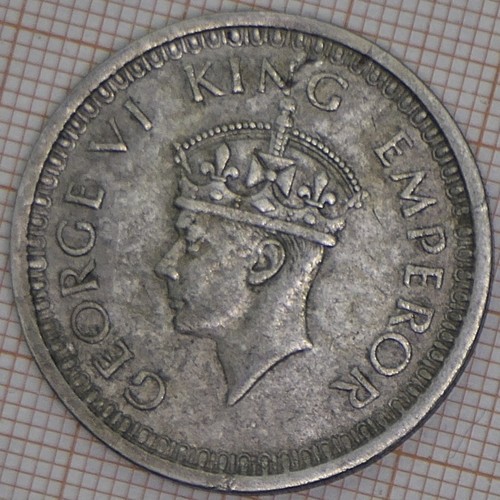
Victoria One Rupee
Silver 1-rupee coin of British India bearing Queen Victoria's crowned bust, struck from 1862 to 1901 under Crown rule.
British India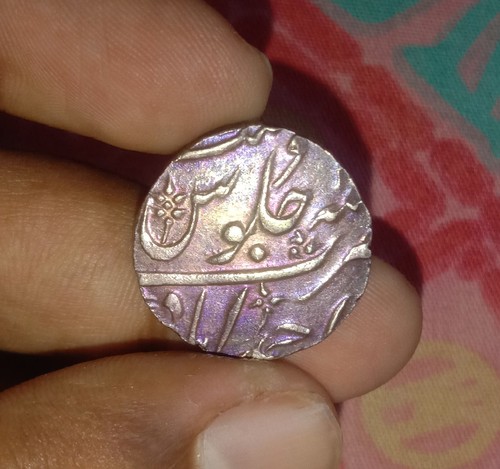
Silver Rupee of Bombay Presidency
British East India Company silver rupee struck at Bombay in the name of Mughal emperor Akbar II, bearing Persian legends.
Princely & Presidency States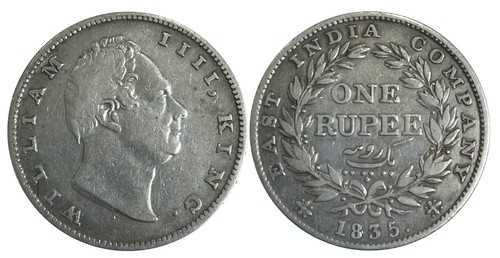
William IV One Rupee
Silver one-rupee coin of British India struck in 1835 under the East India Company, bearing the right-facing bust of King William IV.
British India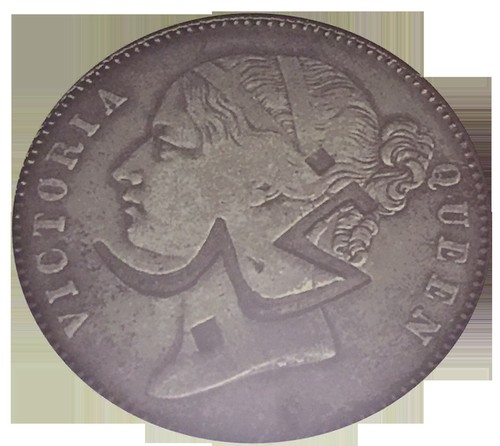
Najd Silver Coin
Silver trade coin catalogued to Najd, central Arabia, bearing a left-facing Victoria Queen bust and an 1862 date in the British India rupee style.
Arabia