
Coin Encyclopedia
Search and identify coins from around the world — with country, denomination, metal, mint, history, and how to tell them apart.
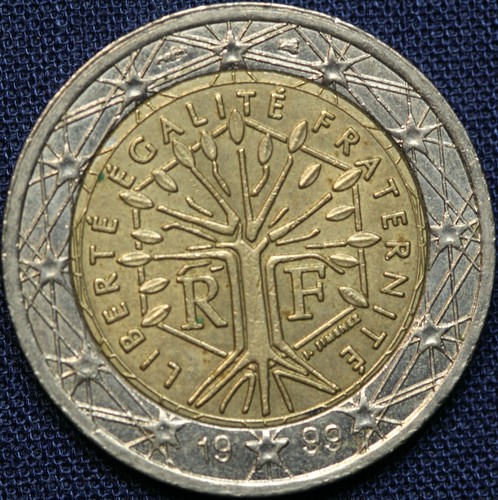
France 1 Euro
France's bimetallic 1 euro coin, with a stylized leafy tree inside a hexagon on the national side and the euro value with a map of Europe on the common side.
Euro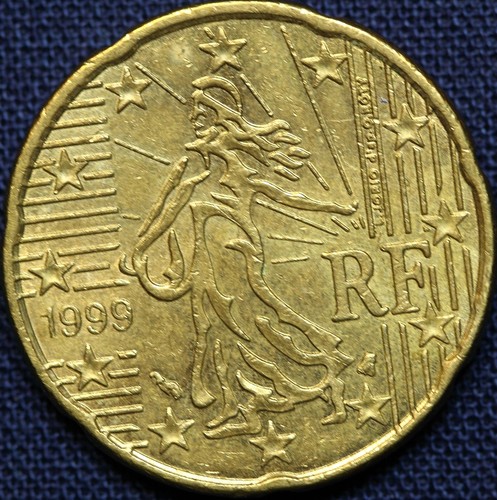
France 50 Cent Euro
France's gold-coloured 50 euro cent coin, showing the striding Sower (Marianne) among the EU stars on one side and the value 50 on the other.
Circulation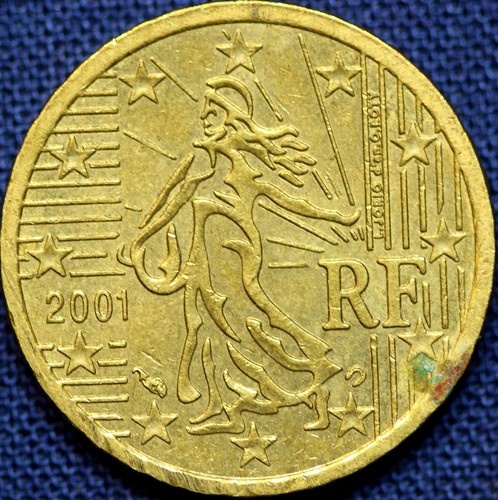
France 10 Cent Euro
France's gold-coloured 10 euro cent: the striding Sower for the French Republic on one side, a European map and the value 10 on the other.
Circulation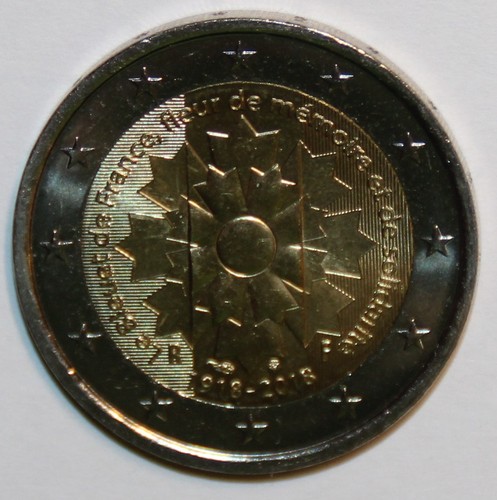
France 2 Euro Bleuet de France Commemorative
A French bi-metallic 2 euro commemorative showing the Bleuet de France cornflower, France's remembrance flower, paired with the shared European 2 euro side.
Commemorative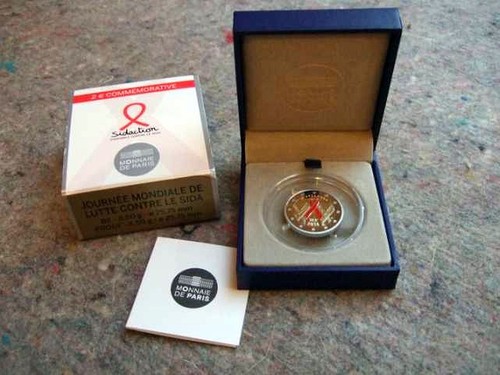
France 2 Euro Sidaction Commemorative
France's 2014 bi-metallic 2 euro commemorative honouring Sidaction, shown with a red AIDS-awareness ribbon and paired with the shared European reverse.
Commemorative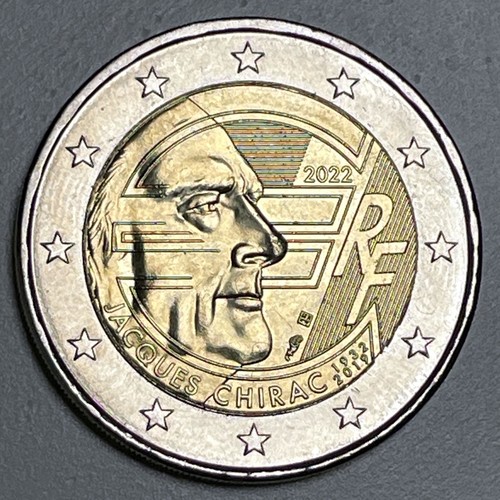
France 2 Euro Jacques Chirac Commemorative
France's 2022 bi-metallic €2 commemorative honouring former president Jacques Chirac, showing his right-facing profile paired with the standard euro reverse.
Commemorative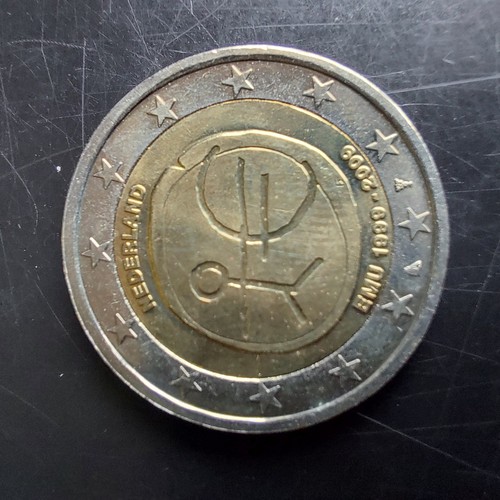
1 Euro (10 Years EMU)
Dutch bi-metallic 1 Euro marking ten years of Economic and Monetary Union, with a stylized integration design and the twin dates 1999 and 2009.
Commemorative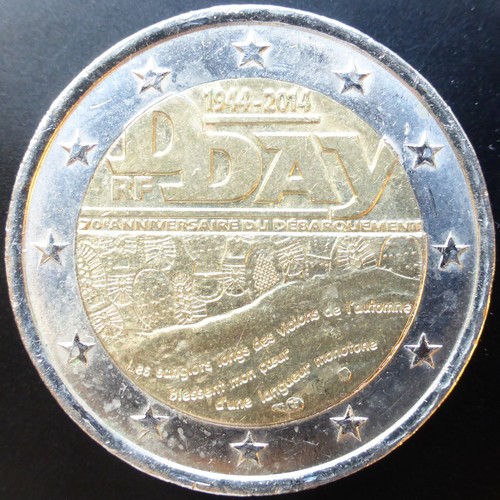
France 2 Euro D-Day Anniversary Commemorative
A 2014 French bi-metallic 2 euro commemorating the 70th anniversary of the D-Day landings, dated 1944-2014 with a ring of EU stars.
Commemorative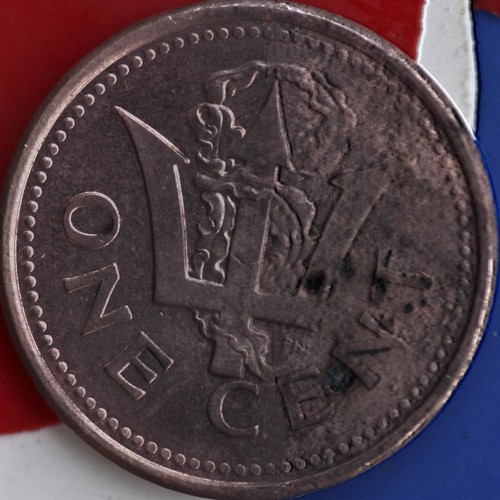
Barbados 1 Cent
A modern copper-colored Barbados one cent: the national coat of arms on the obverse and the value on the reverse, the smallest coin of the Barbadian dollar.
Circulation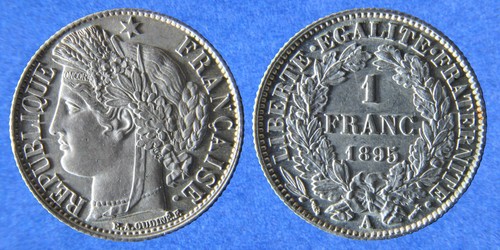
French Cérès 1 Franc
A .835 silver French 1 Franc showing the goddess Cérès in a liberty cap; this example is an 1895 Third Republic issue with a wreath-and-value reverse.
Circulation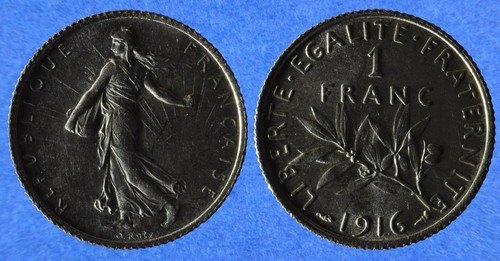
French Semeuse 1 Franc
France's classic silver 1 franc showing the Semeuse (Sower) with a liberty cap, backed by an oak-and-olive wreath around the value; this example is dated 1916.
Circulation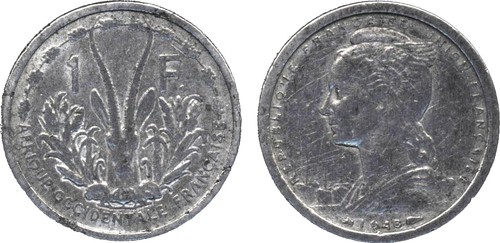
French West Africa 1 Franc
A lightweight aluminum 1 Franc dated 1948 for French West Africa, with an allegorical female head on the obverse and the value framed by AFRIQUE-OCCIDENTALE FRANCAISE on the reverse.
World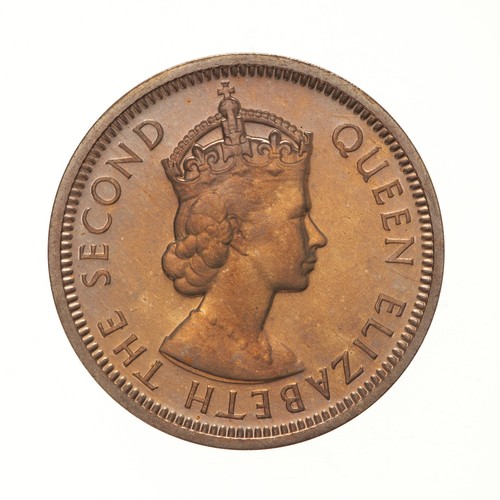
Belize 1 Cent
A small bronze one-cent coin from the Caribbean nation now called Belize, carrying a portrait of Queen Elizabeth II and dated 1954.
Circulation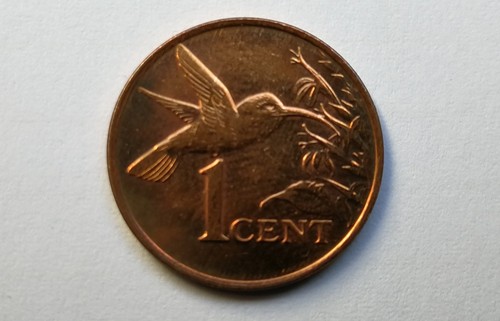
Trinidad and Tobago 1 Cent
The small copper-colored one cent of Trinidad and Tobago, with a hummingbird obverse and a plain value-and-name reverse.
Circulation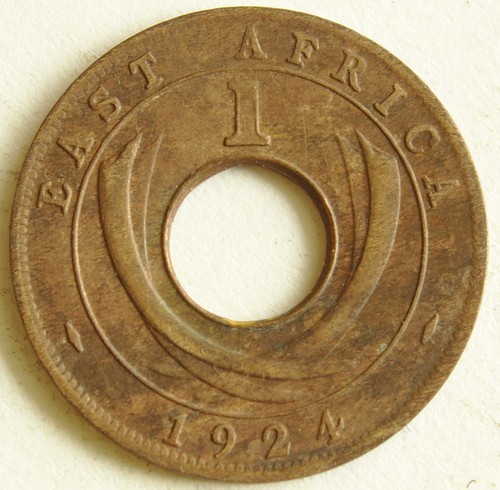
East African 1 Cent
A small holed copper 1 Cent of British East Africa dated 1924, with a crown and decorative rings on one face and the value framing the central hole on the other.
World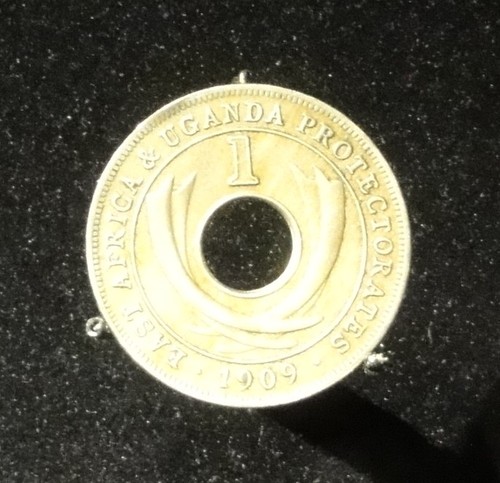
East Africa Protectorate 1 Cent
A small holed one-cent coin of the British East Africa Protectorate, struck in base metal with a crowned, portrait-free design around a central hole.
World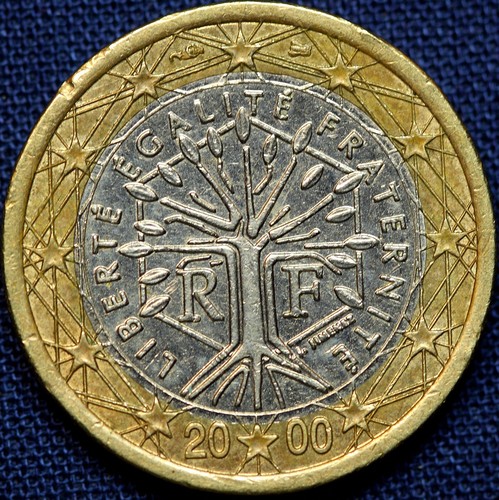
France 20 Centimes
A small gold-colored French Fifth Republic coin showing Marianne in profile, worth one-fifth of a franc, struck for four decades before the euro.
Circulation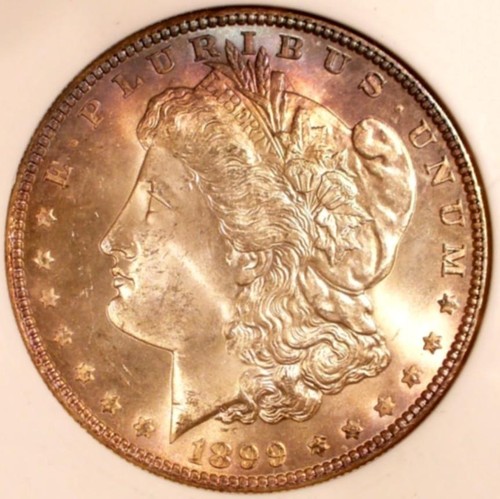
French Silver Franc
A small Third Republic silver 1-franc coin with an allegorical Marianne head and a REPUBLIQUE FRANCAISE reverse; the pictured piece is dated 1899.
World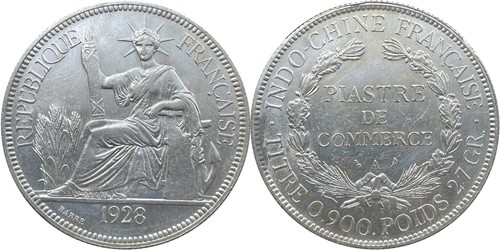
French Indochina Piastre
A 1928 silver piastre of French Indochina, its obverse showing seated Liberty with torch and laurel, its reverse reading UNION INDOCHINE FRANÇAISE in a floral wreath.
Southeast Asia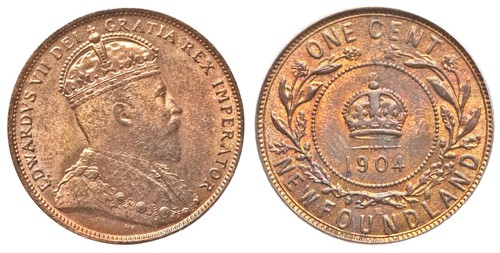
Newfoundland One Cent
Bronze large cent of the colony of Newfoundland; the example shown is a 1904 issue with Edward VII's profile and a wreath reverse.
Canadian & Provincial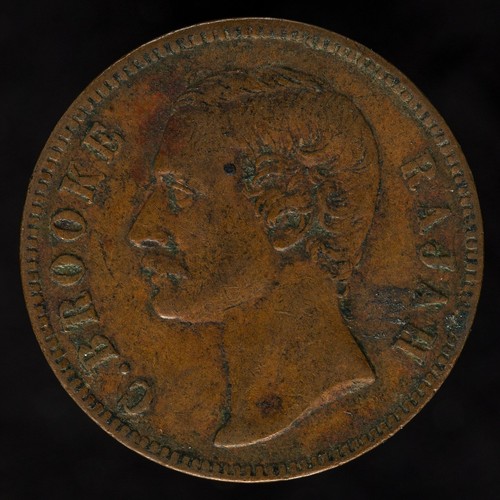
Sarawak One Cent
A large copper cent of the Brooke Rajahs of Sarawak, showing the Rajah's portrait on the obverse and SARAWAK ONE CENT with a wreath and the year 1870.
Colonial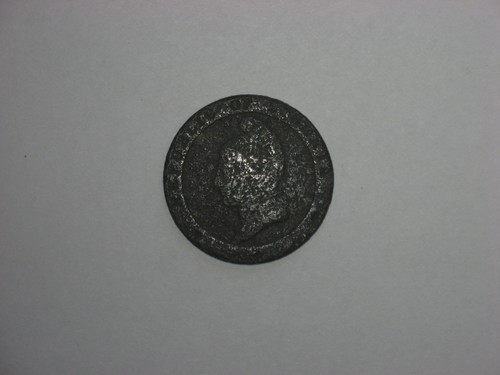
Liberia One Cent
An early copper cent tied to Liberia's founding, dated 1847, with a profile portrait obverse and warm brown patina.
World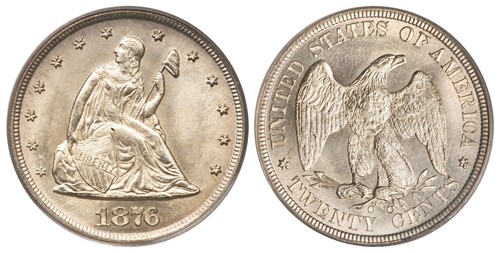
Twenty Cent Piece
A short-lived U.S. silver coin worth twenty cents, showing a seated Liberty and a soaring eagle, struck only from 1875 to 1878.
Twenty Cent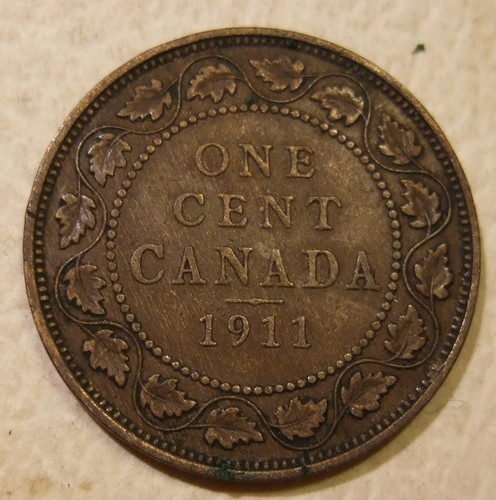
Canadian One Cent
Bronze Canadian large cent with a maple-leaf wreath reverse; the 1911 issue is the famous first-year 'Godless' cent lacking DEI GRATIA.
Canadian & Provincial