
Coin Encyclopedia
Search and identify coins from around the world — with country, denomination, metal, mint, history, and how to tell them apart.
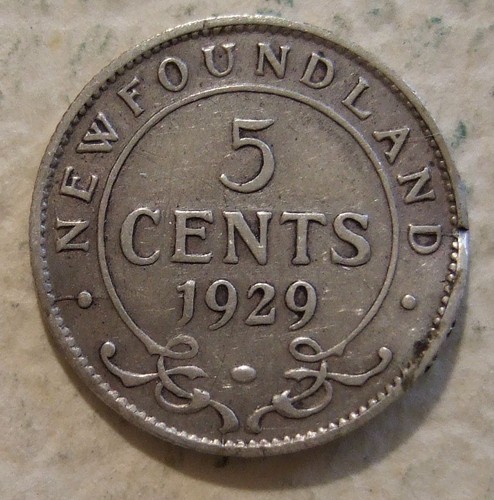
Newfoundland Five Cents
Tiny sterling-silver 5-cent piece of the Dominion of Newfoundland; the 1929 issue bears King George V and a crowned denomination reverse.
Canadian & Provincial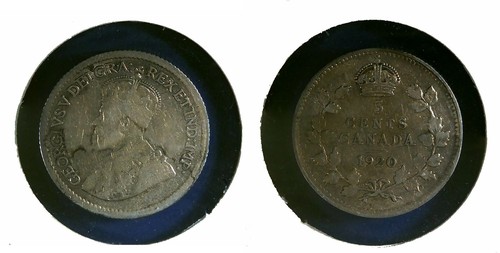
Canadian Five Cents (Nickel)
Canada's five-cent 'nickel,' with G.E. Kruger Gray's beaver reverse. This 1987 example pairs the beaver with an Elizabeth II portrait.
Canadian & Provincial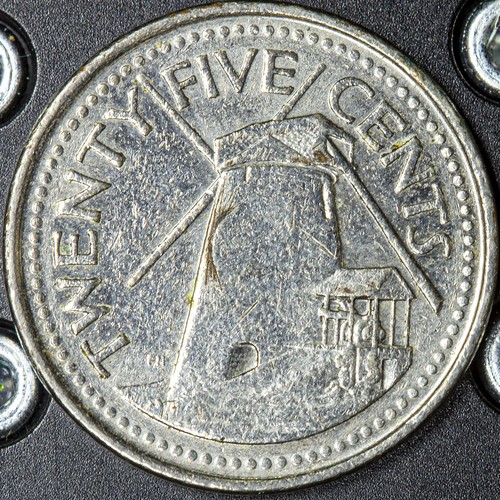
Barbados 25 Cents
A copper-nickel Caribbean circulation coin of Barbados; the 1998 example shows the national coat of arms on the obverse and the 25-cent value on the reverse.
Circulation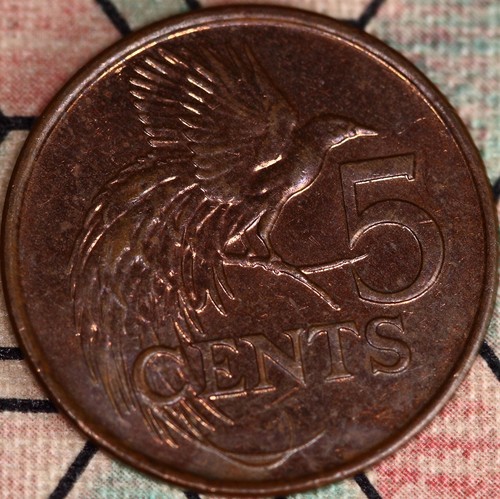
Trinidad and Tobago 5 Cents
A bronze five-cent coin of Trinidad and Tobago showing a perched bird — the Greater Bird of Paradise, often mistaken for a parrot — with FIVE CENTS on the reverse.
Circulation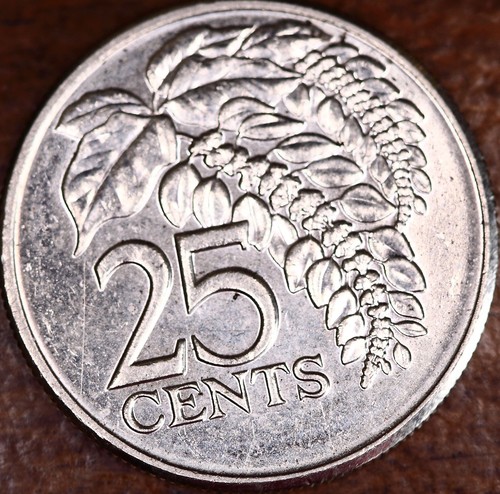
Trinidad and Tobago 25 Cents
A copper-nickel 25-cent coin of Trinidad and Tobago: a leafy national-flower plant design on one face and the value TWENTY FIVE CENTS on the other.
Circulation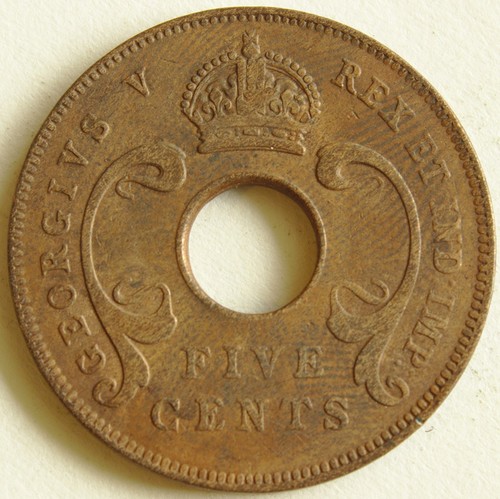
East African 5 Cents
A holed copper-nickel colonial coin with a crown above scrollwork and EAST AFRICA lettering, issued by the East African Currency Board.
World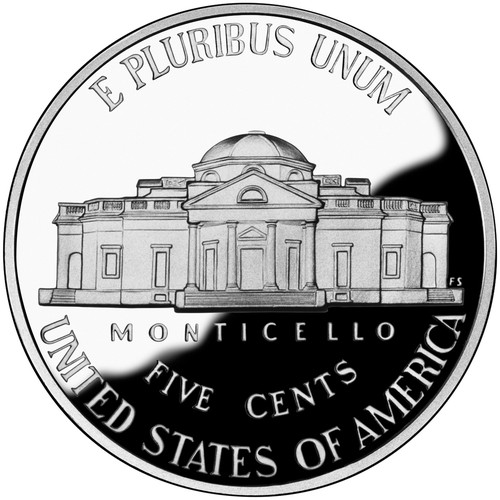
Jefferson Nickel
U.S. five-cent piece introduced in 1938, showing Thomas Jefferson on the obverse and his Monticello home on the reverse. 1942–1945 issues are 35% silver.
Nickel Five Cent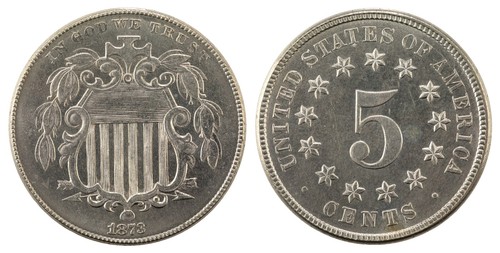
Shield Nickel
The first U.S. five-cent piece struck in copper-nickel, showing a Union shield on the obverse and a large numeral 5 on the reverse, made 1866–1883.
Nickel Five Cent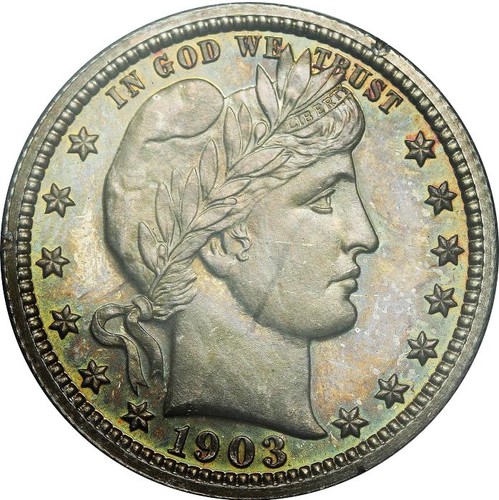
Barber Quarter
U.S. twenty-five-cent silver coin struck 1892–1916, with a left-facing Liberty head and a heraldic shield-eagle reverse.
Quarter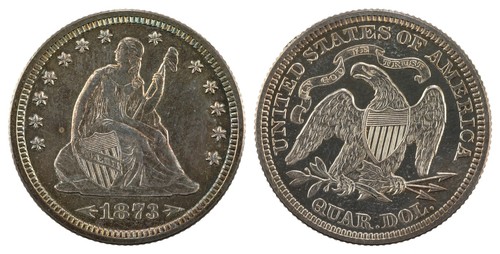
Seated Liberty Quarter
U.S. twenty-five-cent silver coin struck 1838–1891, showing Liberty seated with shield and staff on the obverse and a shield-breasted eagle on the reverse.
Quarter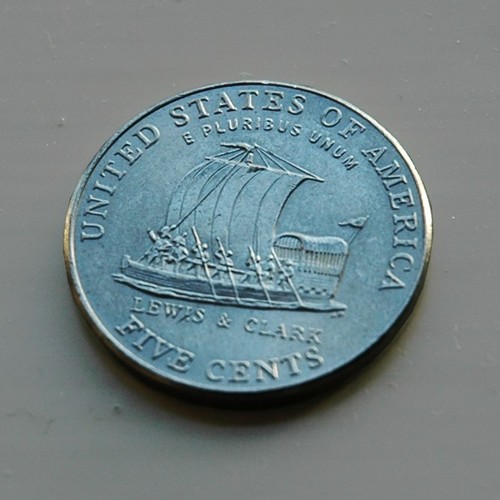
Westward Journey Nickel - Lewis and Clark Keelboat
A 2004 Jefferson five-cent piece from the Westward Journey series, its reverse showing the keelboat that carried the Lewis and Clark expedition upriver.
Nickel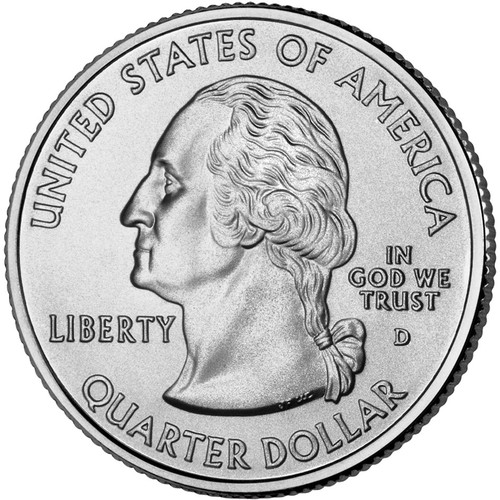
Washington Quarter
U.S. twenty-five-cent coin introduced in 1932, showing George Washington's profile and an eagle reverse; early issues struck in 90% silver.
Quarter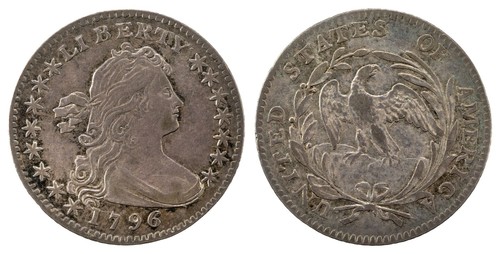
Draped Bust Half Dime
An early U.S. silver five-cent piece showing a draped bust of Liberty ringed by stars; the tiny half dime was struck 1796–1805.
Half Dime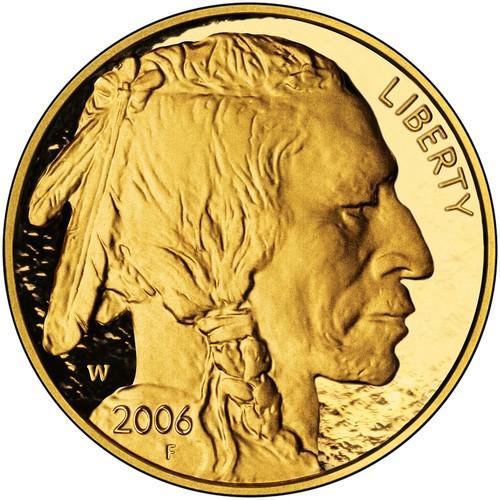
Buffalo Nickel
Iconic U.S. five-cent coin struck 1913–1938, with a Native American profile on the obverse and a standing American buffalo on the reverse.
Nickel Five Cent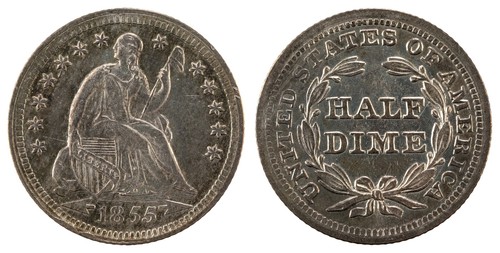
Seated Liberty Half Dime with Arrows
A tiny silver five-cent piece: Liberty seated with a shield, small arrows flanking the date to mark a reduced weight, over a wreath reverse.
Half Dime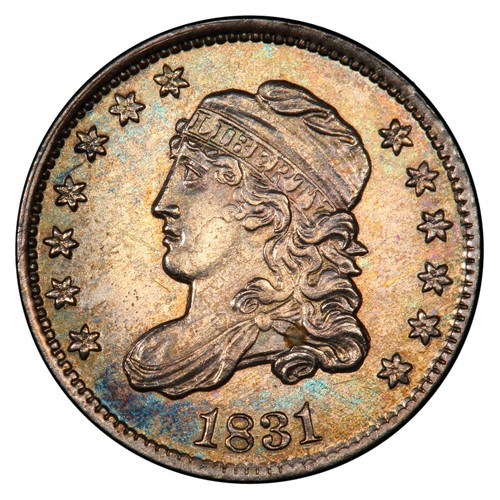
Capped Bust Half Dime
A small early U.S. silver five-cent piece showing Liberty in a Phrygian cap and a shielded eagle reverse, struck at Philadelphia from 1829 to 1837.
Half Dime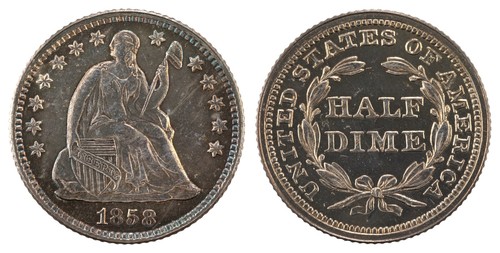
Seated Liberty Half Dime
A tiny 90% silver five-cent piece showing Liberty seated with a shield and Liberty pole; the reverse wreath frames HALF DIME. First struck 1837.
Half Dime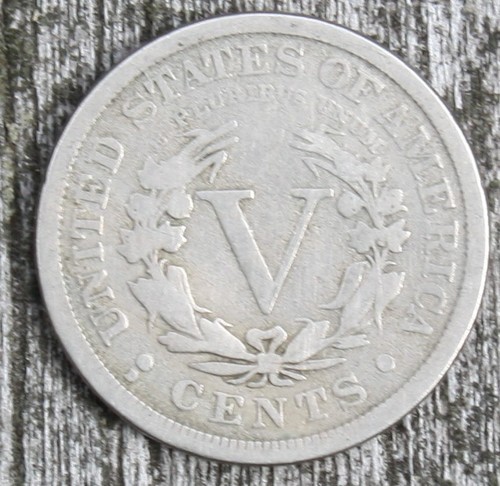
Liberty Head Nickel
U.S. five-cent piece struck 1883–1912, showing a left-facing Liberty head ringed by stars, with a Roman-numeral "V" reverse; the 1913 issue is a legendary rarity.
Nickel Five Cent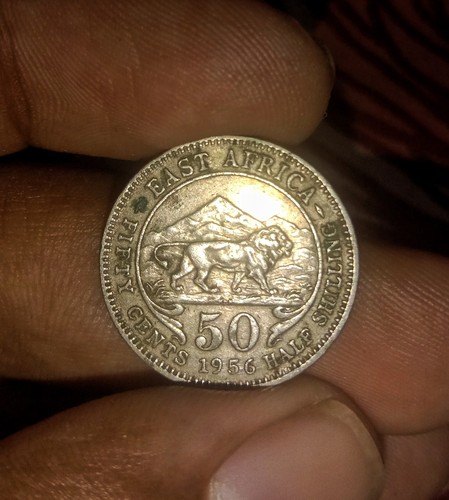
British East Africa Half Shilling
A small low-fineness silver coin of British East Africa bearing King George VI; the half shilling equalled fifty cents in the East African system.
World