
Coin Encyclopedia
Search and identify coins from around the world — with country, denomination, metal, mint, history, and how to tell them apart.
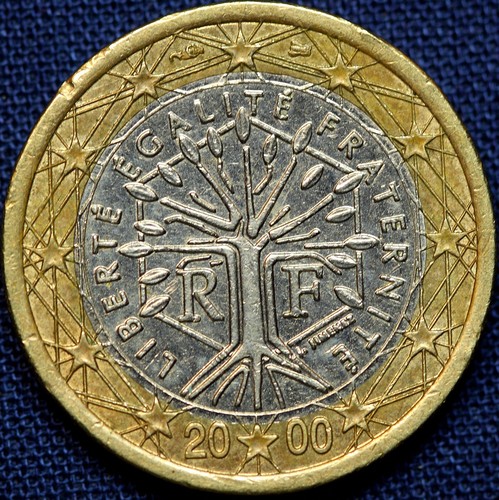
France 20 Centimes
A small gold-colored French Fifth Republic coin showing Marianne in profile, worth one-fifth of a franc, struck for four decades before the euro.
Circulation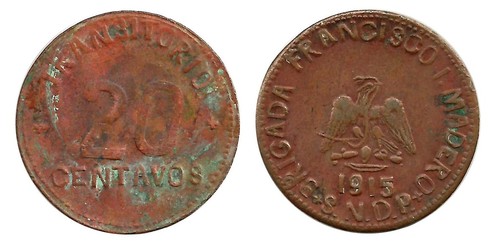
Puebla 20 Centavos
A copper 20 centavos struck in the State of Puebla during the Mexican Revolution, showing a profile bust and the numeral 20 with the national eagle, dated 1915.
Revolutionary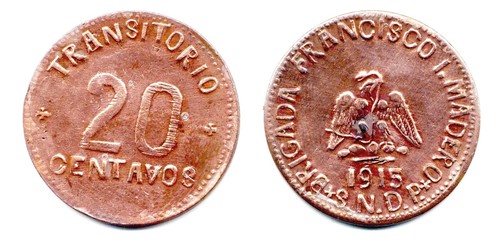
Chiconcuautla 20 Centavos
A 1915 copper 20 centavos struck as a local Revolutionary-era issue at Chiconcuautla, with a numeral 20 on one side and the Mexican national eagle on the other.
Revolutionary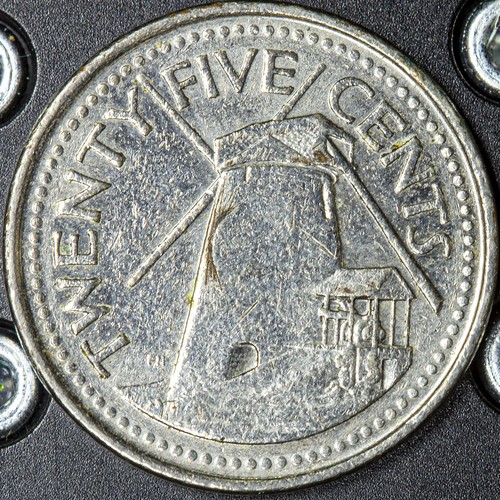
Barbados 25 Cents
A copper-nickel Caribbean circulation coin of Barbados; the 1998 example shows the national coat of arms on the obverse and the 25-cent value on the reverse.
Circulation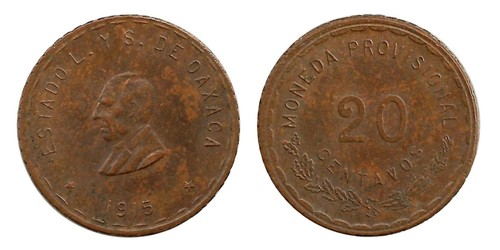
Oaxaca 20 Centavos
A copper 20 centavos struck by revolutionary-era Oaxaca in 1915, showing a profiled bust on a round base and a large numeral 20 with the Mexican eagle.
Revolutionary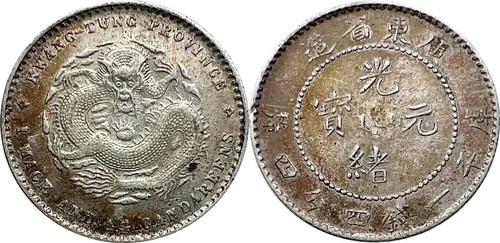
Guangdong 20 Cents
A silver 20-cent coin of Kwangtung (Guangdong) province, struck under the Guangxu Emperor with a coiled dragon on one side and Chinese legends on the other.
Circulation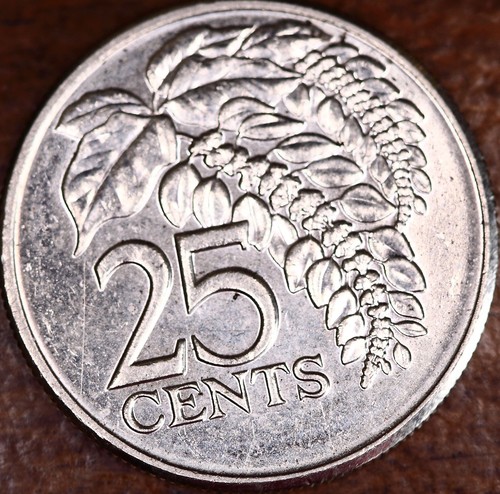
Trinidad and Tobago 25 Cents
A copper-nickel 25-cent coin of Trinidad and Tobago: a leafy national-flower plant design on one face and the value TWENTY FIVE CENTS on the other.
Circulation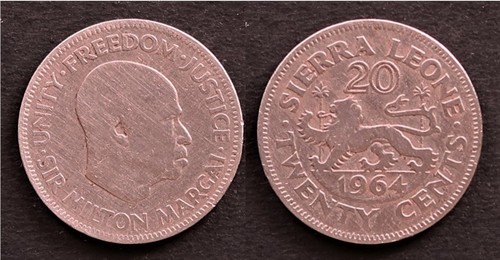
Sierra Leone 20 Cents
A 1964 Sierra Leone 20 cents from the country's first decimal coinage, showing a portrait profile on one side and the national coat of arms with its lion on the other.
World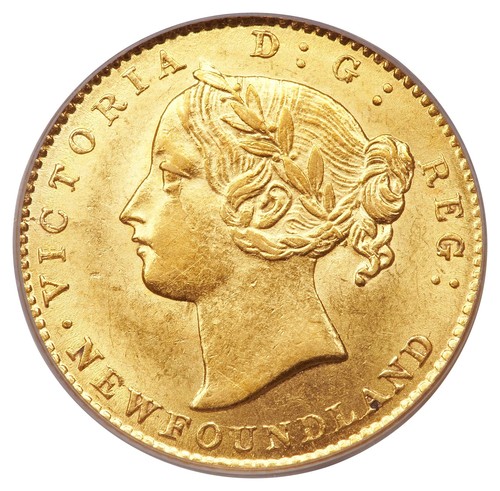
Newfoundland Two Dollars
Small gold two-dollar coin of the colony of Newfoundland; the only circulating coin ever denominated in dollars, cents, and pence together.
Canadian & Provincial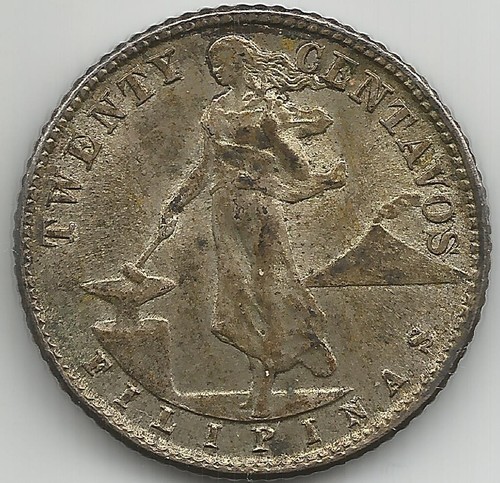
Philippines 20 Centavos
A small wartime silver 20 centavos of the Commonwealth-era Philippines: a standing Liberty figure and Mayon volcano, with an eagle over a shield on the reverse.
Southeast Asia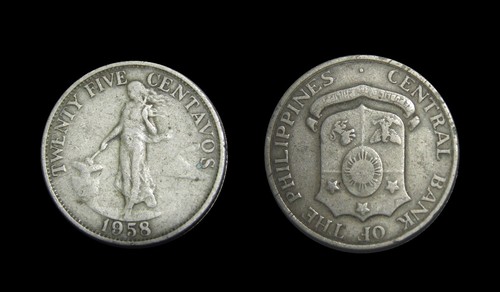
Philippines 25 Centavos
Silvery base-metal 25 centavos of the young Republic of the Philippines, dated 1958: a standing figure with a liberty torch and the Republic's sunburst coat of arms.
Southeast Asia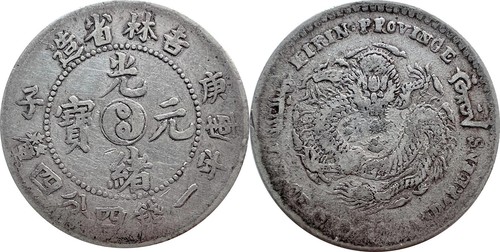
Guangxu Yuanbao 20 Cents
A machine-struck Qing silver 20 cents of the Guangxu era, with a coiled dragon on one face and a yin-yang (taiji) symbol on the other.
Circulation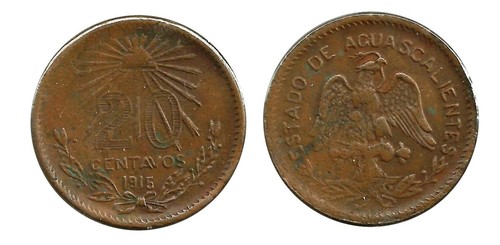
Aguascalientes 20 Centavos
A copper 20 centavos struck in Aguascalientes during the Mexican Revolution in 1915, showing the denomination on one side and a large numeral 20 with the national eagle on the other.
Revolutionary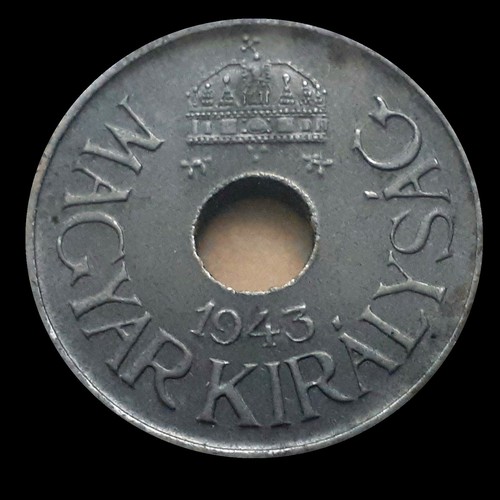
20 Fillér
An early 20th-century Hungarian 20 fillér, a small base-metal coin showing the crowned Hungarian coat of arms and the FILLÉR minor denomination.
Modern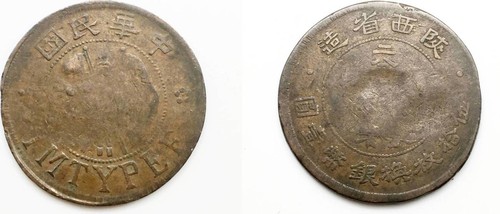
Shanxi 2 Fen
A holed Republic-era Chinese copper 2 Fen struck for Shanxi Province, dated 1931, with a numeral 2 and Chinese legends around a central hole.
Circulation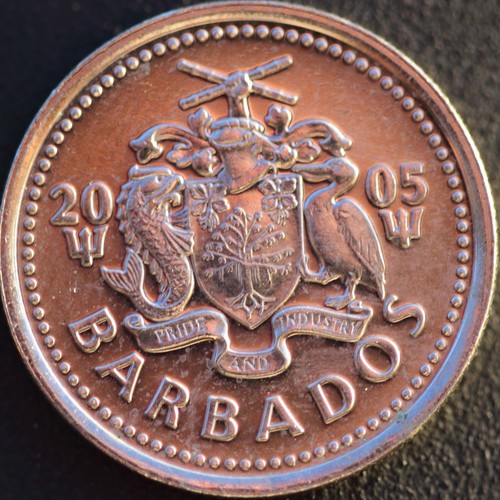
Barbados 10 Cents
A small copper-nickel Barbadian 10-cent coin showing the national coat of arms on one side and the value and country name on the other.
Circulation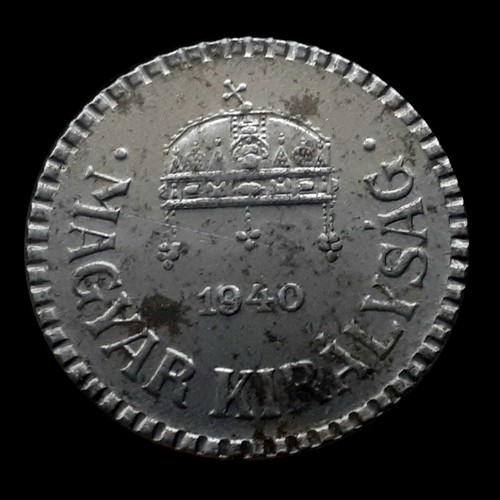
2 Fillér
A small early-20th-century Hungarian 2 fillér in copper-based bronze, showing the crowned Hungarian coat of arms on the obverse and the value with date on the reverse.
Modern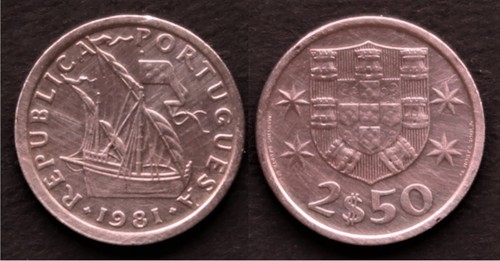
2.5 Escudos
A copper-nickel 2.5 Escudos of the Portuguese Republic, showing a sailing caravel on the obverse and the national shield with the value 2$50.
Modern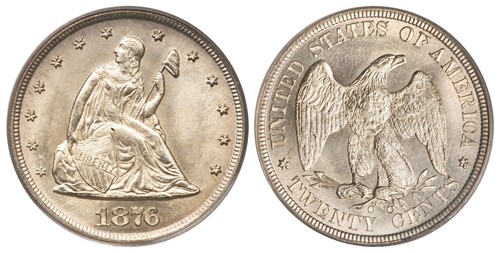
Twenty Cent Piece
A short-lived U.S. silver coin worth twenty cents, showing a seated Liberty and a soaring eagle, struck only from 1875 to 1878.
Twenty Cent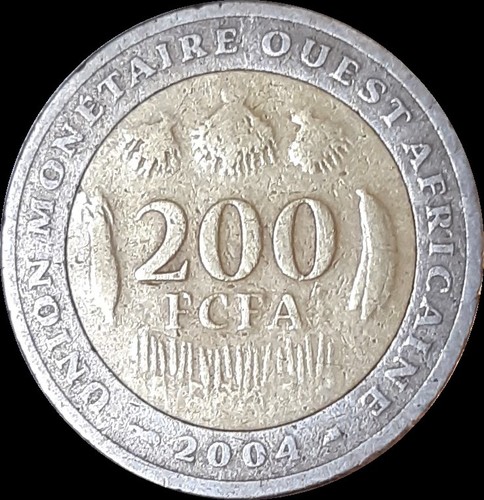
200 CFA Francs
A modern West African CFA coin worth 200 francs, showing a bold '200 FCFA' with decorative border on one face and a crossed emblem on the other.
World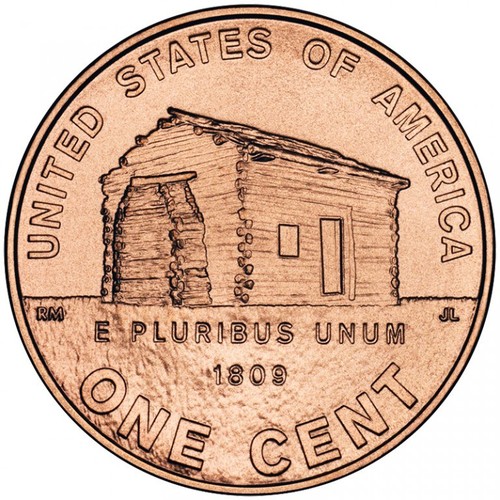
Lincoln Bicentennial Cent
A 2009 U.S. one-cent coin marking Lincoln's 200th birthday, keeping his classic profile while replacing the usual reverse with four scenes from his life.
Small Cent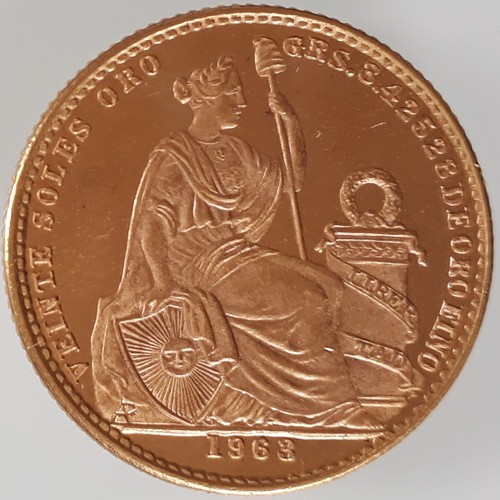
20 Soles de Oro
A Peruvian gold 20 soles de oro showing a seated Liberty with crown, torch and radiant sun, part of Peru's mid-20th-century gold coinage.
Circulation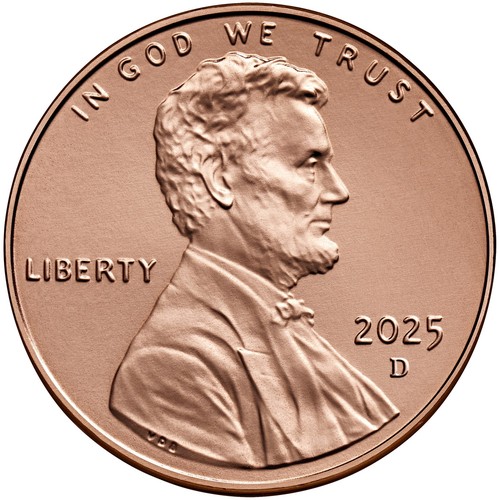
Lincoln Shield Cent
The current U.S. one-cent coin, struck since 2010, pairing Lincoln's profile with a Union Shield reverse on a copper-plated zinc planchet.
Small Cent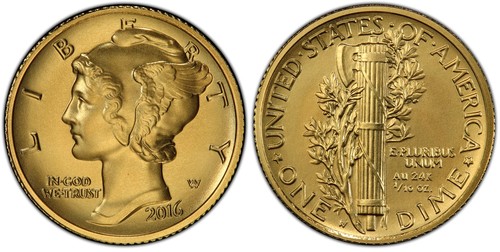
Mercury Dime Centennial Gold
A 2016-W gold collector coin marking the centennial of the 1916 Mercury dime, struck in 1/10 oz of 24-karat gold at West Point.
Dime