
Coin Encyclopedia
Search and identify coins from around the world — with country, denomination, metal, mint, history, and how to tell them apart.
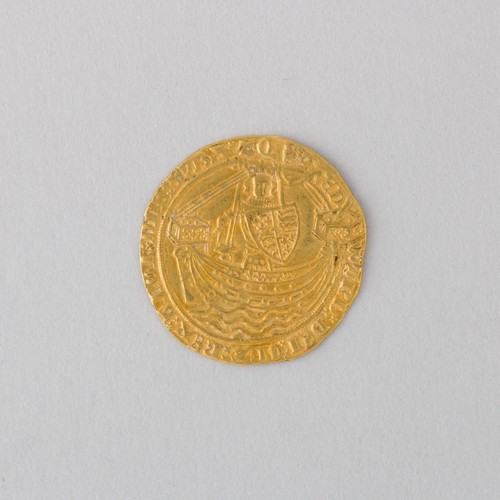
Edward III Noble
Large medieval English gold coin of King Edward III, showing the crowned king standing in a ship and an ornate floral cross on the reverse.
Medieval Coins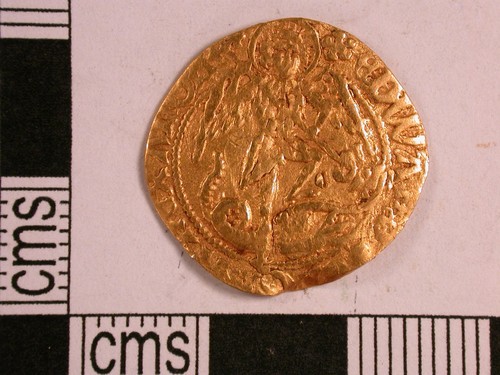
Edward IV Half Angel
Medieval English gold coin of King Edward IV, half the value of the angel, showing Saint Michael slaying a dragon with a spear and shield.
Medieval Coins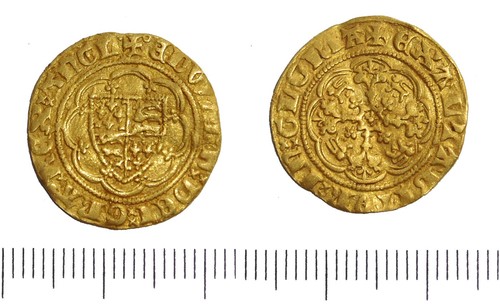
Edward III Quarter Noble
Small medieval English gold coin of Edward III, showing a crowned shield of arms on the obverse and an ornate floral cross design on the reverse.
Medieval Coins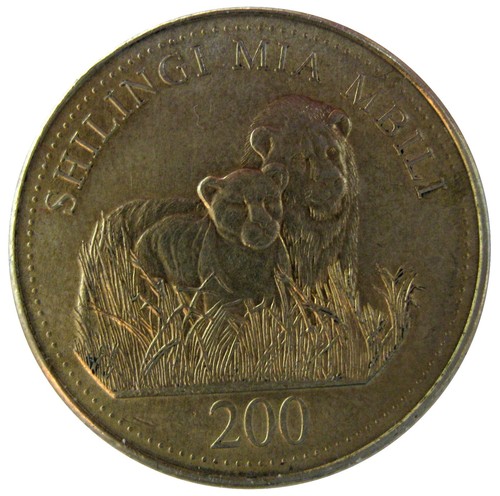
Tanzania 200 Shillings
A golden-brass circulating coin of the United Republic of Tanzania, showing a large African animal in grass with a bold 200 and a Swahili shilling legend.
World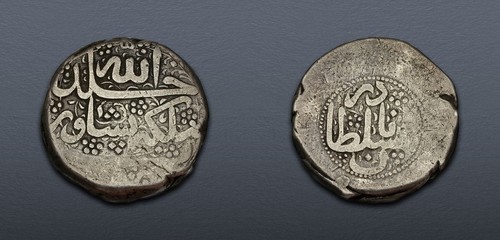
Double Rupi
A large Afsharid silver coin of Nader Shah, the double rupi, dated AH 1151 and covered in flowing Persian calligraphy and ornamental scrollwork.
Historic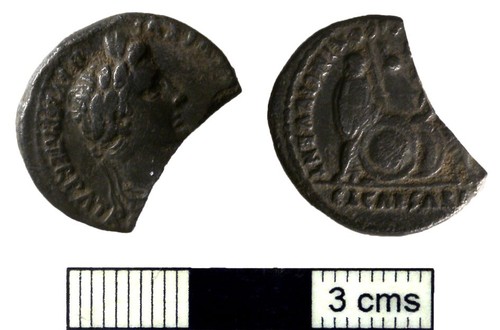
Roman Denarius
A small hammered silver coin of ancient Rome, showing an emperor's portrait and abbreviated Latin titles on one side and a deity or figure on the other.
Ancient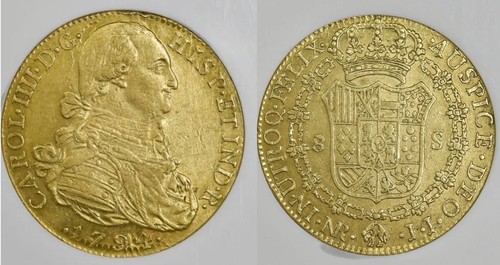
8 Escudos (Carolus)
The largest Spanish gold coin of the age, the 8 Escudos or doubloon, struck under the Habsburg Carolus rulers with the crowned quartered royal arms.
Early Modern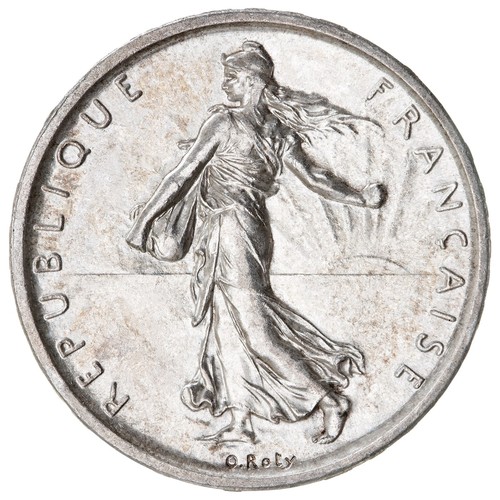
French Semeuse 5 Francs
A silver French 5-franc coin of the Fifth Republic showing the Sower (Semeuse) striding left, with a flowered wreath around the value on the reverse.
Circulation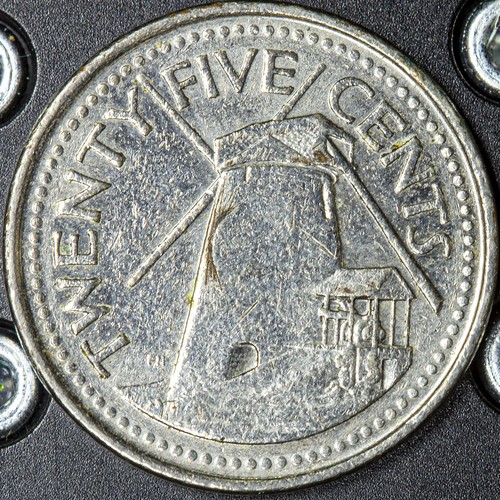
Barbados 25 Cents
A copper-nickel Caribbean circulation coin of Barbados; the 1998 example shows the national coat of arms on the obverse and the 25-cent value on the reverse.
Circulation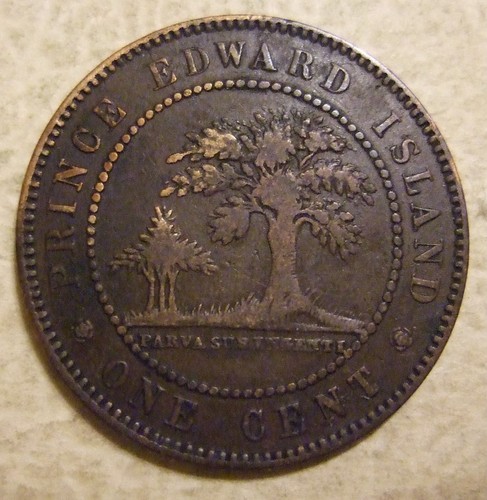
Prince Edward Island One Cent
Bronze one-cent coin struck in 1871 for the colony of Prince Edward Island, with Queen Victoria on the obverse and the island's name and date on the reverse.
Canadian & Provincial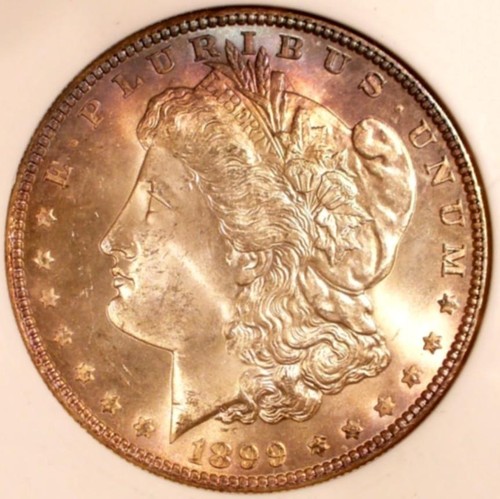
French Silver Franc
A small Third Republic silver 1-franc coin with an allegorical Marianne head and a REPUBLIQUE FRANCAISE reverse; the pictured piece is dated 1899.
World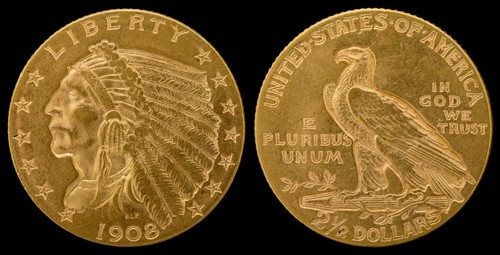
Indian Head Quarter Eagle
U.S. $2.50 gold coin of 1908–1929 with a sunken (incuse) design: an Indian in a feathered war bonnet on the obverse and a standing eagle reverse.
Quarter Eagle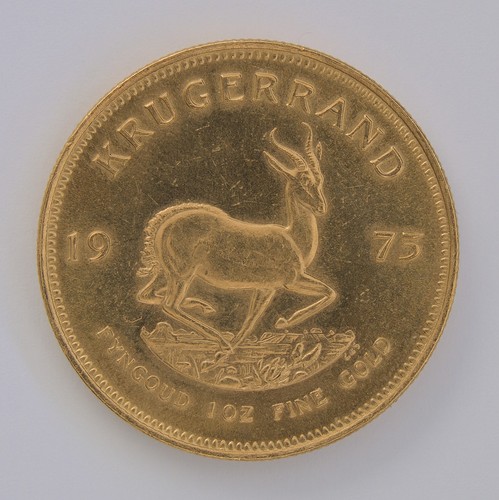
Krugerrand
South Africa's 1 oz gold bullion coin, with Paul Kruger's portrait on the obverse and a leaping springbok on the reverse; this piece is dated 1975.
Bullion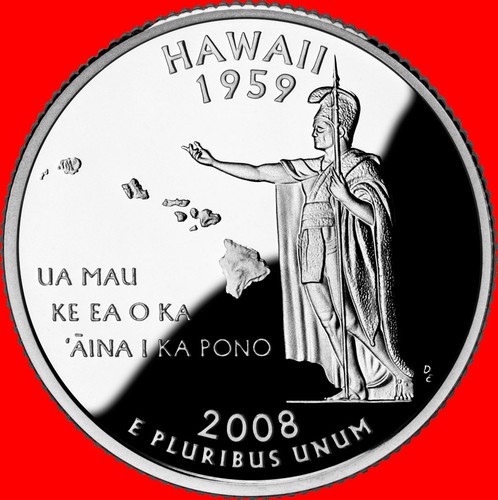
Hawaii State Quarter
The 2008 Hawaii State Quarter, final coin in the 50 State Quarters series, showing King Kamehameha I reaching over the islands.
Quarter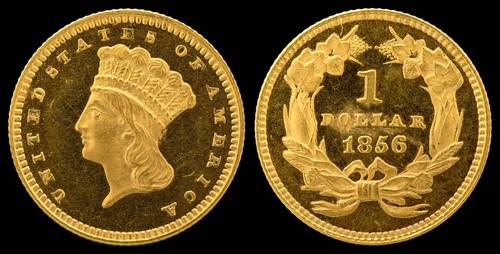
Indian Head Gold Dollar
Tiny U.S. one-dollar gold coin (1854–1889) with an Indian-princess Liberty in a feathered headdress and a denomination-and-date wreath reverse.
Gold Dollar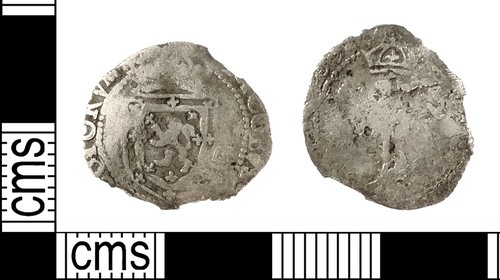
Eighth Thistle Merk
A small hammered silver Scottish coin of James VI, showing a crowned heraldic shield of arms on one side and a crowned thistle on the other.
Hammered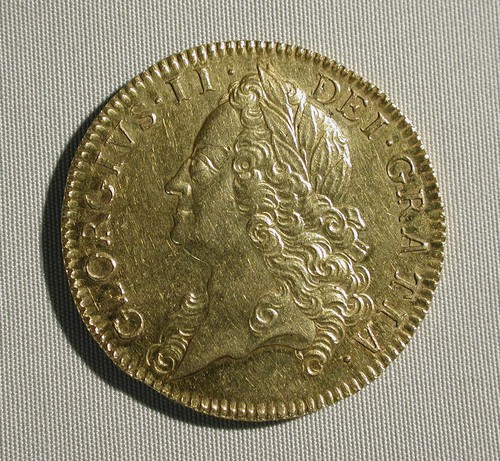
Five Guineas of George II
The largest English gold coin of George II's reign, showing his laureate profile and a crowned heraldic shield of the royal arms on the reverse.
Milled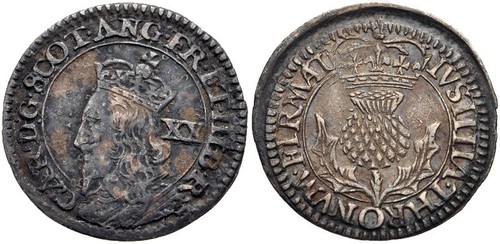
Charles I Twenty Pence
A small hammered silver twenty-pence coin of Charles I, showing his crowned profile and a heraldic reverse with rose and thistle badges.
Hammered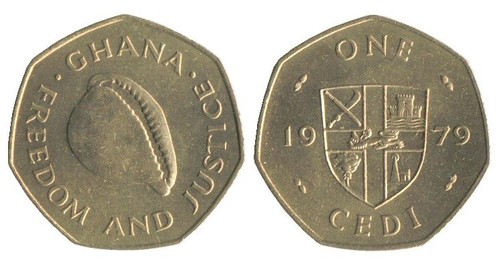
Ghana 1 Cedi
A golden-brass Ghanaian coin dated 1979, showing a cocoa pod with FREEDOM AND JUSTICE on one face and the national coat of arms on the other.
World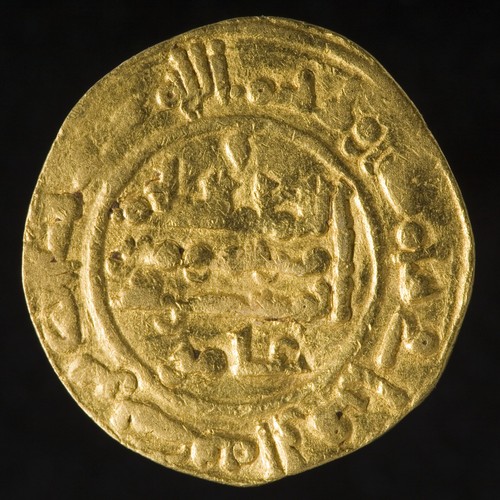
Islamic Gold Dinar (LACMA M.2006.143.8)
A medieval Islamic gold dinar in the LACMA collection, struck with purely calligraphic Arabic legends and a decorative border — the classic imageless coin of the caliphates.
Islamic (Medieval)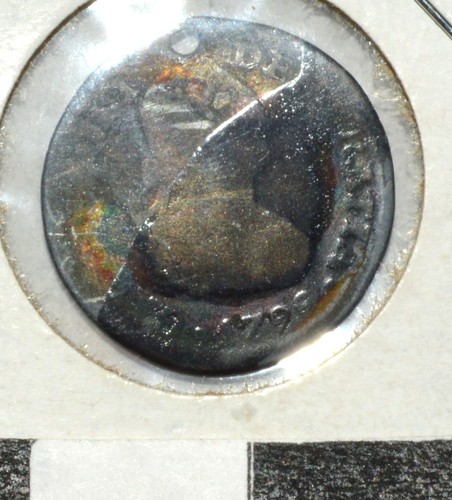
Spanish Colonial Half Real
The smallest milled silver coin of Spain's American empire: a tiny 1/2 real with a royal bust and the crowned arms between pillars.
Colonial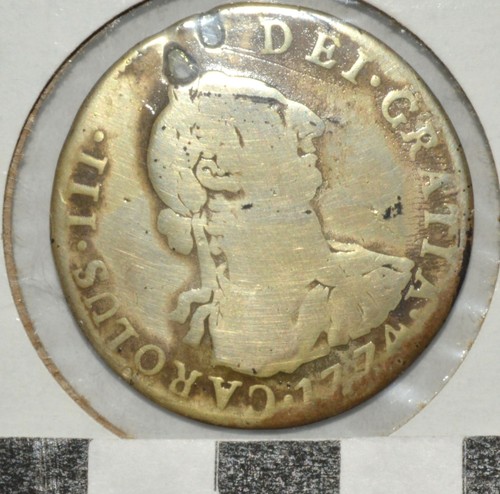
Spanish Colonial 4 Reales
A large silver colonial coin worth half a Spanish dollar, struck for Spain's American empire and bearing the crowned Spanish royal arms.
Colonial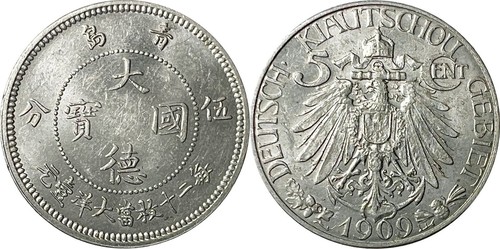
Kiautschou 5 Cents
A 1909 nickel 5 Cent coin of the German-leased Kiautschou Bay territory in China, pairing Chinese characters with the German imperial eagle.
Colonial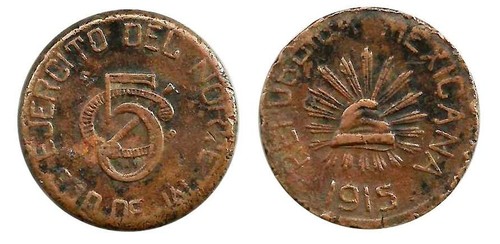
Jalisco 5 Centavos
A small copper 5-centavos coin issued by the Mexican state of Jalisco in 1915 during the Revolution, with a large numeral 5 and the national eagle.
Revolutionary