
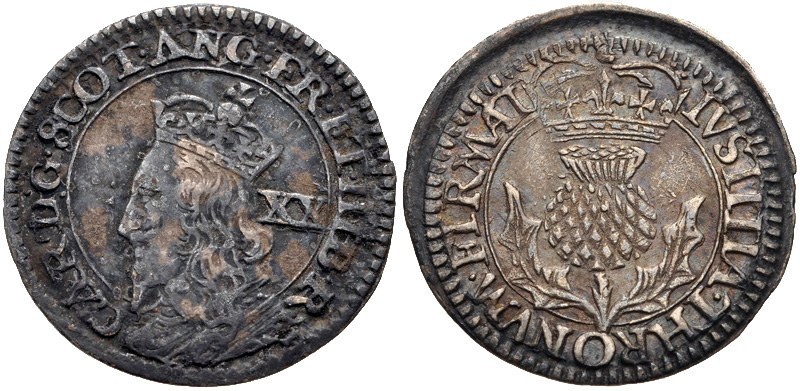
Charles I Twenty Pence
A small hammered silver twenty-pence coin of Charles I, showing his crowned profile and a heraldic reverse with rose and thistle badges.
- Country
- England
- Denomination
- 20 Pence
- Metal
- Silver
Got a coin like this?
Identify any coin from a photo, free.
Overview
The Charles I Twenty Pence is a small hammered silver coin struck during the reign of Charles I (1625–1649). It shows the king's crowned bust in profile on one side and a heraldic reverse combining the rose and thistle, badges of the united Stuart kingdoms, within a Latin motto invoking Christ.
Like all coins of its era, it was produced by hand between two engraved dies rather than by machine, so each surviving piece has a slightly irregular flan, individual centering, and hand-cut lettering. The twenty pence was one of the smaller silver denominations of the period and would have served everyday transactions.
The photographed example dates to the 1640s, the closing and most turbulent decade of Charles I's reign, and displays the characteristic curled royal hair, crowned profile, and shield-and-badge reverse that identify the type.
History & Background
Charles I ruled from 1625 until his execution in 1649, a period that included the English Civil War (1642–1651) and mounting conflict between the Crown and Parliament. The silver coinage of his reign was struck across several mints and issues, and small denominations like the twenty pence circulated widely as practical money for daily trade.
The rose and thistle on the reverse reflect the Stuart union of the English and Scottish crowns under Charles's father, James I and VI, a dynastic theme carried through Charles I's coinage. The twenty-pence denomination sits within this Stuart tradition of hammered silver, produced by hand before mechanized minting was established in Britain.
Coins dated or attributed to the 1640s belong to a decade of political upheaval, when royal and parliamentary mints operated under wartime pressures. This context makes surviving pieces of this period of particular interest to collectors of Civil War–era coinage.
How to Identify
The obverse shows Charles I crowned and facing left in profile, with the distinctive curled hair associated with his portraits, surrounded by a Latin legend naming him king. On the photographed coin this legend reads around the rim as an abbreviated form of Charles, by the grace of God, king of Britain (visible as CARO … DG BRITT and related lettering), typical of the worn, hand-struck legends of the period.
The reverse carries a heraldic design incorporating a crowned shield with rose and thistle badges, encircled by a Latin devotional motto invoking Christ (read on this coin as a CHRISTO … legend). Together the crowned royal portrait and the rose-and-thistle reverse are the key diagnostic pairing for the type.
The coin is small, thin hammered silver with an uneven flan and soft, occasionally doubled relief rather than the crisp uniform detail of machine-made coins. Genuine strikes show hand-cut lettering and the slight irregularity characteristic of hammered work.
Value & Collectibility
As a genuine hammered silver coin of Charles I, roughly 370 to 380 years old, the twenty pence is a collectable Stuart-era piece whose value rests mainly on grade, strike quality, and eye appeal rather than its modest silver content. Small denominations survive in varying condition, and prices span a wide range accordingly.
Heavily worn or damaged examples typically trade for modest sums, while well-struck, clearly legible, and attractively toned pieces command a strong premium among collectors of Civil War–era coinage. Rarity of the specific issue and mint, along with clarity of the portrait and legends, all influence what a given coin realizes.
Anyone valuing a specific piece should consult recent auction records for comparable Charles I silver of the same denomination and grade, and treat any single quoted figure as context rather than a fixed price.
Frequently asked questions
What is a Charles I Twenty Pence?
It is a small hammered silver coin struck during the reign of Charles I (1625–1649), showing his crowned profile on one side and a heraldic rose-and-thistle reverse on the other.
Why does it show both a rose and a thistle?
The rose and thistle are badges of the English and Scottish crowns, united under the Stuart dynasty. They reflect the joint kingship carried through Charles I's coinage.
What do the Latin inscriptions mean?
The obverse legend names Charles as king by the grace of God, and the reverse carries a Latin motto invoking Christ. On worn hammered coins these legends are often only partly legible.
Is it made of real silver?
Yes. It is a hammered silver coin of the period, though as a small denomination its intrinsic silver content is modest and its value to collectors depends mainly on condition and rarity.
Why does the coin look uneven or off-center?
It was struck by hand between two dies rather than by machine, so an irregular flan, off-center design, and slightly soft lettering are normal and expected for the type.
Charles I Twenty Pence guides
In-depth guides for identifying, valuing, and collecting Charles I Twenty Pence.
Charles I Twenty Pence identified by the community
Real coins identified with Coin Identifier.

Other coins you may enjoy
English Sixpence
Early 1600s (James I, 1603-1625)
Sixpence of James I
1603-1625
Thistle Merk
1567–1625
James VI Ryal
1567–1571
Quarter Merk
c. 1580–1691
Sixpence of Elizabeth I
1560–1603
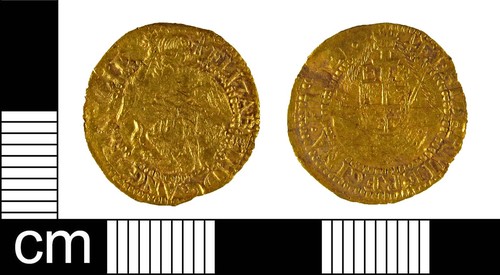
Quarter Angel of Elizabeth I
1581-1583
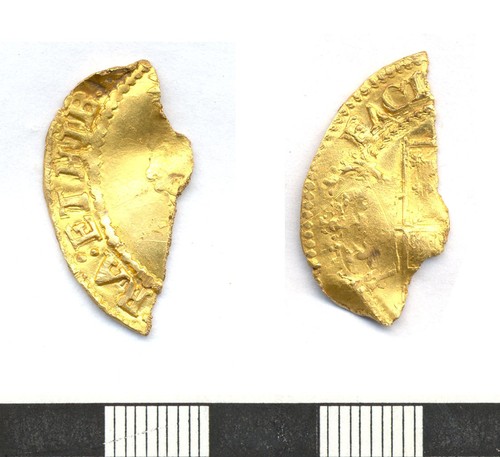
Laurel
1619-1625
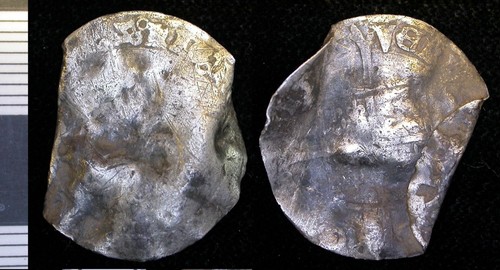
Mary I Groat
1553-1558
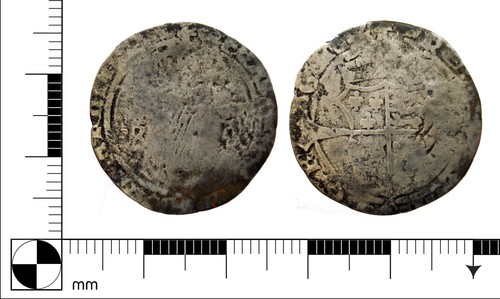
Medieval Coin
c. 500–1500 (Medieval)
Half Thistle Merk
1567-1625
Irish Pistole
1640s (17th century)