
Krugerrand
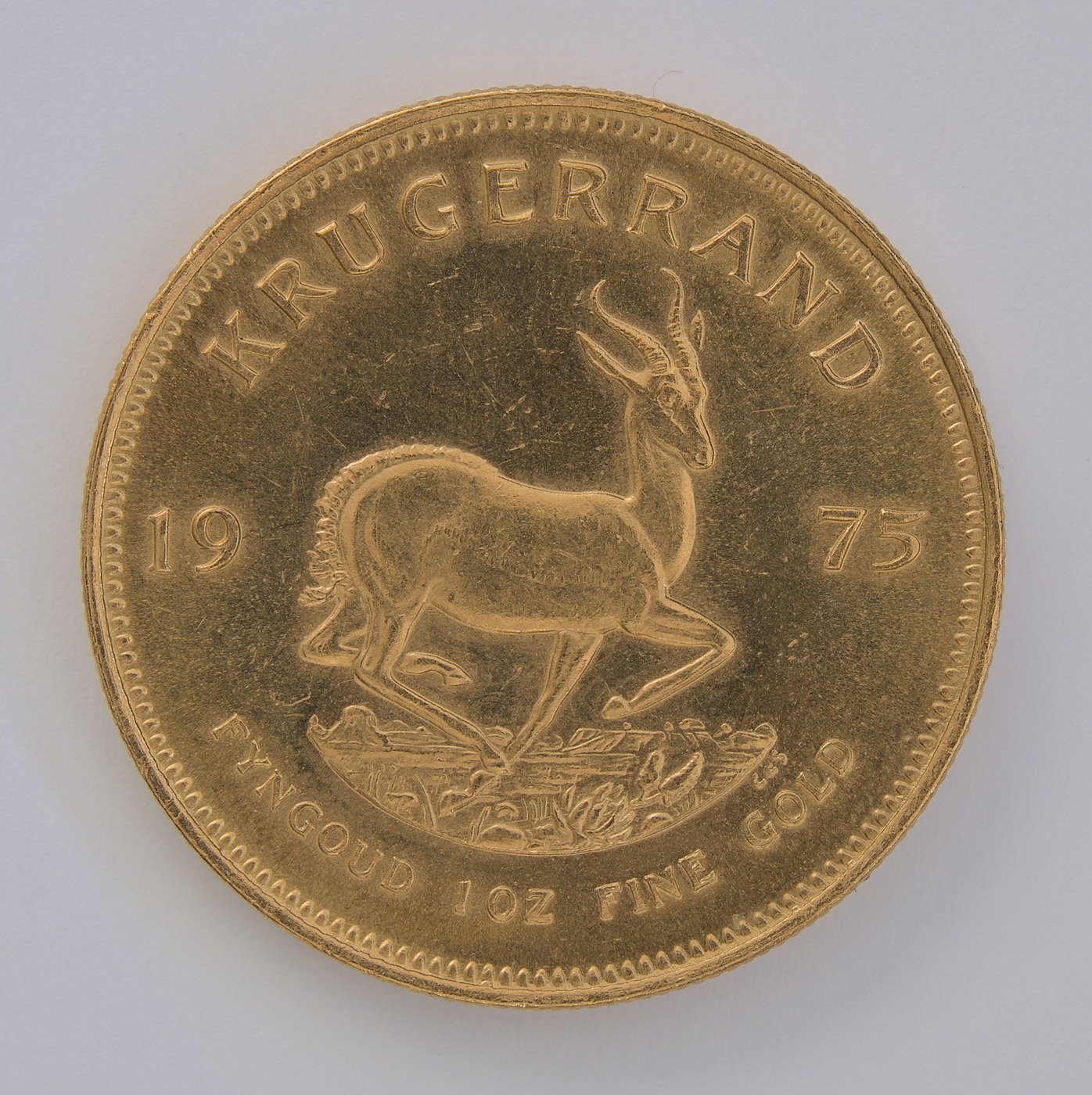
South Africa's 1 oz gold bullion coin, with Paul Kruger's portrait on the obverse and a leaping springbok on the reverse; this piece is dated 1975.
- Country
- South Africa
- Denomination
- 1 oz
- Metal
- Gold
Got a coin like this?
Identify any coin from a photo, free.
Overview
The Krugerrand is South Africa's flagship gold bullion coin, first struck in 1967 to market the country's gold. The example shown is a 1975 one-ounce piece, carrying the left-facing portrait of Paul Kruger on the obverse and a leaping springbok antelope on the reverse.
Each standard coin contains exactly one troy ounce of pure gold but is made from a 22-karat (91.67% gold) alloy hardened with copper, which gives the Krugerrand its characteristic warm, reddish-gold tone and greater durability than a pure-gold coin. Because of the added copper, a one-ounce Krugerrand actually weighs slightly more than one ounce overall.
The Krugerrand carries no face value denomination. Instead of a numeric value it is defined purely by its gold content, and it circulated as legal tender whose worth tracks the gold price. It remains one of the most widely traded and recognized gold bullion coins in the world.
History & Background
The Krugerrand was introduced in 1967 by the South African Mint and the Rand Refinery to provide private investors with a convenient way to own gold, and to help market South African bullion abroad. Its name combines Paul Kruger, the 19th-century president of the South African Republic (Transvaal) shown on the obverse, with the rand, the country's currency.
Through the 1970s the Krugerrand dominated the global gold-coin market, and by the end of that decade it accounted for the vast majority of gold coins traded worldwide. A 1975-dated coin like this one comes from that peak period of popularity, before fractional sizes (half, quarter, and tenth ounce) were added in 1980.
In the 1970s and 1980s anti-apartheid sanctions led several Western countries to restrict or ban Krugerrand imports, which spurred rival bullion coins such as the Canadian Maple Leaf, the American Gold Eagle, and others. After the end of apartheid those restrictions were lifted and the Krugerrand returned to broad international trade, remaining in continuous production.
How to Identify
The two design elements seen here are the definitive markers. The obverse shows the left-facing bust of Paul Kruger with the bilingual country name in Afrikaans ('SUID-AFRIKA') and English ('SOUTH AFRICA') around it. The reverse shows a springbok antelope leaping to the left, with the word 'KRUGERRAND' above, the fineness inscription, and the year, 1975, split beside the animal.
The reverse also carries the weight and metal statement 'FYNGOUD 1 OZ FINE GOLD', confirming a one-ounce gold coin. A standard one-ounce Krugerrand measures about 32.6-32.7 mm in diameter, is roughly 2.8 mm thick, and weighs about 33.9 grams gross because the copper alloy adds mass beyond the one ounce of pure gold. Its color is distinctly warmer and more coppery than the yellow of 24-karat coins.
Because the coin has no numeric denomination, the absence of a face value is itself a diagnostic: the reverse states weight and fineness rather than a currency figure. Reeded (grooved) edges and the crisp, high-relief springbok are typical of genuine strikes.
Value & Collectibility
As a bullion coin, a one-ounce Krugerrand is worth essentially its gold content plus a small premium. Its value moves with the live gold price, so a common-date coin like a 1975 example trades close to the melt value of one troy ounce of gold, with dealers adding a modest markup over spot.
Most circulated or lightly handled Krugerrands from the 1960s-1980s carry little or no numismatic premium beyond metal value, since tens of millions were produced. Exceptions are high-grade certified examples, proof strikes (which have distinct finishes and were sold separately), and a few scarcer dates, which can command more from collectors.
Because the price is tied to gold, any figure should be treated as a moving target rather than a fixed amount. When buying or selling, check the current gold spot price and expect the coin to trade near that level, adjusted for condition, dealer premium, and whether it is a bullion or proof issue.
Frequently asked questions
How much gold is in a Krugerrand?
A standard one-ounce Krugerrand contains exactly one troy ounce of pure gold. It is struck in a 22-karat alloy (91.67% gold, the rest copper), so the whole coin weighs about 33.9 grams, slightly more than an ounce because of the added copper.
Why does the coin have no face value?
The Krugerrand was designed as a bullion coin defined by its gold content rather than a fixed denomination. Its worth tracks the gold price, so instead of a currency figure the reverse states the weight and fineness, '1 OZ FINE GOLD'.
Who is on the front of the coin?
The obverse shows Paul Kruger, president of the South African Republic (Transvaal) in the late 19th century. The coin's name combines his surname with the rand, South Africa's currency.
What is the animal on the back?
It is a springbok, a native South African antelope shown leaping. The springbok is a national symbol of South Africa and has appeared on the Krugerrand reverse since the coin's introduction in 1967.
Is a 1975 Krugerrand rare or valuable?
It is valued mainly for its gold. Krugerrands were produced in large numbers, so a common-date 1975 coin generally trades close to the melt value of one ounce of gold plus a small premium, rather than a large collector markup.
Krugerrand guides
In-depth guides for identifying, valuing, and collecting Krugerrand.
Other coins you may enjoy
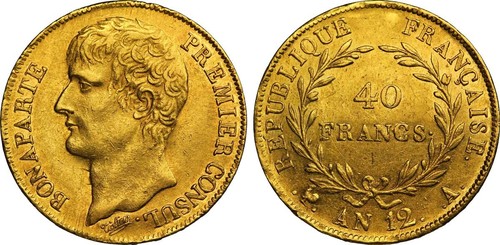
40 Francs Napoleon
Consulate and Empire era, early 1800s (this example An 12 / 1804, BONAPARTE PREMIER CONSUL type)
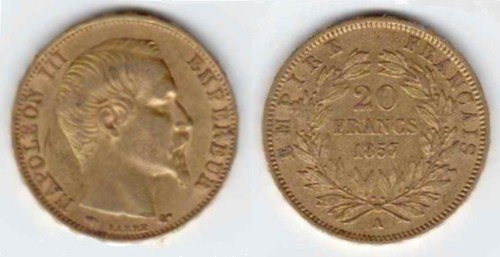
20 Francs Napoleon
1853–1870 (this example dated 1857)
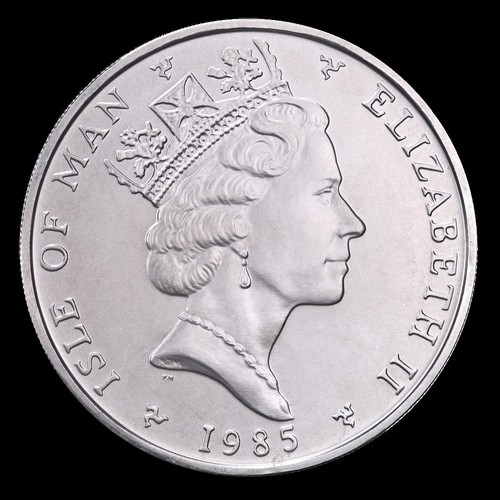
Isle of Man Noble
1983–1989
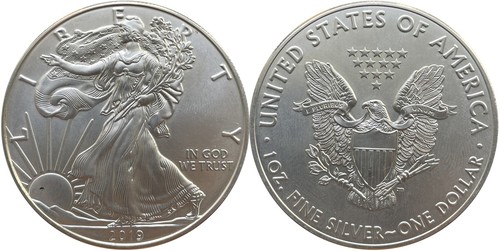
American Gold Eagle
1986–present
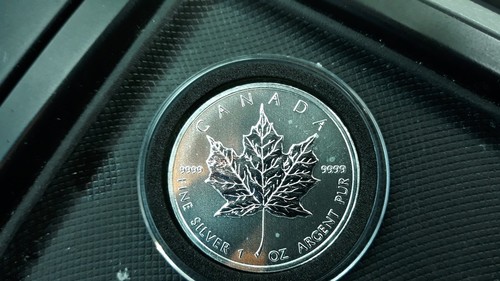
Canadian Silver Maple Leaf
1988–present
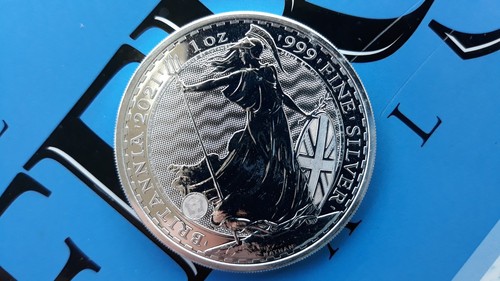
British Britannia Silver Coin
1997–present (this example dated 2021)
Vienna Philharmonic (Gold)
1989–present (gold series; euro-denominated since 2002). Observed example dated 2017.
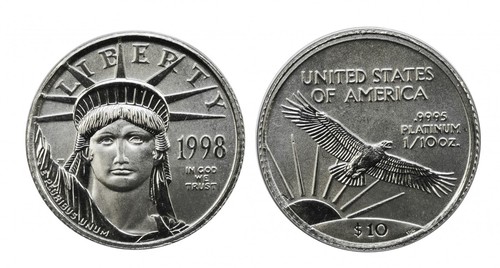
American Platinum Eagle
1997–present
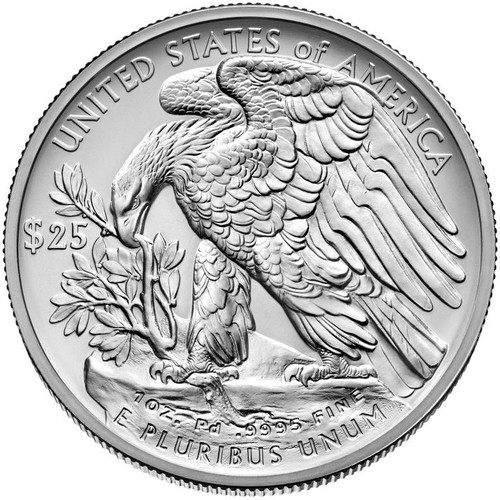
American Palladium Eagle
2017–present
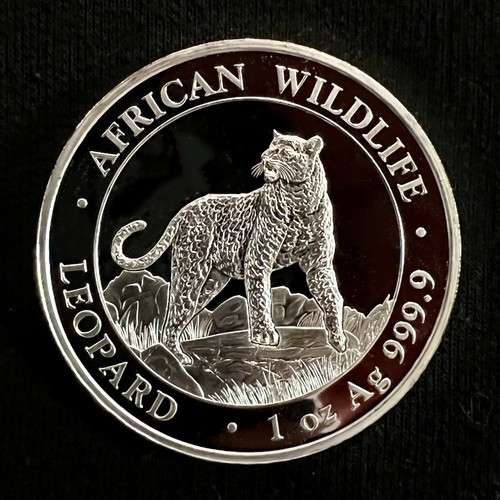
Somalia Silver Leopard
2019–present (this example dated 2022)
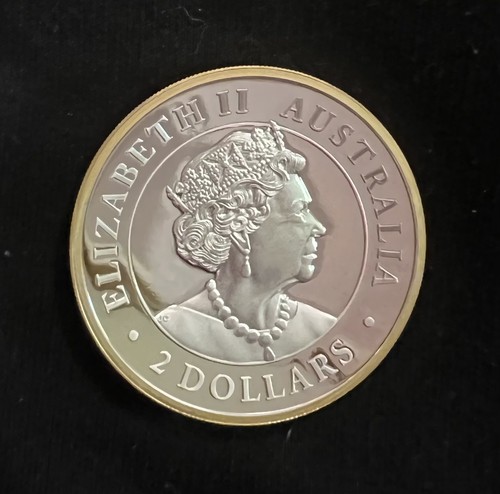
Australian Kookaburra
1990–present (this example dated 2012)
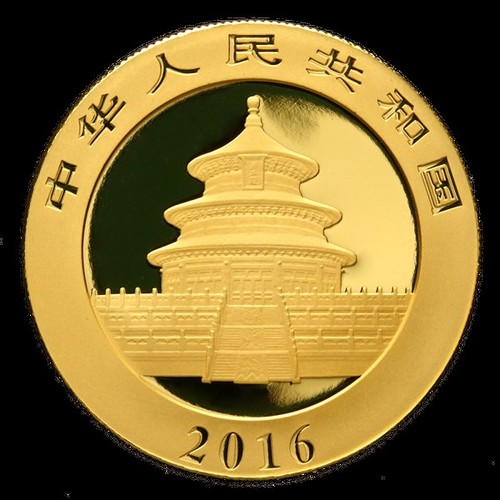
China Panda Gold Coin
2016 (part of an ongoing series first issued 1982)