

Vienna Philharmonic (Gold)
Austria's flagship gold bullion coin, struck in 99.99% fine gold by the Austrian Mint and themed around the Vienna Philharmonic orchestra.
- Country
- Austria
- Denomination
- 100 Euro (1 oz)
- Metal
- Gold
Got a coin like this?
Identify any coin from a photo, free.
Overview
The Vienna Philharmonic (German: Wiener Philharmoniker) is Austria's official gold bullion coin, produced by the Austrian Mint (Münze Österreich) in Vienna. It is struck in 99.99% (four-nines) fine gold and is issued primarily as an investment coin whose value tracks the gold market rather than a numismatic premium. The one-ounce version carries a legal-tender face value of 100 euro, well below its bullion worth.
The coin's design celebrates the Vienna Philharmonic orchestra. The side shown here presents a cluster of orchestral instruments — a harp at the center, flanked by string instruments such as a violin and cello, together with a Vienna horn and a bassoon — a motif that gives the coin its distinctive musical identity. The opposite side, not visible in these photos, depicts the great pipe organ of the Golden Hall (Goldener Saal) in Vienna's Musikverein concert hall.
The example seen here is dated 2017. The Philharmonic is issued anew each year with the current date, and the one-ounce gold coin has consistently ranked among the best-selling gold bullion coins in the world.
History & Background
The gold Vienna Philharmonic was introduced by the Austrian Mint in 1989, originally denominated in Austrian schillings (2,000 schillings for the one-ounce coin). When Austria adopted the euro, the coin's denomination was converted, and since 2002 the one-ounce piece has borne a face value of 100 euro — making the Philharmonic the euro area's principal euro-denominated bullion coin.
The design is the work of Austrian Mint chief engraver Thomas Pesendorfer. Both motifs draw on the Musikverein, the historic home of the Vienna Philharmonic: the organ side references the hall's celebrated pipe organ, while the instruments side gathers together pieces of the orchestra. The theme ties the coin to one of Austria's most internationally recognized cultural institutions.
Over the decades the program expanded. Fractional gold sizes were added to complement the one-ounce coin, a silver Philharmonic was launched in 2008, and a platinum version followed in 2016. The one-ounce gold coin has repeatedly been cited among the world's top-selling bullion coins, and the mint has issued special large-format and commemorative pieces over the years to mark anniversaries of the series.
How to Identify
The instruments side (shown in these photos) is the quickest identifier: a harp stands at the center, surrounded by orchestral instruments including string instruments and horns, with the inscriptions naming the coin. Austrian issues carry German-language legends — typically WIENER PHILHARMONIKER — along with the precious-metal statement, the fineness, the weight, and the year of issue. The 2017 date appears in the field with the instruments.
The reverse (not visible here) shows the pipe organ of the Musikverein's Golden Hall, encircled by the issuing country's name and the face value. On the one-ounce gold coin the face value reads 100 EURO; earlier pre-2002 coins instead read 2000 SCHILLING.
The one-ounce coin is struck in 99.99% fine gold, weighs one troy ounce (about 31.1 g), measures roughly 37 mm in diameter, and has a smooth (plain) edge. The Philharmonic is issued in multiple sizes — 1 oz, 1/2 oz, 1/4 oz, 1/10 oz and 1/25 oz — each with its own face value and diameter, so the stated weight and euro denomination on the organ side confirm which size a given coin is.
Value & Collectibility
As a bullion coin, the Vienna Philharmonic's worth is driven mainly by its gold content rather than rarity. A one-ounce coin contains one troy ounce of pure gold, so its intrinsic value moves with the spot price of gold; dealers sell it at a modest premium over that melt value to cover minting and distribution.
Because the coin is produced in large quantities every year as an investment product, common recent dates such as 2017 generally trade close to bullion value, and one year's coin is usually worth about the same as another of the same size and condition. Premiums can be a little higher for fractional sizes (1/10 oz, 1/25 oz) because of their higher production cost per ounce, and for coins in original mint packaging.
Exact prices change constantly with the gold market and vary by dealer and region, so values are best treated as "spot plus a premium" rather than a fixed figure. Special or limited-issue Philharmonics can carry collector premiums, but a standard bullion-strike one-ounce coin like this is valued as gold.
Frequently asked questions
What are the instruments shown on the coin?
The design gathers instruments of the Vienna Philharmonic orchestra — a central harp with string instruments such as a violin and cello, plus a Vienna horn and a bassoon.
How much gold does the one-ounce Philharmonic contain?
It contains one full troy ounce (about 31.1 grams) of 99.99% fine gold, so its value tracks the gold spot price plus a small dealer premium.
Why does a gold coin have only a 100 euro face value?
The 100 euro figure is a nominal legal-tender value; the coin is a bullion product worth far more for its gold content. The face value has been in euro since 2002 (previously 2000 schilling).
Who makes the Vienna Philharmonic coin?
It is produced by the Austrian Mint (Münze Österreich) in Vienna, with the design by chief engraver Thomas Pesendorfer.
Is a 2017 gold Philharmonic rare?
No. It is a modern bullion coin issued in large numbers, so common dates like 2017 trade close to gold value rather than commanding a rarity premium.
Vienna Philharmonic (Gold) guides
In-depth guides for identifying, valuing, and collecting Vienna Philharmonic (Gold).

Other coins you may enjoy
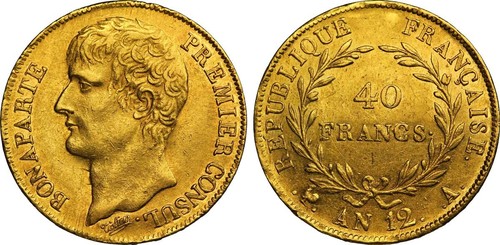
40 Francs Napoleon
Consulate and Empire era, early 1800s (this example An 12 / 1804, BONAPARTE PREMIER CONSUL type)
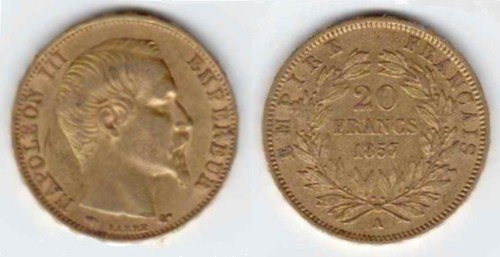
20 Francs Napoleon
1853–1870 (this example dated 1857)
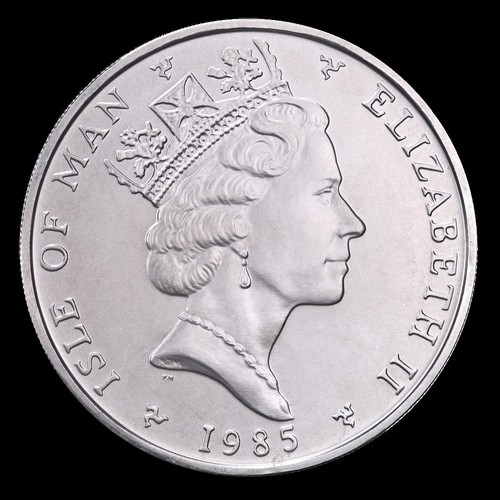
Isle of Man Noble
1983–1989
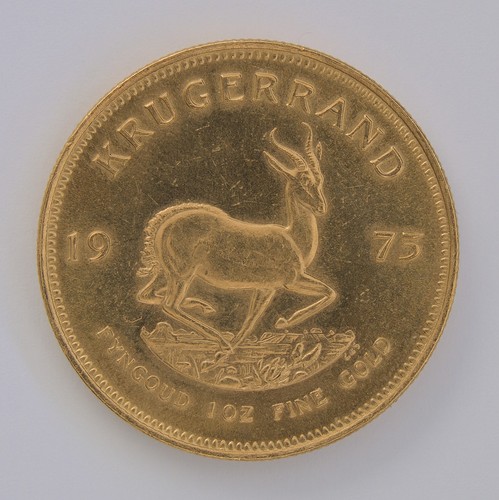
Krugerrand
1967-present (this example 1975)
American Gold Eagle
1986–present
Canadian Silver Maple Leaf
1988–present
British Britannia Silver Coin
1997–present (this example dated 2021)
American Platinum Eagle
1997–present
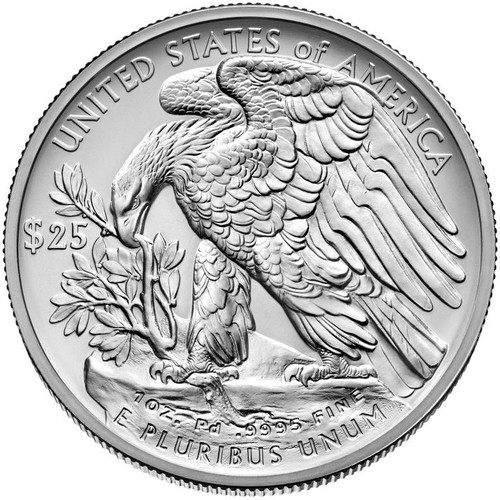
American Palladium Eagle
2017–present
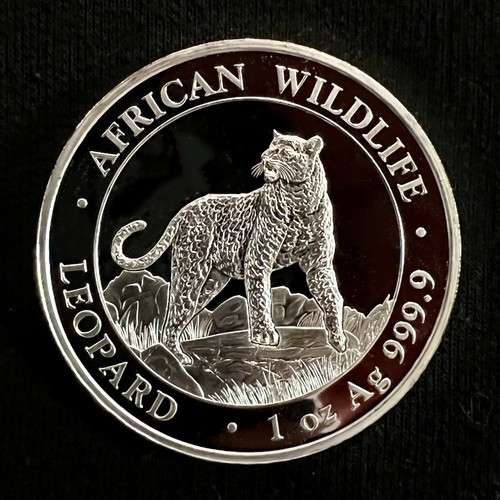
Somalia Silver Leopard
2019–present (this example dated 2022)
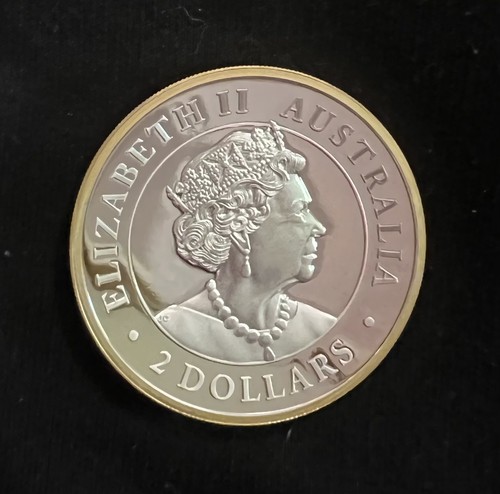
Australian Kookaburra
1990–present (this example dated 2012)
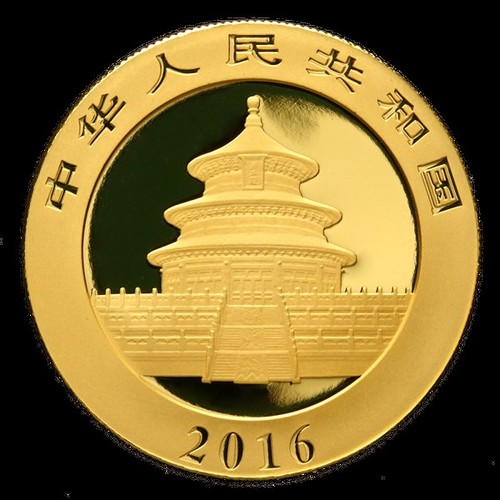
China Panda Gold Coin
2016 (part of an ongoing series first issued 1982)