
Coin Encyclopedia
Search and identify coins from around the world — with country, denomination, metal, mint, history, and how to tell them apart.
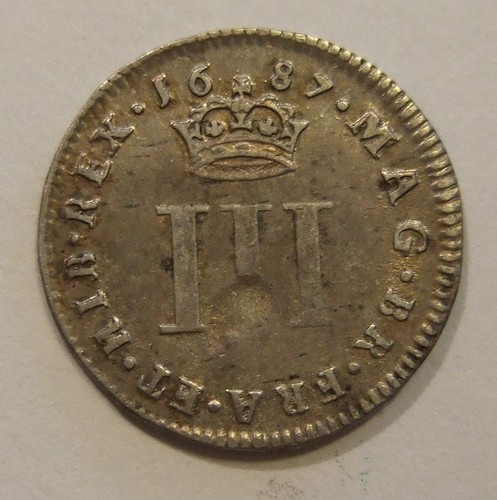
Maundy Three Pence
A tiny sterling-silver threepence tied to Britain's Royal Maundy tradition; the photographed 1687 coin shows James II's bust and a crowned Roman numeral III.
Maundy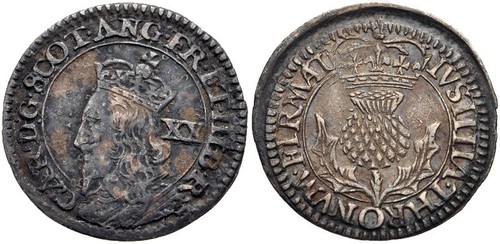
Charles I Twenty Pence
A small hammered silver twenty-pence coin of Charles I, showing his crowned profile and a heraldic reverse with rose and thistle badges.
Hammered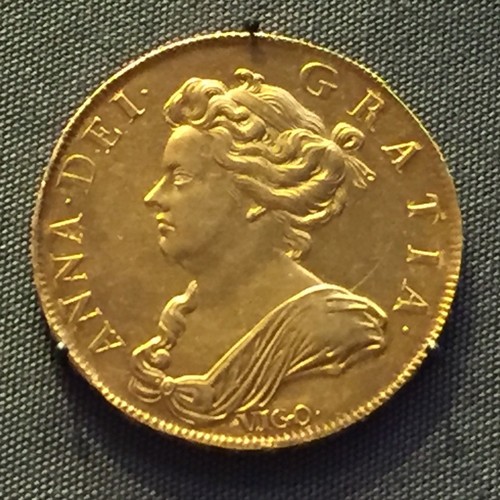
Five Guineas of Anne
Queen Anne's largest gold coin, the celebrated 1703 issue struck with VIGO below the bust from gold captured at the Battle of Vigo Bay.
Milled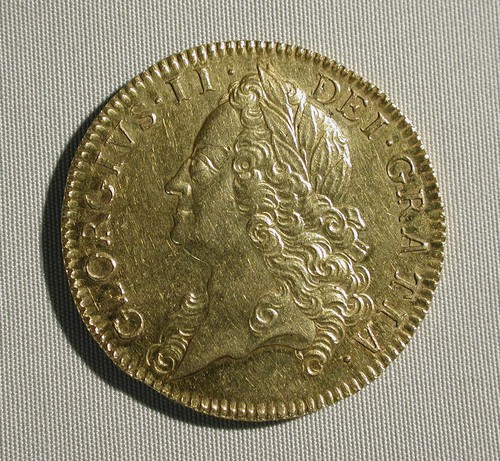
Five Guineas of George II
The largest English gold coin of George II's reign, showing his laureate profile and a crowned heraldic shield of the royal arms on the reverse.
Milled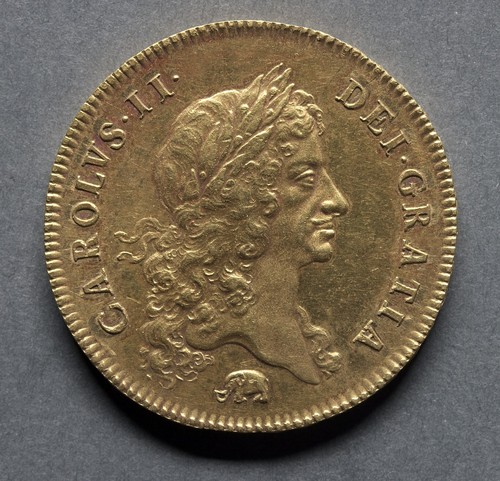
Charles II Five Guineas
The largest English gold coin of Charles II's reign, showing his laureate profile and a cruciform arrangement of crowned shields on the reverse.
Milled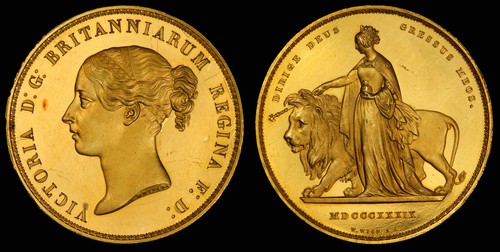
Una and the Lion Five Pounds
William Wyon's 1839 gold Five Pounds pairs a young Queen Victoria with Una guiding a lion — widely praised as one of the most beautiful British coins ever struck.
British Isles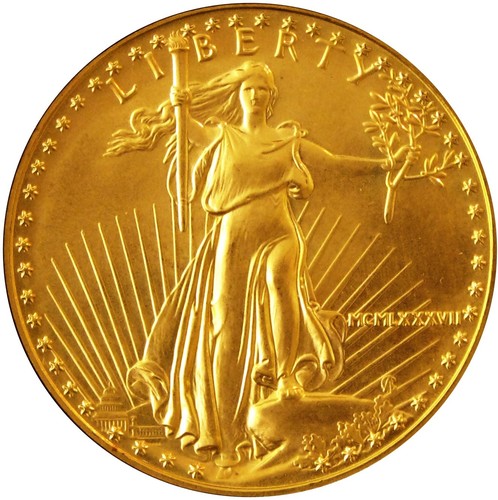
U.S. Gold Five Dollar (Half Eagle)
Modern U.S. $5 gold coin: Saint-Gaudens striding Liberty with torch on the obverse and a soaring eagle reverse; this piece is dated 1987.
Us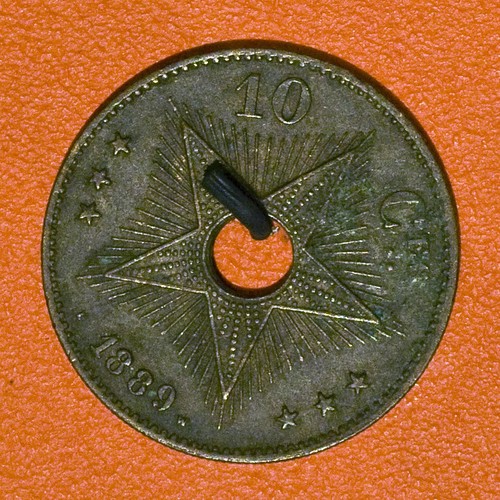
Congolese Commemorative Coin
An 1889 holed copper 10-centime coin of the Congo Free State, with a radiant five-pointed star, the value 10 C, and a ring of small stars.
World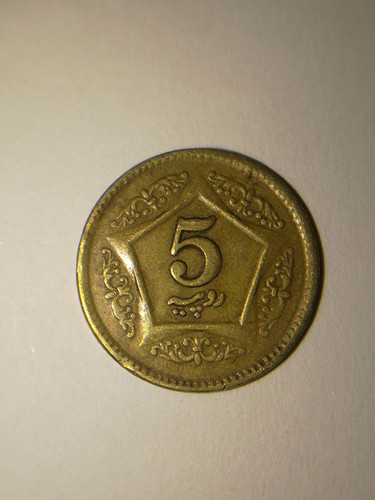
Pakistan 5 Rupees
A brass Pakistani five-rupee coin with a large numeral 5 set in an ornamental frame and Islamic-style Urdu calligraphy around both faces.
South Asia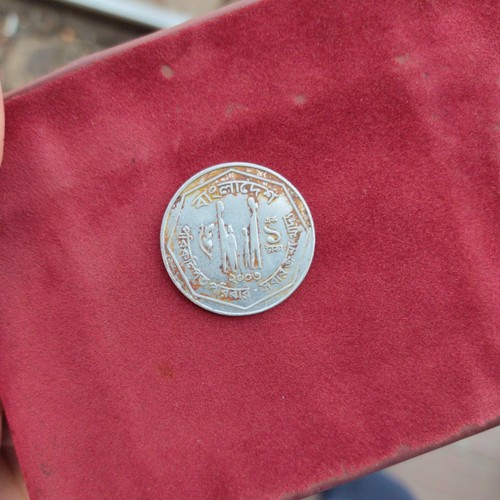
Bangladesh 5 Taka
A modern Bangladeshi circulation coin worth five Taka, struck in nickel-plated steel, with the national emblem on the obverse and the value in Bengali on the reverse.
South Asia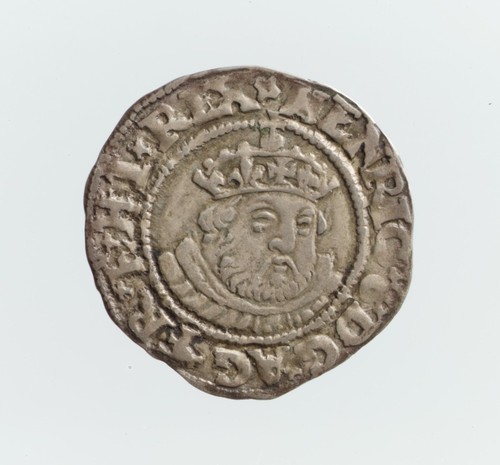
Half Groat of Henry VIII
A small hammered English silver coin worth twopence, struck across the reign of Henry VIII and bearing his crowned facing bust.
Hammered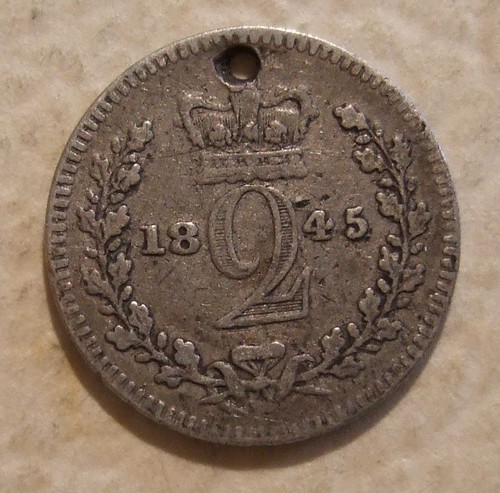
Victoria Maundy Twopence
A tiny sterling-silver ceremonial coin from a Royal Maundy set. This 1845 example shows Victoria's young head and a crowned 2 in a wreath.
British Isles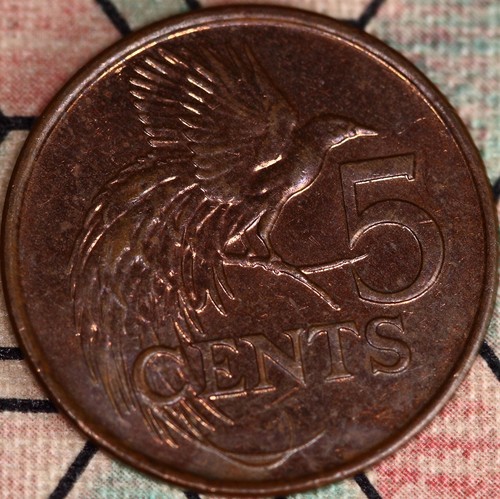
Trinidad and Tobago 5 Cents
A bronze five-cent coin of Trinidad and Tobago showing a perched bird — the Greater Bird of Paradise, often mistaken for a parrot — with FIVE CENTS on the reverse.
Circulation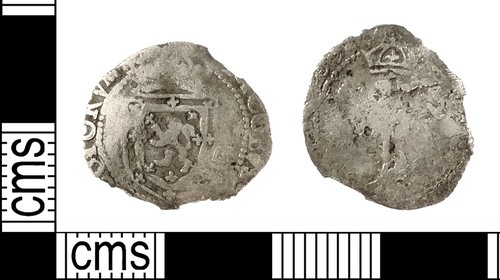
Eighth Thistle Merk
A small hammered silver Scottish coin of James VI, showing a crowned heraldic shield of arms on one side and a crowned thistle on the other.
Hammered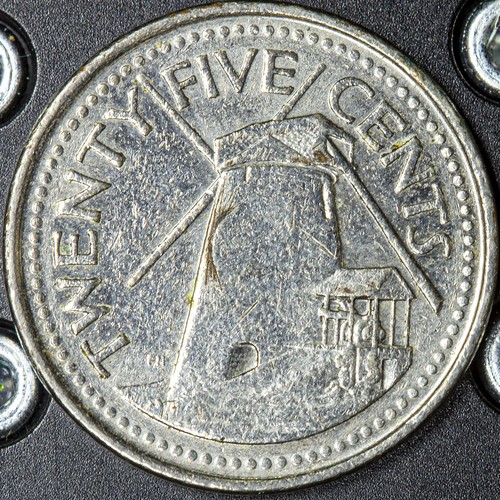
Barbados 25 Cents
A copper-nickel Caribbean circulation coin of Barbados; the 1998 example shows the national coat of arms on the obverse and the 25-cent value on the reverse.
Circulation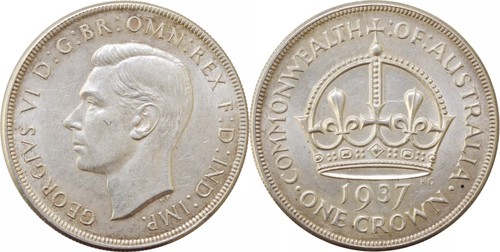
Australian Crown
Australia's only crown (five-shilling) coin, a large sterling-silver piece struck in 1937 and 1938 with a George VI portrait and a crown reverse.
Australian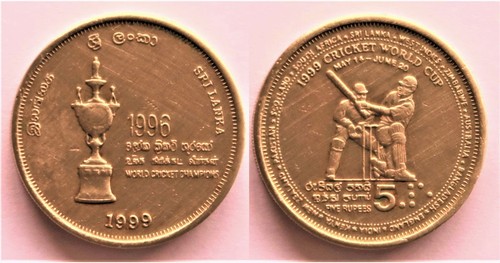
Sri Lanka 5 Rupees
Sri Lanka's 1999 copper-nickel five rupees marking the Cricket World Cup, showing the tournament trophy on one face and a batsman at the crease on the other.
South Asia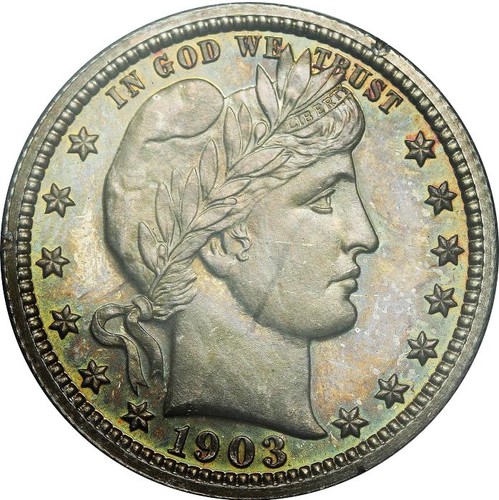
Barber Quarter
U.S. twenty-five-cent silver coin struck 1892–1916, with a left-facing Liberty head and a heraldic shield-eagle reverse.
Quarter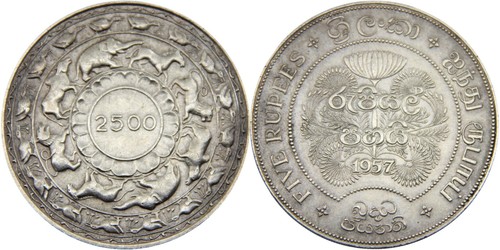
Ceylon 5 Rupees Buddhism Anniversary
Ceylon's 1957 silver five rupees marking 2,500 years of Buddhism, with an ornate 2500 device amid mythological creatures and a scrolled RUPEES reverse.
South Asia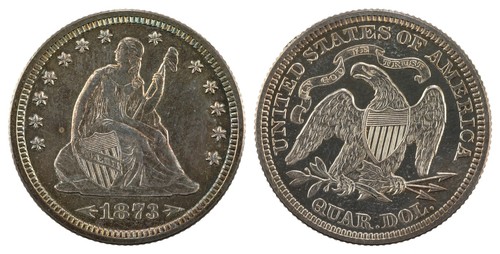
Seated Liberty Quarter
U.S. twenty-five-cent silver coin struck 1838–1891, showing Liberty seated with shield and staff on the obverse and a shield-breasted eagle on the reverse.
Quarter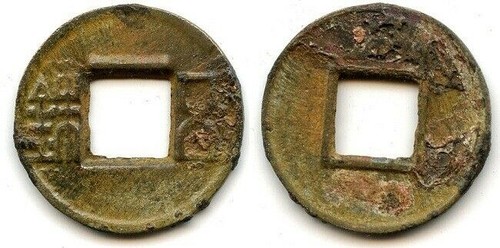
Wu Zhu Cash
A round Han-dynasty bronze cash coin with a central square hole and two seal-script characters, Wu Zhu, naming its weight of five zhu.
Cash Coin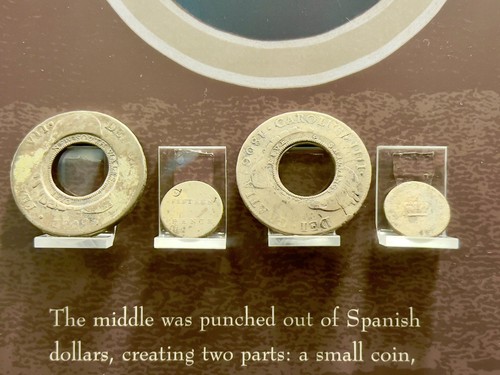
Holey Dollar
Australia's first struck coin: a Spanish silver dollar with its centre punched out, counterstamped NEW SOUTH WALES 1813 and revalued at five shillings.
Australian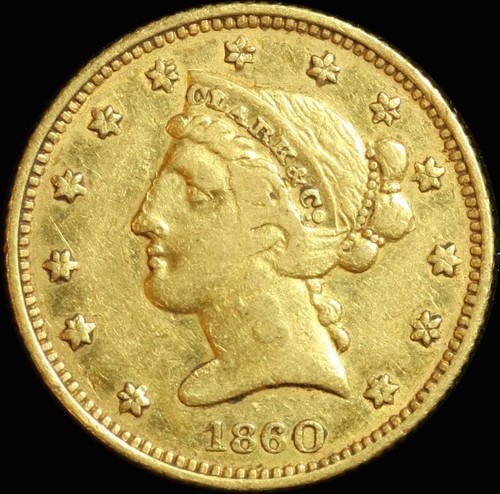
Clark & Co Territorial Gold Half Eagle
An 1860 privately struck $5 gold piece from Clark, Gruber & Co. of Denver, coined from Pikes Peak gold during the Colorado gold rush.
Half Eagle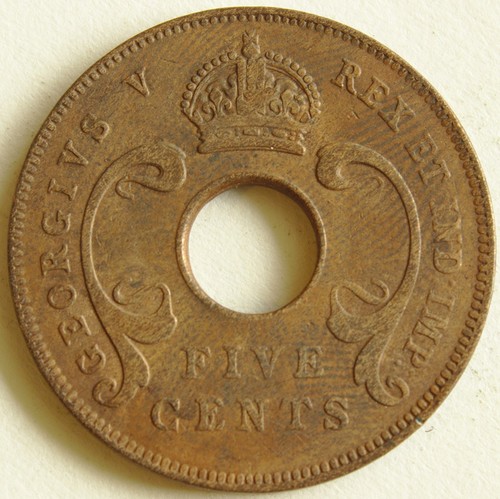
East African 5 Cents
A holed copper-nickel colonial coin with a crown above scrollwork and EAST AFRICA lettering, issued by the East African Currency Board.
World