
Coin Encyclopedia
Search and identify coins from around the world — with country, denomination, metal, mint, history, and how to tell them apart.
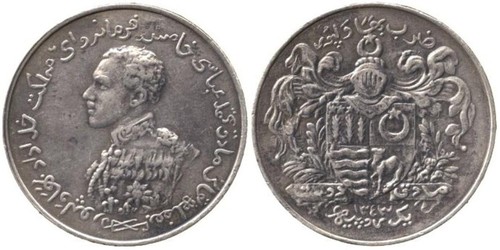
Bahawalpur Gold Coin
A gold coin or medallic piece linked to the princely state of Bahawalpur, its obverse bearing a uniformed royal portrait and its reverse an ornate coat of arms.
South Asia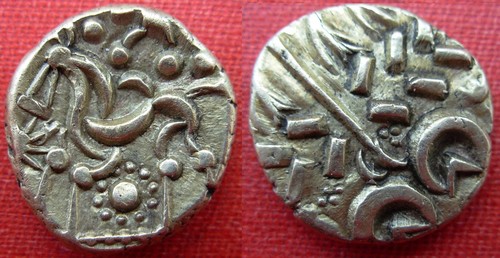
Corieltauvi Stater
A gold stater of the Corieltauvi tribe of Iron Age Britain, with an abstracted head on the obverse and a stylized horse and symbols on the reverse.
Ancient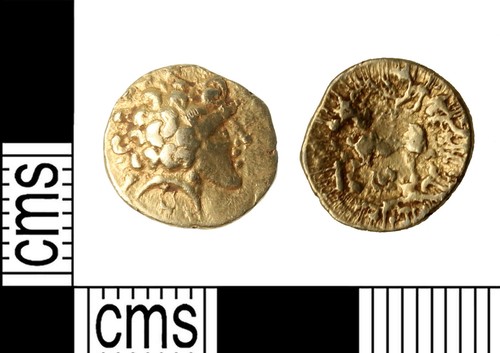
Celtic Gold Quarter Stater
A small Iron Age gold coin struck by the Celtic peoples of ancient Britain, valued at one-quarter of a full stater and marked by abstract, geometric designs.
Ancient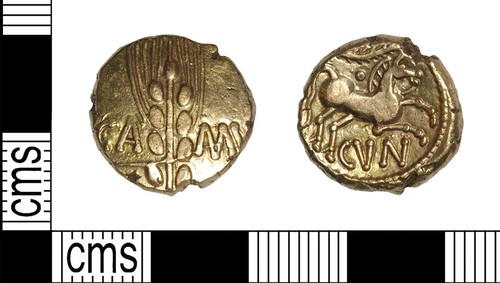
Gold Stater of the Catuvellauni and Trinovantes
An Iron Age British gold stater of the Catuvellauni and Trinovantes, showing stylized wheat/barley ears on one face and a dynamic horse on the other.
Ancient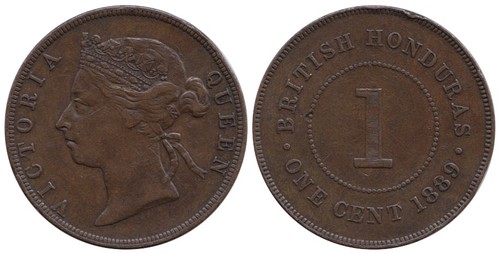
British Honduras One Cent
A colonial copper one cent of British Honduras under Queen Victoria, dated 1889, with the Queen's profile and the value and country name on the reverse.
Colonial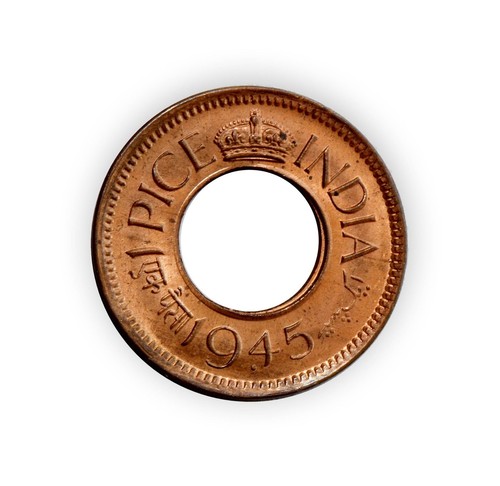
British India One Pice
A small holed copper-bronze One Pice of British India under George VI, dated 1945, its obverse crowned and lettered INDIA and PICE around a central hole.
British India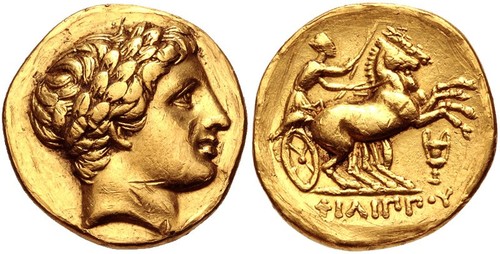
Philip III Gold Stater
A Macedonian gold stater struck under Philip III Arrhidaeus, half-brother of Alexander the Great, showing Heracles and an enthroned Zeus.
Ancient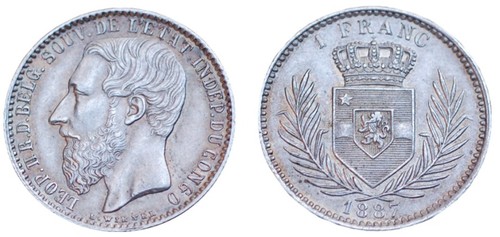
Belgian Congo 1 Franc
An early silver franc struck for the Congo under King Leopold II, pairing a laureate portrait with grain stalks and the value.
World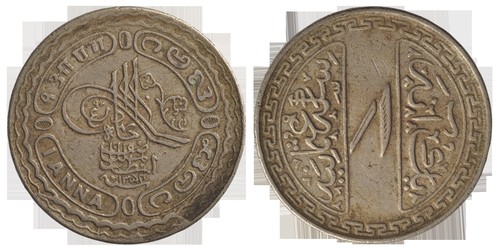
Hyderabad One Anna
A copper-nickel 1-anna coin of Hyderabad State under Nizam Osman Ali Khan, with Urdu inscriptions and floral borders, dated AH 1354 (c. 1935).
Princely & Presidency States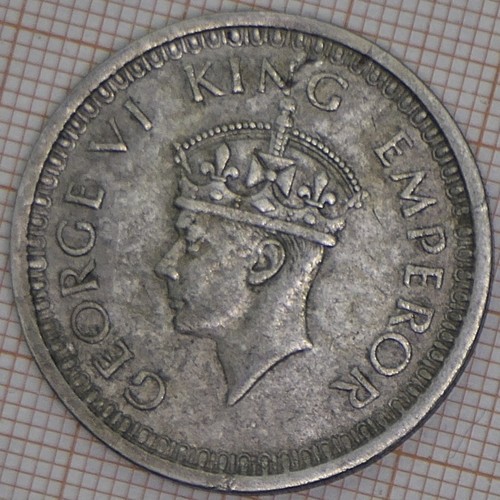
Victoria One Rupee
Silver 1-rupee coin of British India bearing Queen Victoria's crowned bust, struck from 1862 to 1901 under Crown rule.
British India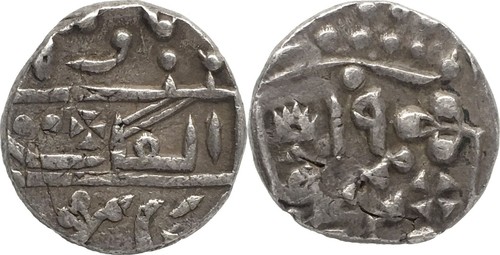
Kotah State Rupee
Silver rupee of the princely state of Kotah in Rajputana, struck with Persian and Devanagari legends and the state's katar-dagger emblem.
Princely & Presidency States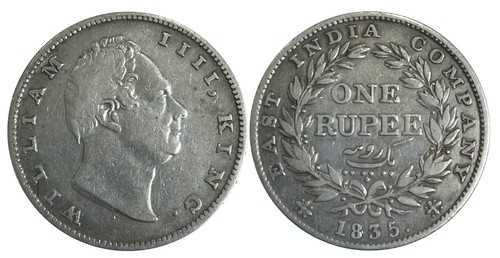
William IV One Rupee
Silver one-rupee coin of British India struck in 1835 under the East India Company, bearing the right-facing bust of King William IV.
British India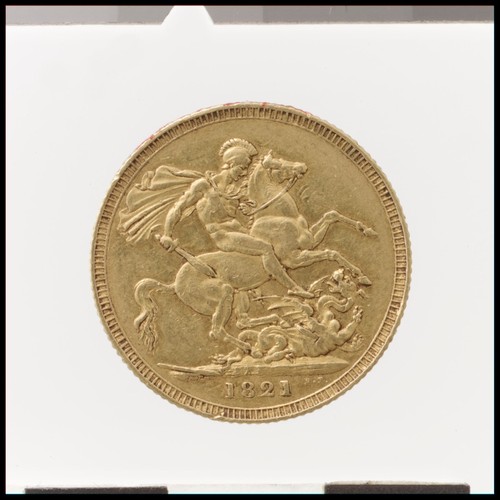
Sovereign of George IV
A milled gold sovereign of Great Britain struck under George IV, with the king's laureate head and Pistrucci's St George slaying the dragon reverse, dated 1821.
Milled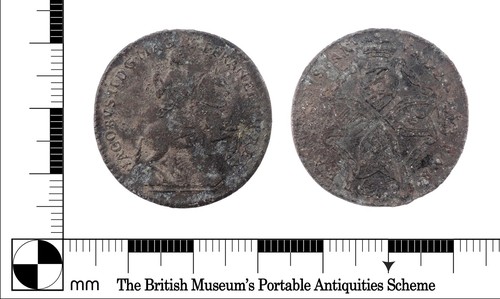
American Plantations Token
A 1688 tin token struck under James II for England's American colonies, valued at 1/24 of a Spanish real — the first regal-authorized coinage for British America.
Colonial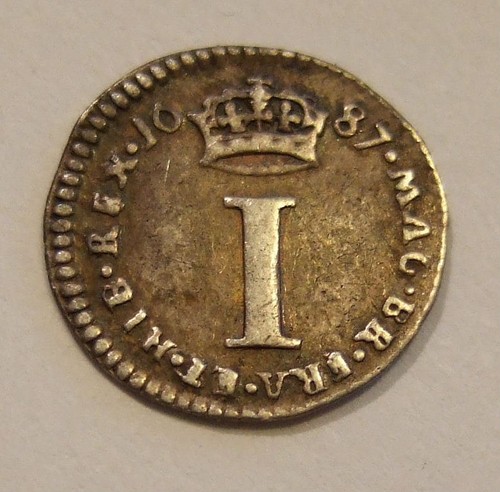
Maundy One Penny
The smallest British Maundy silver coin, bearing a crowned Roman numeral I; this example was struck in 1687 under James II.
Maundy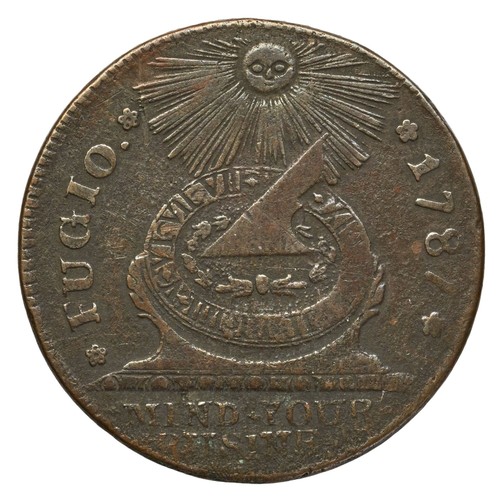
Fugio Cent
1787 copper cent, among the first coins issued under the United States, with a sundial and sun on the obverse and thirteen linked rings on the reverse.
Colonial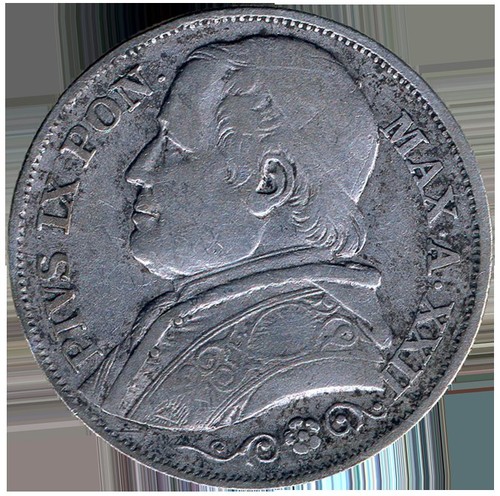
2 Lire
Silver 2 Lire of the Papal States struck under Pope Pius IX, part of the Italian lira system adopted by Rome in the 1860s.
Modern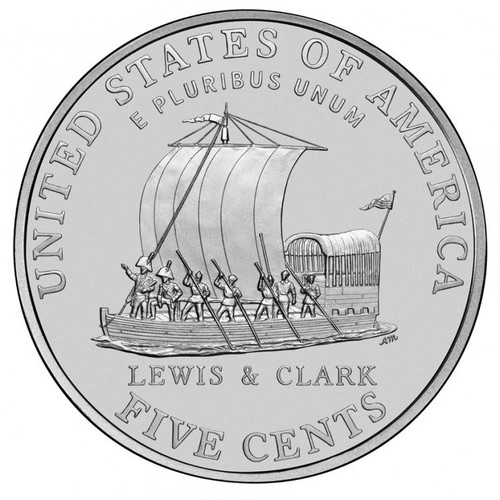
Westward Journey Nickel
A 2004 Jefferson nickel from the Westward Journey series, showing the Lewis & Clark keelboat under sail on the reverse to mark the expedition's bicentennial.
Nickel Five Cent