
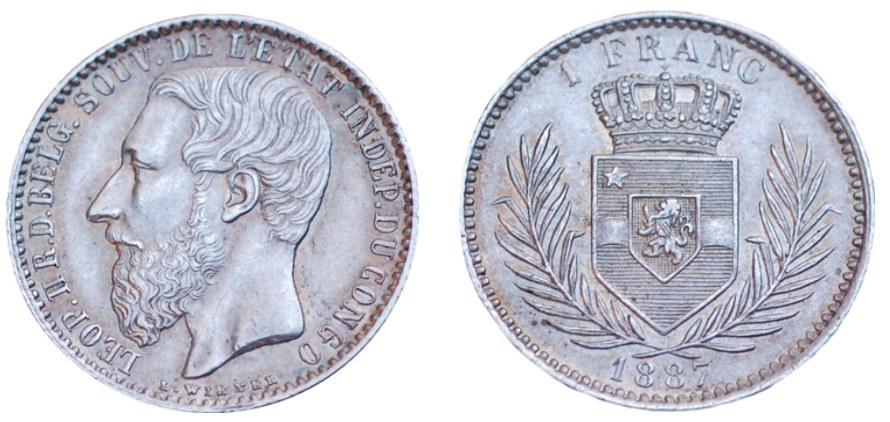
Belgian Congo 1 Franc
An early silver franc struck for the Congo under King Leopold II, pairing a laureate portrait with grain stalks and the value.
- Country
- Belgian Congo
- Denomination
- 1 Franc
- Metal
- Silver
Got a coin like this?
Identify any coin from a photo, free.
Overview
The Belgian Congo 1 franc dated 1887 is an early silver coin struck for the Congo territory during the period it was governed as the Congo Free State (État Indépendant du Congo) under King Leopold II of the Belgians. It represents one of the first franc-denominated coins produced for the region, decades before the modern Belgian Congo coinage most collectors picture.
As seen on the coin, one face carries a laureate portrait framed by a decorative laurel wreath, while the other shows grain or plant stalks together with the denomination and inscriptions in French. The classical, ornate styling follows the conventions of late 19th-century European silver coinage.
Struck in silver at roughly the size of a contemporary French or Belgian franc, it is a small but substantial piece. Because it dates from the earliest phase of organized Congo coinage, it holds particular interest for collectors of African, Belgian, and colonial-era world coins.
History & Background
The Congo Free State was created in the mid-1880s as a territory held personally by Leopold II, King of the Belgians, rather than by the Belgian state itself. To support commerce and administration, silver franc coinage bearing the sovereign's titles was introduced, and the 1 franc dated 1887 belongs to this founding series.
The coin's design reflects Belgian and broader European monetary tradition of the era, using a laureate portrait and wreath alongside the value in francs. The franc denomination tied the Congo issues to the wider Latin Monetary Union standards that shaped Belgian and French silver coins of the period.
In 1908 the territory was formally annexed by Belgium and became the Belgian Congo, after which later coinage carried the colonial identity that most people associate with the name. The 1887 franc therefore straddles the transition, catalogued today under the Congo Free State but commonly listed and searched for as an early Belgian Congo coin.
How to Identify
Start with the date and the two design faces. A genuine example shows the year 1887, a laureate portrait ringed by a laurel wreath on one side, and grain or plant stalks with the value 1 FRANC and French legends on the other. The inscriptions reference Leopold II and his sovereignty over the Congo, which anchors the attribution.
The coin is struck in silver and is close in diameter and weight to a French or Belgian franc of the same era — a small, dense piece that feels heavier than a base-metal coin of similar size. The silver surfaces often tone to a soft gray, and honest wear is expected on so old an issue.
Because the styling resembles other Latin-standard franc coins of the 1880s, confirm the Congo legends rather than relying on the portrait alone. The pairing of the laureate wreath side with the grain-stalk value side, plus the 1887 date and French Congo inscriptions, distinguishes it from contemporary Belgian, French, or Swiss francs.
Value & Collectibility
As an early silver coin from a short-lived and historically notable issuing authority, the 1887 Congo franc carries a collector premium above its silver content, and values scale sharply with condition. Heavily worn or damaged examples trade for modest sums, while sharp, problem-free coins command considerably more.
The silver content sets a floor, but demand from collectors of African, Belgian, and colonial coinage is what drives the price. Cleaning, edge knocks, and corrosion reduce value, so original, evenly toned surfaces are preferred.
Because so old a coin has been widely collected and occasionally faked, treat any single figure as a guide only. Confirm the specific date, verify authenticity, and check recent auction and dealer results for the matching grade before assigning a value.
Frequently asked questions
Is the 1887 Congo franc really a Belgian Congo coin?
It was struck during the Congo Free State period, when the territory was held personally by King Leopold II. Belgium formally annexed the region as the Belgian Congo in 1908, so the 1887 franc is an early forerunner often searched for under the Belgian Congo name.
Is this coin made of real silver?
Yes. The 1 franc of this era was struck in silver to Latin Monetary Union standards, similar to contemporary Belgian and French francs. That silver content sets a value floor beneath any collector premium.
Who is on the coin?
The portrait side shows a laureate bust within a laurel wreath, and the legends name Leopold II, King of the Belgians and sovereign of the Congo. The other side pairs grain or plant stalks with the value in francs.
How can I tell it apart from a French or Belgian franc?
The date 1887 and the French Congo inscriptions naming Leopold II's sovereignty over the Congo are decisive. The styling is similar to other franc coins of the era, so read the legends rather than judging by the portrait alone.
Is my 1887 Congo franc valuable?
It carries a premium over silver value as a historic early Congo issue, with condition the main driver. Worn examples are modest; sharp, original coins bring more. Verify the date, authenticity, and recent results for the grade.
Belgian Congo 1 Franc guides
In-depth guides for identifying, valuing, and collecting Belgian Congo 1 Franc.
Other coins you may enjoy
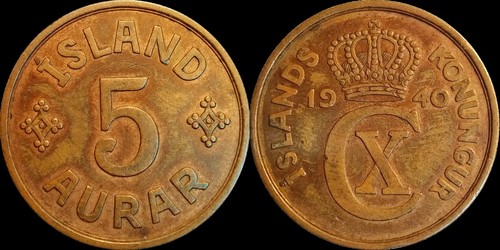
5 Aurar
1926-1942
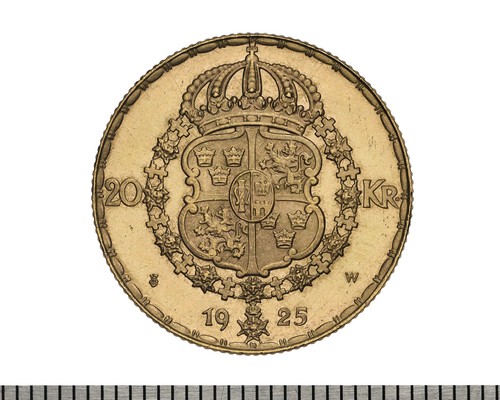
20 Kronor
1925 (denomination struck 1873-1925)
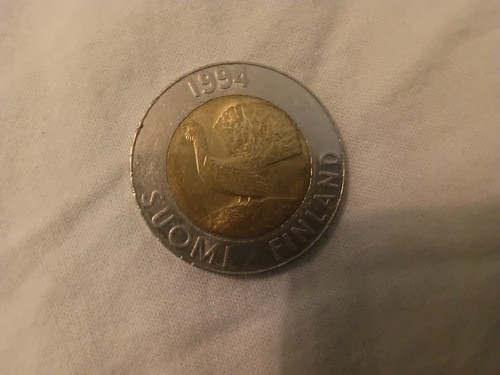
10 Markka
1993–2001
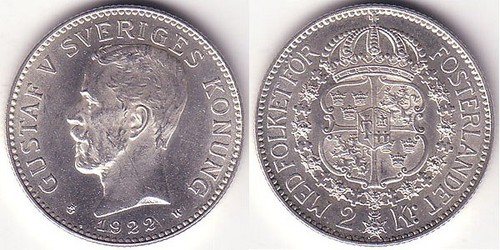
2 Kronor
1910-1940 (this example dated 1922)
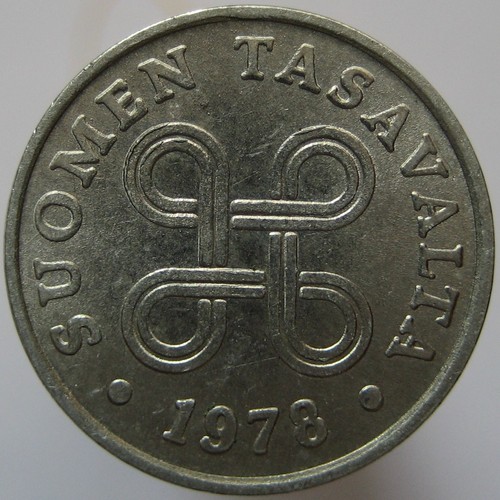
1 Penni
1969–1979
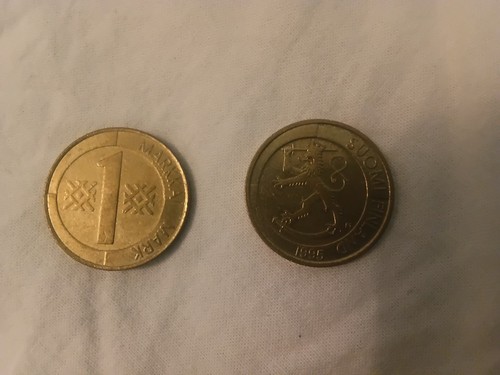
1 Markka
1993–2001
Kenya 5 Shillings
Bimetallic issues (2005–2010)
Kenya 20 Shillings
Modern issue (late 1990s–2000s)
South Africa Farthing
1923-1960
Kenya 10 Shillings
Republic of Kenya, bimetallic issues (mid-1990s to c. 2010)
Gold Sovereign
1817–present
Henri V Five Francs
1831