
Coin Encyclopedia
Search and identify coins from around the world — with country, denomination, metal, mint, history, and how to tell them apart.
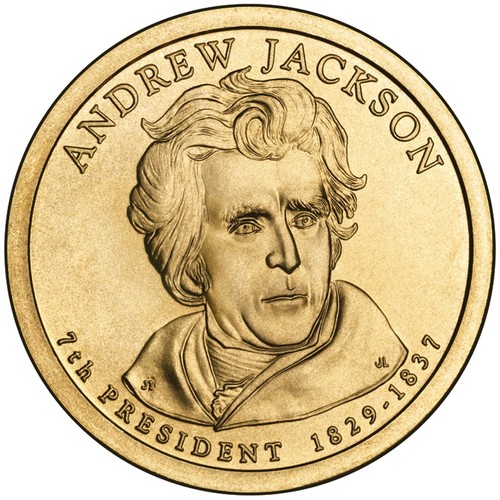
Andrew Jackson Presidential Dollar
2008 U.S. golden dollar honoring Andrew Jackson, the seventh president; part of the Presidential $1 Coin Program with edge-lettered inscriptions.
United States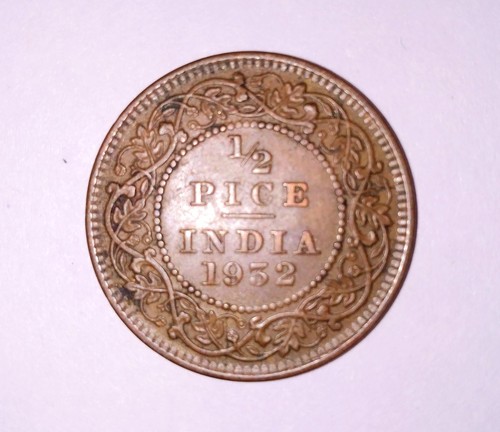
India Half Pice
A small copper half pice from India carrying a crowned obverse with the word INDIA; the pice is a sub-unit of the old pre-decimal Indian coinage system.
Modern India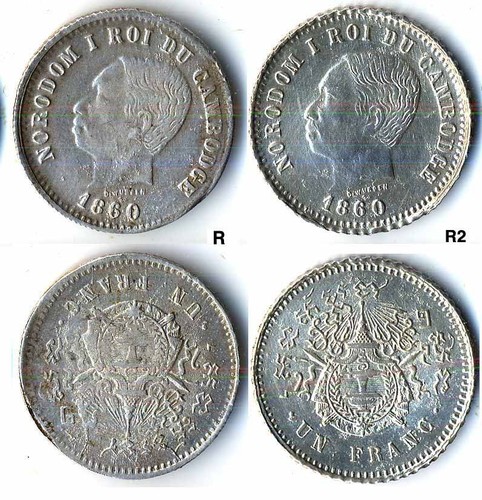
Cambodia One Franc
A mid-20th-century one-franc coin of the Kingdom of Cambodia, its obverse bearing a royal Norodom profile and its reverse a heraldic coat of arms.
Southeast Asia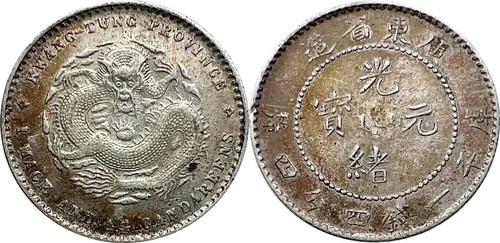
Guangdong 20 Cents
A silver 20-cent coin of Kwangtung (Guangdong) province, struck under the Guangxu Emperor with a coiled dragon on one side and Chinese legends on the other.
Circulation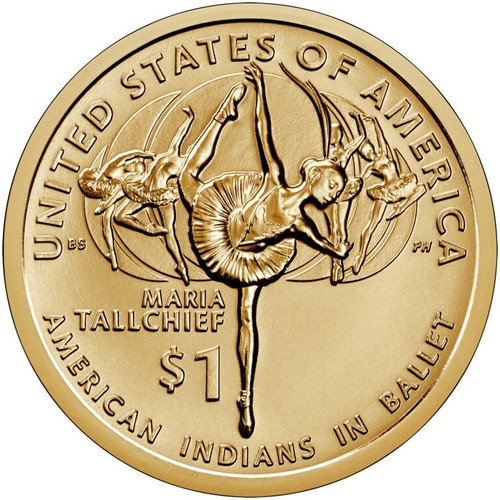
Native American Dollar - Tallchief
2023 Native American $1 Coin whose reverse honors Maria Tallchief and the five Osage ballerinas, struck in golden manganese brass.
Dollar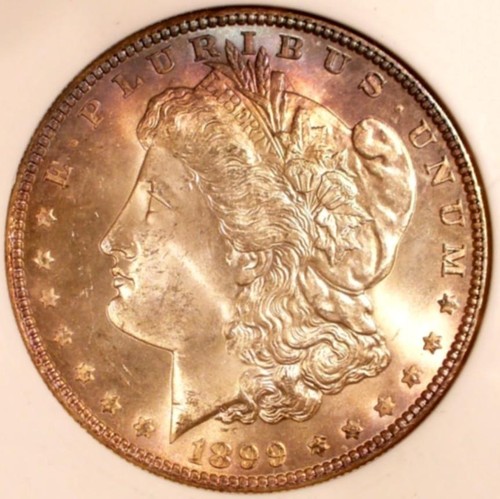
French Silver Franc
A small Third Republic silver 1-franc coin with an allegorical Marianne head and a REPUBLIQUE FRANCAISE reverse; the pictured piece is dated 1899.
World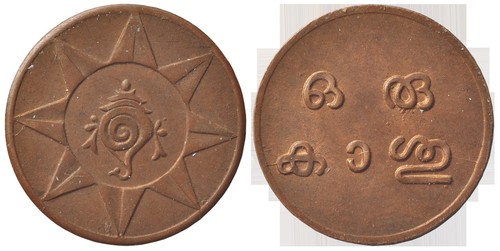
Travancore One Cash
A tiny copper coin of the princely state of Travancore, carrying the state's conch-shell emblem on one side and its cash value in local script on the other.
Princely & Presidency States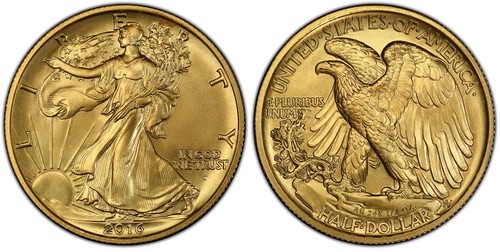
Walking Liberty Half Dollar Centennial Gold
A 2016-W gold collector coin marking the centennial of the 1916 Walking Liberty half dollar, struck in 1/2 oz of 24-karat gold at West Point.
Half Dollar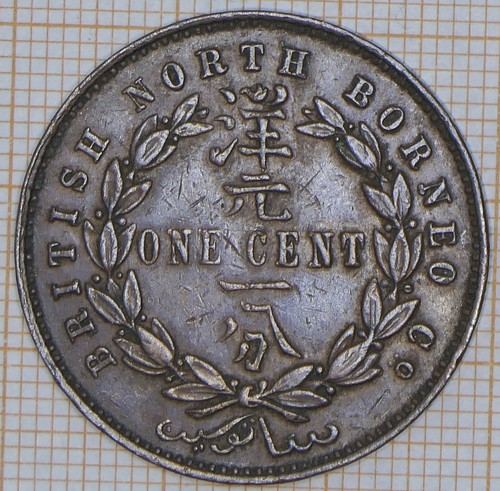
British North Borneo One Cent
A colonial copper cent of the British North Borneo Company: company arms with Dyak supporters and a sailing ship on one side, ONE CENT in a wreath on the other.
Colonial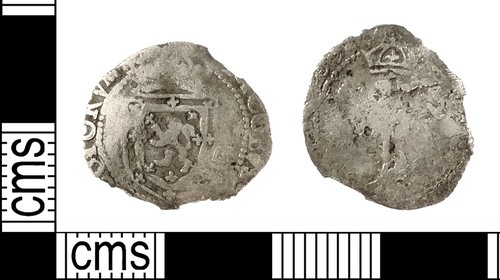
Eighth Thistle Merk
A small hammered silver Scottish coin of James VI, showing a crowned heraldic shield of arms on one side and a crowned thistle on the other.
Hammered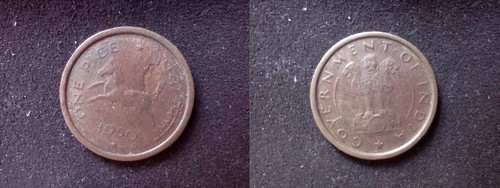
Republic India One Pice
A small bronze one-pice from 1950, the first year of the Republic of India, the lowest coin of the pre-decimal anna series struck in a copper alloy.
Modern India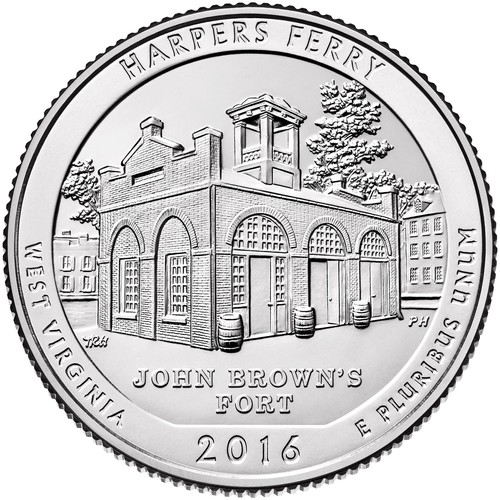
Harpers Ferry Quarter
U.S. 25-cent coin from the 2016 America the Beautiful series, showing John Brown's Fort at Harpers Ferry National Historical Park, West Virginia.
Quarter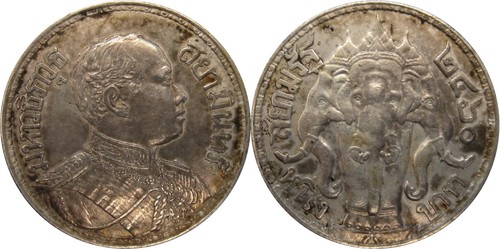
Thailand One Baht
A silver one-baht coin of Siam struck under King Rama VI, its obverse bearing the young king's uniformed profile within Thai royal inscriptions.
Southeast Asia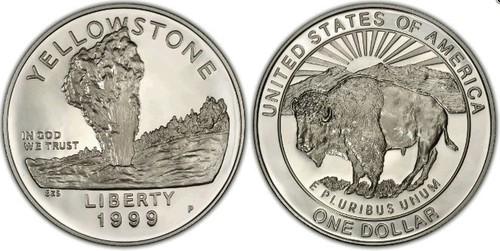
Yellowstone National Park Silver Dollar
A 1999 U.S. 90% silver commemorative dollar honoring Yellowstone National Park, with Old Faithful erupting on the obverse and an American bison on the reverse.
Modern Commemorative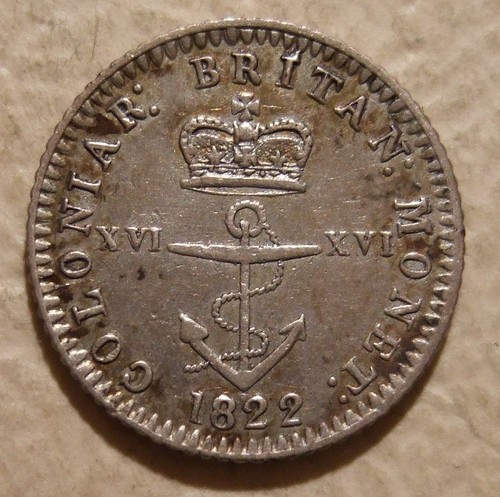
George IV One Sixteenth Spanish Dollar
A small George IV silver coin of the "Anchor Money" series, worth one-sixteenth of a Spanish dollar and marked with an anchor and Roman numeral XVI.
Colonial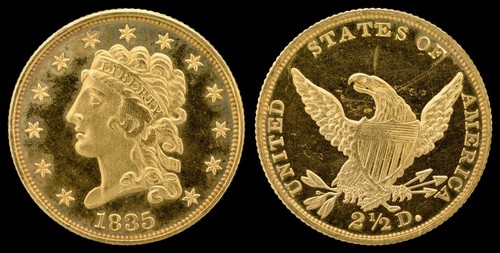
Classic Head Quarter Eagle
U.S. $2.50 gold coin struck 1834–1839, with a band-bound Liberty head obverse and a shield-breasted eagle reverse marked "2½ D."
Quarter Eagle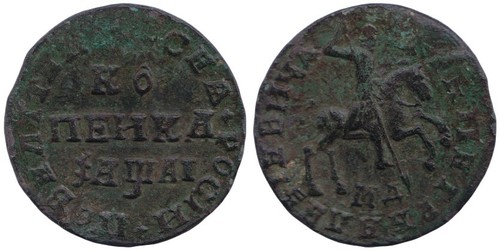
Kopek (Peter I)
An early copper kopek of Peter the Great, showing a profile of Peter I and Cyrillic legends on one side and the Russian double-headed eagle on the other.
Early Modern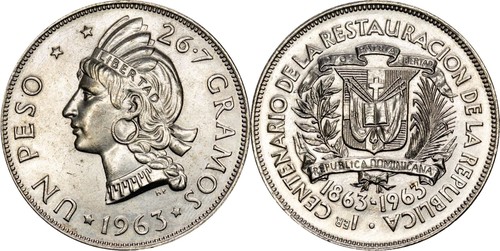
Restoration Anniversary Peso
A silver Dominican one-peso commemorative dated 1963, marking the centennial of the Restoration, with a Liberty head obverse and the national arms.
Commemorative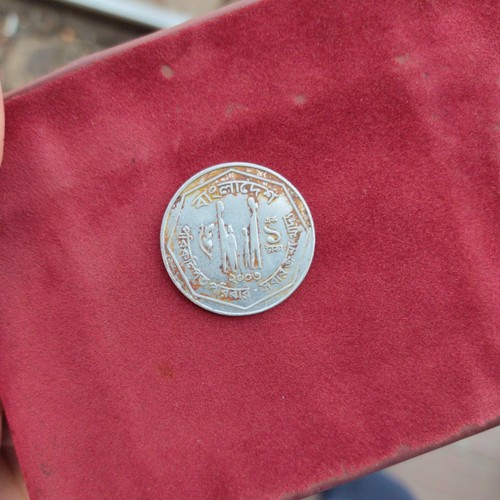
Bangladesh 5 Taka
A modern Bangladeshi circulation coin worth five Taka, struck in nickel-plated steel, with the national emblem on the obverse and the value in Bengali on the reverse.
South Asia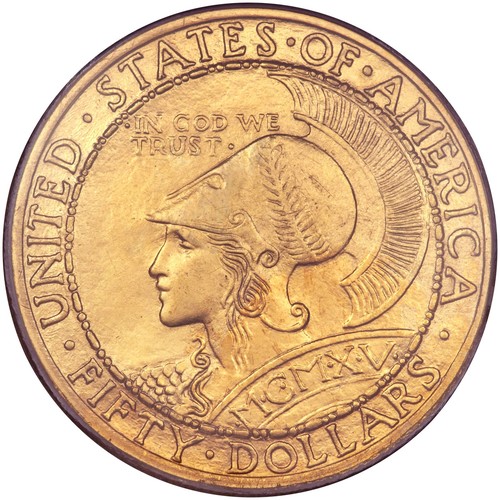
Panama-Pacific Exposition $50 (Octagonal)
An eight-sided $50 gold commemorative struck for San Francisco's 1915 world's fair, showing Minerva and her owl — the largest U.S. coin of its era.
Classic Commemorative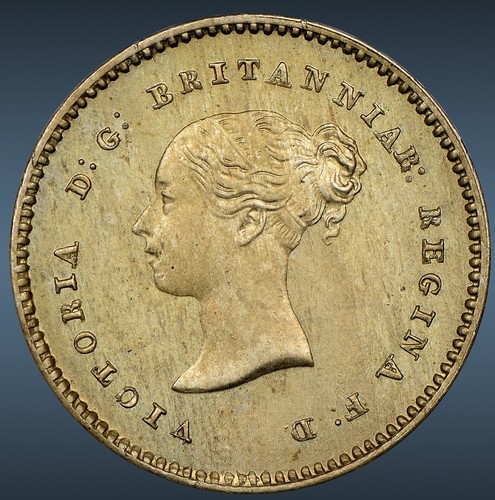
Quarter Farthing
Tiny copper coin of Queen Victoria worth one-sixteenth of a penny, struck for use in Ceylon; the smallest-value British denomination ever made.
British Isles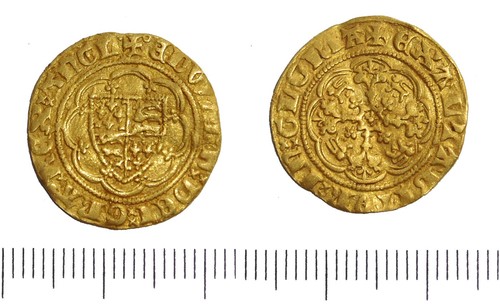
Edward III Quarter Noble
Small medieval English gold coin of Edward III, showing a crowned shield of arms on the obverse and an ornate floral cross design on the reverse.
Medieval Coins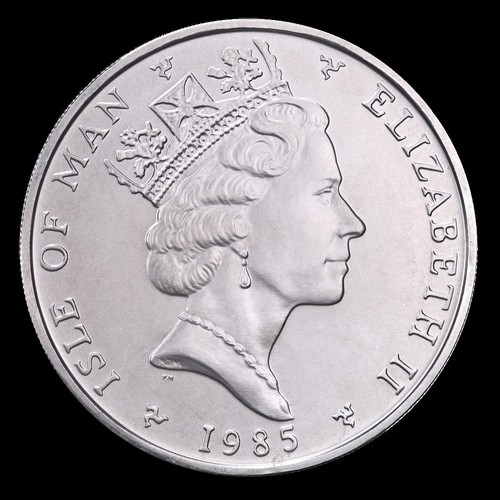
Isle of Man Noble
The Isle of Man Noble: the world's first platinum bullion coin, pairing a crowned Queen Elizabeth II with a Viking longship reverse.
Bullion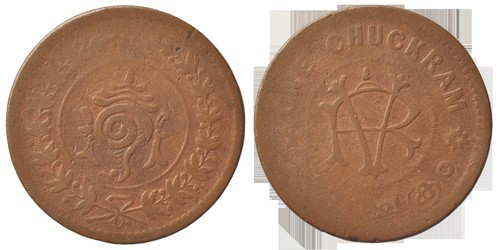
Travancore One Chuckram
Small copper one-chuckram coin of the princely state of Travancore, with the royal conch-shell emblem and a local-script denomination reverse.
Princely & Presidency States