
Coin Encyclopedia
Search and identify coins from around the world — with country, denomination, metal, mint, history, and how to tell them apart.
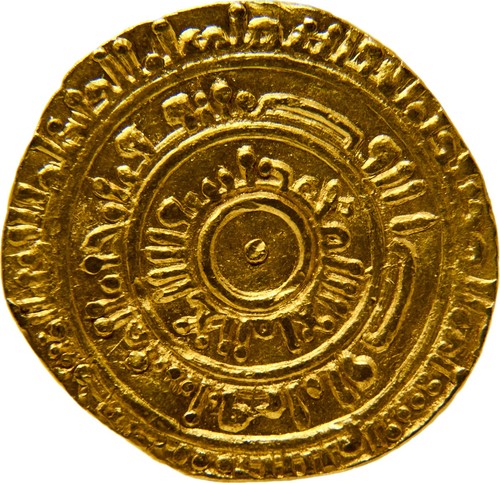
Fatimid Dinar of Imam Nizar
An 11th-century Fatimid gold dinar with concentric circular Kufic inscriptions naming the ruler and Shi'a invocations, a hallmark of Fatimid coinage.
Islamic (Medieval)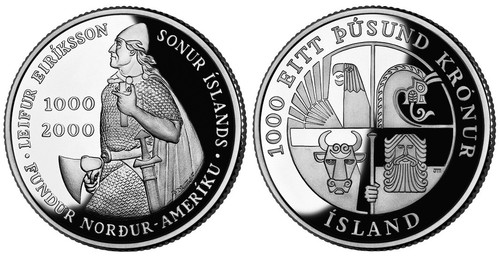
Leif Erikson Commemorative 1000 Króna
Icelandic silver commemorative dated 2000, marking the millennium of Leif Erikson's voyage and the Norse discovery of North America.
Commemorative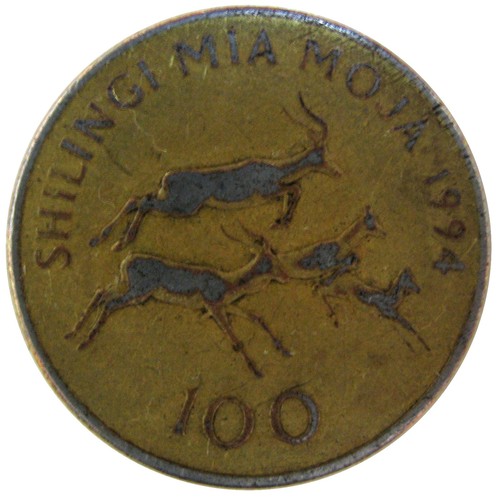
Tanzania 100 Shillings
A golden brass Tanzanian coin worth 100 shillings, showing a lively scene of running antelope with the Swahili legend SHILINGI MIA MOJA.
World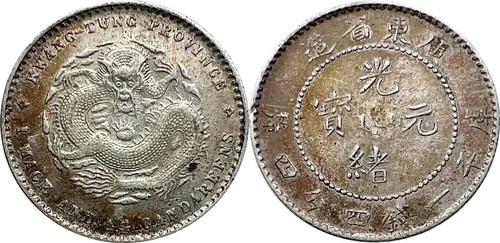
Guangdong 20 Cents
A silver 20-cent coin of Kwangtung (Guangdong) province, struck under the Guangxu Emperor with a coiled dragon on one side and Chinese legends on the other.
Circulation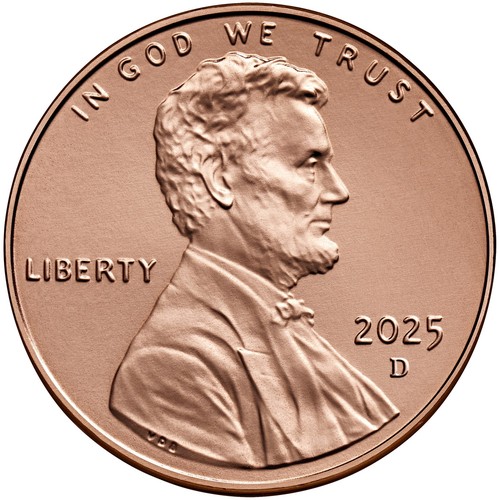
Lincoln Shield Cent
The current U.S. one-cent coin, struck since 2010, pairing Lincoln's profile with a Union Shield reverse on a copper-plated zinc planchet.
Small Cent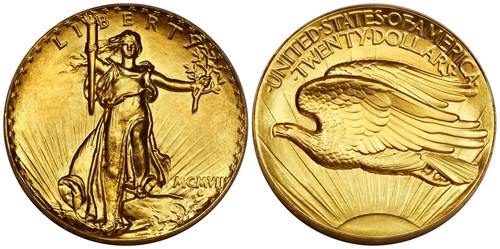
Ultra High Relief Double Eagle
Augustus Saint-Gaudens' 1907 $20 gold pattern struck in sculptural ultra high relief, with striding Liberty and a soaring eagle.
Gold Type Coin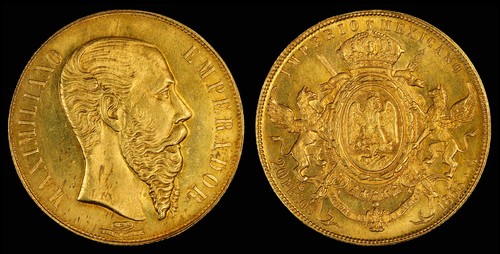
Empire 20 Pesos
A gold 20 pesos of the Second Mexican Empire, showing a bearded imperial portrait, the legend IMPERIO MEXICANO, and a crowned heraldic coat of arms.
Circulation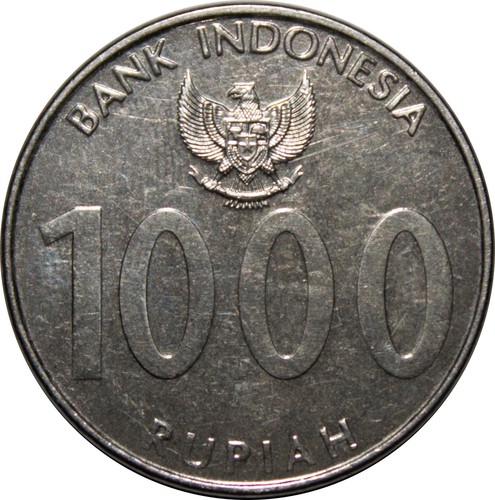
Indonesia 1000 Rupiah
A 2010 Indonesian 1000-rupiah circulation coin, its obverse bearing the Garuda Pancasila emblem and Bank Indonesia legend, its reverse a traditional monument design.
Southeast Asia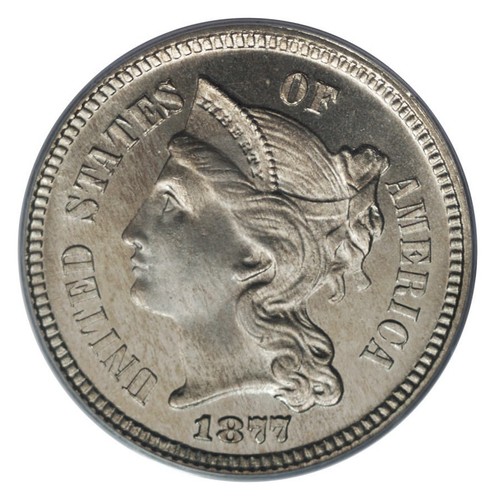
Three Cent Nickel
A small copper-nickel three-cent coin with a Liberty head obverse and a Roman numeral III inside a wreath; struck at Philadelphia from 1865 to 1889.
Three Cent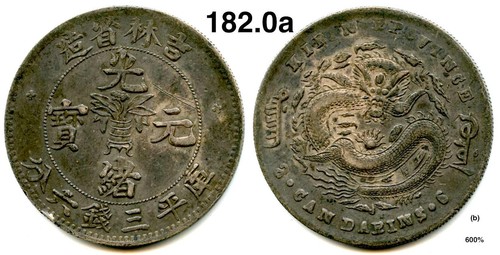
Guangxu Yuanbao 50 Cents
A Qing-dynasty silver half-dollar bearing the legend Guangxu Yuanbao and a coiled dragon, struck by Chinese provincial mints during the Guangxu Emperor's reign.
Circulation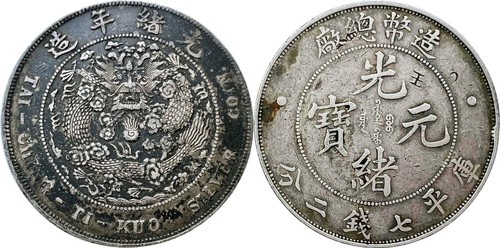
Guangxu Yuanbao 7 Mace 2 Candareens
A silver Chinese dragon dollar of the Guangxu era, marked Guangxu Yuanbao and valued at 7 Mace 2 Candareens, with a coiled dragon on one face and Chinese legends on the other.
Circulation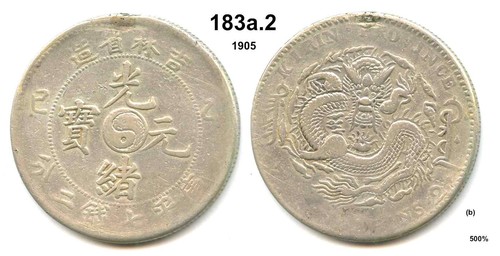
Guangxu Yuanbao Dollar
A crown-sized silver dragon dollar of Qing China inscribed 光緒元寶 (Guangxu Yuanbao), with a coiled dragon reverse and a provincial mint inscription; this piece dated 1905.
Circulation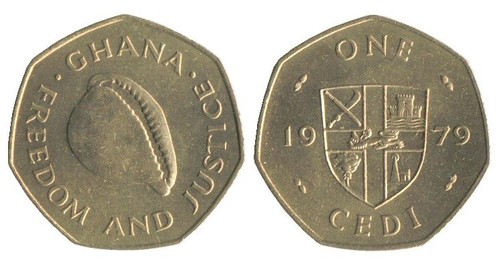
Ghana 1 Cedi
A golden-brass Ghanaian coin dated 1979, showing a cocoa pod with FREEDOM AND JUSTICE on one face and the national coat of arms on the other.
World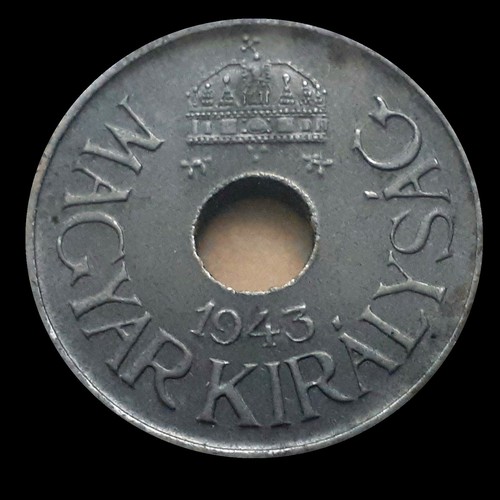
20 Fillér
An early 20th-century Hungarian 20 fillér, a small base-metal coin showing the crowned Hungarian coat of arms and the FILLÉR minor denomination.
Modern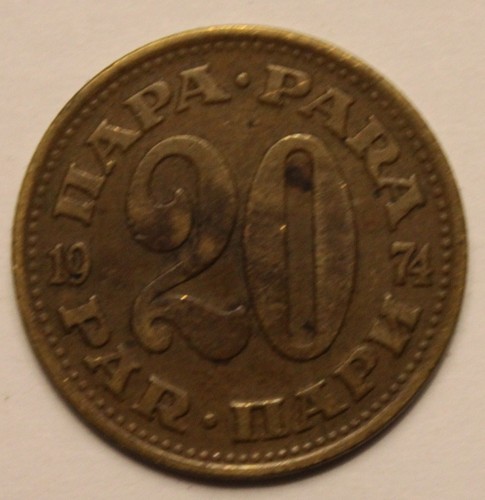
20 Para
A small base-metal coin of socialist Yugoslavia, showing the value 20 with the date 1974 on one side and the six-flame Yugoslav state emblem on the other.
Modern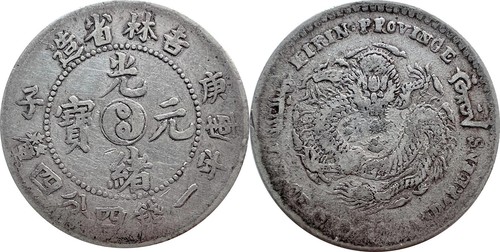
Guangxu Yuanbao 20 Cents
A machine-struck Qing silver 20 cents of the Guangxu era, with a coiled dragon on one face and a yin-yang (taiji) symbol on the other.
Circulation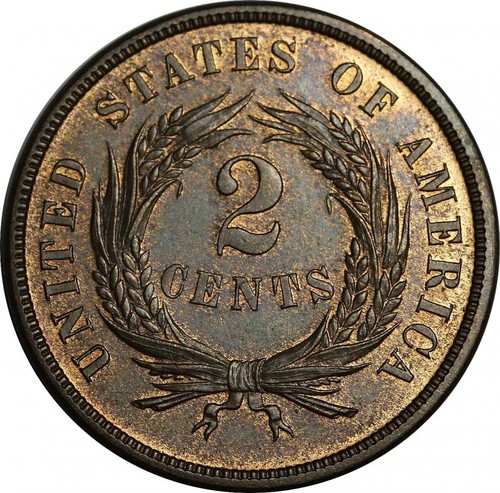
Two Cent Piece
America's only two-cent coin, struck in bronze from 1864 to 1873, and the first U.S. coin to carry the motto "IN GOD WE TRUST."
Two Cent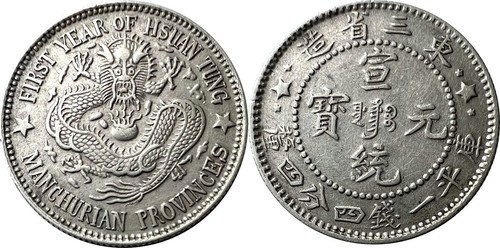
Xuantong Yuanbao 20 Cents
A small late-Qing silver 20-cent coin with a Western-style dragon, the English legend FIRST YEAR OF HSUAN TUNG, and Chinese characters reading Xuantong Yuanbao.
Circulation