
Coin Encyclopedia
Search and identify coins from around the world — with country, denomination, metal, mint, history, and how to tell them apart.
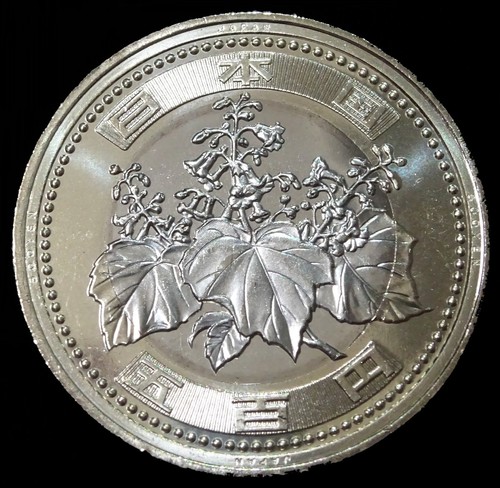
500 Yen Bicolor Clad
Japan's large two-tone 500 yen circulation coin, with a floral blossom design and pearl-like beading on one face and bold value numerals on the other.
Circulation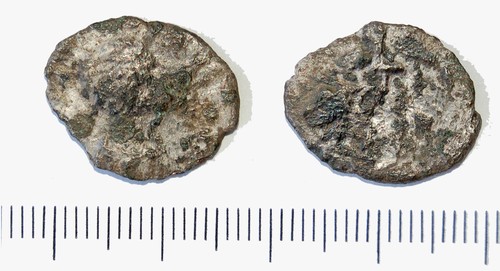
Denarius of Faustina the Elder
A silver Roman denarius honoring Faustina the Elder, wife of Antoninus Pius, with her draped bust and a seated Fortuna reverse, struck c. 141–161 AD.
Ancient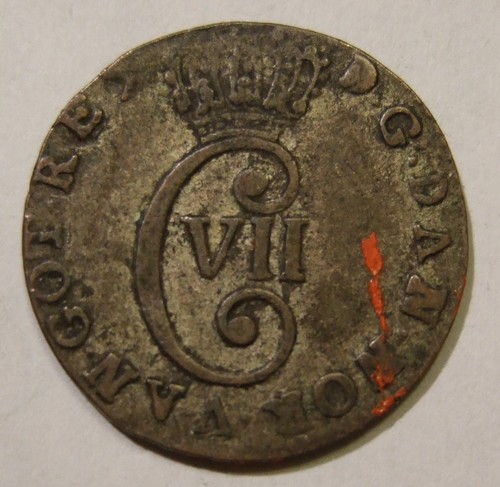
4 Skilling
A Danish copper 4 skilling of 1783, with a crown above a numeral on one face and an ornamental circular pattern framing the date on the other.
Early Modern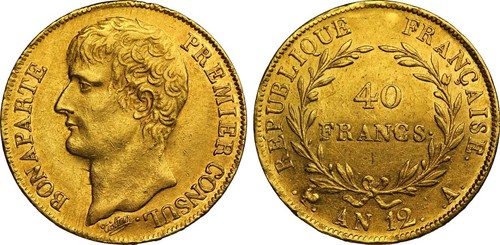
French 40 Francs Gold (Napoleon I)
A large early French gold coin showing Napoleon Bonaparte's left-facing profile and a wreathed reverse, struck in the opening years of his rule.
Bullion/gold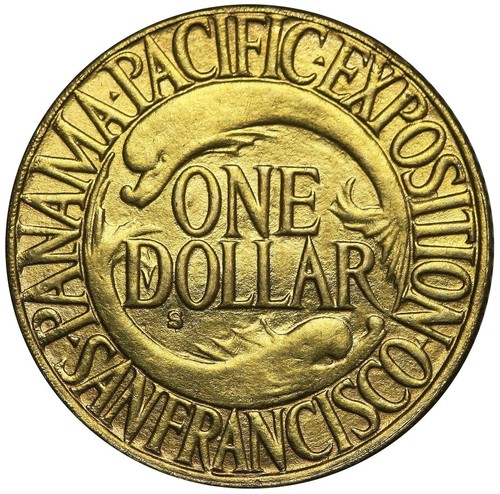
Panama-Pacific Exposition Dollar
An 1915 U.S. gold dollar struck for the Panama-Pacific International Exposition, showing a canal laborer and two dolphins encircling the denomination.
Classic Commemorative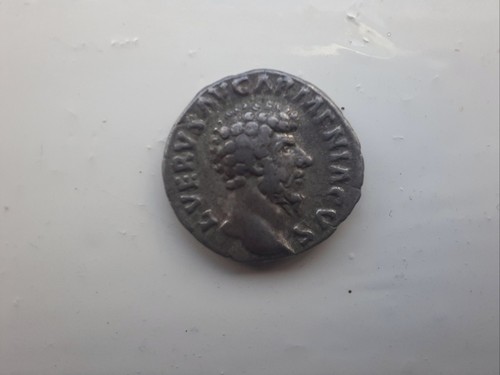
Denarius of Lucius Verus
A silver Roman denarius of the emperor Lucius Verus (161–169 AD), showing his curly-haired, bearded portrait facing right with a Latin legend.
Ancient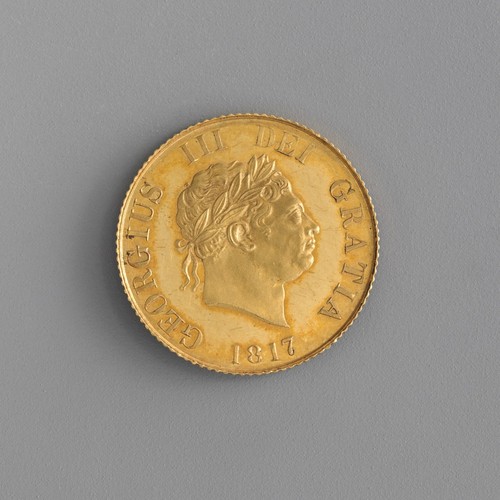
Half Sovereign of George III
British 22-carat gold half sovereign of George III, introduced in 1817 with a laureate bust and a crowned shield of arms; face value ten shillings.
Milled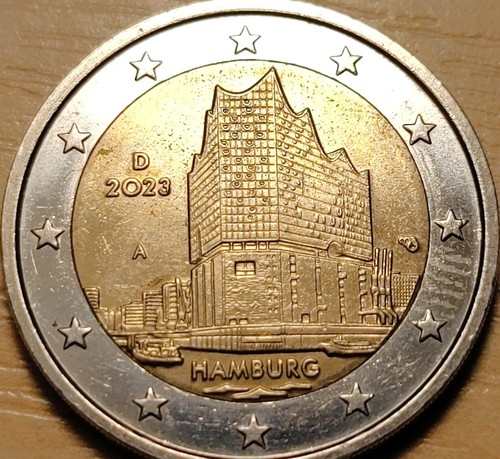
Germany 2 Euro Elbphilharmonie Commemorative
A 2017 German bi-metallic 2 euro commemorative for Hamburg, showing the Elbphilharmonie concert hall with the common European reverse.
Commemorative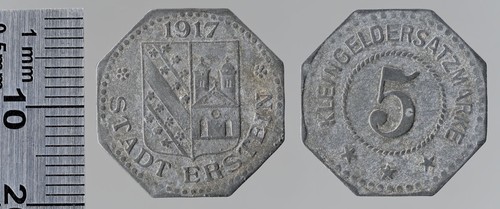
Erstein Notgeld 5 Pfennigs
A World War I emergency small-change coin issued by the town of Erstein in 1917, with the civic coat of arms on one side and a large 5 on the other.
Token/notgeld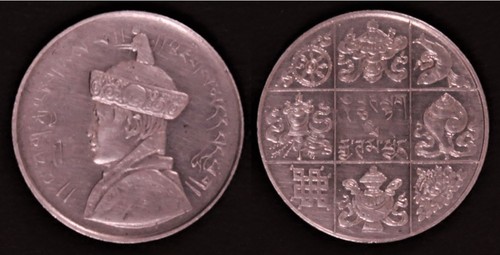
India Half Rupee (Copper)
Copper coin bearing a lion design with the English legend 'HALF RUPEE INDIA' and the date 1947, dated to the year of Indian independence.
Modern India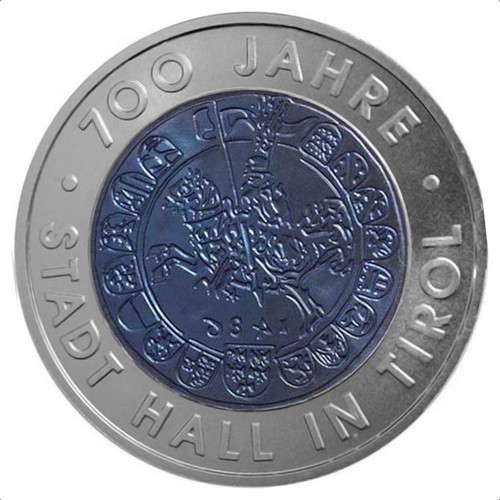
Austria 25 Euro Silver-Niobium Commemorative
Bi-metallic 25 Euro of the Austrian Mint with a silver outer ring and a colored niobium core; the 2003 first issue honored the town of Hall in Tirol.
Commemorative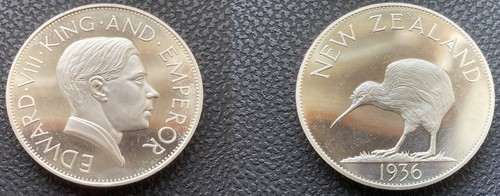
Edward VIII New Zealand Crown
A 1936-dated crown-sized piece pairing an Edward VIII profile with a New Zealand kiwi; a fantasy/novelty issue, not an officially circulated coin.
World Coins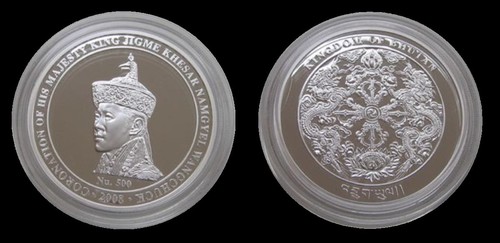
Bhutan 500 Ngultrum Commemorative
Modern Bhutanese silver commemorative dated 2008, with a portrait of King Jigme Khesar Namgyel Wangchuck and an ornate dragon-and-mythical-creature reverse.
Himalayan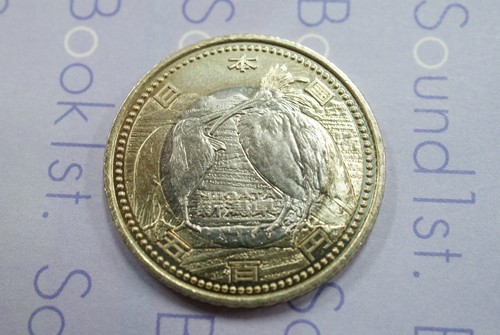
500 Yen Niigata Prefecture Commemorative
A modern Japanese 500 Yen commemorative for Niigata Prefecture, showing a traditional ship that celebrates the region's maritime and port heritage.
Commemorative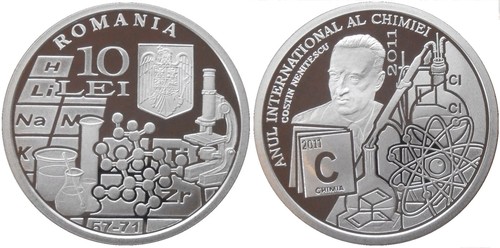
Romania International Year of Chemistry Commemorative
Romanian silver 10 lei commemorative dated 2011, issued for the International Year of Chemistry with molecular, laboratory and scientist imagery.
Commemorative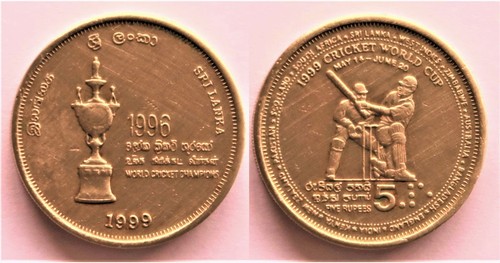
Sri Lanka 5 Rupees
Sri Lanka's 1999 copper-nickel five rupees marking the Cricket World Cup, showing the tournament trophy on one face and a batsman at the crease on the other.
South Asia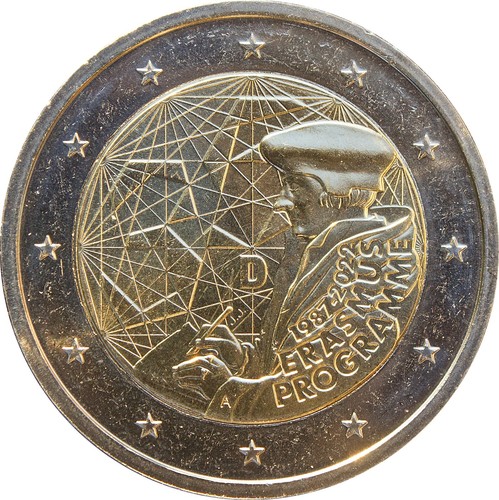
Germany 2 Euro Erasmus Programme Commemorative
A German 2 Euro commemorative dated 2022 marking the Erasmus Programme, its obverse showing a student figure with a globe and the reverse the ring of European stars.
Commemorative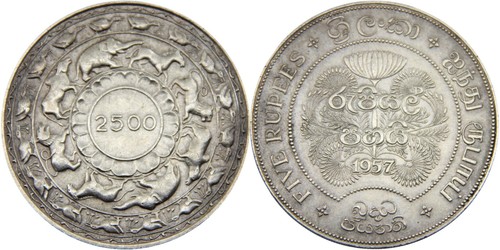
Ceylon 5 Rupees Buddhism Anniversary
Ceylon's 1957 silver five rupees marking 2,500 years of Buddhism, with an ornate 2500 device amid mythological creatures and a scrolled RUPEES reverse.
South Asia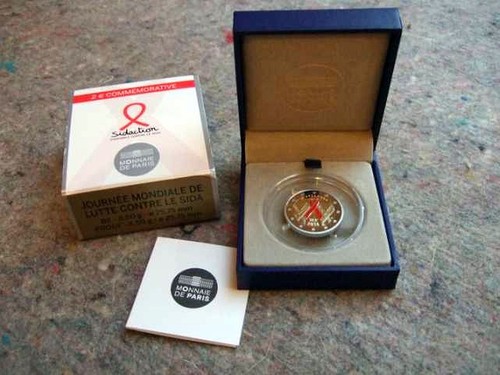
France 2 Euro Sidaction Commemorative
France's 2014 bi-metallic 2 euro commemorative honouring Sidaction, shown with a red AIDS-awareness ribbon and paired with the shared European reverse.
Commemorative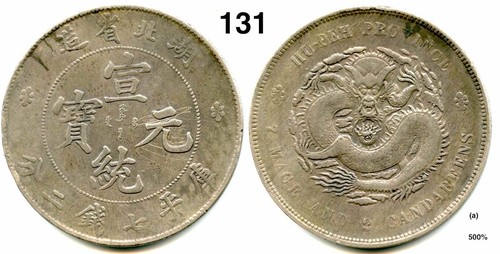
Xuantong Yuanbao 7 Mace 2 Candareens
A late Qing silver dollar-size coin of the Xuantong era (1909-1911), reading 宣統元寶 on the obverse with a Chinese dragon on the reverse.
Circulation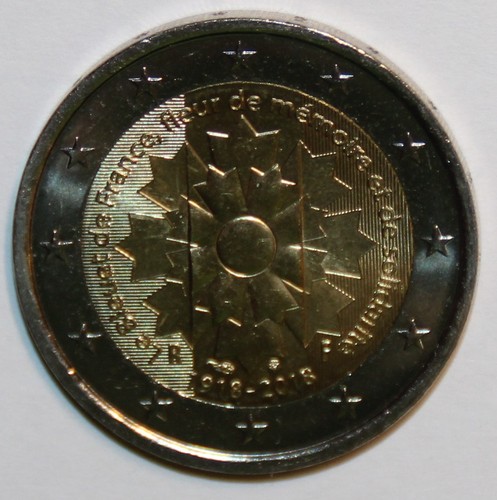
France 2 Euro Bleuet de France Commemorative
A French bi-metallic 2 euro commemorative showing the Bleuet de France cornflower, France's remembrance flower, paired with the shared European 2 euro side.
Commemorative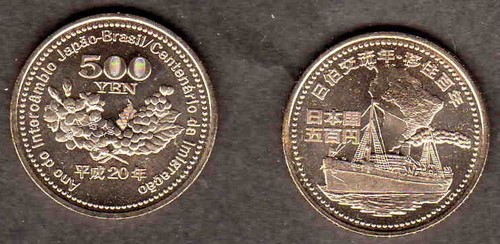
500 Yen Japanese Immigration Commemorative
A 2008 Japanese 500 yen commemorative marking 100 years of Japanese immigration to Brazil, with two figures on one side and a ship on the other.
Commemorative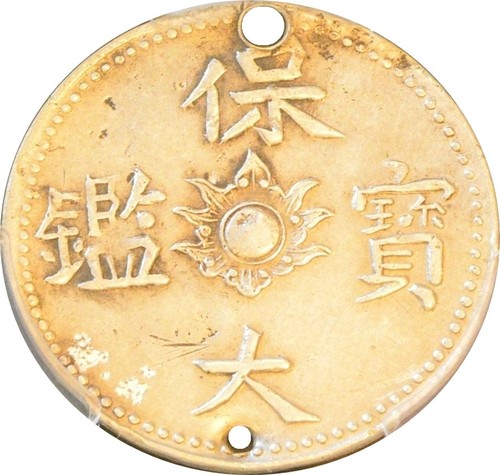
Vietnam 2 Tien - Bao Dai
A gold 2 Tien of Vietnam's last emperor, Bao Dai (1926-1945), its face bearing a radiant sun motif and Chinese-Vietnamese court inscriptions.
Southeast Asia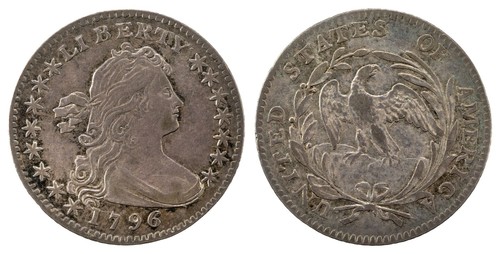
Draped Bust Half Dime
An early U.S. silver five-cent piece showing a draped bust of Liberty ringed by stars; the tiny half dime was struck 1796–1805.
Half Dime