
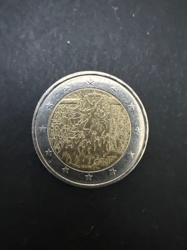
30th Anniversary of the Fall of the Berlin Wall Commemorative Coin
Germany (issued by several Eurozone countries, but this specific design is typical for German issuance for this event, as the inscription is in German) · 2019
2 Euro
Community gallery
Every coin the Coin Identifier community has discovered, from ancient tetradrachms to modern commemoratives.
30th Anniversary of the Fall of the Berlin Wall Commemorative Coin
Germany (issued by several Eurozone countries, but this specific design is typical for German issuance for this event, as the inscription is in German) · 2019
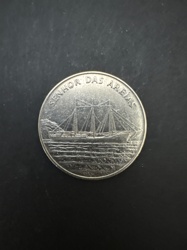
Cape Verde Escudo (Senhor das Areias)
Cape Verde · This particular design on a 100 Escudos coin for Cape Verde was issued in multiple years, including 1994, 2004, and later. Without a clear view of the reverse side or a date, a precise year cannot be determined, but it falls within the late 20th to early 21st century period when bimetallic coins became common in global currencies.
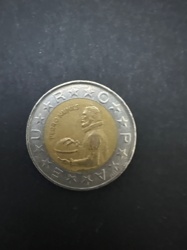
Pedro Nunes 2 Euro Commemorative Coin
Portugal · 2005
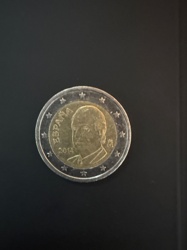
2 Euro (King Felipe VI)
Spain · 2014
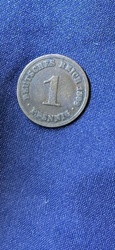
1 Pfennig
German Empire · 1888
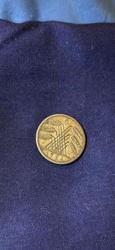
Rentenpfennig
Germany (Weimar Republic) · 1924
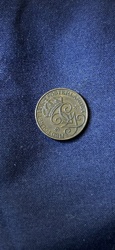
5 Ore (likely)
Sweden · 1916 (inferred from common Swedish coinage designs of the era which closely match the presented image, particularly the monogram of Gustaf V and the specific motto used on 5 öre coins)
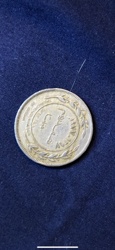
Qirsh / Piastre
Egypt (under King Farouk I) · 1941 (AH 1360)
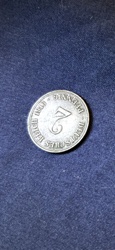
2 Pfennig
German Empire · 1916
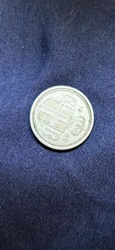
50 Øre
Norway · 1942
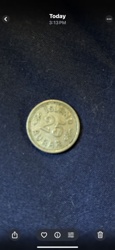
25 Aurar coin
Iceland · 1957
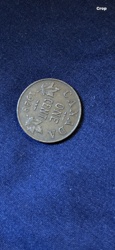
One Cent (Large Cent)
Canada · 1928
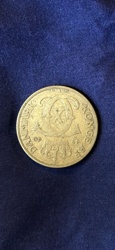
25 Øre
Denmark · 1907
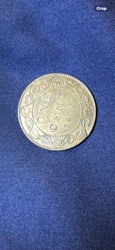
One Cent (Maple Leaf design)
Canada · 1910
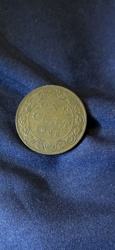
One Cent (Edward VII)
Straits Settlements (British Malaya) · 1908
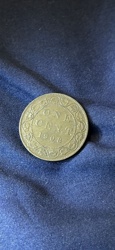
One Cent
British Straits Settlements · 1908
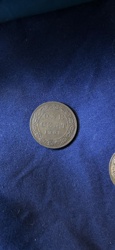
One Cent
British Straits Settlements · 1908
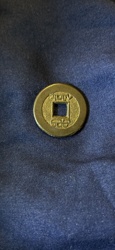
Chinese Cash Coin (e.g., Kai Yuan Tong Bao, Song Dynasty Cash Coin, Qing Dynasty Cash Coin, etc. - specific name depends on characters)
China · Uncertain from the image alone, but likely dates from a period between the Tang Dynasty (618-907 AD) and the Qing Dynasty (1644-1912 AD), as this style was common throughout these periods.
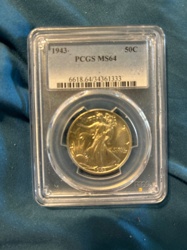
Walking Liberty Half Dollar
United States · 1943
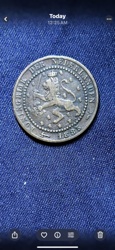
¼ Gulden
Netherlands · 1885
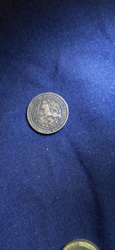
Lion Daalder
Dutch Republic (specifically, provinces such as Zeeland - 'ZEL' in the inscription) · Based on the visible inscription 'MO: ARG: ORD: ZEL: TRA: IMP: CIVT: ZEL:', this coin is a Zeeland (ZEL) issue. The exact year is not clearly visible in the image, but Lion Daalders were minted from 1577 until the late 17th century. To determine the precise year, a clearer view of the obverse or reverse would be needed, typically found near the bottom of the lion or on the reverse design. Given the general design, it is likely from the 17th century.
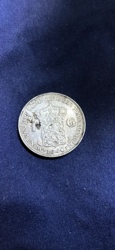
Gulden
Netherlands · 1940
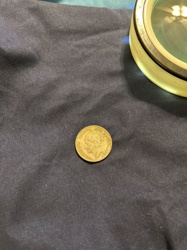
French 20 Francs (Louis Napoléon Bonaparte)
France · Based on the visible effigy, this coin is likely from the reign of Louis Napoléon Bonaparte (later Napoleon III) as President or Emperor of France. Specific dates for 20 Francs coins of this type range from 1852 (as Prince-President) through 1870 (as Emperor). Without a clearer image of the date, a precise year cannot be determined, but it falls within this range.
Could potentially be a Shilling, Sixpence, or similar denomination of British coinage.
United Kingdom (Great Britain) · Unable to determine the exact year from the provided image due to blurriness and distance. However, based on the design elements visible, it likely dates from the late 19th or early to mid-20th century. For example, the shield design with crown is present on various British coins across different reigns, including Victoria, Edward VII, George V, and George VI.
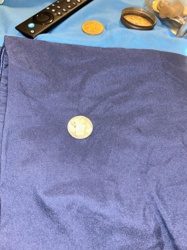
Mercury Dime (Winged Liberty Head Dime)
United States · 1916-1945 (Specific year not discernible from the provided image)
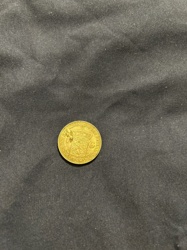
Dutch Gold Ducat (Netherlands Ducat)
Netherlands · Based on the visual characteristics, especially the style of the coat of arms and the visible text indicating 'BELG. PROV. FOED.', this coin appears to be a Dutch Gold Ducat. While an exact year is not clearly visible in the image, these ducats were minted for many years. Given the clarity of the design and the general appearance, it could range from the 18th to the early 20th century. A definitive year cannot be provided without a clearer image of the date, but many were struck in the 18th and 19th centuries.
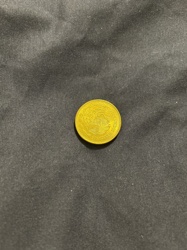
Mexican 50 Pesos (Centenario)
Mexico · While the specific year is not clearly legible from the image, Centenarios were originally minted in 1921 and then from 1943 intermittently through 1947, and later restrikes from 1949 onwards (often with a 1947 date). Without a clearer view of the reverse side, an exact year cannot be determined, but it falls within these ranges.
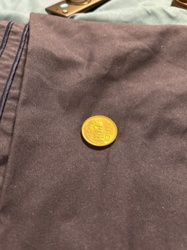
500 Rupiah coin
Indonesia · Based on the design featuring the Rumah Gadang and '500 RUPIAH' text, this coin is likely from either the 1991-2003 series or later variants. Without a clear view of the year, it's impossible to pinpoint the exact year, but this design was prominent during those periods.
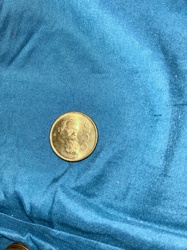
100 Soles de Oro
Peru · Based on typical designs and the denomination, this coin likely dates from the mid-20th century, possibly the 1960s or 1970s. A precise year is not visible in the provided image.
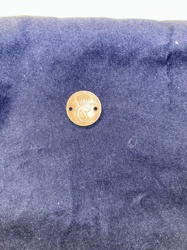
Kiosk Token (Carolina Kiosk)
Likely United States (often used in amusement parks, arcades, or private establishments). · Circa Mid-20th Century to Late 20th Century (Exact year not discernible without further information or specific markers on the token, but similar tokens were common during this period).
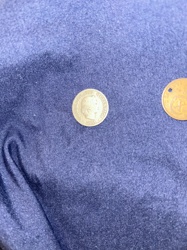
1 Gulden (Queen Wilhelmina)
Netherlands · Based on the visible portrait of Queen Wilhelmina, the year could be anywhere from 1898 to 1945, as this design was used for various denominations, including the Gulden, during her long reign. A precise year cannot be determined without seeing the reverse side or a clearer view of the obverse date. However, the visible inscription '19' suggests it is from the early 20th century, possibly '190X' or '191X'.
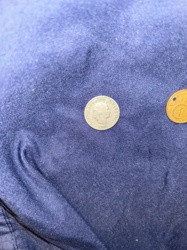
1 Franc (Leopold III type, first series)
Belgium · 1935
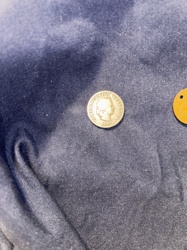
20 Rappen (Rapen)
Switzerland · 1904
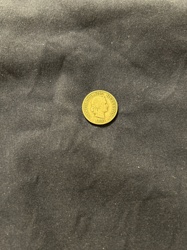
10 Gulden Gold Coin
Netherlands · 1911
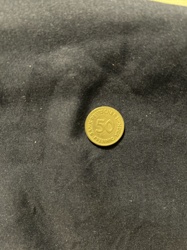
50 Pfennig
Germany (West Germany) · Specific year cannot be determined from the image, but this type was issued from 1949 to the early 1990s.
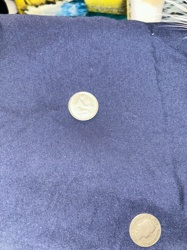
South African 1 Rand (bottom coin); Australian 5 Cents (top coin)
South Africa; Australia · Based on the visible features, particularly the portrait on what appears to be the obverse of the bottom coin, it is likely a South African 1 Rand coin from the period when Queen Elizabeth II was depicted, which would range from "1961-1989". The top coin, an Australian 5 Cents, was first issued in "1966" and continues to be minted.
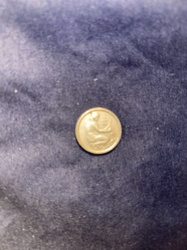
Unknown (Possibly a Charm, Token or Amulet)
Unknown (Potentially Southeast Asian or East Asian) · Unknown (Likely 20th Century or later, but could be older if an amulet piece)
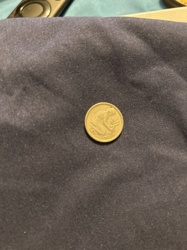
Australian 20 Cent Coin
Australia · Based on the design, it is a post-1966 Australian 20 cent coin. The exact year is not visible in the provided image, but this design has been continuous since 1966.
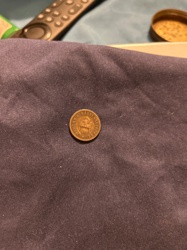
1 Filler
Hungary (as part of the Austro-Hungarian Monarchy) · 1918
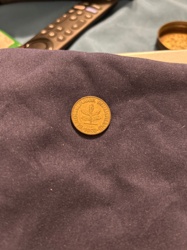
Pfennig
West Germany · 1950
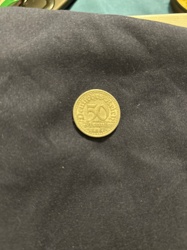
50 Reichspfennig
Germany (Deutsches Reich) · Circa 1920s-1940s (exact year needs to be visible on the coin)
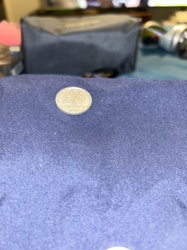
50 Forint
Hungary · 1996