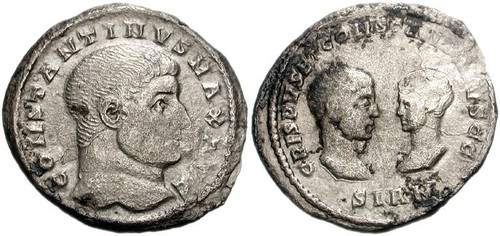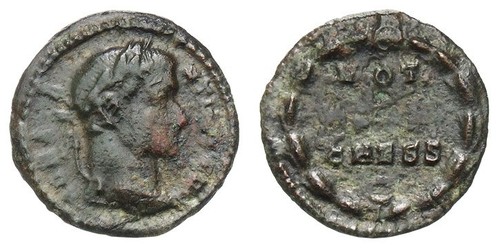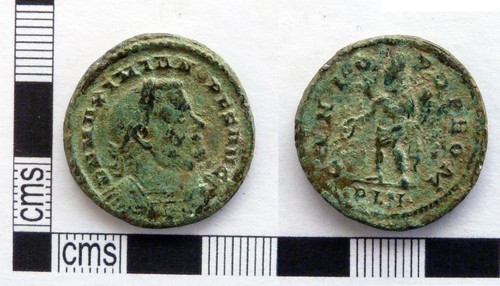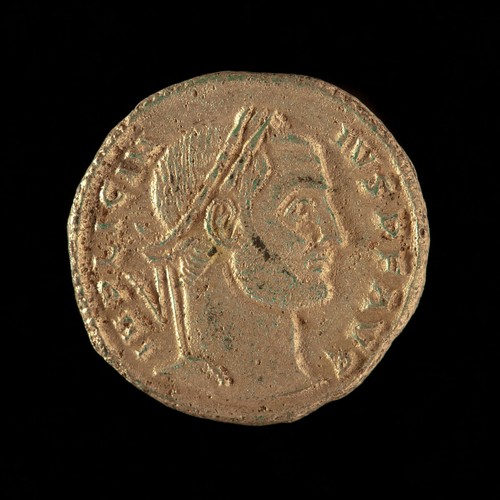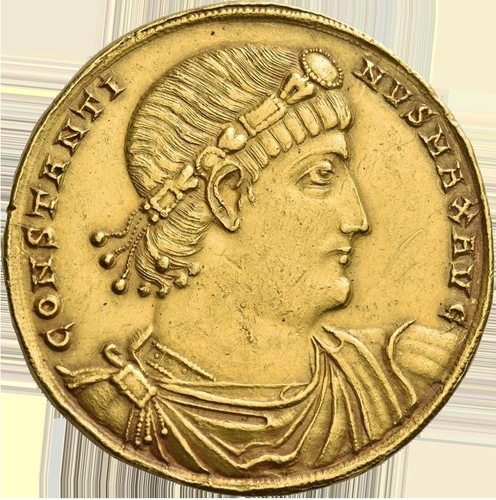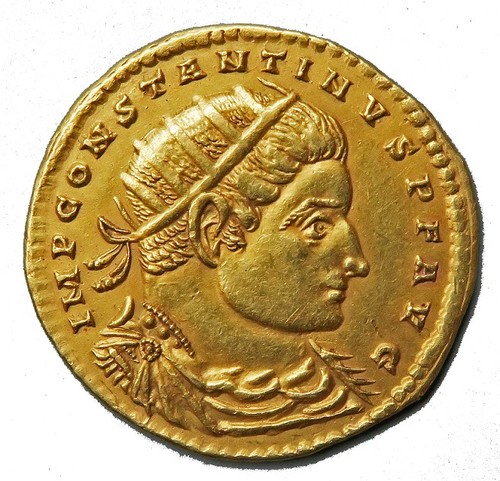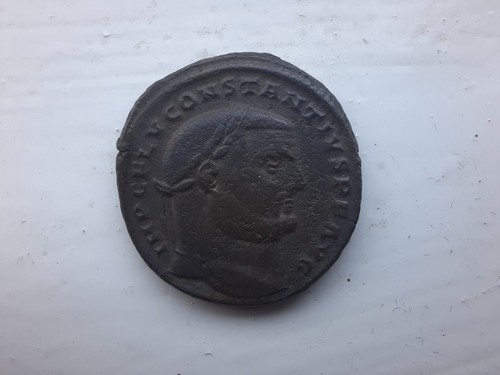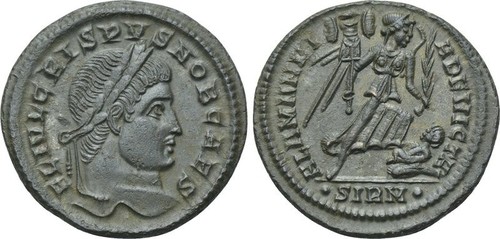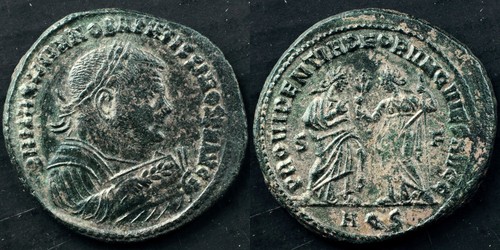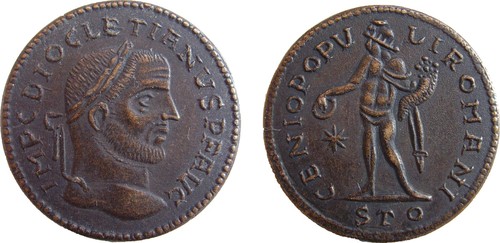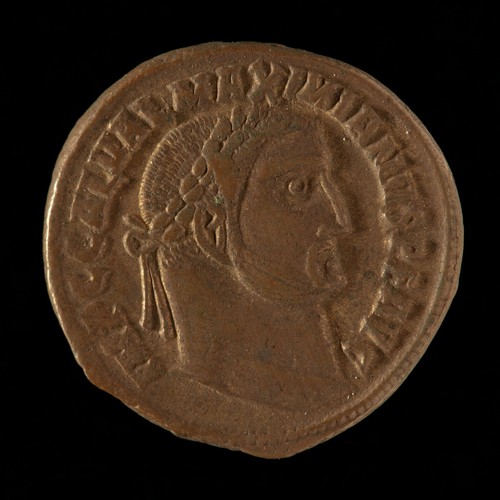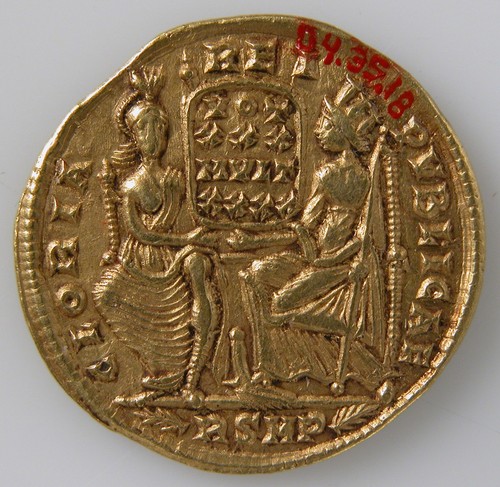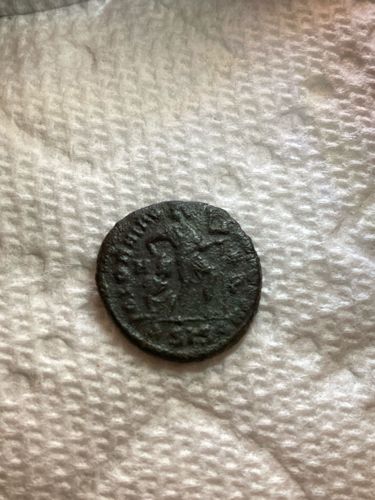
Roman Follis (possibly Constantine I or a successor)
Roman Empire · Circa 310-340 AD (due to the Follis denomination and iconography)
The coin appears to be a late Roman bronze Follis. The obverse likely features a laureate or diademed bust of an emperor (possibly Constantine I or one of his sons) facing right. The reverse typically depicts a military standard, a camp gate, two soldiers, or allegorical figures such as Sol Invictus or Victory. Due to the wear and patination, specific details are hard to discern, but Roman lettering is visible around the edges.
- Country
- Roman Empire
- Year
- Circa 310-340 AD (due to the Follis denomination and iconography)
- Denomination
- Follis
This report is AI-generated and can be wrong. Always verify grade, authenticity, and value with a qualified dealer or certified grading service before buying, selling, or insuring.
Identify your own coins.
Get a report just like this from any photo, free.
Overview
Historical significance
Estimated value
Care & preservation
More like this
Other roman empire coins

Roman Bronze Coin (As or Dupondius)
Roman Empire · Circa 1st Century BC to 3rd Century AD
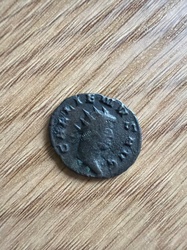
Roman Antoninianus (Radiate)
Roman Empire · c. 250 - 280 AD
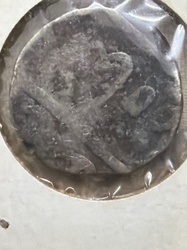
Ancient Roman Denarius or Antoninianus (Heavily Worn / Slashed)
Roman Empire · c. 1st - 3rd Century AD
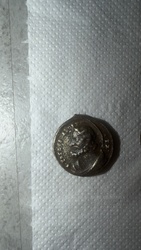
Roman Provincial Bronze Coin (possibly Antoninus Pius or similar emperor)
Roman Empire · circa 2nd Century AD
Ancient Roman Bronze Coin
Roman Empire · Circa 4th Century AD (Late Roman Empire)
Follis (or similar small bronze coinage)
Roman Empire · Likely between 305 and 337 AD (based on visible lettering and style, possibly representing Constantine I or a co-emperor)