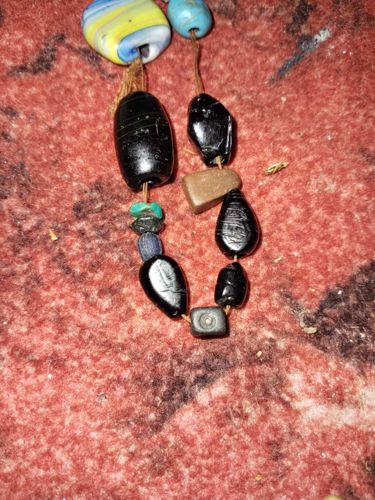
Not a Coin (Ancient/Vintage Beads)
Unknown (Likely Middle Eastern or African origin) · N/A (Ancient or Proto-currency era)
A collection of various beads, including a large multi-colored yellow and blue striped glass bead, dark teardrop-shaped glass or stone beads, and smaller turquoise and earth-toned stone beads strung on a fiber cord.
- Country
- Unknown (Likely Middle Eastern or African origin)
- Year
- N/A (Ancient or Proto-currency era)
- Denomination
- N/A (Trade items)
- Metal
- Glass, stone, and ceramic
This report is AI-generated and can be wrong. Always verify grade, authenticity, and value with a qualified dealer or certified grading service before buying, selling, or insuring.
Identify your own coins.
Get a report just like this from any photo, free.
Overview
Historical significance
Estimated value
Care & preservation
More like this
Other unknown (likely middle eastern or african origin) coins

Unknown Copper Coin with Eagle Motif
Unknown (possibly Eastern European or Middle Eastern) · Unknown (likely 18th or 19th century given wear and style)

Not identifiable from image
Unknown · Unknown

Unknown (likely 10 Kopecks or similar small denomination coin)
Cannot definitively determine the country of origin from the provided image due to lack of clear national symbols or text beyond the denomination and year. Countries that use a '10' denomination with '2022' include Russia (10 Kopecks), Ukraine (10 Kopecks, though often brass-colored), and various other former Soviet states or Eastern European countries. · 2022
Unidentifiable Coin
Unknown · Unknown
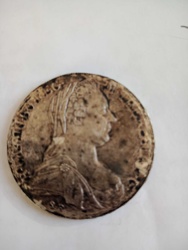
Maria Theresa Thaler (Restrike)
Austria (Austrian Empire) · 1780 (Frozen date; likely a modern restrike)
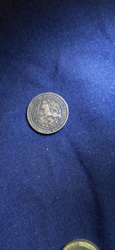
Lion Daalder
Dutch Republic (specifically, provinces such as Zeeland - 'ZEL' in the inscription) · Based on the visible inscription 'MO: ARG: ORD: ZEL: TRA: IMP: CIVT: ZEL:', this coin is a Zeeland (ZEL) issue. The exact year is not clearly visible in the image, but Lion Daalders were minted from 1577 until the late 17th century. To determine the precise year, a clearer view of the obverse or reverse would be needed, typically found near the bottom of the lion or on the reverse design. Given the general design, it is likely from the 17th century.