Coin Identifier
Canadian One Cent (Penny) — obverse
Obverse
Canadian One Cent (Penny) — reverse
Reverse
1 Cent

Canadian One Cent (Penny)

Canada · 1943

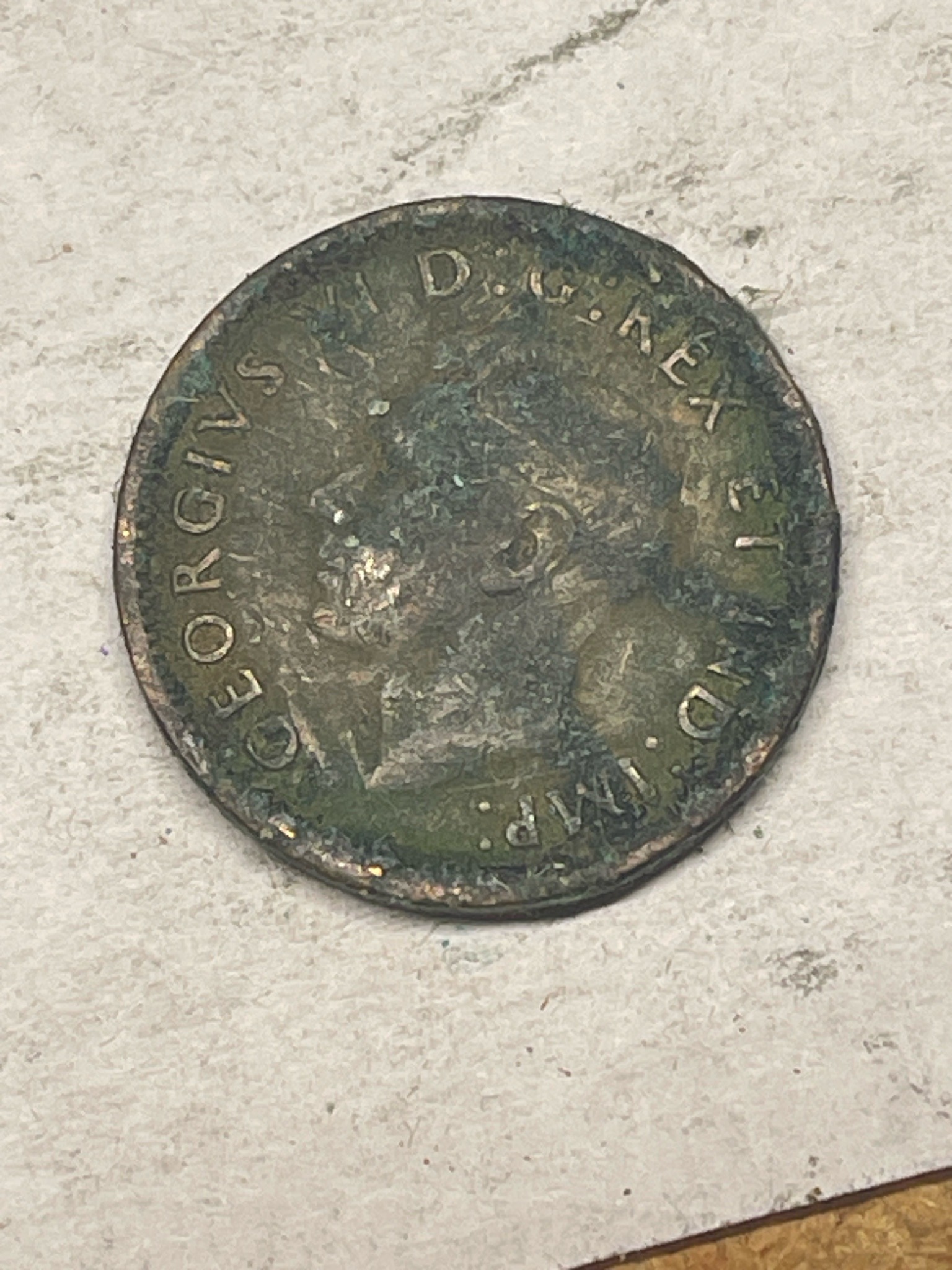
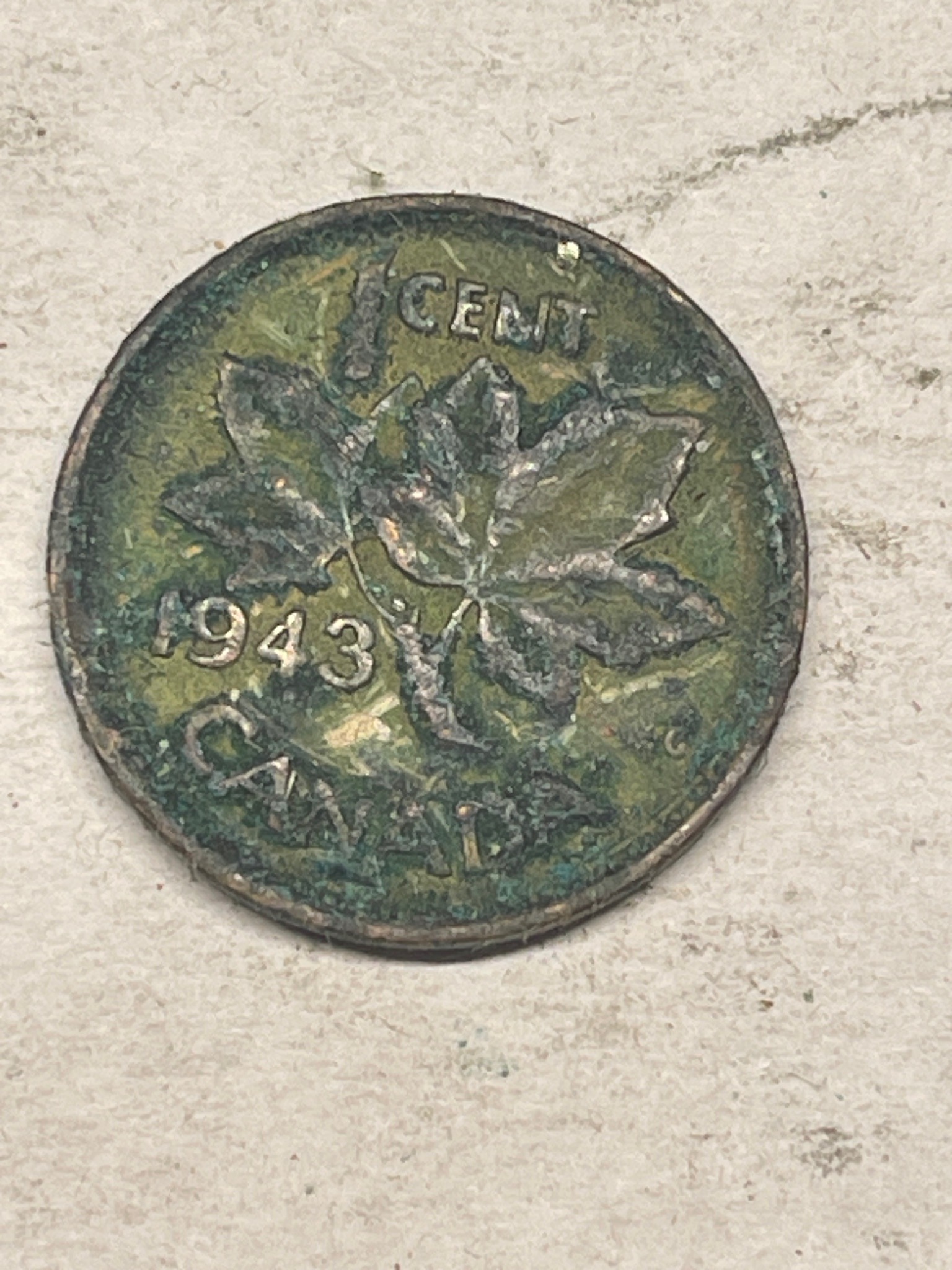
A dark, heavily toned and environmentally weathered bronze-colored coin featuring the bust of King George VI on the obverse and a maple leaf twig with the denomination and date on the reverse.

Country
Canada
Year
1943
Denomination
1 Cent
Metal
88% Copper, 12% Zinc (World War II brass alloy used from 1942 to 1946)

This report is AI-generated and can be wrong. Always verify grade, authenticity, and value with a qualified dealer or certified grading service before buying, selling, or insuring.

Identified More canada coins →
Explore Canadian One Cent (Penny) in the encyclopedia →

Identify your own coins.

Get a report just like this from any photo, free.

Overview

A dark, heavily toned and environmentally weathered bronze-colored coin featuring the bust of King George VI on the obverse and a maple leaf twig with the denomination and date on the reverse.

Historical significance

Issued during the height of World War II, Canadian coinage temporarily shifted from bronze to a copper-zinc brass composition to conserve strategic metals like tin for the war effort.

Obverse (front)

Uncrowned bust of King George VI facing left, surrounded by the Latin legend 'GEORGIVS VI D:G:REX ET IND:IMP:' (George VI, by the grace of God, King and Emperor of India). Designed by T. Humphrey Paget.

Reverse (back)

A sprig of two maple leaves, with the denomination '1 CENT' above, the date '1943' to the left, and 'CANADA' below. Designed by G. E. Kruger-Gray.

Estimated value

$0.20 - $2.00 depending on condition (largely common due to high mintage, though pristine uncirculated specimens command more)

What drives this coin's value

Overall state of preservation, surface corrosion/verdigris, and presence of original mint luster. Key dates and rare mint errors drive higher values.

Grade assessment

About Good to Good (AG-3 to G-4), showing heavy surface oxidation, corrosion, and considerable wear with flattening of the higher design elements, though major legends and dates remain legible.

Mintage & rarity

55,274,383 minted; very common

Authenticity & counterfeit red flags

Counterfeits for this common circulating coin are virtually non-existent because the metal value and production cost outweigh any profit. Watch out for environmental damage mistaken for alterations.

Notable varieties & errors

Occasional doubled die obverses or reverses, though none command extreme premiums in circulated condition.

Similar coins

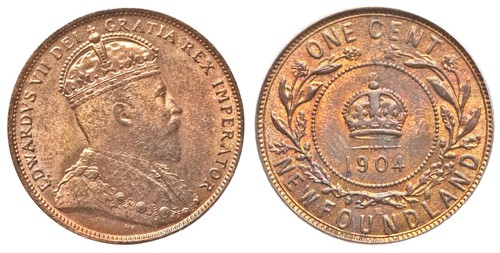
Other Commonwealth bronze or brass one-cent pieces from the mid-20th century, particularly British pennies or Newfoundland cents.

Care & preservation

Store in a cool, dry environment in a PVC-free coin flip or holder. Do not clean the coin, as harsh cleaning agents or physical scrubbing will permanently damage the surface and destroy numismatic value.