
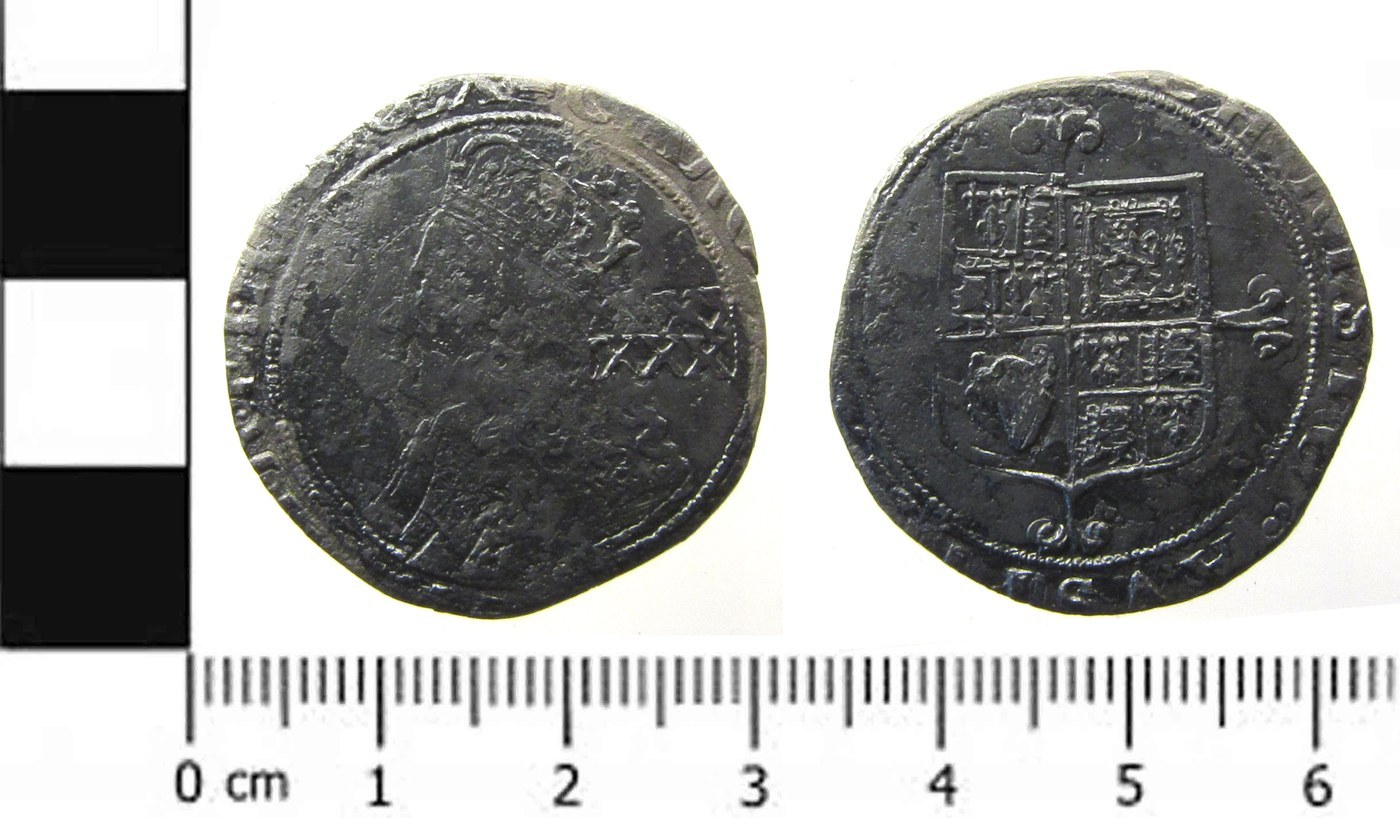
Charles II Half Crown
A milled silver half crown of Charles II, showing his laureate bust facing right and crowned royal-arms shields on the reverse.
- Country
- England
- Denomination
- Half Crown
- Metal
- Silver
Got a coin like this?
Identify any coin from a photo, free.
Overview
The Charles II Half Crown is a large silver coin struck during the reign of Charles II of England (1660–1685), the period following the Restoration of the monarchy. Valued at two shillings and sixpence — half of a crown — it was one of the biggest silver denominations in everyday use, and it belongs to the first era of English coins produced by machinery rather than by hand.
The photographed type shows Charles II as a laureate, draped bust facing right, encircled by a Latin legend, with a reverse of crowned shields bearing the royal arms of England, Scotland, Ireland, and France. Unlike the hammered coins of earlier reigns, these half crowns were struck on mechanical presses at the Tower Mint in London, giving them a rounder flan, more even relief, and an inscribed or grained edge.
Because Charles II's silver coinage ran across most of a twenty-five-year reign, half crowns of this type were issued over many years and in several bust and edge varieties, making them a cornerstone series for collectors of early English milled silver.
History & Background
Charles II was restored to the throne in 1660 after the Commonwealth and Protectorate period. His earliest coinage continued the old hammered method, but within a few years the Mint fully adopted milled (machine-struck) production, and from the mid-1660s the half crown was struck by press. This shift ended centuries of hand-hammered English coinage and set the pattern for all later British coins.
The milled half crowns carry the laureate bust of the king and, on their edge, an inscription intended to deter the clipping and filing that had plagued earlier hammered silver. Successive portraits — often described by collectors as the first, second, third, and fourth busts — were used across the reign, and coins from silver supplied by trading companies bear a small elephant or elephant-and-castle mark below the bust.
Charles II died in 1685 and was succeeded by James II, whose half crowns continue the same milled format with a new portrait. The Restoration half crown thus stands at the beginning of the modern, machine-made British coinage tradition rather than at the close of the older hammered one.
How to Identify
The obverse shows Charles II as a laureate bust facing right, usually draped, surrounded by a Latin legend giving his name and titles. The right-facing laureate portrait is a key marker: English monarchs were conventionally shown facing opposite to their predecessor, and Charles II faces right where several earlier Stuart portraits face left.
The reverse carries the crowned royal arms of England, Scotland, Ireland, and France. On the milled half crowns these are typically arranged as four crowned shields set in a cruciform pattern around the coin, with interlinked C ciphers in the angles between them, rather than a single central shield. This four-shield cruciform layout is the principal diagnostic separating the milled Charles II half crown from single-shield reverses of earlier reigns.
The coin is a large silver piece struck by machine, so it shows a rounder, more regular flan and more even relief than hammered coins, and its edge is inscribed or grained rather than plain. Look for the edge lettering, for any elephant or elephant-and-castle mark below the bust indicating the source of the silver, and for the bust variety, all of which help pin down the exact issue.
Value & Collectibility
As a genuine silver coin from the reign of Charles II, the milled half crown is a substantial and popular type, and ordinary dates in worn but honest condition are among the more attainable of early English milled silver. Values rise steeply with grade, with a bold portrait and full edge inscription, and with scarcer dates, bust varieties, or the elephant provenance marks.
High-grade examples, rare years, and pieces with attractive original surfaces can command strong prices at specialist auction, while worn, cleaned, or damaged coins are worth considerably less. Edge legends and bust type matter for attribution, and a correctly identified scarce variety can be worth many times a common date in the same grade.
Anyone valuing a specific coin should compare it against recent auction records for the matching date and bust type, and treat any single quoted figure as context rather than a firm price. Condition, eye appeal, and correct attribution influence value far more than the mere fact that a coin is a Charles II half crown.
Frequently asked questions
What was a Charles II half crown worth when it was in use?
It was valued at two shillings and sixpence — half of a crown of five shillings. It was one of the larger silver coins in everyday circulation during the reign.
Is the Charles II half crown hammered or milled?
The main series is milled, meaning struck by machine rather than by hand. Charles II's reign saw England move permanently from hammered to milled coinage, and the half crown is a classic early milled type.
What do the shields on the reverse represent?
They carry the royal arms of England, Scotland, Ireland, and France, reflecting the titles claimed by the Stuart kings. On the milled half crowns they are usually shown as four crowned shields arranged in a cross.
What is the writing on the edge of the coin?
Milled half crowns carry an inscribed edge, added to discourage the clipping and filing of silver that had damaged earlier hammered coins. It also helps confirm a coin as a genuine milled striking.
What is the small elephant sometimes seen below the bust?
It is a provenance mark showing the silver came from a trading company operating in Africa. Coins with an elephant or elephant-and-castle below the portrait are a distinct and collectable variety.
Charles II Half Crown guides
In-depth guides for identifying, valuing, and collecting Charles II Half Crown.
Other coins you may enjoy
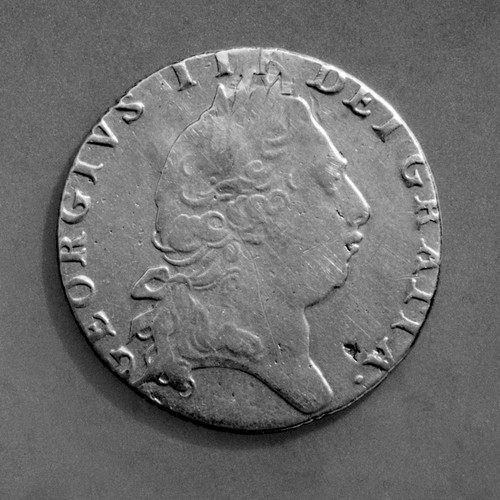
Spade Guinea
1760-1820
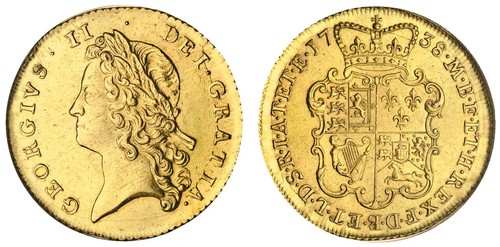
Two Guineas of George II
1738–1753
Shilling of Victoria
1838-1901
Sovereign of George IV
1821-1830
Sovereign of William IV
1831–1837
Penny of William IV
1831-1837
Shilling of George III
1816-1820
Milled Sixpence of Elizabeth I
1561-1571
Shilling of George II
1727-1758
Shilling of Anne
1702-1714
Charles II Twopence
1660-1685
Irish Halfpenny of Charles II
1680–1684