
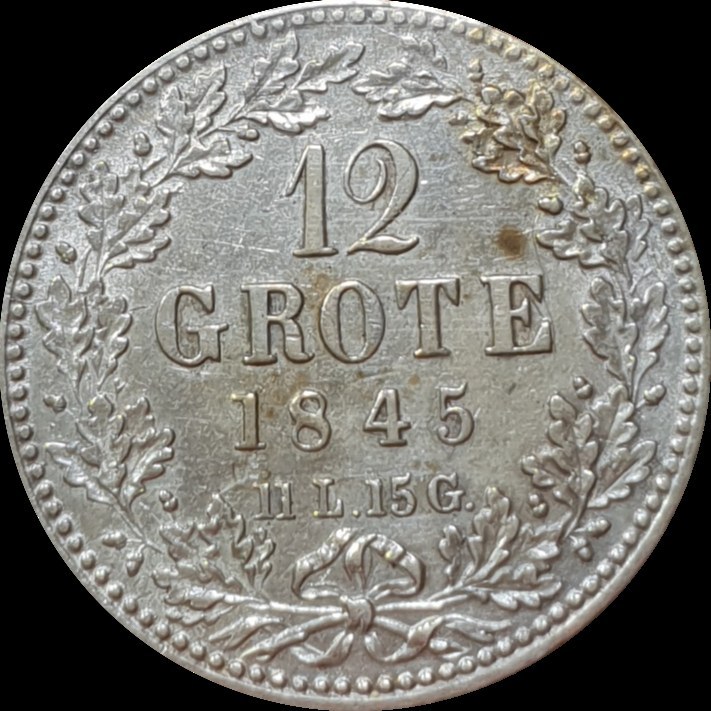
Bremen 12 Grote Thaler
A silver 12 Grote coin of the Free Hanseatic City of Bremen dated 1845, with an ornamental civic coat of arms and an allegorical reverse.
- Country
- Germany (Bremen)
- Denomination
- 12 Grote
- Metal
- Silver
Got a coin like this?
Identify any coin from a photo, free.
Overview
The Bremen 12 Grote is a small silver coin of the Free Hanseatic City of Bremen, one of the German states, struck in the mid-19th century. The example shown is silver and dated 1845. The Grote (plural Groten) was Bremen's local unit of account, and coins were denominated in multiples of it under the city's own monetary system.
The obverse carries an ornamental heraldic coat of arms within a decorative border — the civic arms of Bremen. The reverse shows an allegorical scene with figures and religious iconography, a style of pictorial reverse used on Bremen's silver issues of this period. Together the civic arms and the pictorial reverse mark the coin as a city issue rather than the portrait coinage of a princely German state.
History & Background
Bremen was a free imperial and later free Hanseatic city, self-governing rather than ruled by a prince, and it maintained its own coinage and its own money of account based on the Grote and the local Thaler. Because the city struck coins in its own name, Bremen pieces bear civic heraldry and inscriptions naming the city instead of a ruler's portrait.
By the 1840s, when this piece was struck, the German lands were a patchwork of separate coinage authorities, each with its own standards, before the monetary unification that followed in later decades. Bremen's small-denomination silver such as the 12 Grote served everyday commerce in and around the busy North Sea port city.
A dated 1845 civic issue like this survives today as a tangible record of an independent Hanseatic city's coinage in the decades before Germany's later monetary consolidation. Grote-denominated coinage was eventually retired as Bremen's currency was absorbed into the wider German system.
How to Identify
Obverse: an ornamental coat of arms set within a decorative border — Bremen's civic heraldry. The arms and surrounding inscription name the city rather than a monarch, a key distinction from the portrait coins of princely German states.
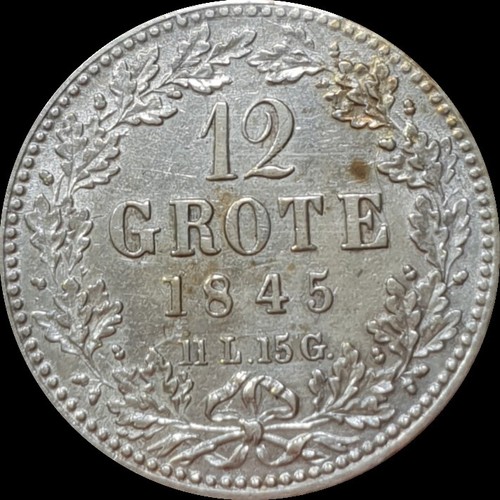
Reverse: an allegorical scene with figures and religious iconography, accompanied by the denomination and the date 1845. The pictorial, figural reverse is a distinctive feature of Bremen's silver coinage of this era.
Physical clues: the coin is silver and a small denomination (12 Grote). Confirm the identification by matching the Bremen civic arms, the allegorical/figural reverse, the 12 Grote value, and the 1845 date together, rather than relying on any single element. Inscriptions are in the period style and name the city of Bremen.
Value & Collectibility
Value depends on the exact variety, the strength of the arms and reverse detail, and overall condition. As a small silver coin of an independent German city, the 12 Grote appeals to collectors of German states and Hanseatic-city coinage, and well-preserved examples with sharp detail command a premium over worn ones.
Exact prices vary widely with grade and rarity, so treat any single figure with caution. Compare recent auction and dealer results for closely matching Bremen 12 Grote examples of the same date, and for higher-grade pieces consider third-party grading or a specialist opinion before buying or selling.
Frequently asked questions
What is a Bremen 12 Grote?
It is a small silver coin issued by the Free Hanseatic City of Bremen, denominated in the city's local unit, the Grote. The example shown is silver and dated 1845.
What is shown on the coin?
The obverse bears an ornamental coat of arms within a decorative border — Bremen's civic heraldry — while the reverse shows an allegorical scene with figures and religious iconography, along with the value and date.
What is a 'Grote'?
The Grote (plural Groten) was Bremen's local unit of currency. Coins were struck in multiples of it, such as this 12 Grote piece, under the city's own monetary system before Germany's later unification.
What year is this coin?
This example is dated 1845, which appears on the reverse. It was struck while Bremen was a self-governing free Hanseatic city with its own coinage.
Is it valuable?
As a small silver German-states coin, condition and rarity drive its value more than metal content. Sharp, well-preserved examples bring a premium; compare recent sales of matching Bremen 12 Grote pieces for guidance.
Bremen 12 Grote Thaler guides
In-depth guides for identifying, valuing, and collecting Bremen 12 Grote Thaler.
Other coins you may enjoy
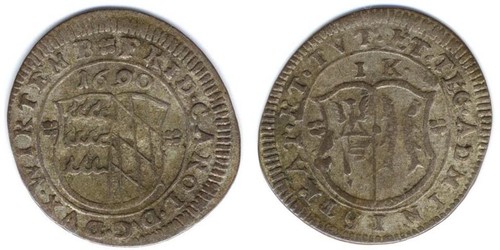
Württemberg Kreuzer
17th century (example dated 1690)
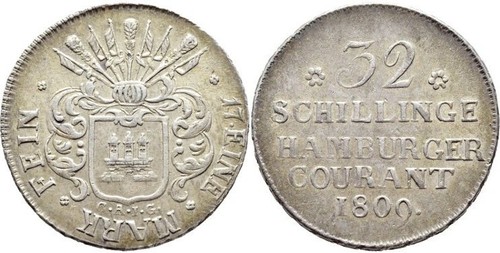
Hamburg 32 Schilling
1800
Hessen-Homburg Kreuzer
1840
Hanover-Luneburg 1.5 Thaler
1681 (dated example)
Prussian Taler
1750s–1786 (reign of Frederick II)
Bavaria 6 Kreuzer
1745 (issue shown)
Gotha 3 Kreuzer
1830
60 Kreuzer Guldiner
1568
Hanover 1/6 Thaler
1688
Hanover 2/3 Thaler
1694
Braunschweig-Lüneburg Thaler
17th–18th century
Braunschweig-Lüneburg 3 Thaler
1685 (late 17th century)