
How to Identify the Bremen 12 Grote Thaler
Identify a Bremen 12 Grote by its ornamental civic coat of arms, its allegorical figural reverse, the 12 Grote value, and the 1845 date on a small silver coin.
Read the full Bremen 12 Grote Thaler encyclopedia entry →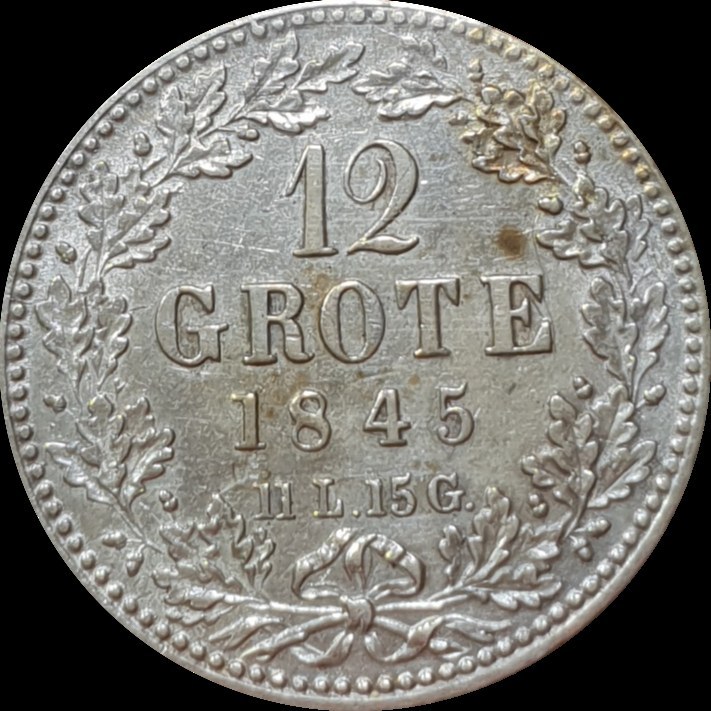
Start with the coat of arms. The obverse shows an ornamental heraldic coat of arms inside a decorative border — the civic arms of Bremen. Because Bremen was a free city rather than a principality, the coin names the city in its inscription and shows no ruler's portrait. Reading the legend to confirm it names Bremen is the surest way to attribute the piece.
Read the reverse. Look for the allegorical scene with figures and religious iconography, together with the denomination and the date 1845. This figural, pictorial reverse is characteristic of Bremen's silver coinage of the period and helps separate it from the plainer arms-and-legend reverses of many other German-states coins.
Check size and metal. The 12 Grote is a small silver denomination. Weigh and measure the coin and compare against published specifications for the type; genuine silver is non-magnetic and shows a warm gray tone with age-appropriate toning. A weight or diameter well outside the expected range is a warning sign.
Watch for look-alikes. Bremen struck several Grote denominations (for example larger multiples such as 36 Grote), and neighboring Hanseatic cities like Hamburg and Lübeck issued their own civic silver with comparable heraldic styling. Confirm the Bremen arms, the 12 Grote value, and the 1845 date together before settling on this type, rather than judging by the general look of a civic coat of arms.
Authenticate carefully. For any higher-grade or scarcer example, inspect the edge and surfaces for casting seams, bubbles, or soft, mushy detail that can indicate a cast copy. Compare the arms and reverse figures against verified specimens of the same date, and for valuable pieces seek a specialist opinion or third-party certification.
Frequently asked questions
How do I confirm the coin is from Bremen?
Read the inscription, which names the city, and match the civic coat of arms in the decorative border. Bremen was a free city, so the coin shows heraldry and a city name rather than a ruler's portrait.
Where is the date and denomination?
The reverse carries the allegorical scene along with the value (12 Grote) and the date, which reads 1845 on this example. Confirming both ties the two faces to the correct issue.
How is it different from other Hanseatic-city coins?
Hamburg and Lubeck issued similar civic silver, so verify the Bremen arms and the 12 Grote value specifically rather than relying on the general heraldic style shared across free-city coinage.
What are the main authentication risks?
Cast copies are the chief concern for smaller silver coins. Check the edge and fields for seams or bubbles, look for crisp detail in the arms and reverse figures, and get scarcer or high-grade examples professionally authenticated.