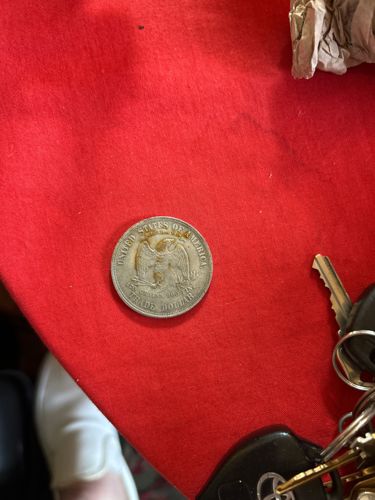
Trade Dollar
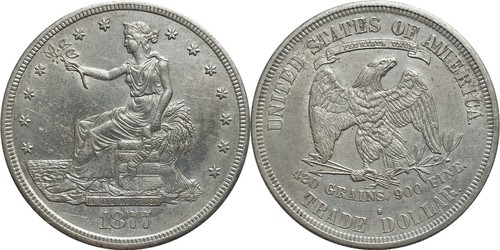
United States of America · The exact year of issue is not clearly visible on the image, but U.S. Trade Dollars were minted from 1873 to 1885 (with 1884 and 1885 being very rare proof issues).
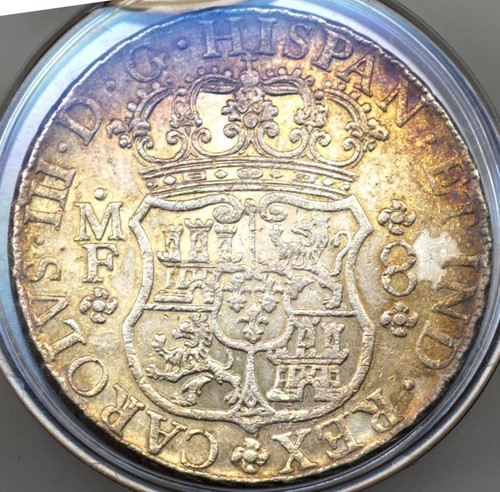
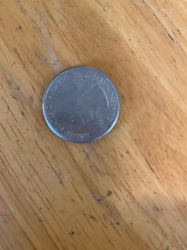
The coin clearly shows the reverse side of a U.S. Trade Dollar. It features an eagle with outstretched wings, holding arrows and an olive branch. Above the eagle, it reads "UNITED STATES OF AMERICA," and below, "TRADE DOLLAR." The coin appears to be made of a silvery metal and has some toning or discoloration on its surface.
- Country
- United States of America
- Denomination
- One Dollar
- Metal
- 90% silver, 10% copper
This report is AI-generated and can be wrong. Always verify grade, authenticity, and value with a qualified dealer or certified grading service before buying, selling, or insuring.
Identify your own coins.
Get a report just like this from any photo, free.
Overview
Historical significance
Estimated value
Care & preservation
More like this
Other united states of america coins
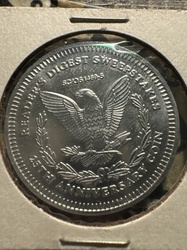
Reader's Digest Sweepstakes 25th Anniversary Coin (Token)
United States, Reader's Digest Association · 1987
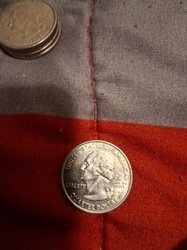
Washington Quarter (50 State Quarters Program / DC & Territories)
United States of America · Post-1999 (The specific reverse design is not visible, but this obverse design was used from 1999–2009 and 2021)
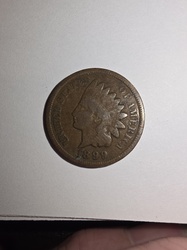
Indian Head Cent
United States of America · 1899
San Antonio Missions Quarter (America the Beautiful Quarters Series)
United States of America · 2019
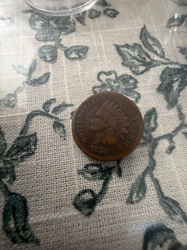
Indian Head Cent
United States · 1879
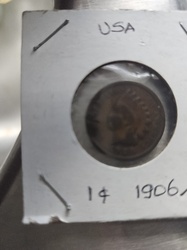
Indian Head Cent
United States · 1906