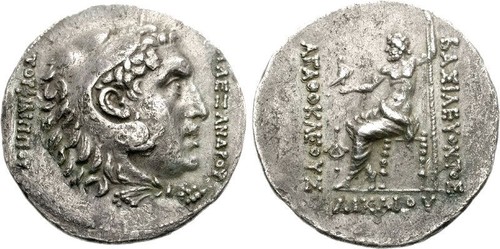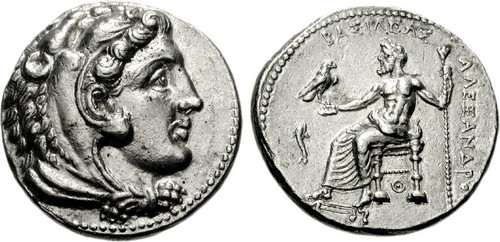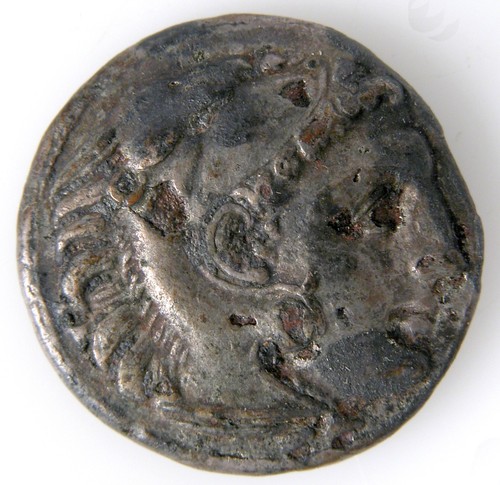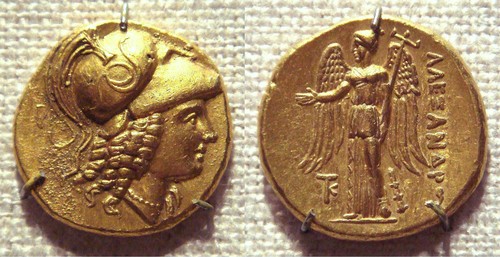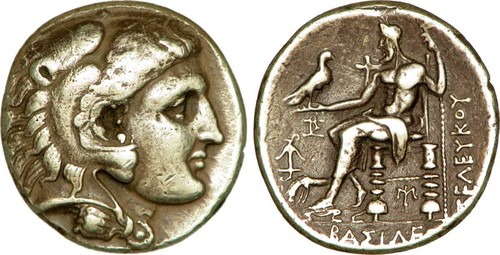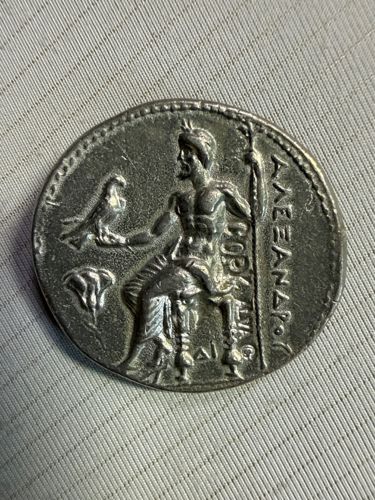
Tetradrachm of Alexander the Great
Macedonian Kingdom (Ancient Greece) · Circa 336-323 BCE (posthumous issues continued after his death)
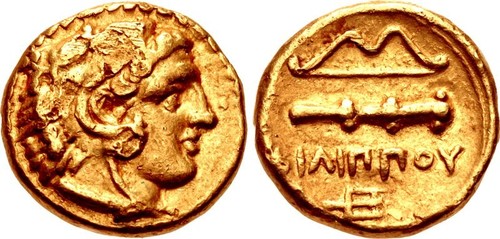
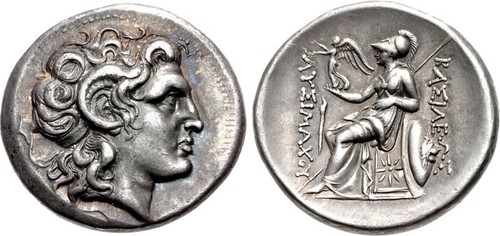
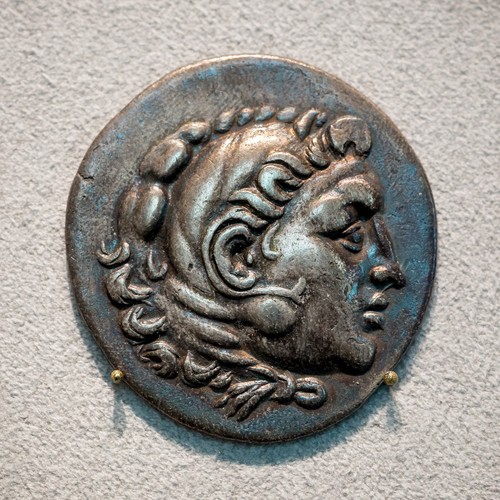
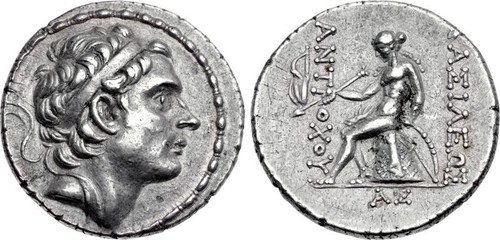
The obverse (not shown in image) typically features a head of Heracles (wearing a lion-skin headdress). The reverse, as shown, depicts Zeus Aetophoros enthroned to the left, holding an eagle in his outstretched right hand and a scepter in his left hand. The legend 'ΑΛΕΞΑΝΔΡΟΥ' (ALEXANDROU) is inscribed vertically to the right of Zeus. Further symbols or monograms may be present in the field below the eagle or under the throne, specific to the mint and magistrate.
- Country
- Macedonian Kingdom (Ancient Greece)
- Year
- Circa 336-323 BCE (posthumous issues continued after his death)
- Denomination
- Tetradrachm
- Metal
- Silver
This report is AI-generated and can be wrong. Always verify grade, authenticity, and value with a qualified dealer or certified grading service before buying, selling, or insuring.
Identify your own coins.
Get a report just like this from any photo, free.
Overview
Historical significance
Estimated value
Care & preservation
More like this
Other macedonian kingdom (ancient greece) coins
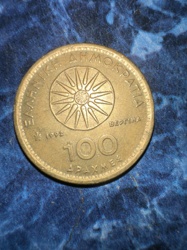
100 Drachmas
Greece · 1992
100 Drachmes (Alexander the Great / Star of Vergina)
Greece · 1992
100 Drachmes (Alexander the Great)
Greece · 1990
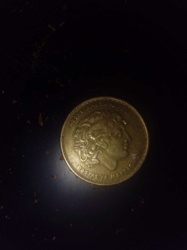
Alexander the Great Commemorative Token (Modern)
Greece · Late 20th Century (Modern Replica)
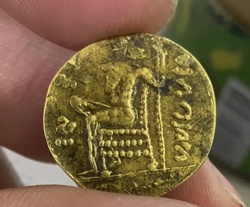
Alexander the Great Gold Stater (Reproduction/Copy)
Kingdom of Macedon (Original style) · Ancient style circa 336-323 BC (Modern reproduction apparent)
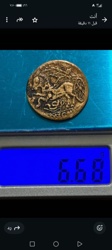
Ancient Greek Tetradrachm (Philip II of Macedon Reverse Style)
Kingdom of Macedonia (Ancient Greece) · Circa 359-336 BC (Original) / Modern Replica (Likely)