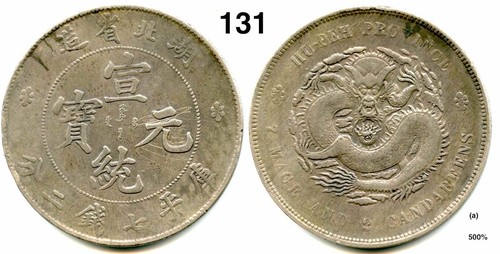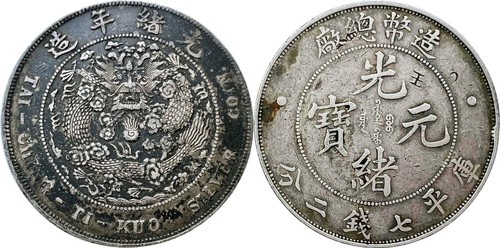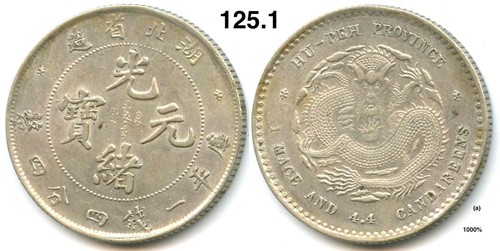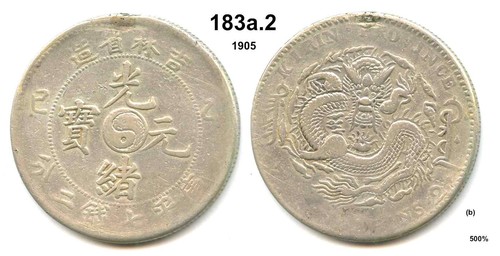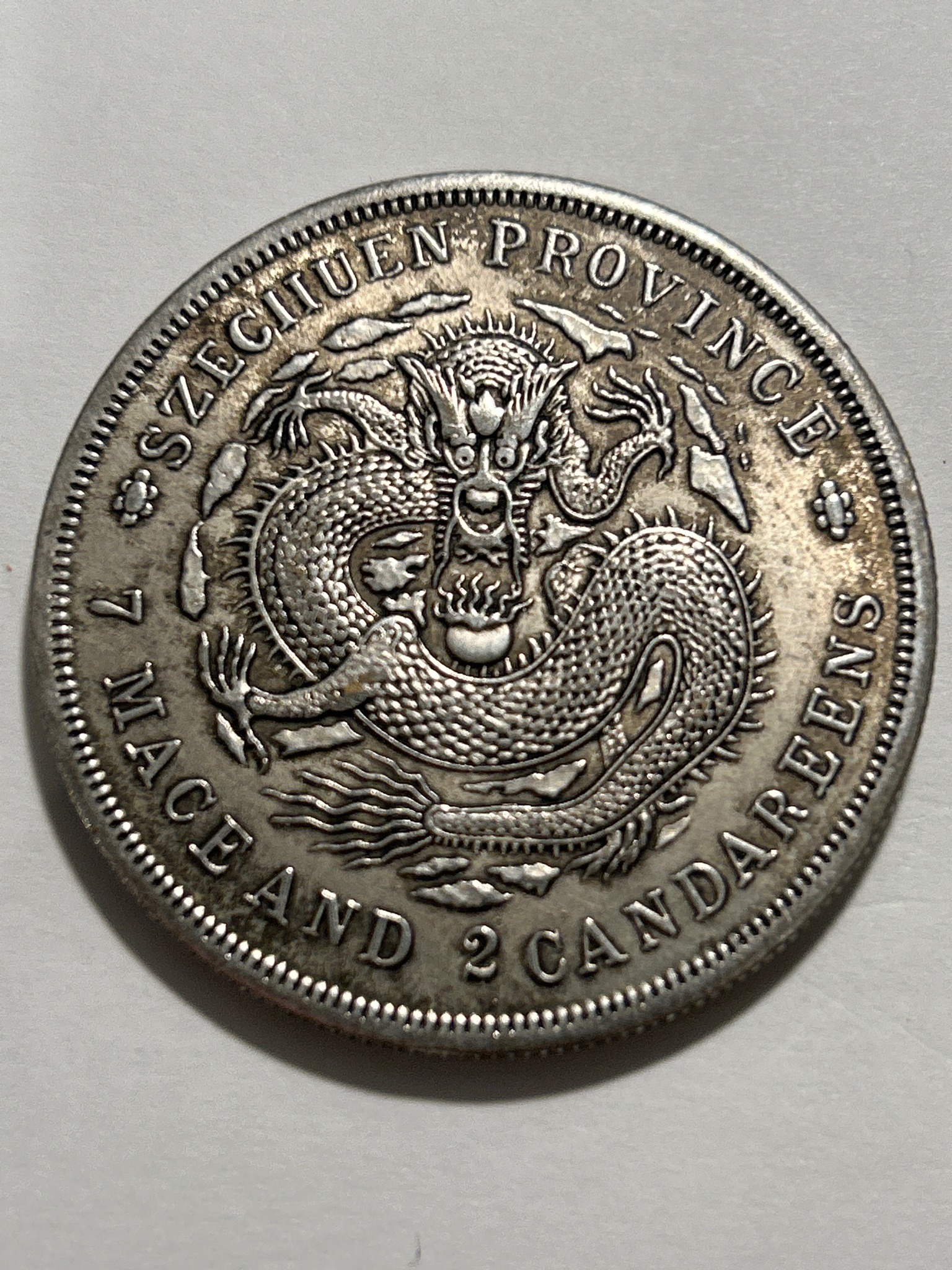
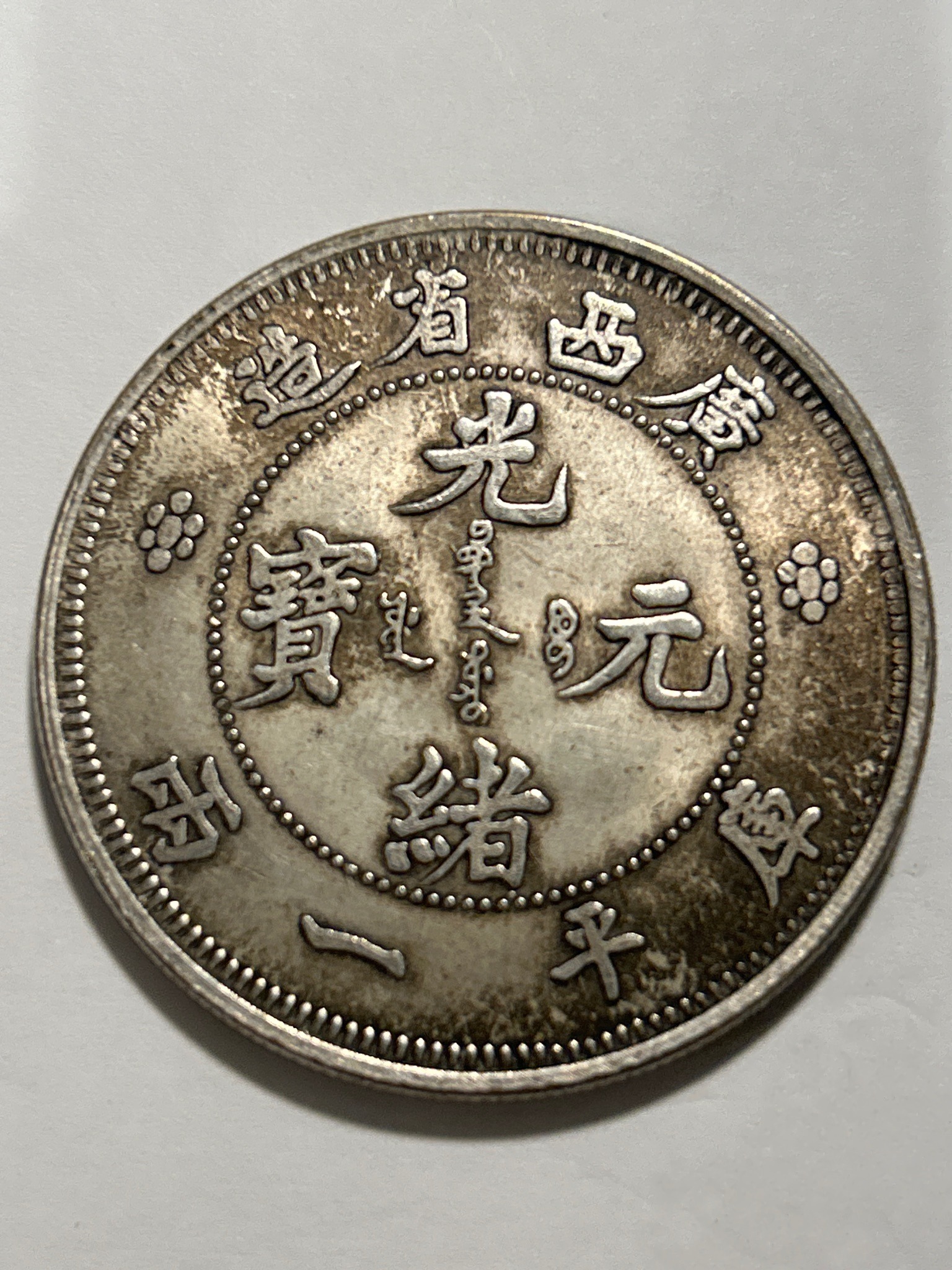
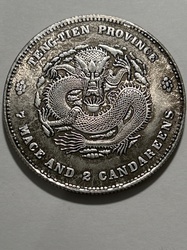
Szechuan Province 7 Mace and 2 Candareens (Dragon Dollar)
China (Imperial / Szechuan Provincial Mint) · 1901-1908
Large Chinese imperial silver dragon dollar featuring intricate scale and cloud motifs with traditional Chinese characters surrounding a central rosette.
- Country
- China (Imperial / Szechuan Provincial Mint)
- Year
- 1901-1908
- Denomination
- 7 Mace and 2 Candareens (1 Dollar)
- Metal
- Silver (.890 fine)
This report is AI-generated and can be wrong. Always verify grade, authenticity, and value with a qualified dealer or certified grading service before buying, selling, or insuring.
Identify your own coins.
Get a report just like this from any photo, free.
Overview
Historical significance
Obverse (front)
Reverse (back)
Estimated value
What drives this coin's value
Grade assessment
Mintage & rarity
Authenticity & counterfeit red flags
Notable varieties & errors
Similar coins
Care & preservation
More like this
Other china (imperial / szechuan provincial mint) coins
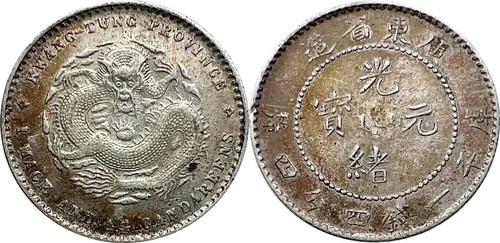
Kwangtung Province 7 Mace and 3 Candareens (Dragon Dollar)
China (Kwangtung Province Mint) · 1890-1908
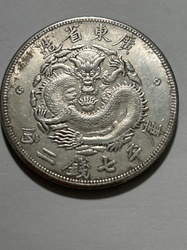
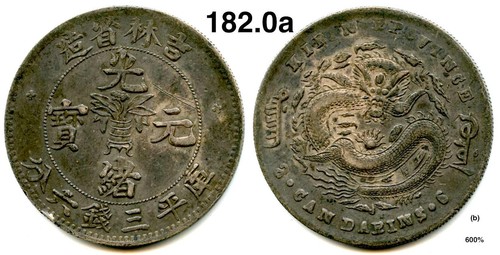
Kwangtung Province 7 Mace and 2 Candareens (Dragon Dollar)
China (Kwangtung Provincial Mint) · 1890-1908
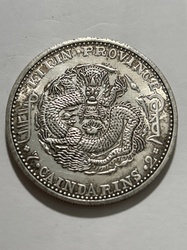
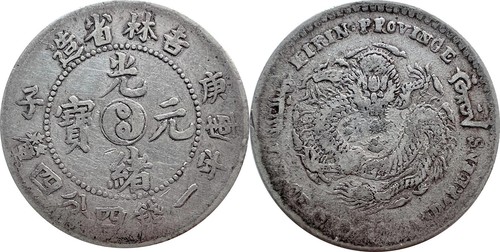
Kirin Province 7 Mace and 2 Candareens (Dragon Dollar)
China (Kirin Province Mint) · Circa late Qing Dynasty (various years, e.g., 1898-1908)
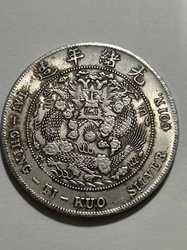
Tai-Ching Ti-Kuo Silver Coin (Kiangnan Dragon Dollar)
China (Chinese Empire) · 1907 (Guangxu Year 33)
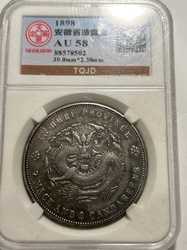
Kiangnan / Anhui Dragon Dollar (7 Mace and 2 Candareens)
China (Anhui Province) · 1898
Feng-Tian Province 7 Mace and 2 Candareens (Dragon Dollar)
China (Feng-Tian Province / Mukden Mint) · ND (1898)