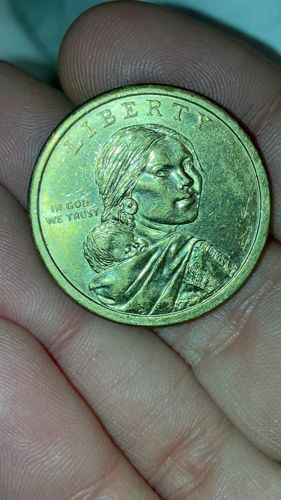
Sacagawea Dollar (Native American Dollar Series)
United States · 2000-Present (specific year not visible, but design is from series)
The obverse features Sacagawea looking right, with her infant son Jean Baptiste Charbonneau on her back. The word "LIBERTY" is above her, and "IN GOD WE TRUST" is to her left. The coin has a golden color.
- Country
- United States
- Year
- 2000-Present (specific year not visible, but design is from series)
- Denomination
- One Dollar
- Metal
- Manganese brass clad (88.5% copper, 6% zinc, 3.5% manganese, 2% nickel)
This report is AI-generated and can be wrong. Always verify grade, authenticity, and value with a qualified dealer or certified grading service before buying, selling, or insuring.
Identify your own coins.
Get a report just like this from any photo, free.
Overview
Historical significance
Estimated value
Care & preservation
More like this
Other united states coins
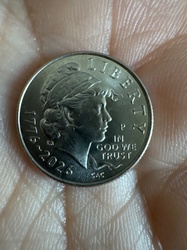
United States Semiquincentennial Fantasy/Mule Concept Dime
United States · 2026
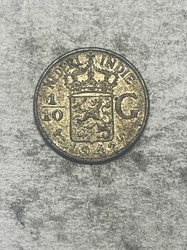
1/10 Gulden - Wilhelmina
Netherlands East Indies · 1942
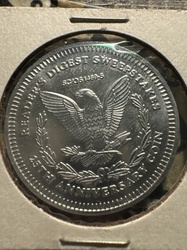
Reader's Digest Sweepstakes 25th Anniversary Coin (Token)
United States, Reader's Digest Association · 1987
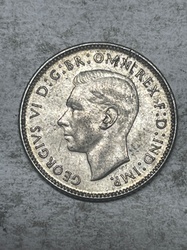
Australian Sixpence
Australia · 1943
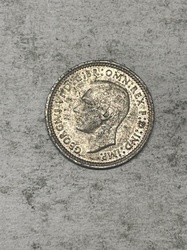
Australian Threepence
Australia · 1943
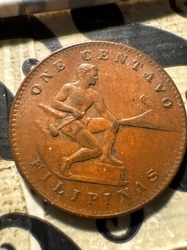
United States Administration of Philippines One Centavo
Philippines (under United States Sovereignty) · 1944