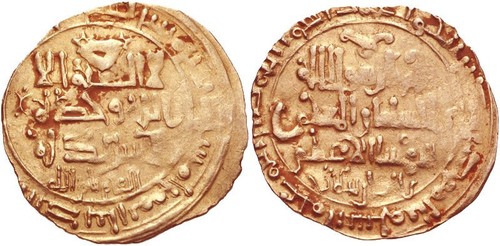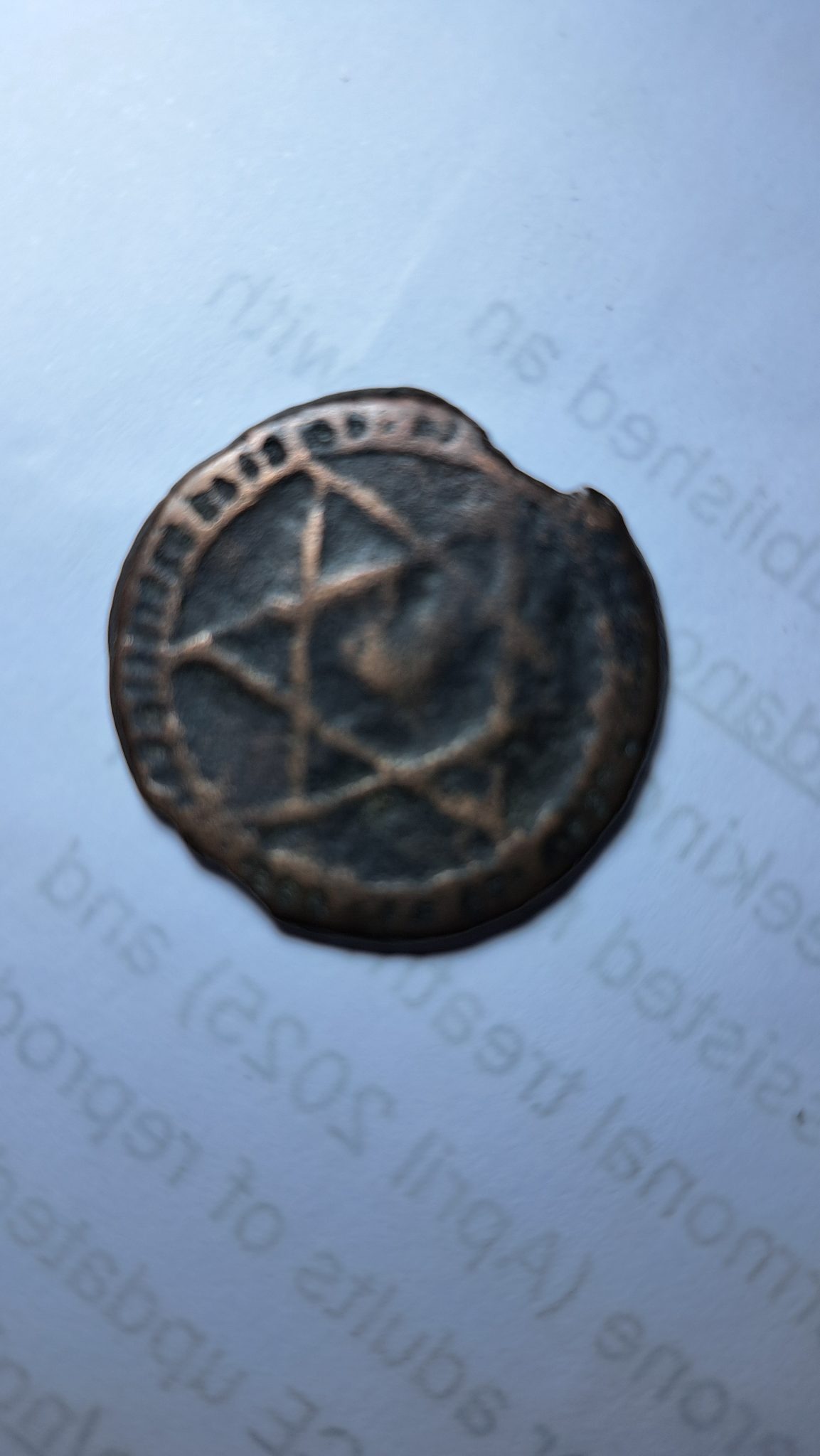
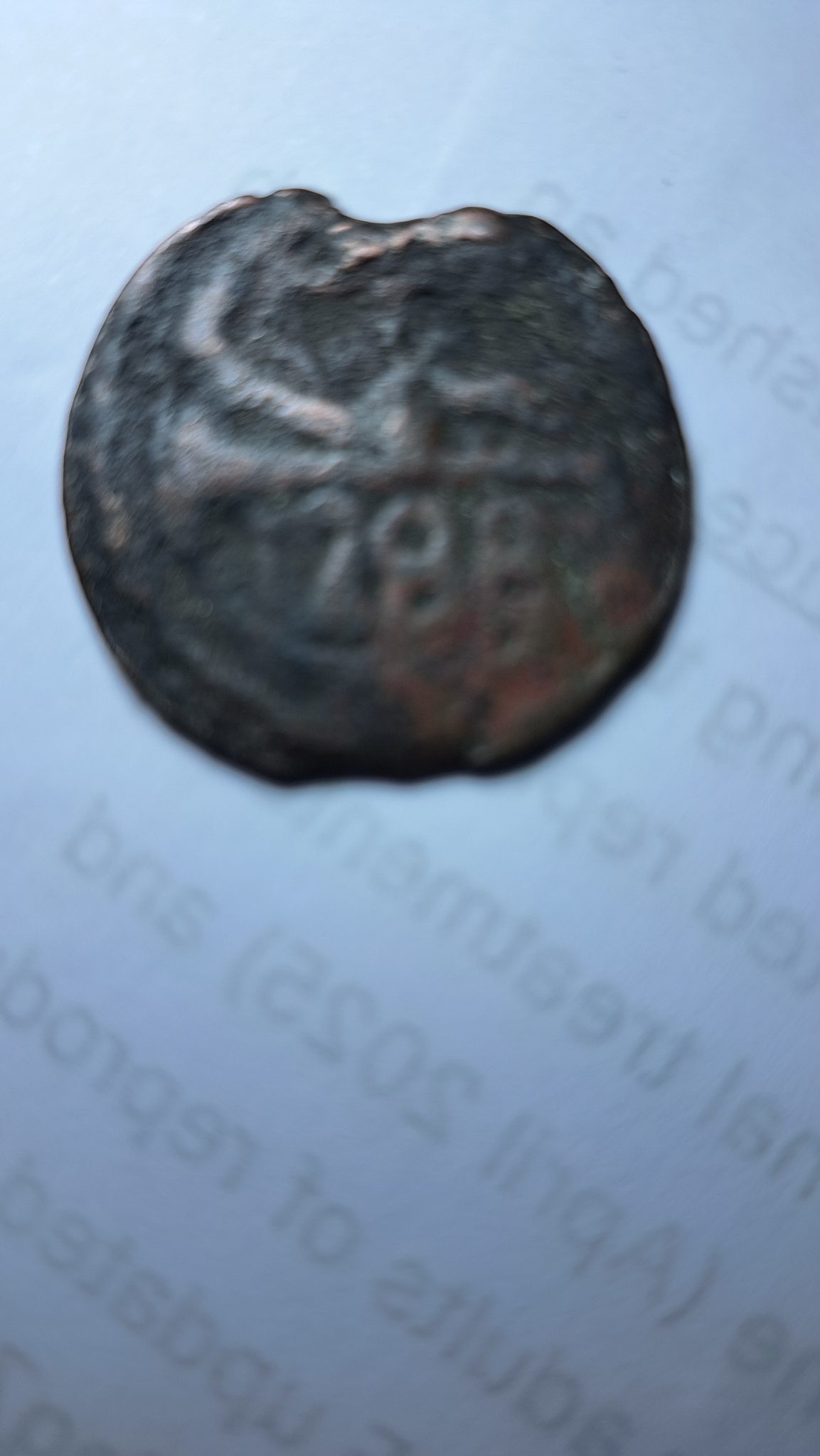
Islamic Copper Falus (or similar medieval/early modern Islamic coin)
Islamic World / Middle East or North Africa · Uncertain (potentially 18th or 19th century based on style, though highly worn)
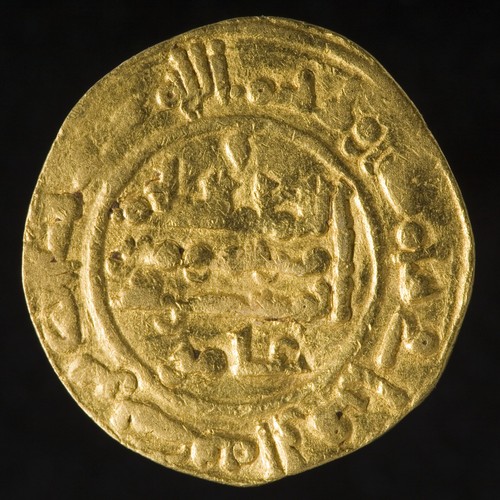
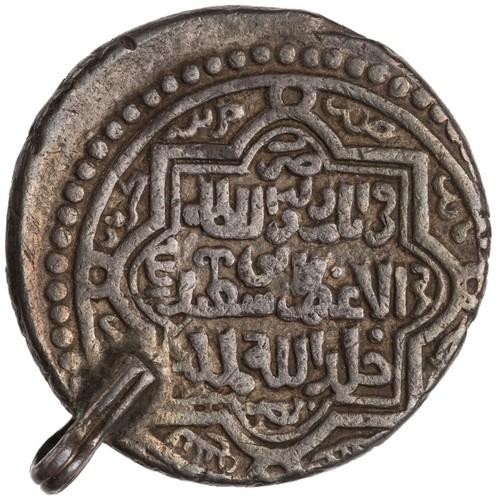
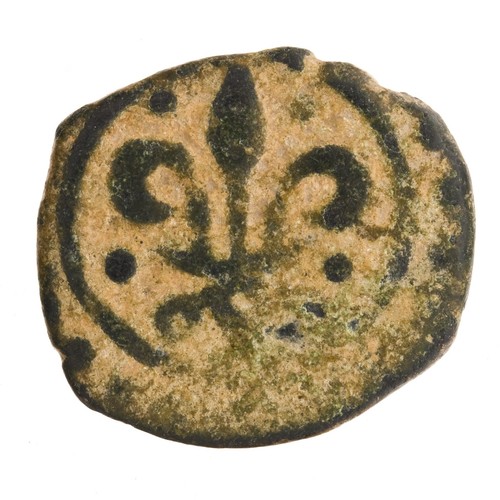
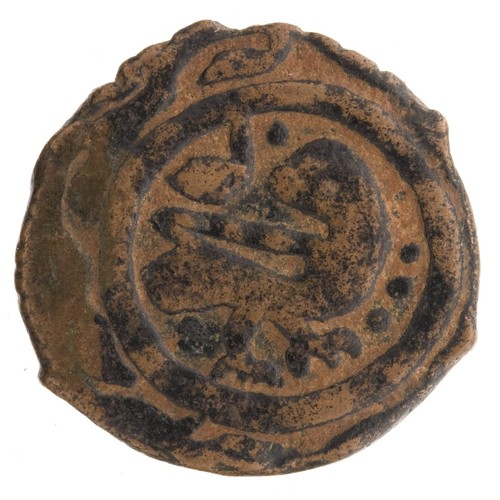
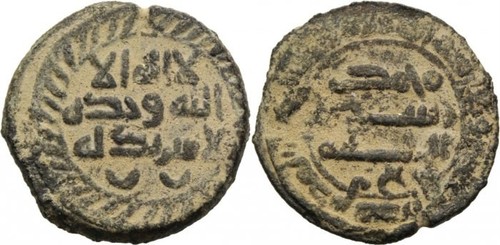
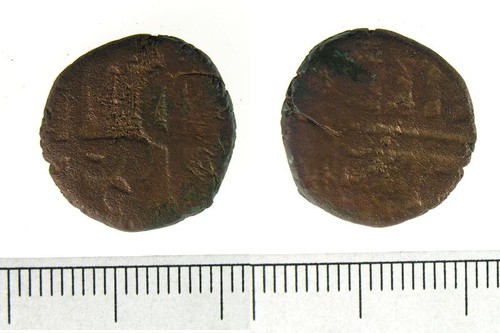
A heavily worn and corroded ancient or medieval copper coin featuring a prominent geometric star motif on one side and Arabic inscriptions on the other.
- Country
- Islamic World / Middle East or North Africa
- Year
- Uncertain (potentially 18th or 19th century based on style, though highly worn)
- Denomination
- Falus / Fals
- Metal
- Copper
- Grade
- Poor to Fair (heavily worn with corrosion and edge damage)
This report is AI-generated and can be wrong. Always verify grade, authenticity, and value with a qualified dealer or certified grading service before buying, selling, or insuring.
Identify your own coins.
Get a report just like this from any photo, free.
Overview
Historical significance
Obverse (front)
Reverse (back)
Estimated value
What drives this coin's value
Grade assessment
Mintage & rarity
Authenticity & counterfeit red flags
Notable varieties & errors
Similar coins
Care & preservation
More like this
Other islamic world / middle east or north africa coins
Maria Theresa Thaler (Restrike)
Austria (Austrian Empire) · 1780 (Frozen date; likely a modern restrike)
East African 1 Cent
East Africa (British Colonies) · 1954 - 1962 (Exact year obscure on specimen)
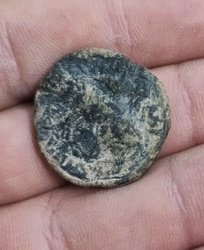
Islamic Copper Falus (or Dirham)
Islamic World / Middle East (various dynasties such as Umayyad, Abbasid, or Seljuk) · Circa 8th to 13th Century CE
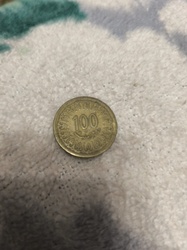
Token for Tea/Coffee or Service
Middle East or North Africa (likely Lebanon or Syria) · 1983 / 1403 AH
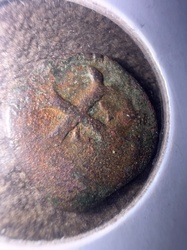
Byzantine Follis or 10 Nummi (Uncertain Emperor/Mint)
Byzantine Empire · 6th - 7th Century AD
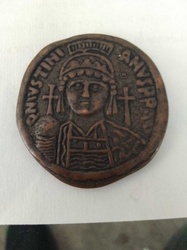
Justinian I Follis (Large Bronze 40 Nummi)
Byzantine Empire (Eastern Roman Empire) · 538-539 AD (Regnal Year 12)