
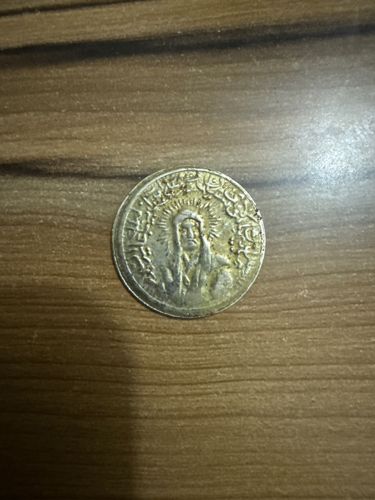
Likely a coin from a Persian or Islamic dynasty; potentially a 'Shahi' or similar denomination, though specific identification without clear inscriptions is difficult.
Persian Empire (various dynasties), Central Asian Khanates, or areas under Islamic rule in the Middle East. · Based on the style and iconography, this coin likely dates from the medieval Islamic period, roughly between the "12th and 18th centuries AD" (6th to 12th centuries AH), but a precise year cannot be determined without clearer inscription details.
The coin features a bust of a figure, likely a ruler or religious figure, with a halo or radiant crown around their head. The figure appears to be wearing traditional attire. Arabic or Persian script encircles the central image. The coin shows signs of wear and age.
This report is AI-generated and can be wrong. Always verify grade, authenticity, and value with a qualified dealer or certified grading service before buying, selling, or insuring.
Identify your own coins.
Get a report just like this from any photo, free.
Overview
Historical significance
Estimated value
Care & preservation
More like this
Other persian empire (various dynasties), central asian khanates, or areas under islamic rule in the middle east. coins
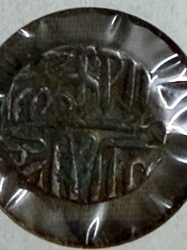
Islamic Silver Dirham (Sultans of Delhi or similar medieval Islamic dynasty)
India / Medieval Islamic Sultanates · 13th-14th Century (c. 1200 - 1400 AD)
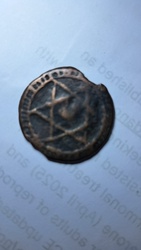
Islamic Copper Falus (or similar medieval/early modern Islamic coin)
Islamic World / Middle East or North Africa · Uncertain (potentially 18th or 19th century based on style, though highly worn)
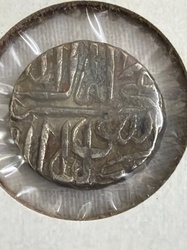
Islamic Silver Rupee (Tanka / Dirham equivalent)
Mughal Empire or Delhi Sultanate (Islamic World, South Asia) · Circa 13th to 17th Century AD (Islamic Hijri calendar dates)
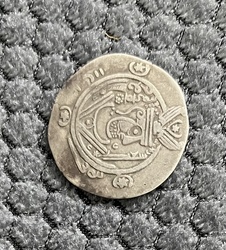
Sasanian Drachm (Khosrow II)
Sasanian Empire (Ancient Persia) · 590-628 AD (Regnal Year 21 visible on reverse, approx. 611 AD)
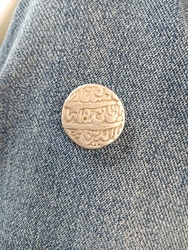
Mughal Empire Silver Rupee
India (Mughal Empire) · 16th-18th Century (Islamic Hijri Calendar)
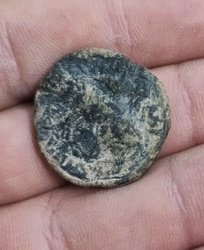
Islamic Copper Falus (or Dirham)
Islamic World / Middle East (various dynasties such as Umayyad, Abbasid, or Seljuk) · Circa 8th to 13th Century CE