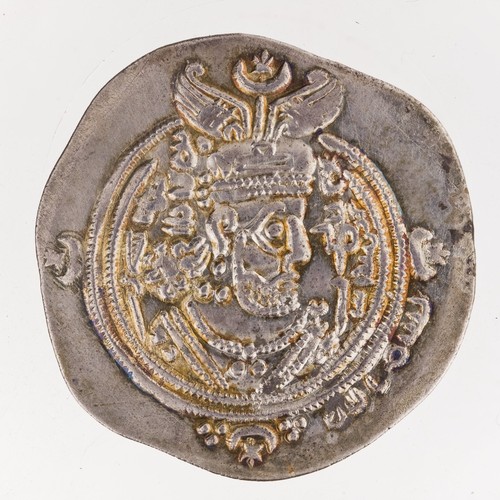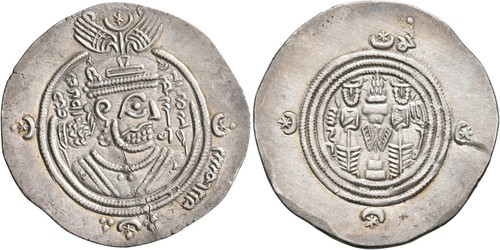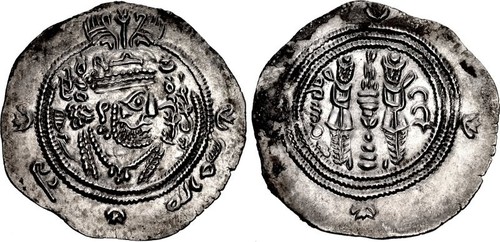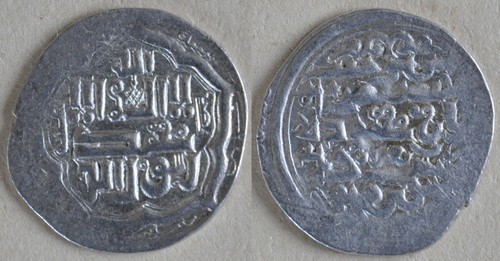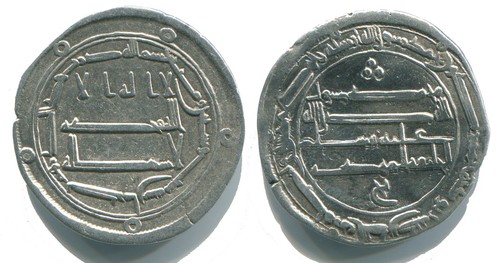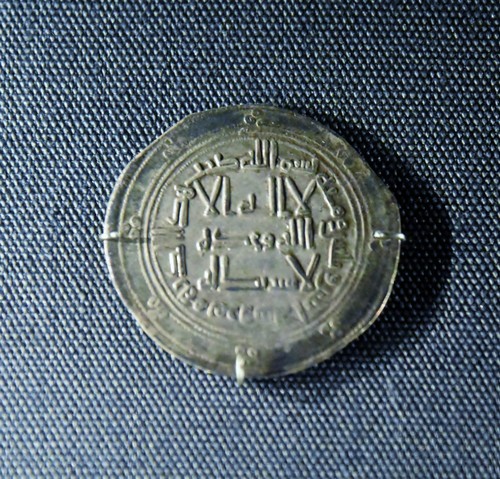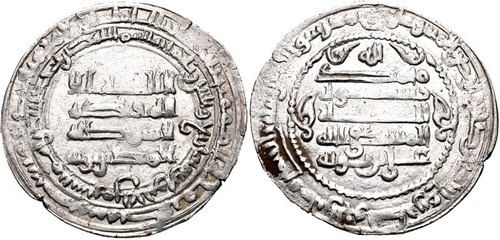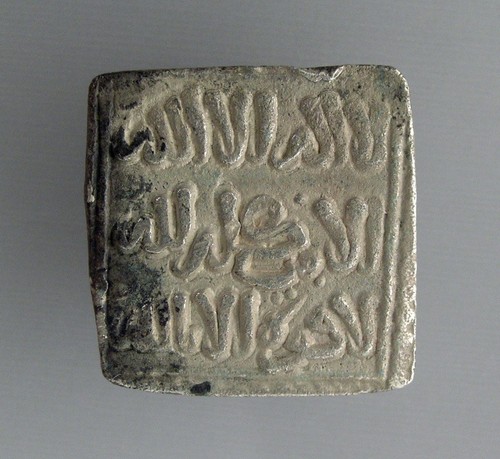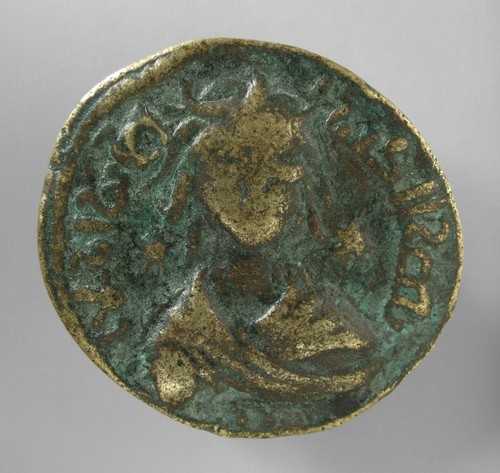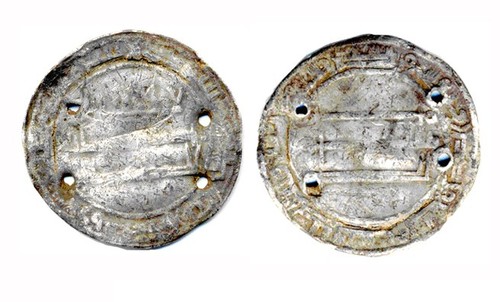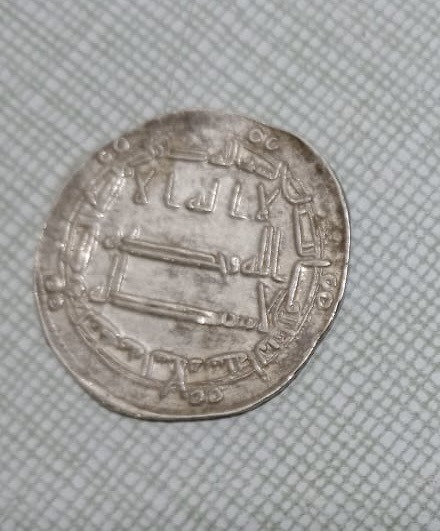
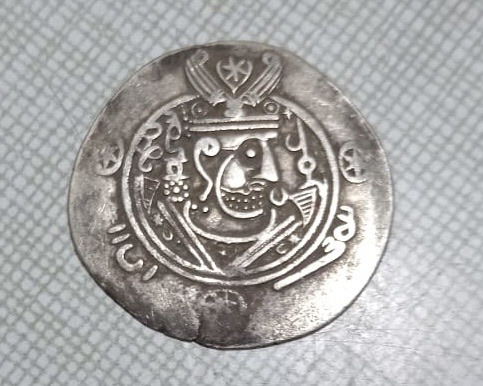
Arab-Sasanian Dirham
Umayyad Caliphate (struck in the Sasanian style) · Circa 60-80 AH (680-700 AD)
A thin, broad silver coin featuring a stylized Sasanian Persian portrait on one side and Kufic Arabic inscriptions on the other side.
- Country
- Umayyad Caliphate (struck in the Sasanian style)
- Year
- Circa 60-80 AH (680-700 AD)
- Denomination
- 1 Dirham
- Metal
- Silver (.900 to .950 fine typical)
This report is AI-generated and can be wrong. Always verify grade, authenticity, and value with a qualified dealer or certified grading service before buying, selling, or insuring.
Identify your own coins.
Get a report just like this from any photo, free.
Overview
Historical significance
Obverse (front)
Reverse (back)
Estimated value
What drives this coin's value
Grade assessment
Mintage & rarity
Authenticity & counterfeit red flags
Notable varieties & errors
Similar coins
Care & preservation
More like this
Other umayyad caliphate (struck in the sasanian style) coins
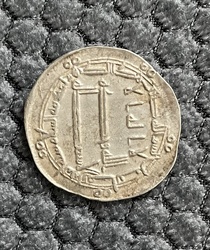
Abbasid Silver Dirham
Abbasid Caliphate · Circa 132-218 AH (750-833 AD)
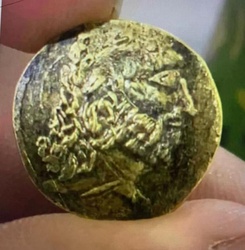
Byzantine Gold Solidus of Heraclius (with Heraclius Constantine and Heracleonas)
Byzantine Empire (Eastern Roman Empire) · c. 632-641 AD
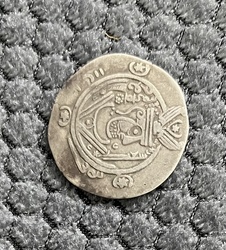
Sasanian Drachm (Khosrow II)
Sasanian Empire (Ancient Persia) · 590-628 AD (Regnal Year 21 visible on reverse, approx. 611 AD)
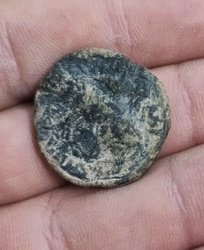
Islamic Copper Falus (or Dirham)
Islamic World / Middle East (various dynasties such as Umayyad, Abbasid, or Seljuk) · Circa 8th to 13th Century CE
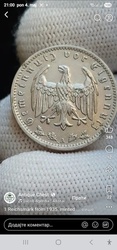
Nickel 1 Reichsmark (Third Reich)
Germany (Third Reich) · 1935
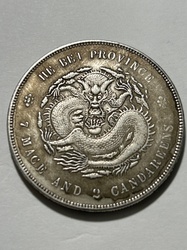
Kiangnan / Chihli Province Dragon Dollar (Ku-Yuan / 7 Mace and 2 Candareens)
China (Imperial / Qing Dynasty) · 1896-1908 (Various years)