
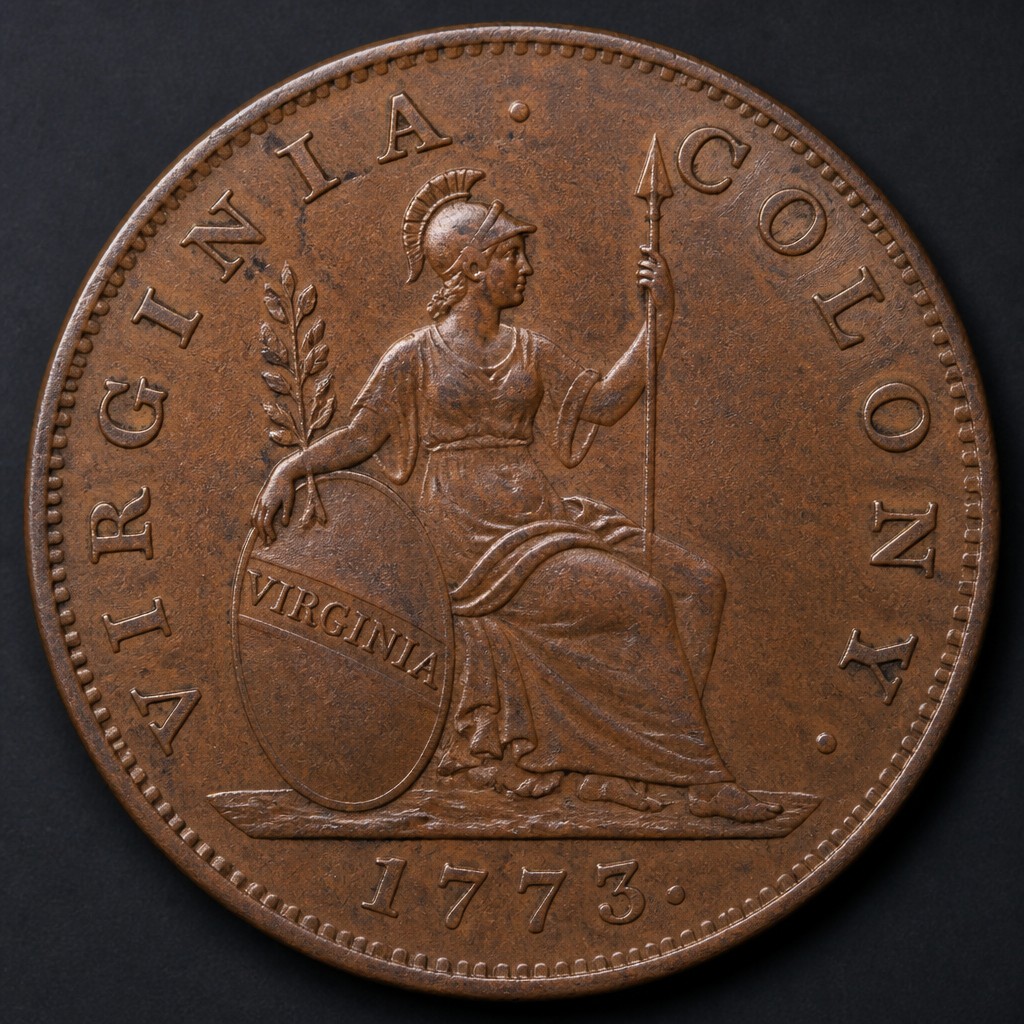
Virginia Halfpenny
An official royal copper coinage struck in London specifically for the Colony of Virginia, showing King George III, whose distribution was disrupted by the approaching American Revolution.
- Country
- Colony of Virginia (British America)
- Denomination
- Halfpenny
- Metal
- Copper
Got a coin like this?
Identify any coin from a photo, free.
Overview
The Virginia halfpenny stands out among American colonial coinage as one of the few copper issues struck under direct royal authorization specifically for a single named colony, rather than as a private patent venture or an informal local mint operation. Authorized for the Colony of Virginia and struck in London, the coin represents a more formal, government-sanctioned approach to addressing colonial small-change shortages compared to earlier ventures like the Rosa Americana or Hibernia coinages.
Struck in 1773, just a few years before the outbreak of the American Revolution, the Virginia halfpenny's timing meant that its planned distribution throughout the colony was significantly disrupted by the growing political crisis between Britain and its American colonies. As a result, many coins never fully entered circulation as intended, with some remaining in storage in England for years afterward.
Today, the Virginia halfpenny is valued both for its distinctive status as an officially authorized colony-specific coinage and for its poignant historical timing on the eve of American independence.
History & Background
In 1773, King George III authorized a special copper halfpenny coinage specifically for the Colony of Virginia, addressing the colony's persistent shortage of small-denomination coins for everyday transactions. Unlike earlier colonial coinage ventures tied to private patent holders, this issue carried more direct royal sanction, reflecting a somewhat more formal approach to colonial monetary policy by this later date.
The coins were struck at facilities in London under contract and then shipped across the Atlantic for circulation in Virginia, but the rapidly escalating political tensions between Britain and its American colonies in the years immediately preceding the Revolutionary War disrupted the coin's intended rollout. Some shipments arrived and circulated to a degree, but significant quantities also remained undistributed.
As the Revolution progressed and Virginia moved toward independence, the practical usefulness and symbolic appropriateness of a royal coinage bearing the British king's portrait diminished considerably, and many undistributed Virginia halfpennies were kept in storage in England for years, with some eventually released into the coin collecting market long after the political circumstances that had originally prompted their creation had passed.
How to Identify
The obverse shows a laureate bust of King George III facing right, with the Latin legend GEORGIVS III REX around the rim. The reverse depicts a crowned shield bearing the British royal arms, with the legend VIRGINIA above and the date 1773 below, clearly identifying the coin's specific colonial destination, a feature that distinguishes it from more generically labeled colonial coinage of the period.
The coin is struck in copper, similar in general size and weight to contemporary British halfpennies, with a straightforward, well-executed design reflecting its production at an established London minting facility rather than a small private or colonial operation. Because significant quantities remained undistributed and were kept in storage, a notable portion of surviving Virginia halfpennies show little to no circulation wear compared to many other colonial coin types.
Collectors distinguish the Virginia halfpenny from other contemporary British colonial issues primarily through its explicit VIRGINIA legend, which directly names the intended colony, a level of specificity uncommon among most other colonial-era coinage.
Value & Collectibility
Virginia halfpennies are relatively available to colonial coin collectors compared to many rarer colonial issues, in part because significant quantities remained undistributed in England and were later released to the market in better-than-typical condition; prices for common circulated to lightly circulated examples often range from roughly one hundred dollars up to several hundred dollars.
Higher-grade, well-struck examples with strong original color and minimal wear can bring considerably more, reflecting the coin's relative availability in higher condition compared to colonial issues that saw heavier everyday circulation. Certain rare die varieties can also carry additional premiums for specialist collectors.
As with most colonial American coinage, buyers should pay close attention to condition, originality of surface color, and any signs of cleaning or alteration, since well-preserved, problem-free examples are consistently valued well above coins showing environmental damage or improper past cleaning.
Frequently asked questions
Why does this coin specifically say Virginia?
It was authorized by King George III specifically for the Colony of Virginia, unlike many other colonial coins meant for broader or less specific circulation.
Where was the Virginia halfpenny struck?
It was produced in London under royal authorization before being shipped to the colony for circulation.
Why are many Virginia halfpennies in nice condition?
The American Revolution disrupted planned distribution, leaving significant quantities in storage in England rather than entering heavy circulation.
Is the Virginia halfpenny rare?
It is relatively available compared to many colonial coins, partly because of the undistributed stock that survived in better condition.
Other coins you may enjoy
Brasher Doubloon
1787
Higley Copper
1737–1739
Kellogg & Co. Gold Piece
1854–1855
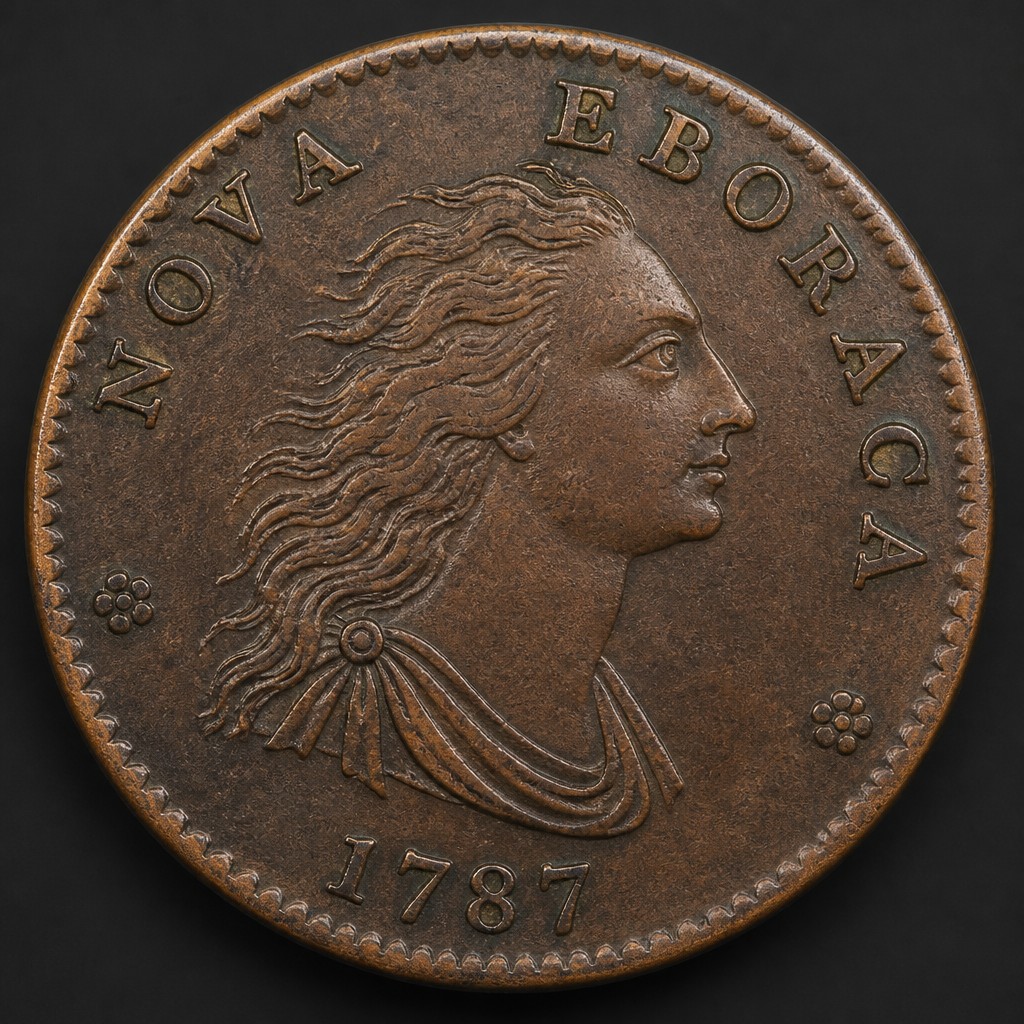
Nova Eborac Copper
1787
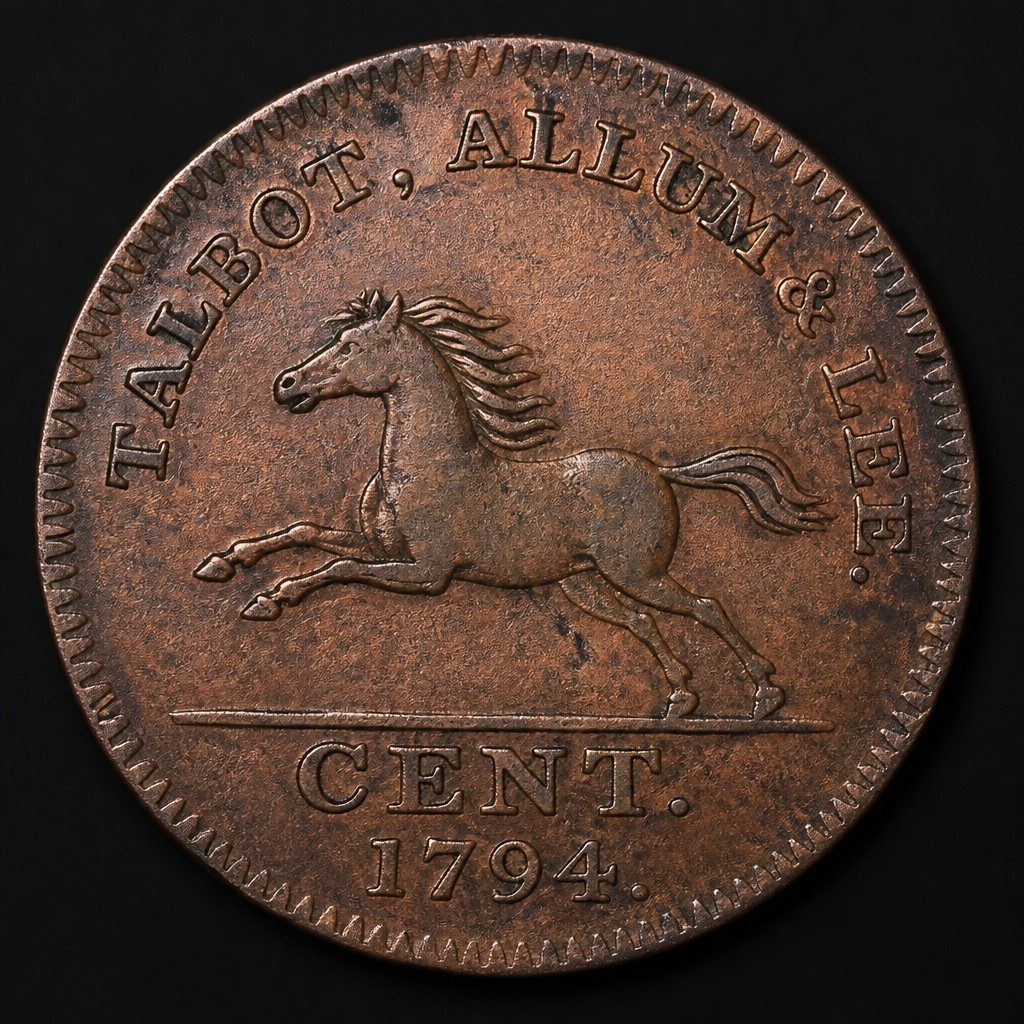
Talbot, Allum & Lee Cent
1794–1795
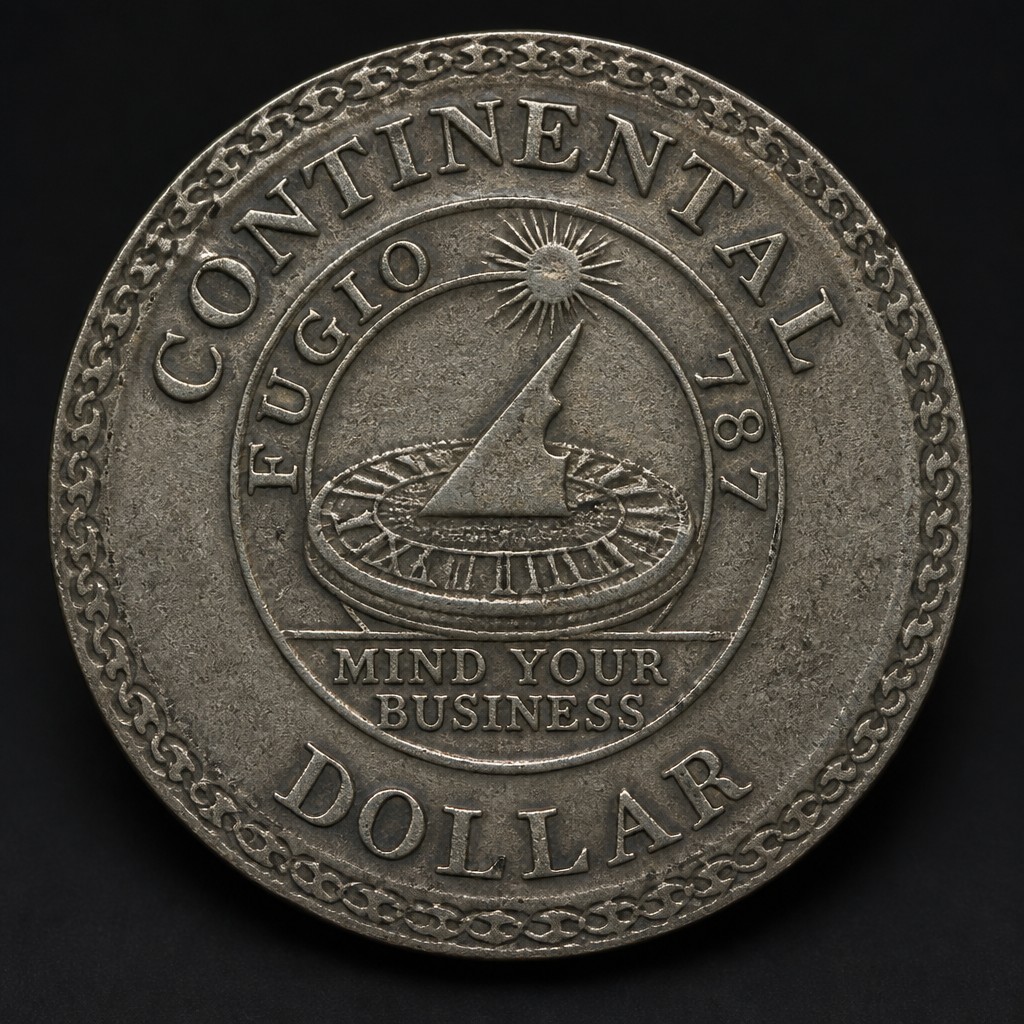
Continental Dollar
1776
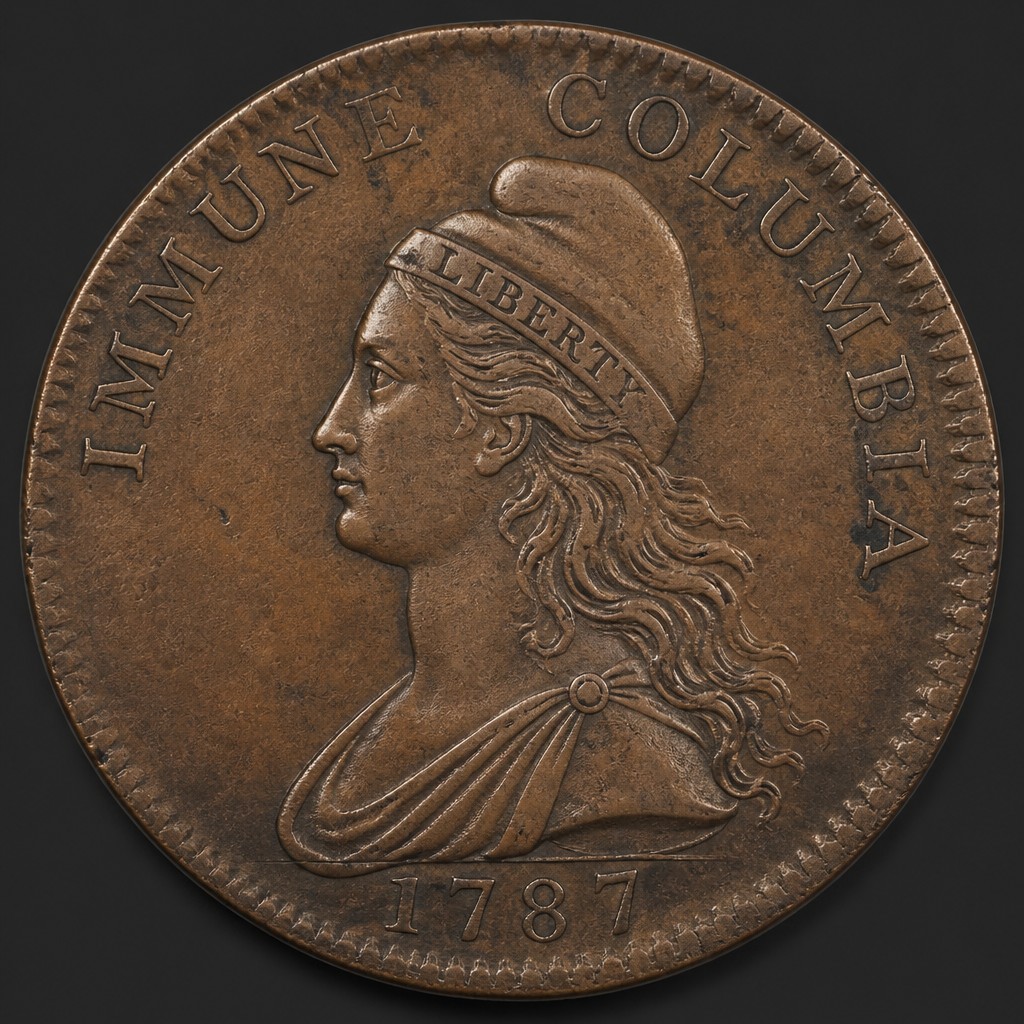
Immune Columbia Copper
circa 1785–1787
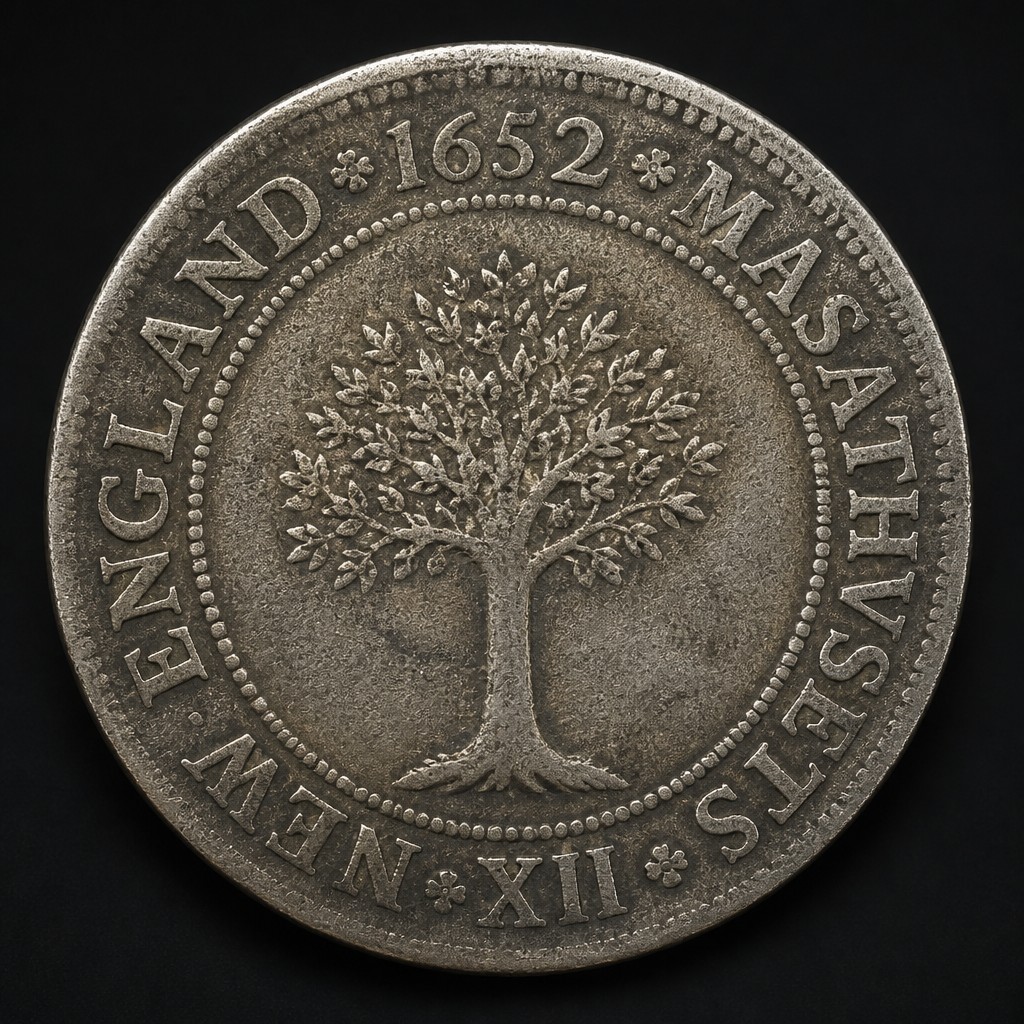
Massachusetts Oak Tree Shilling
Dated 1652, struck circa 1660–1667
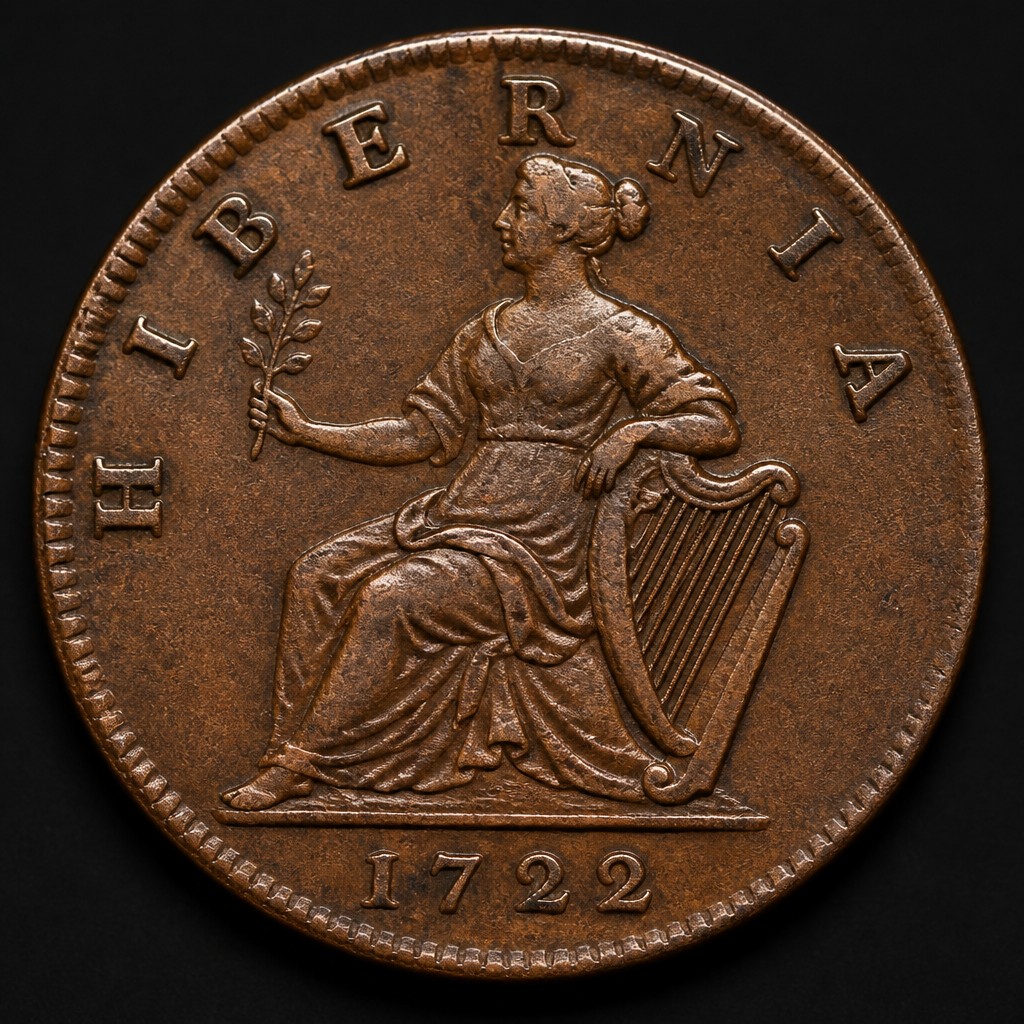
Wood's Hibernia Halfpenny
1722–1724
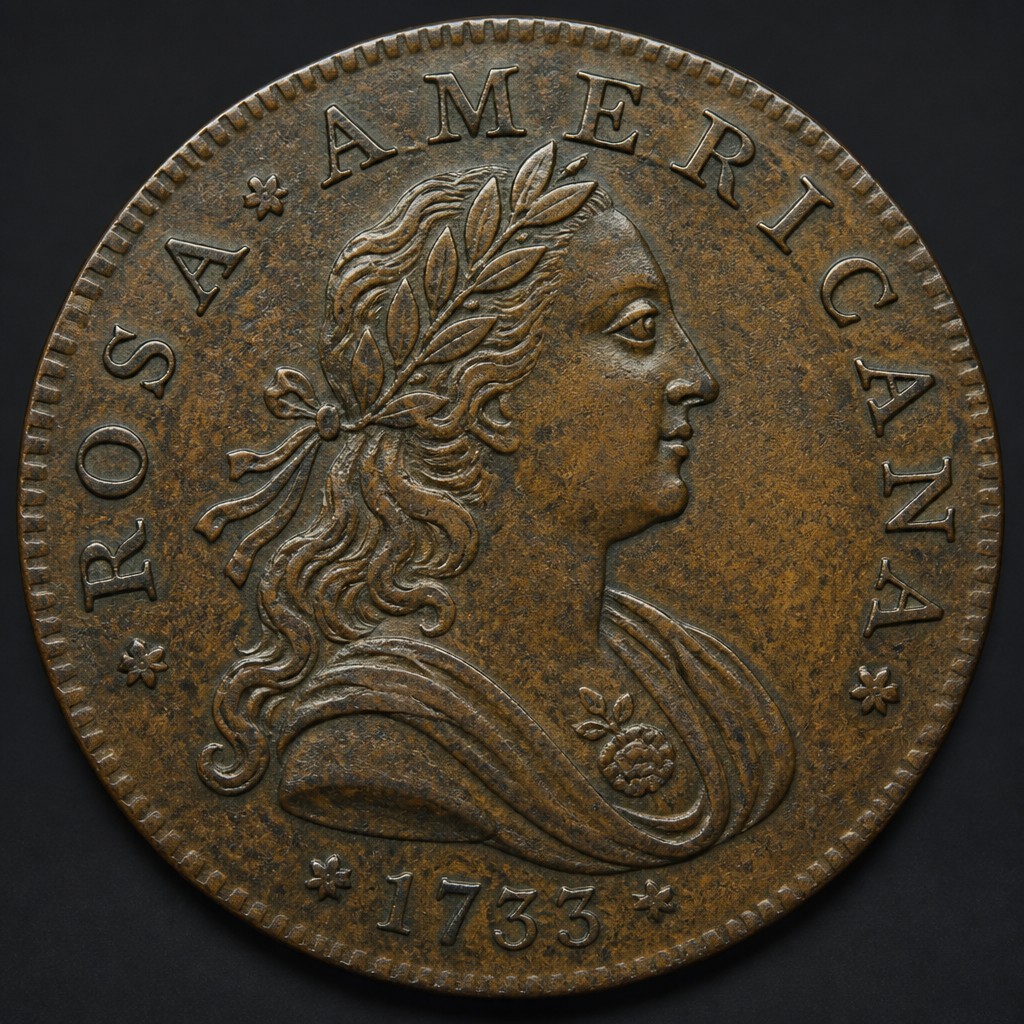
Rosa Americana Coinage
1722–1724 (with pattern issues dated 1733)
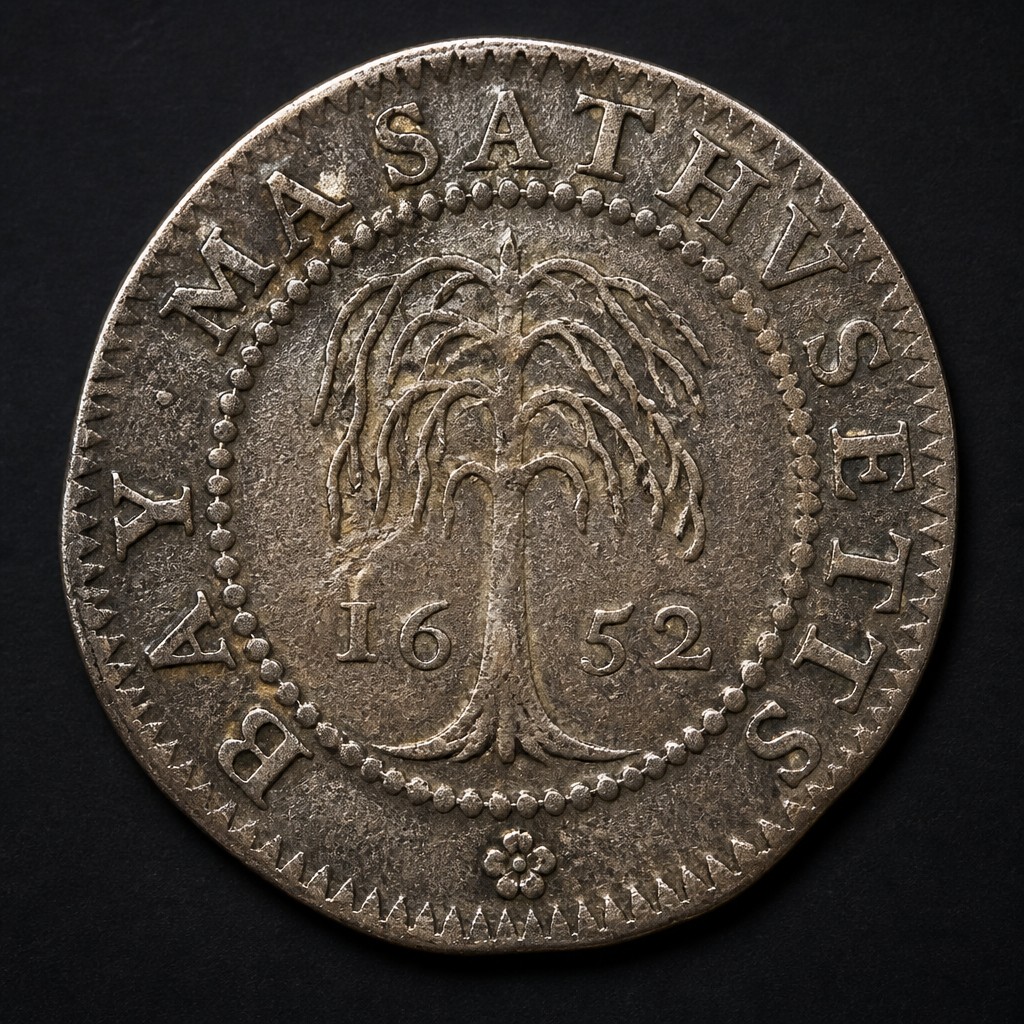
Massachusetts Willow Tree Shilling
Dated 1652, struck circa 1653–1660
Capped Bust Half Eagle
1807–1812