
Continental Dollar
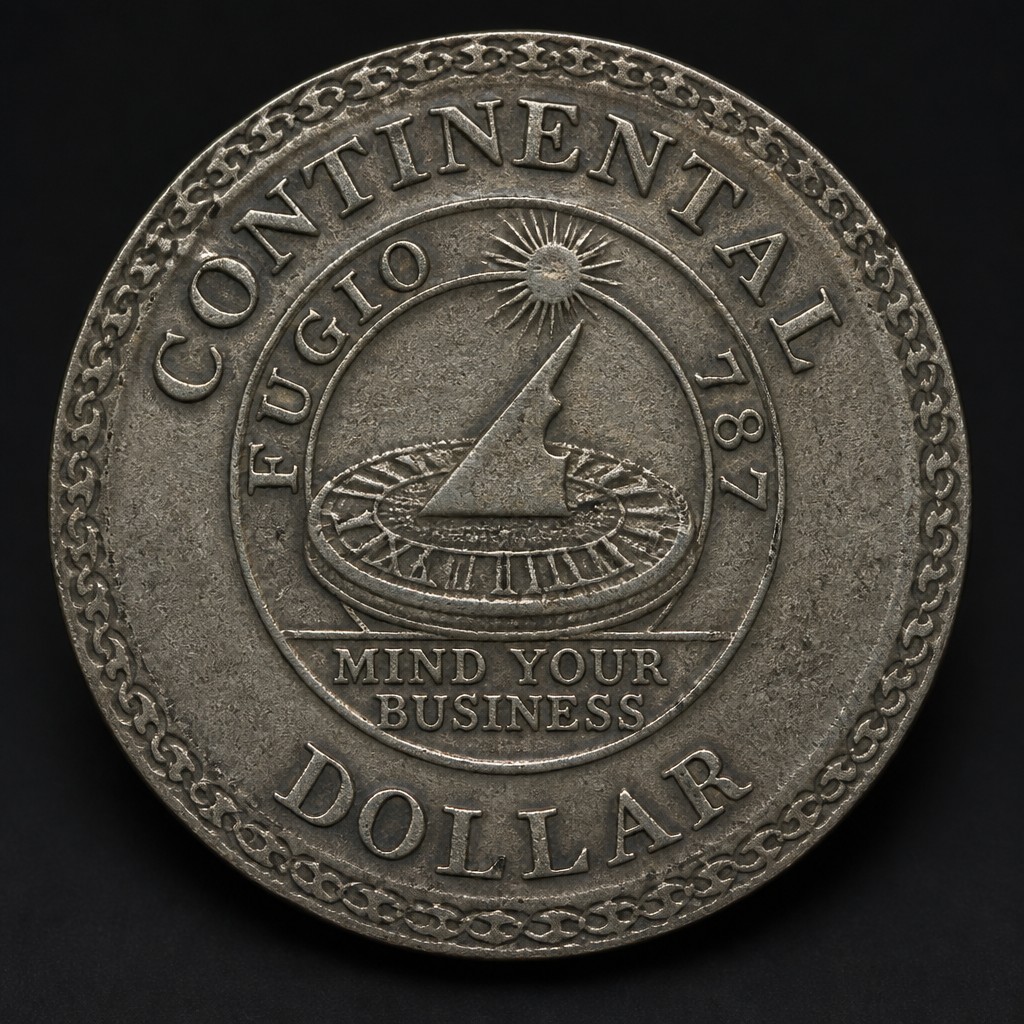
A large 1776-dated piece bearing a sundial, 'MIND YOUR BUSINESS,' and a thirteen-link chain, long debated as either an intended Continental Congress dollar or a contemporary satirical piece.
- Country
- United States (Colonial/Revolutionary era)
- Denomination
- One Dollar (Continental Currency)
- Metal
- Pewter (most common); also brass and rare silver examples
Got a coin like this?
Identify any coin from a photo, free.
Overview
The Continental Dollar is one of the most enigmatic and sought-after pieces in early American numismatics. Dated 1776, it is roughly the size of a Spanish milled dollar and carries imagery evocative of the fledgling United Colonies, including a sundial, a radiant sun, and a chain of thirteen interlocking links representing the colonies. Most surviving examples are struck in pewter, with far scarcer brass and silver specimens known.
For generations these pieces were presented in reference works as the first dollar-sized coin proposed for the United States, meant to accompany the Continental Currency paper notes issued by the Continental Congress. More recent numismatic research has questioned this narrative, with some scholars suggesting the pieces may have been struck later, possibly in Europe, as a commentary on the collapsing value of American paper currency rather than as a genuine circulating proposal. The debate remains unresolved and is part of what makes the series so compelling to specialists.
Regardless of its exact origin, the Continental Dollar is prized as an iconic emblem of the Revolutionary period and is a cornerstone rarity for advanced collectors of early American coinage.
History & Background
The design is closely tied to Continental Currency paper notes of 1776, which used similar sundial and chain motifs, and the sundial and 'MIND YOUR BUSINESS' motto echo imagery associated with Benjamin Franklin, who is often credited with influencing the concept even though no contemporary document firmly confirms his direct involvement. The obverse legend 'FUGIO' (Latin for 'I fly' or 'time flies') paired with the sundial anticipates the later Fugio cent of 1787, which is more securely linked to Franklin.
Traditional accounts held that the piece was struck as a pattern or emergency issue tied to the Continental Congress's currency, meant to lend metallic credibility to depreciating paper money. Modern research by numismatic historians has raised the possibility that some or all varieties were produced later than 1776, and possibly outside the colonies, functioning more as a satirical or speculative medalic issue commenting on American finances rather than an authorized coinage.
Several die varieties exist, distinguished by spelling differences such as 'CURENCY' versus 'CURRENCY' and by the initials 'EG FECIT' (attributed to engraver Elisha Gallaudet) appearing on some obverses. Because of their age, ambiguous origin, and connection to the Declaration of Independence year, they have fascinated collectors for well over a century.
How to Identify
The obverse depicts a radiant sun shining down on a sundial, with the Latin motto 'FUGIO' above and 'MIND YOUR BUSINESS' below, along with the date 1776. Some varieties add 'EG FECIT' near the sundial's base, credited to die engraver Elisha Gallaudet.
The reverse shows a chain of thirteen interlocking links, each inscribed with the name or abbreviation of one of the original thirteen colonies, encircling the central legend 'AMERICAN CONGRESS' and 'WE ARE ONE.' This chain-of-states motif was also used on the 1787 Fugio cent, reinforcing the design connection between the two issues.
Most known specimens are struck in pewter and are typically dark gray with a somewhat soft strike, since pewter does not hold sharp detail as well as harder metals; a small number of brass strikes and extremely rare silver examples also exist. Diameter is close to that of a Spanish eight-reales piece. Because the design has been reproduced extensively as souvenirs and replicas, any suspected genuine example should be examined by a specialist familiar with die varieties and weight standards before being assumed authentic.
Value & Collectibility
Genuine Continental Dollars are rare and command strong prices even in well-worn condition, with pewter examples in problem-free lower grades often reaching well into the thousands of dollars and choice or rare die varieties, especially in silver or brass, capable of bringing five or six figures at auction. Because the series has been heavily counterfeited and reproduced as decorative replicas for over a century, authentication by a major grading service or recognized specialist is essential before assigning any value.
Collectors pay close attention to die variety (spelling of CURENCY/CURRENCY, presence of EG FECIT, and letter style), metal composition, and overall eye appeal, since even modest condition improvements can significantly affect price for such an iconic rarity. As with most 18th-century American numismatic rarities, values are driven as much by documented pedigree and certified authenticity as by traditional grade.
Frequently asked questions
Was the Continental Dollar ever used as real money?
It is uncertain. Traditional accounts say it was meant to back Continental Currency, but modern research suggests some or all varieties may have been a later commentary piece rather than circulating coinage.
What metal are Continental Dollars usually made of?
Most surviving pieces are pewter; brass examples are scarcer, and silver strikes are extremely rare.
Who designed the Continental Dollar?
The design is often attributed in part to Benjamin Franklin's sundial and motto imagery, with die work credited on some varieties to engraver Elisha Gallaudet, though full authorship is not firmly documented.
How can I tell a real Continental Dollar from a replica?
Because replicas are common as souvenirs, any suspected genuine piece should be authenticated by a major grading service familiar with correct weight, metal, and die characteristics.
Why does the reverse show a chain of links?
The thirteen-link chain represents the thirteen original colonies joined together, paired with the motto 'WE ARE ONE,' a design element later reused on the 1787 Fugio cent.
Other coins you may enjoy
Virginia Halfpenny
1773
Brasher Doubloon
1787
Higley Copper
1737–1739
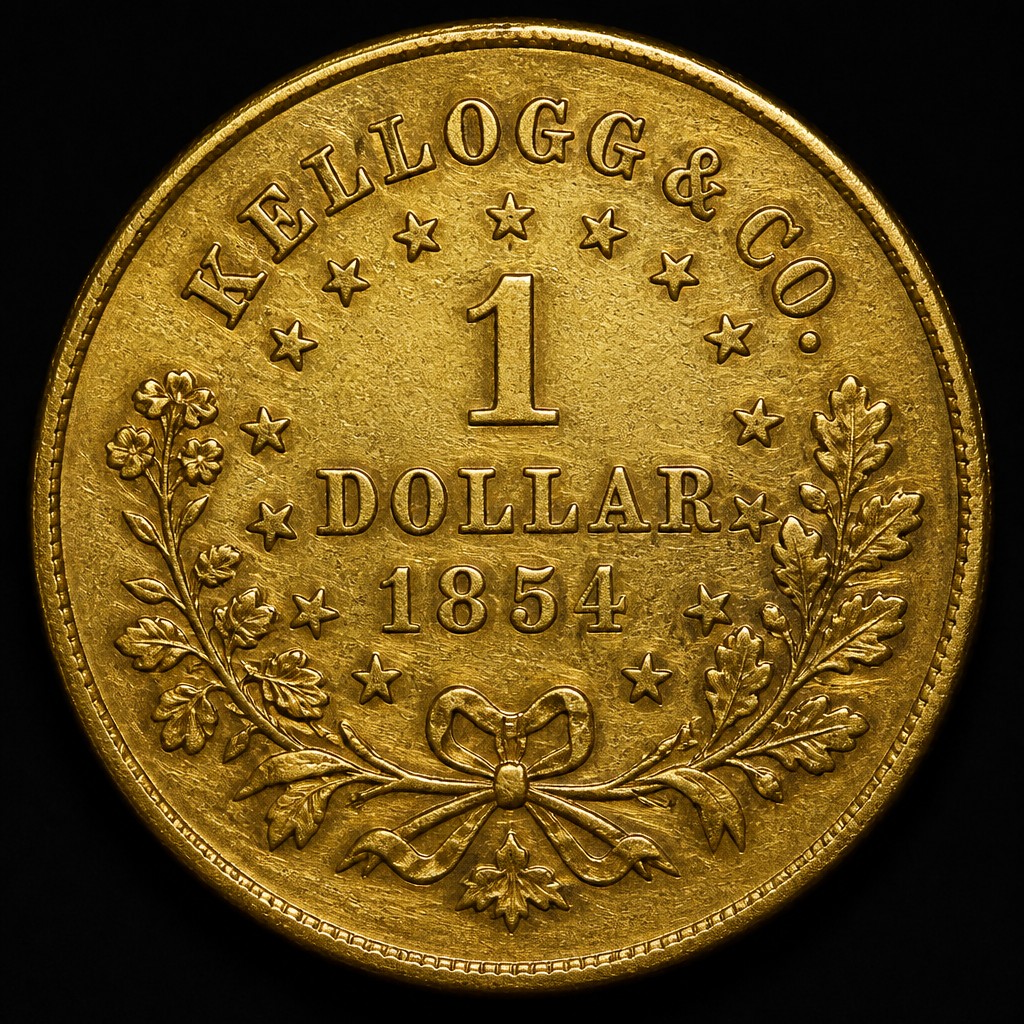
Kellogg & Co. Gold Piece
1854–1855
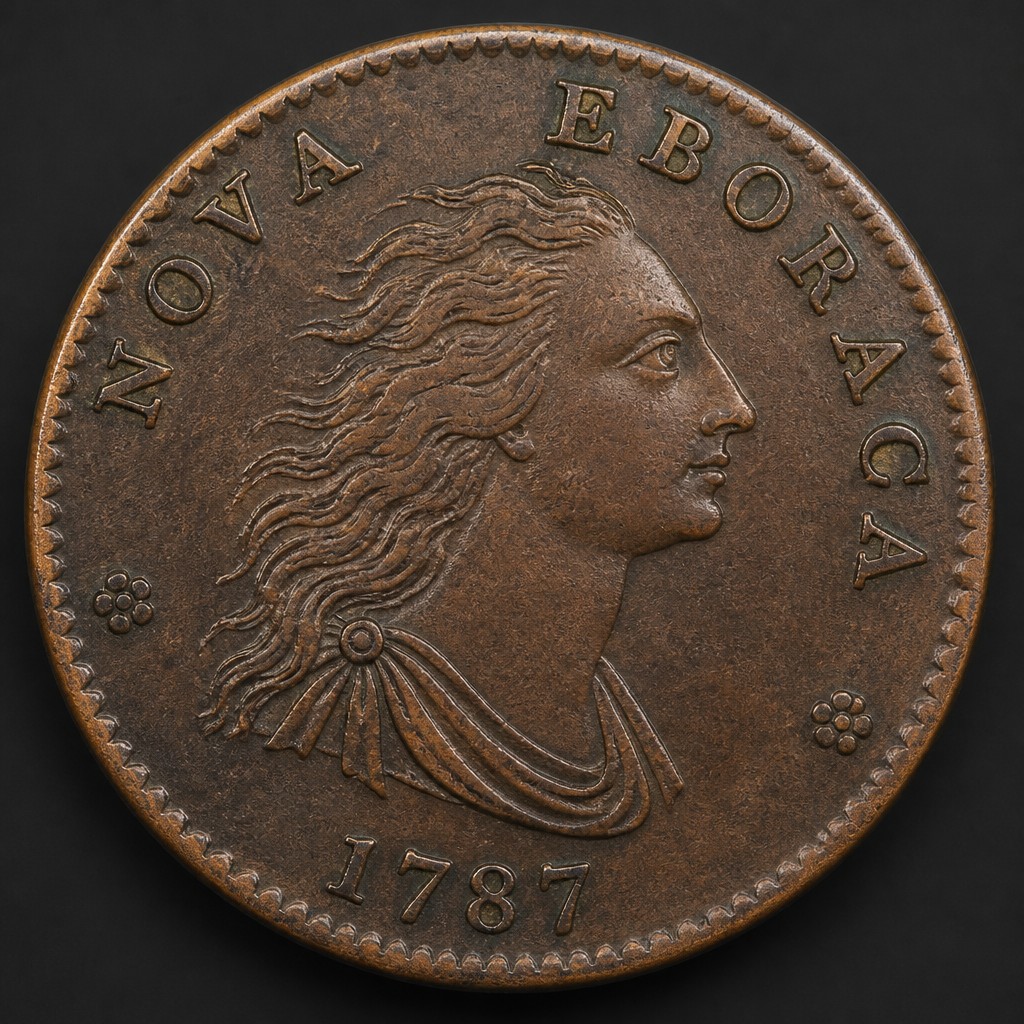
Nova Eborac Copper
1787
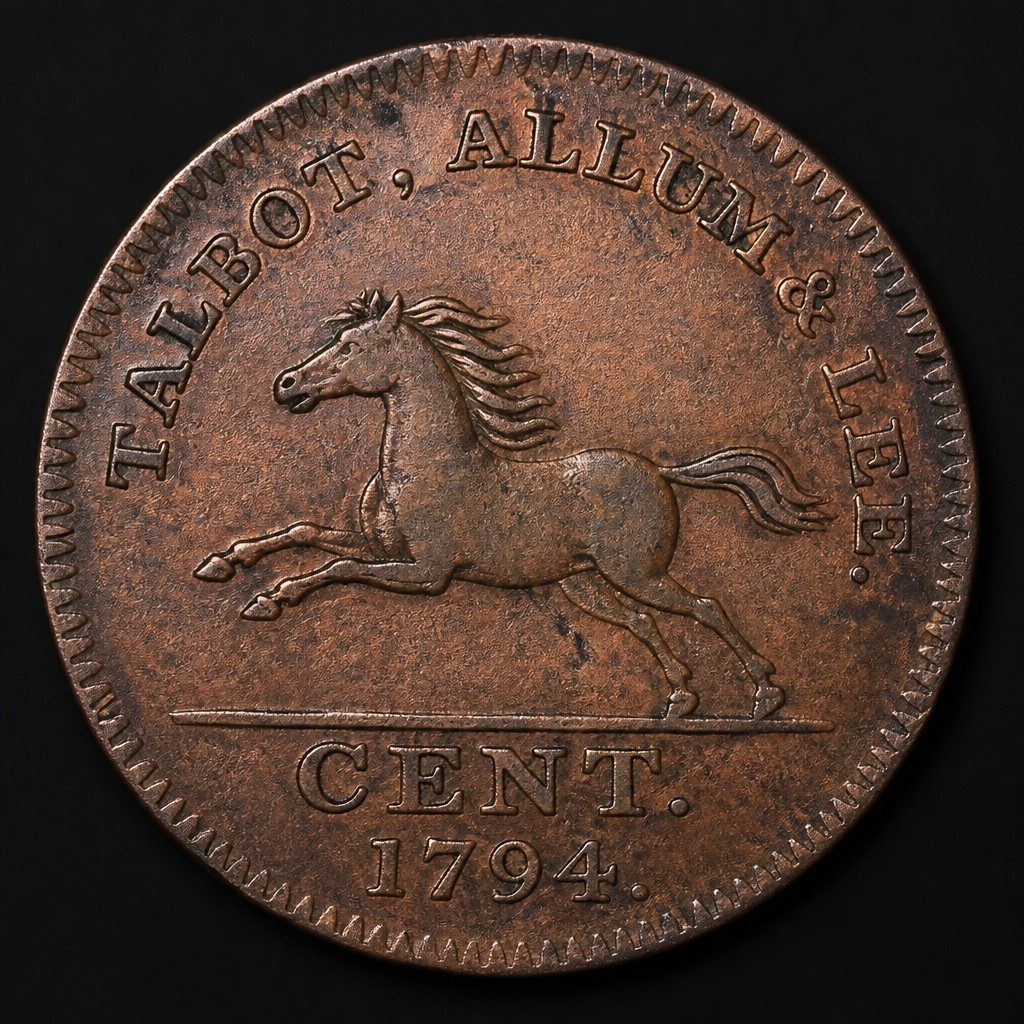
Talbot, Allum & Lee Cent
1794–1795
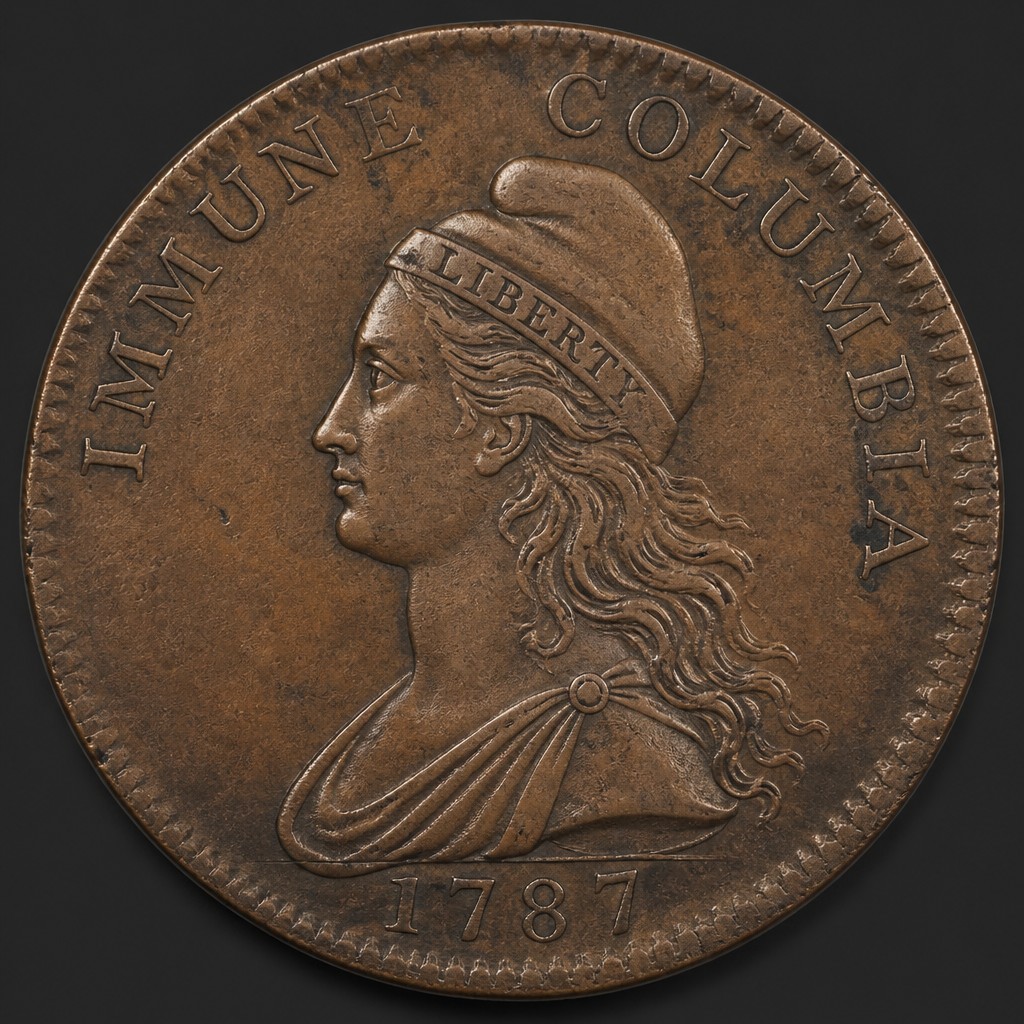
Immune Columbia Copper
circa 1785–1787
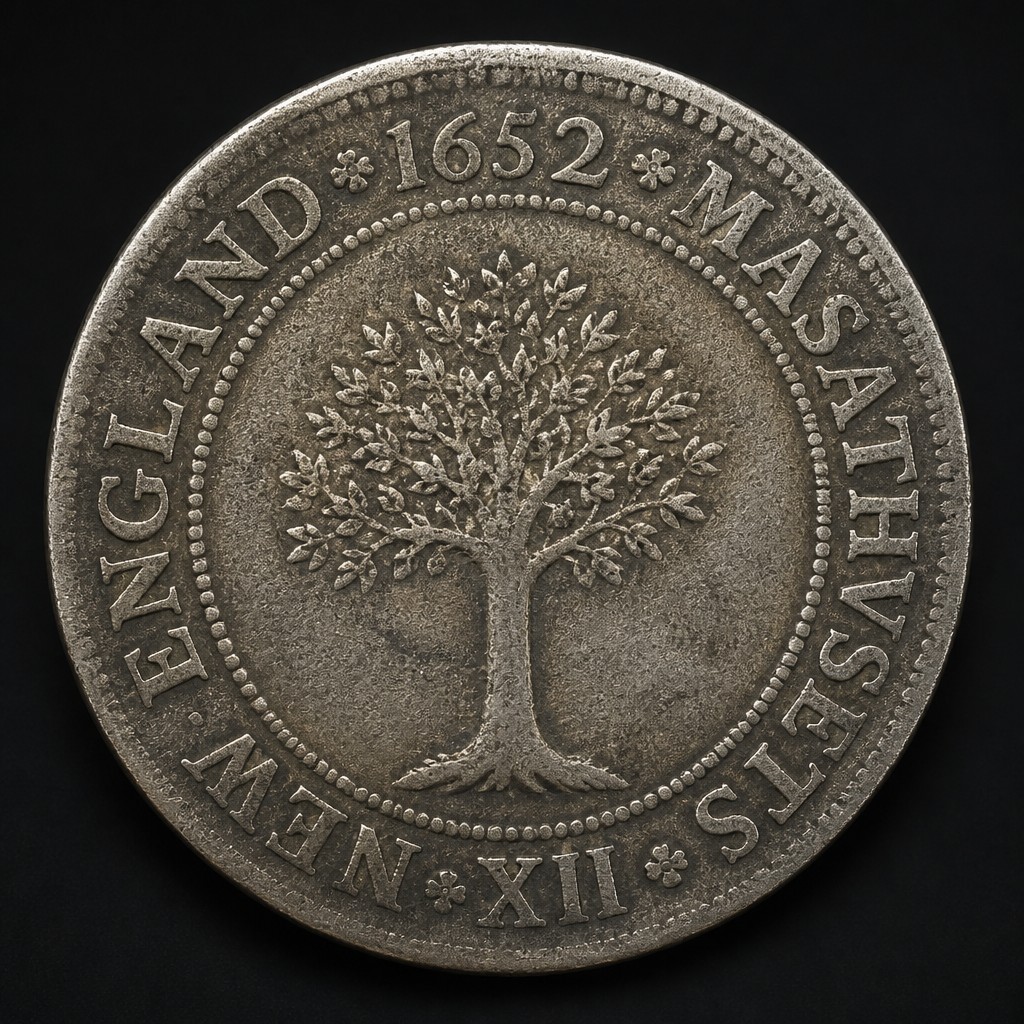
Massachusetts Oak Tree Shilling
Dated 1652, struck circa 1660–1667
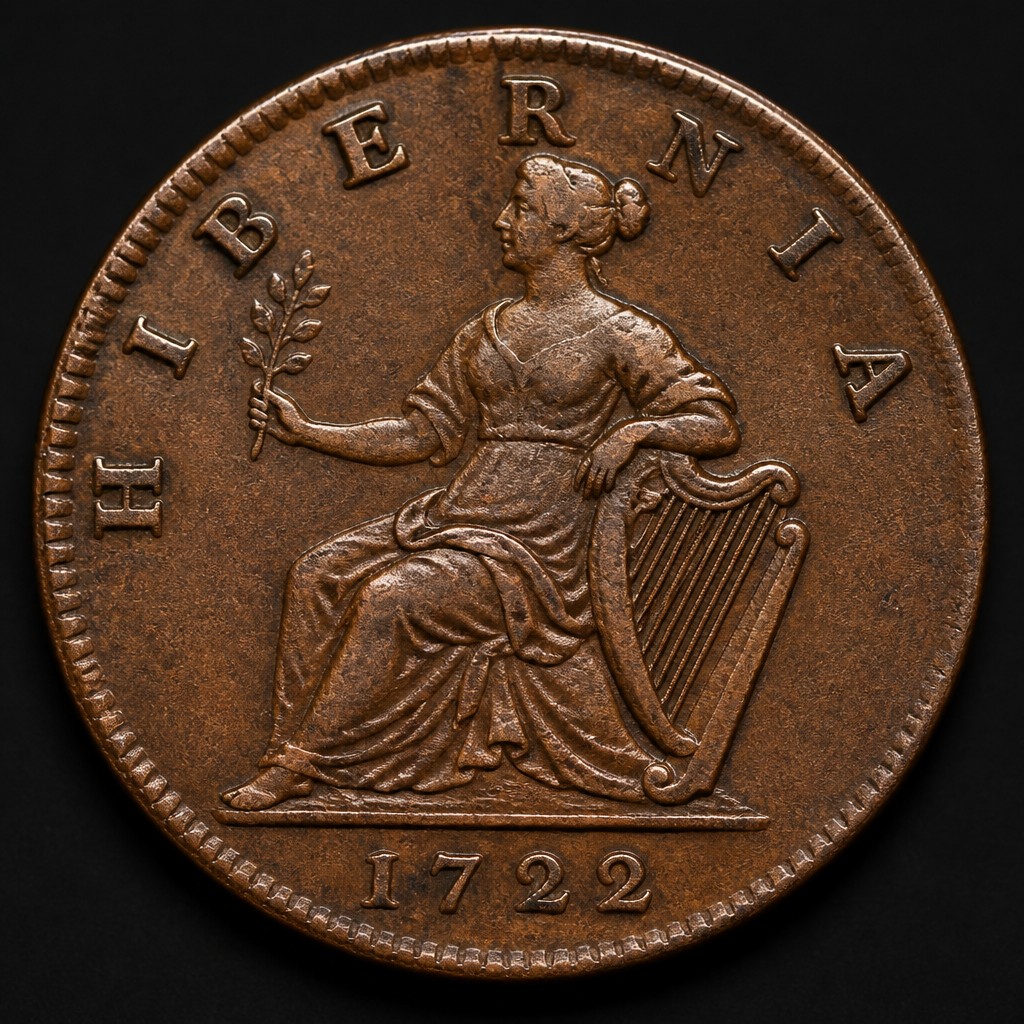
Wood's Hibernia Halfpenny
1722–1724
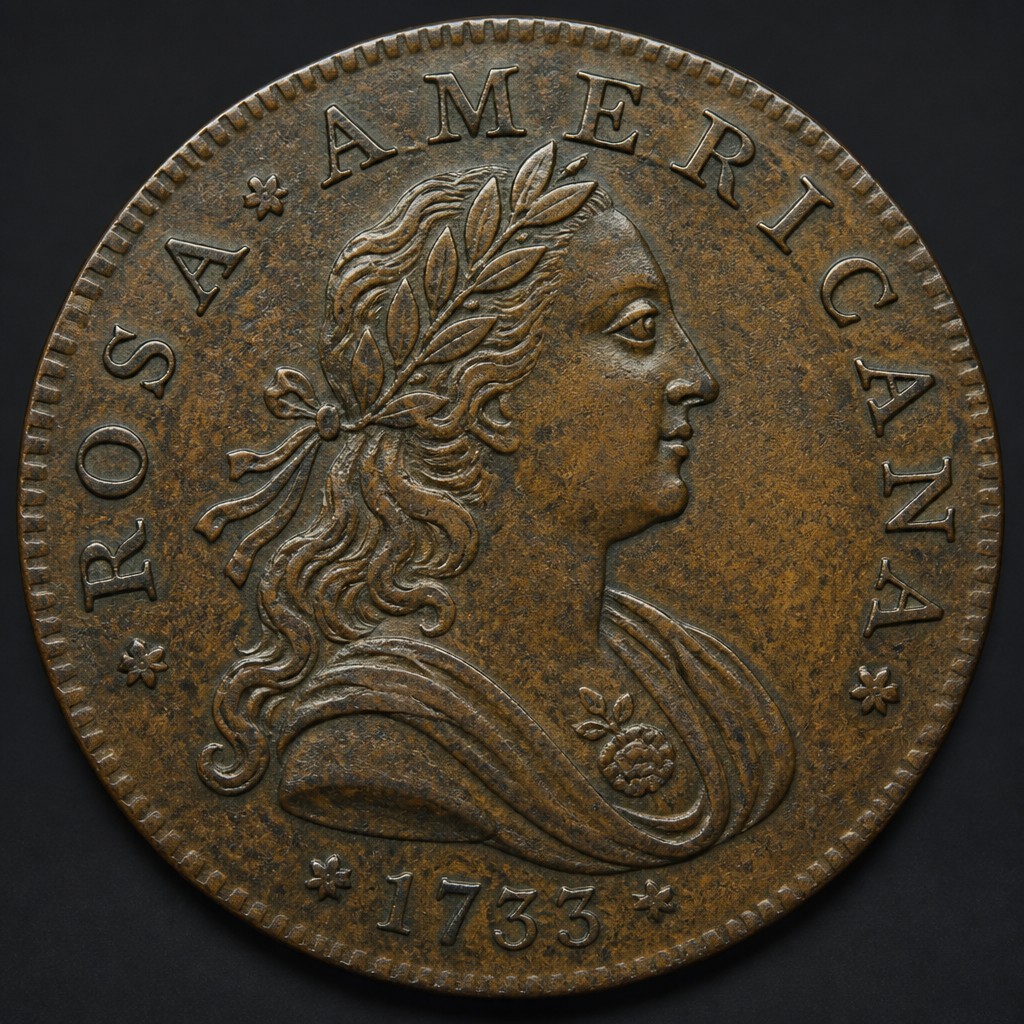
Rosa Americana Coinage
1722–1724 (with pattern issues dated 1733)
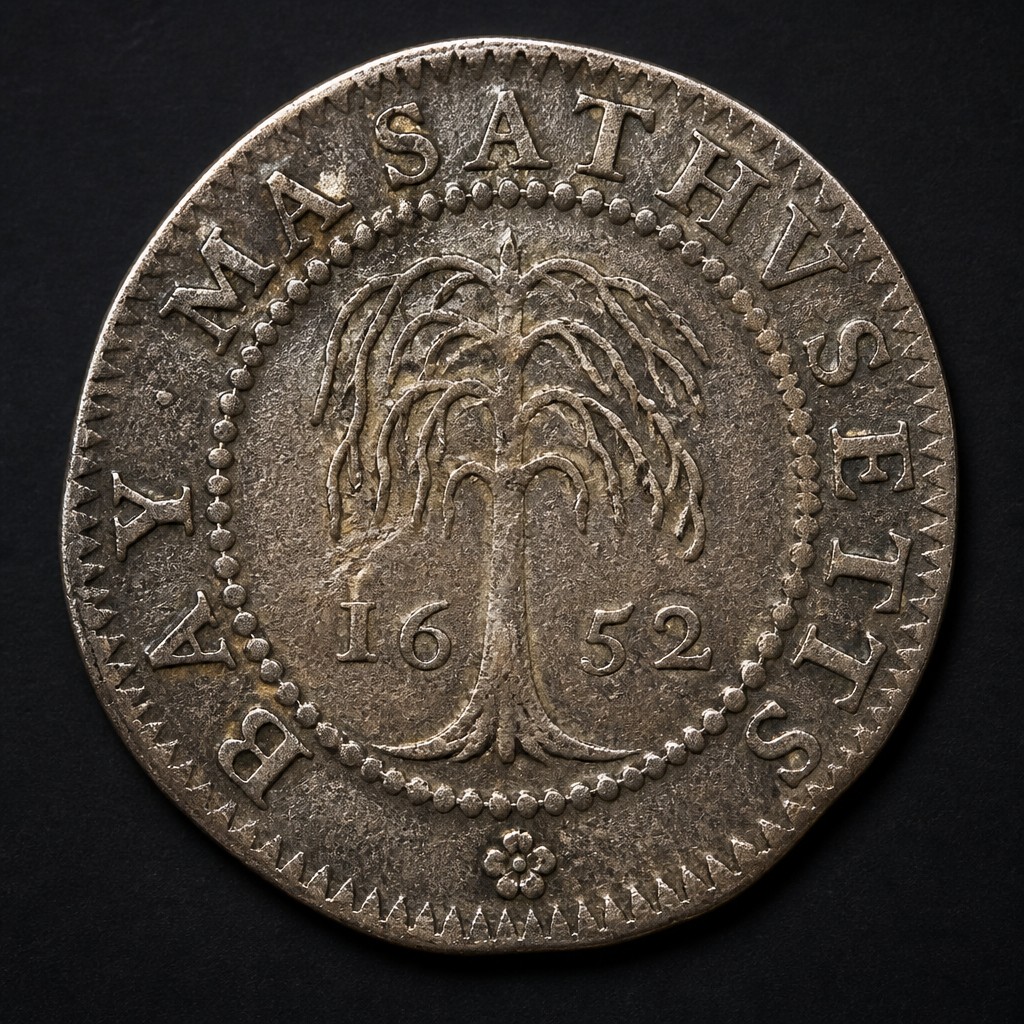
Massachusetts Willow Tree Shilling
Dated 1652, struck circa 1653–1660
Capped Bust Half Eagle
1807–1812