
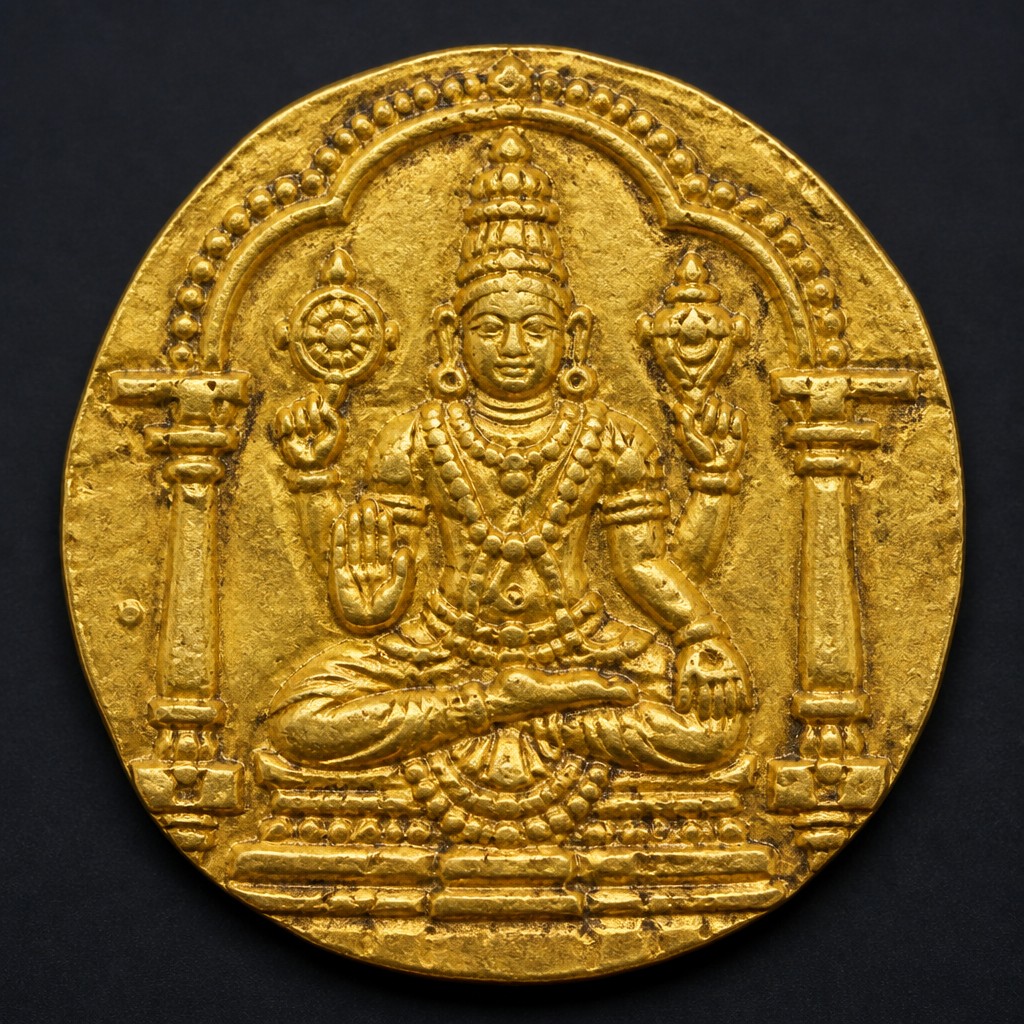
Vijayanagara Gold Pagoda
A small, thick gold coin of the South Indian Vijayanagara Empire, typically showing Hindu deities or a bull, whose type became so trusted it was widely imitated as the standard South Indian trade "pagoda."
- Country
- Vijayanagara Empire (South India)
- Denomination
- Pagoda (Varaha)
- Metal
- Gold
Got a coin like this?
Identify any coin from a photo, free.
Overview
The Vijayanagara Empire dominated much of South India from the 14th to 17th centuries, and its gold coinage, generally called the pagoda or varaha, became one of the most influential and widely trusted trade coins in the region. European trading companies and later regional rulers imitated the type long after the empire itself had declined, a testament to its reputation for reliable weight and fineness.
Collectors are drawn to Vijayanagara pagodas both for their compact, jewel-like appearance and for their broader historical role as a benchmark South Indian trade currency that shaped commerce across the subcontinent's southern coasts for centuries.
History & Background
Founded in 1336, the Vijayanagara Empire grew into the dominant power of South India, resisting incursions from the Deccan Sultanates and fostering a rich culture centered on its capital at Hampi. Its rulers, including notable figures such as Krishnadevaraya, issued gold coinage that financed a prosperous, trade-oriented economy connected to ports along both the eastern and western coasts of India.
The empire's gold pagodas typically depicted Hindu deities, most commonly Balakrishna (the infant Krishna) or Venkateswara (a form of Vishnu), reflecting the strong religious character of Vijayanagara court culture, alongside coins bearing a bull or other royal emblems on certain issues. The consistency of weight and gold content in Vijayanagara coinage earned it wide trust among merchants.
Even after the empire's power was broken following the Battle of Talikota in 1565 and its eventual fall in the following decades, the pagoda type remained in use as a trusted trade coin, imitated by successor Nayaka states, other South Indian kingdoms, and even European trading companies such as the Portuguese, Dutch, and English, who struck their own versions of the pagoda for use in South Indian and Sri Lankan commerce well into the 18th century.
How to Identify
A Vijayanagara pagoda is a small, thick, roughly circular gold coin, typically only about half an inch or less in diameter but noticeably dense due to its gold content. The obverse most commonly shows a standing or seated Hindu deity, frequently identified as Balakrishna or Venkateswara, rendered in a simple, somewhat abstract style suited to the coin's small size.
Other types show a bull, and some later or imitative issues show simplified geometric or dotted patterns derived from earlier deity types as the design became stylized through repeated copying. Legends, where present, are minimal, often limited to a few characters in Kannada or Telugu script identifying the ruler or dynasty, since the coin's small size leaves little room for lengthy inscriptions.
Because the pagoda type was so widely imitated by later Nayaka rulers, other South Indian kingdoms, and European trading companies, precise attribution to the original Vijayanagara emperors versus later imitations can be difficult without careful comparison of style and weight standards found in specialized reference works.
Value & Collectibility
Vijayanagara gold pagodas are generally accessible to collectors given the type's long production run and wide imitation, with common examples priced not too far above their gold content, adjusted for historical and collector interest. Clearer strikes, well-defined deity imagery, and secure attribution to the original Vijayanagara mints rather than later imitations increase value.
Coins attributable to famous rulers such as Krishnadevaraya, or unusual and well-preserved deity types, attract stronger interest from specialists in South Indian numismatics. As with other small ancient and medieval gold issues, weight verification and stylistic comparison are useful in distinguishing genuine Vijayanagara issues from later copies.
Frequently asked questions
Why is it called a 'pagoda'?
European traders in South India used the term 'pagoda' for these small gold coins, likely referencing the temple-like deity imagery often found on them.
Did other kingdoms copy this coin?
Yes, the pagoda's reputation for reliable weight and gold content led many successor states and even European trading companies to strike their own versions long after Vijayanagara's decline.
What deities appear on Vijayanagara pagodas?
The most common figures are Balakrishna (the infant Krishna) and Venkateswara, a form of Vishnu, though bull and other emblem types also exist.
How big are these coins?
They are quite small, generally under half an inch in diameter, but noticeably heavy and dense due to their gold content.
Other coins you may enjoy
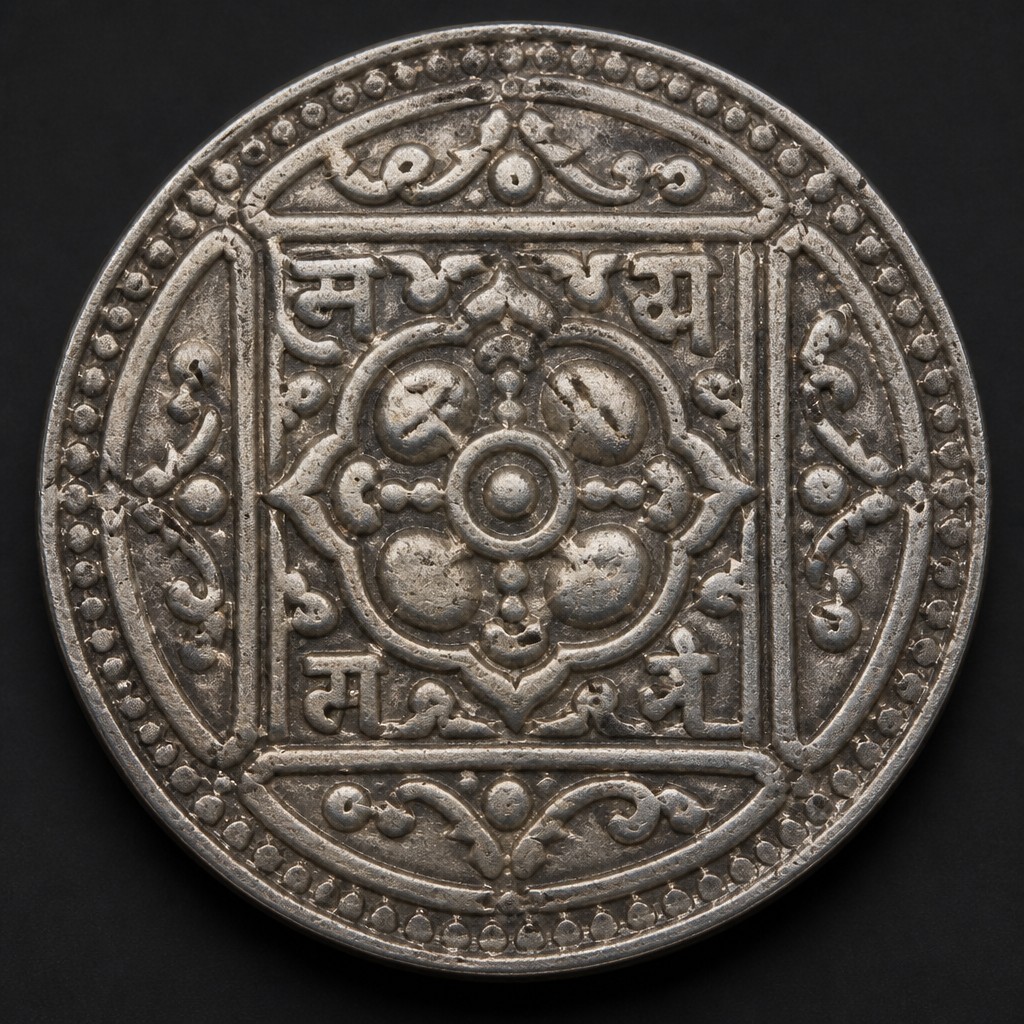
Nepal Silver Mohar
c. 16th–19th century
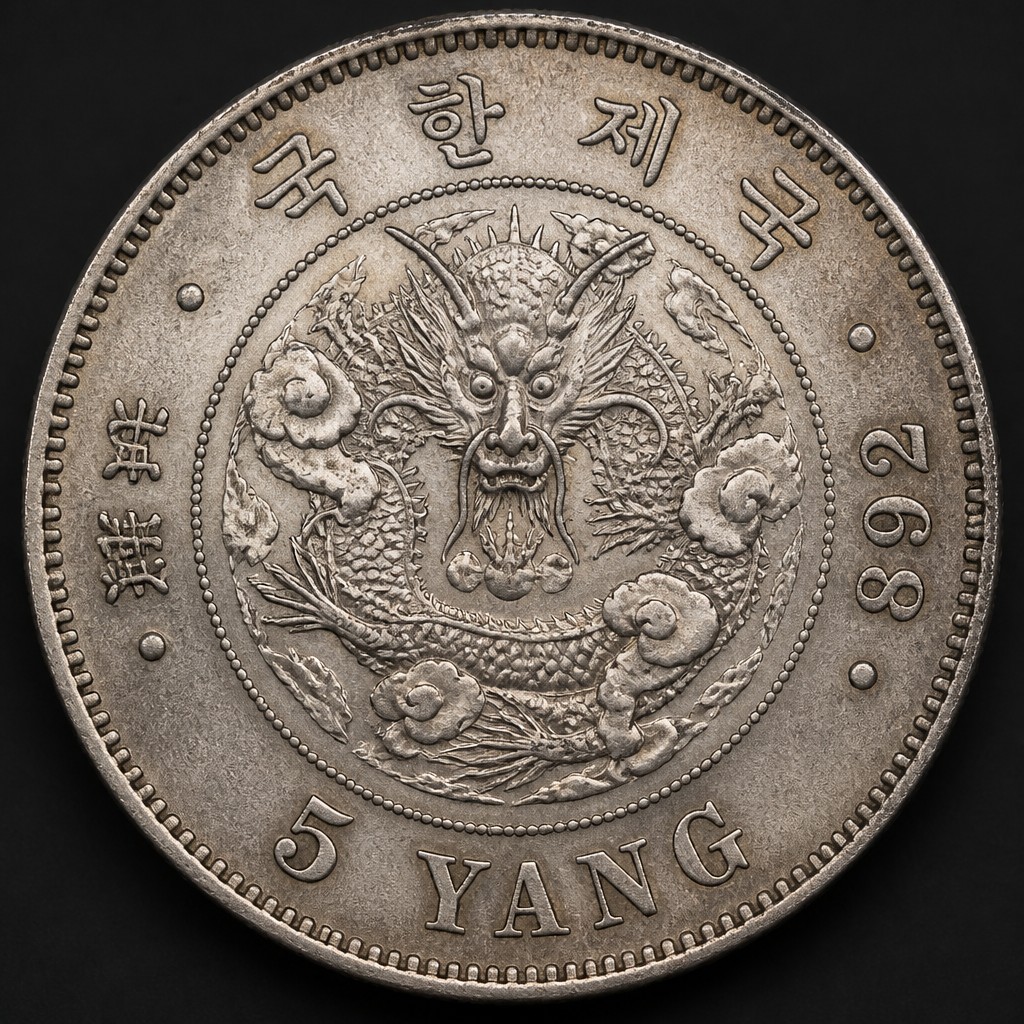
Korean 5 Yang Silver Dollar (1892)
1892
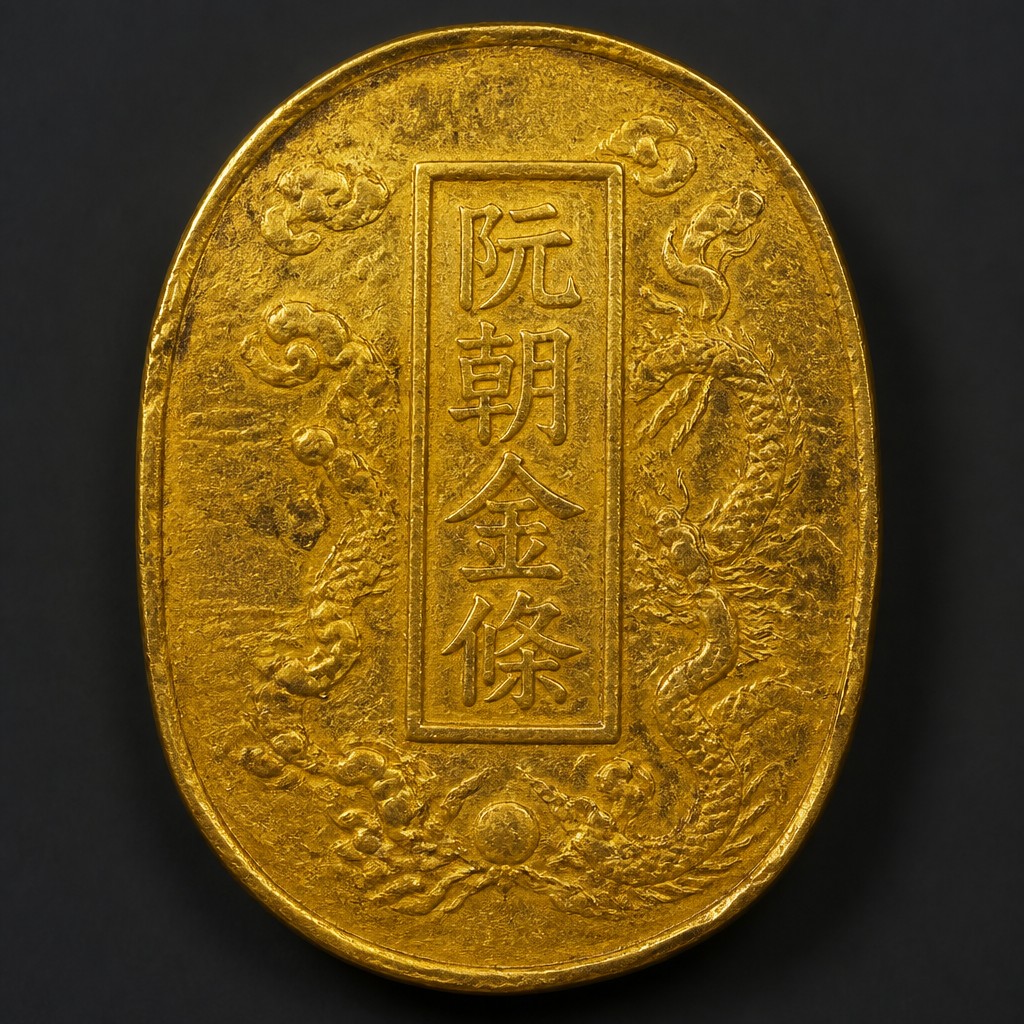
Nguyen Dynasty Gold Bar (Vietnam)
19th century
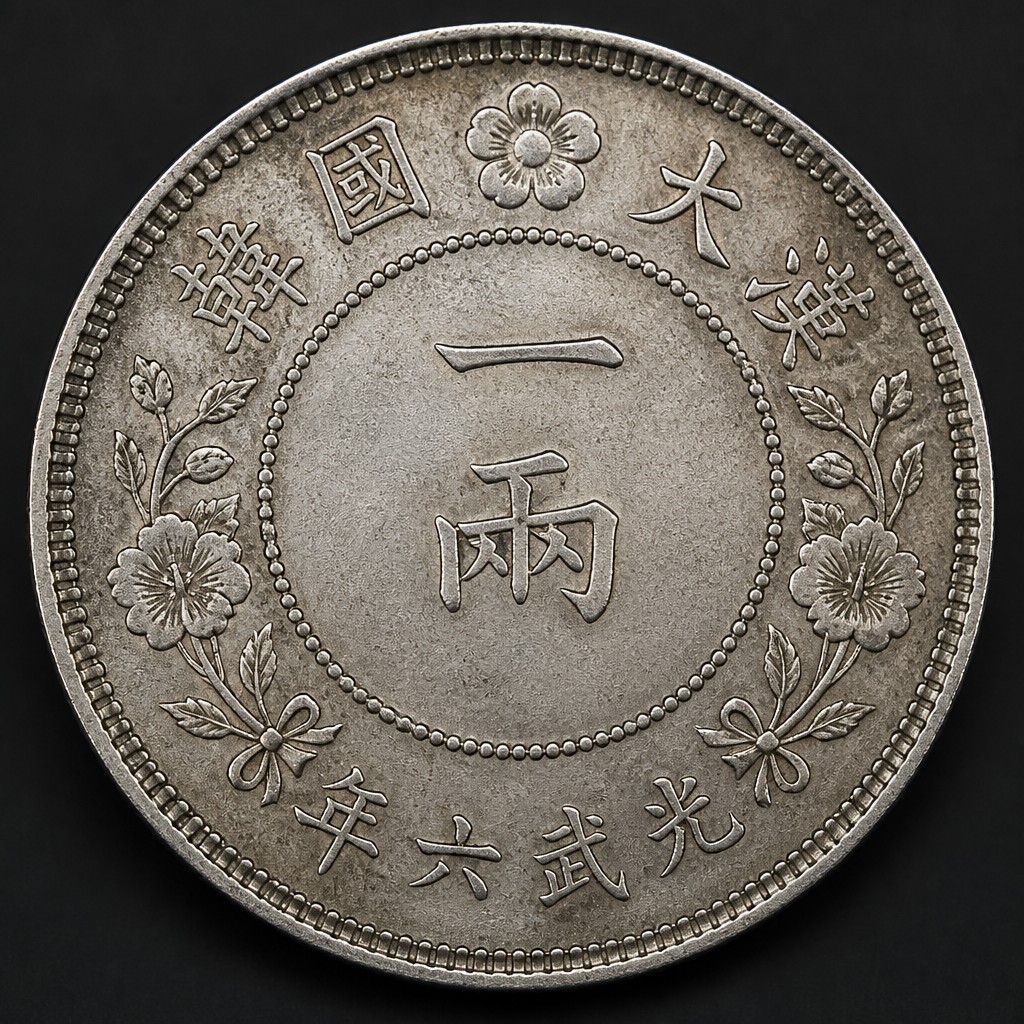
Korean 1 Yang Silver (Joseon/Great Han Empire)
1892–1902
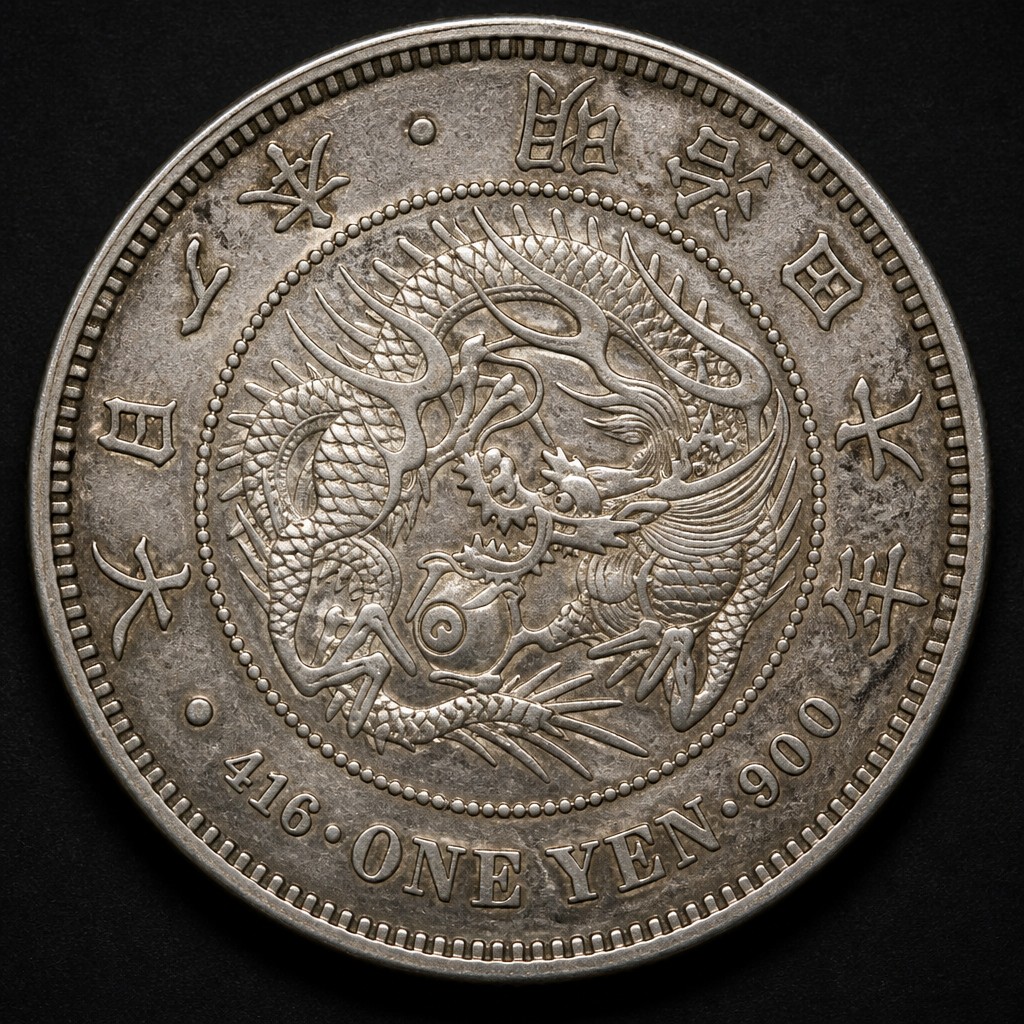
Japanese 1 Yen Silver 'Dragon' Trade Dollar
1870–1914 (trade dollar variant 1875–1877)
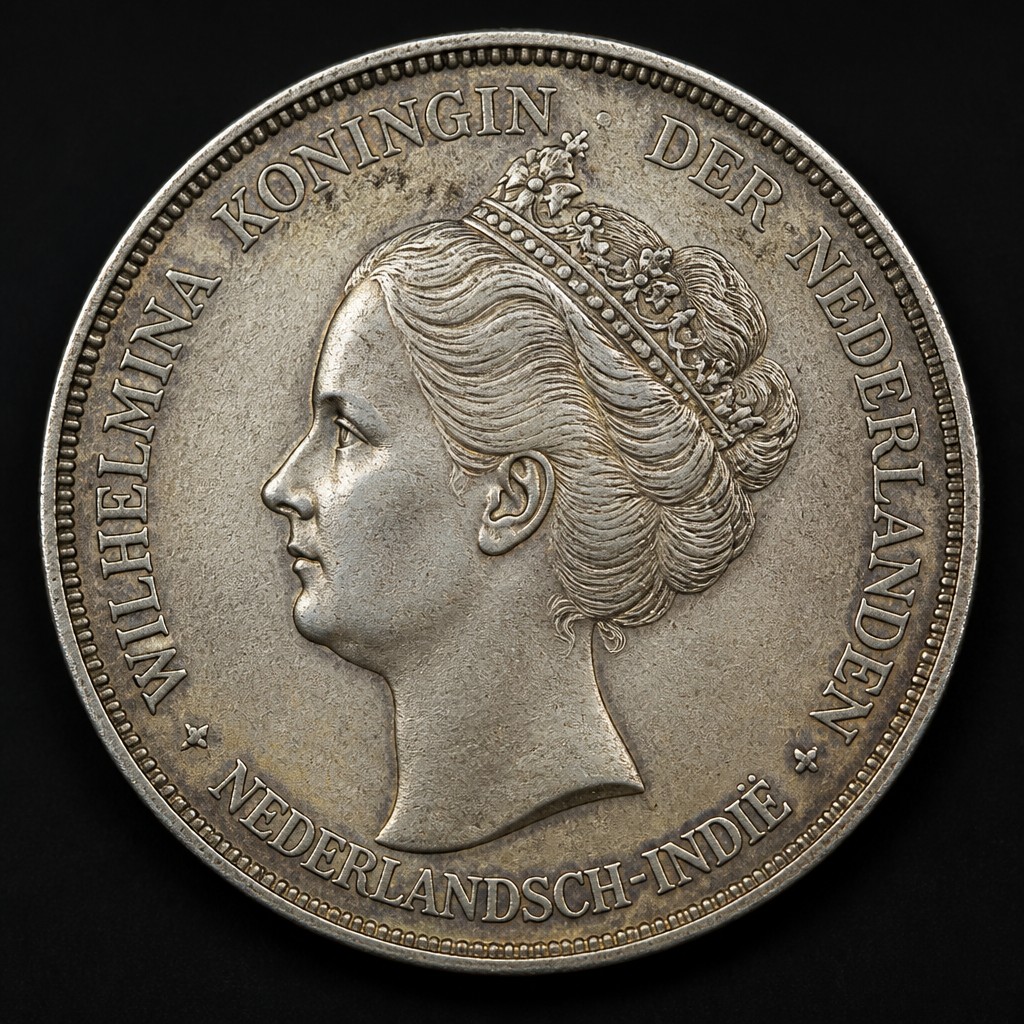
Netherlands East Indies Gulden (Wilhelmina)
1897–1945
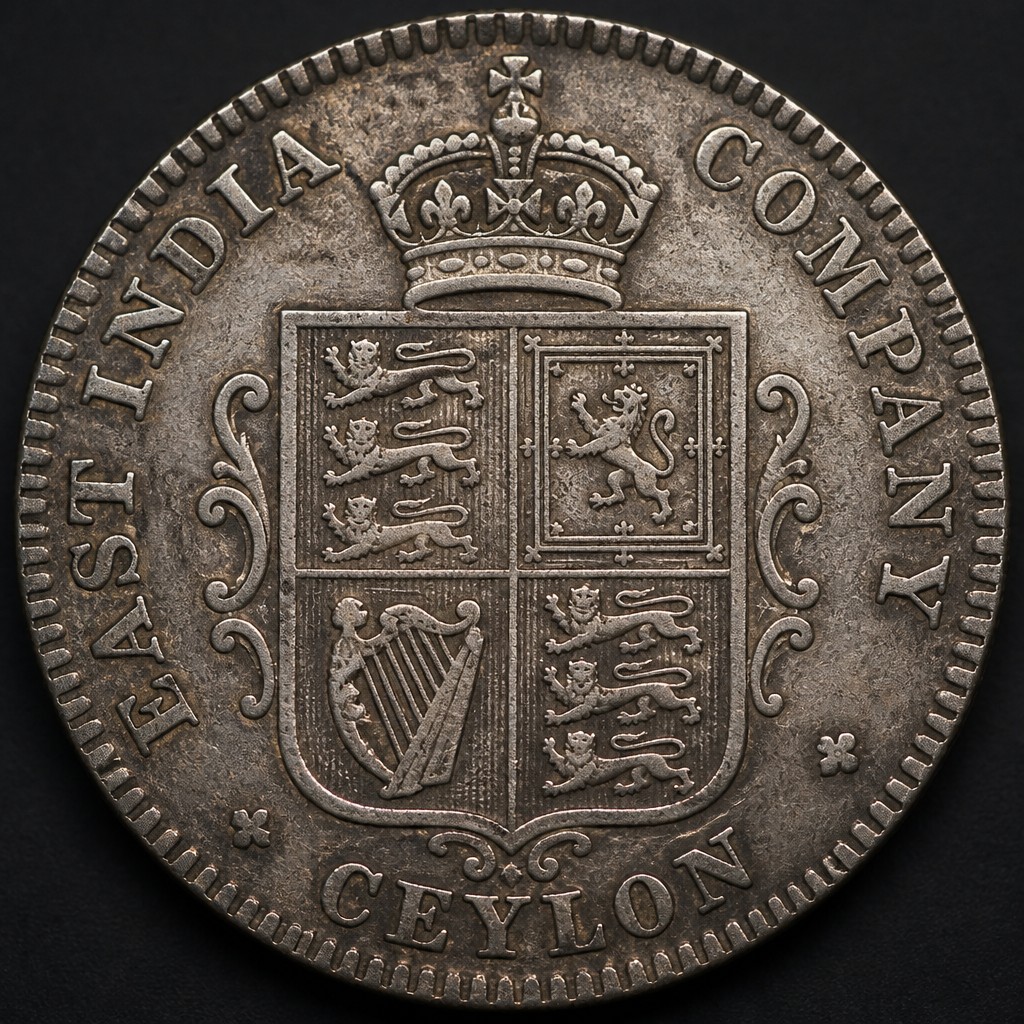
Ceylon (Sri Lanka) EIC Rixdollar
c. 1802–1821
Chinese Cash Coin (Qing Dynasty 'Kangxi Tongbao')
1662–1722
Chinese Hupeh Province Dragon Dollar
c. 1895–1909
Chinese Empire Silver Dollar (Hsuan Tung Dragon)
1909–1911
Thailand (Siam) Silver Baht 'Bullet Money' (Pod Duang)
c. 13th century – late 19th century
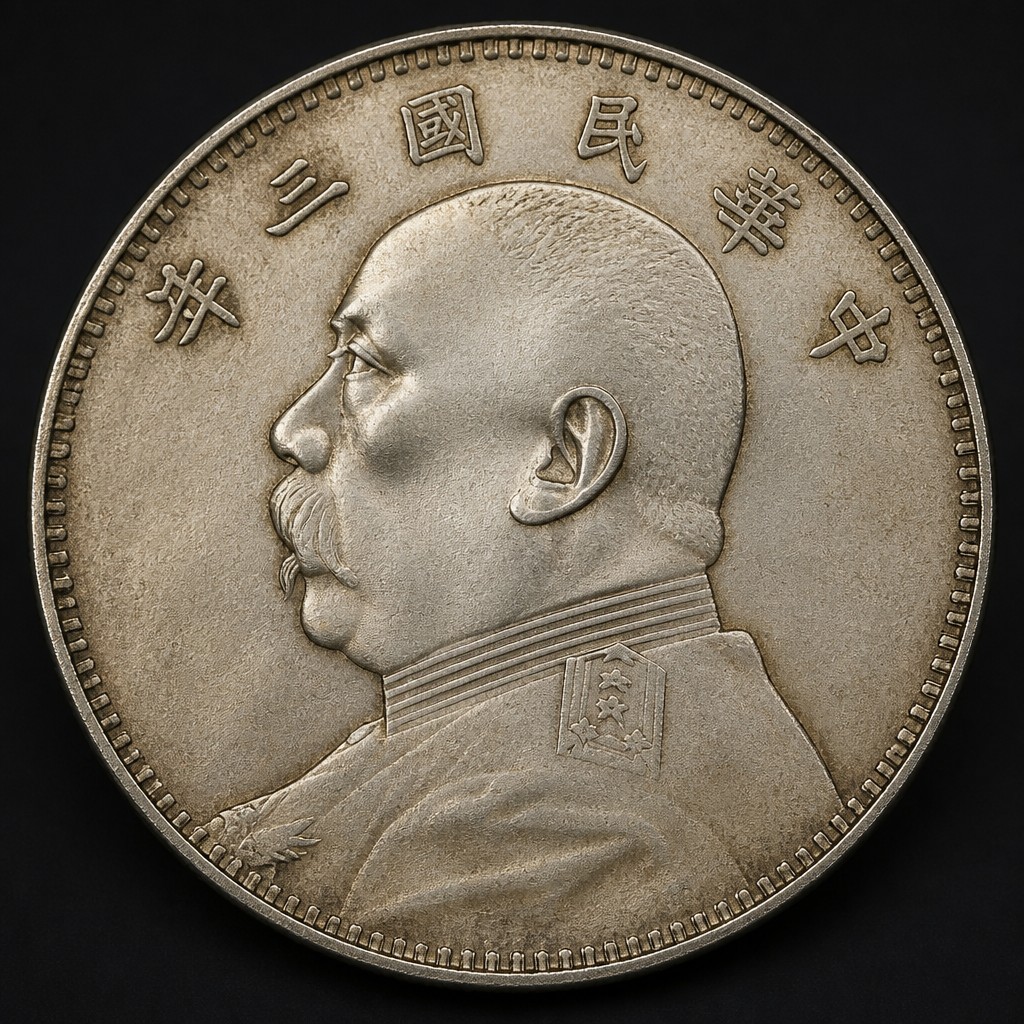
Yuan Shikai 'Fatman' Dollar (1914)
Dated 1914, struck into the early 1920s